Category: Daily Dispatch

  • Celebrating Nonagenarian Conductors on WPRB

    Celebrating Nonagenarian Conductors on WPRB

    Tomorrow is the 90th birthday of conductor Michael Gielen. Though Gielen retired from the podium several years ago, primarily due to failing eyesight, conductor Herbert Blomstedt (born July 11, 1927), a Seventh-day Adventist who doesn’t eat meat, smoke or drink caffeine, is still going strong, with a full season of concerts ahead. On a related note, the French conductor Serge Baudo turned 90 on July 16.

    With these milestone birthdays in mind, I thought it might be interesting tomorrow morning on WPRB to put together a playlist of recordings by these artists and others of their profession who have entered the 90 Year-Old Club.

    We’ll sample Gielen’s recordings of Franz Schreker and Gustav Mahler, Blomstedt’s Roger Sessions, and Baudo’s Messiaen. We’ll also hear recordings by notable nonagenarians who passed within the last year or so, including Stanislaw Skrowaczewski, Georges Prêtre, Louis Fremaux, and Sir Neville Marriner. Then we’ll fill in around the edges with late-career performances by Sir Adrian Boult (who lived to be 93) and Leopold Stokowski (95).

    90 is the new 70, tomorrow morning from 6 to 11 EDT, on WPRB 103.3 FM and wprb.com. Suddenly I feel like a spring chicken again, on Classic Ross Amico.


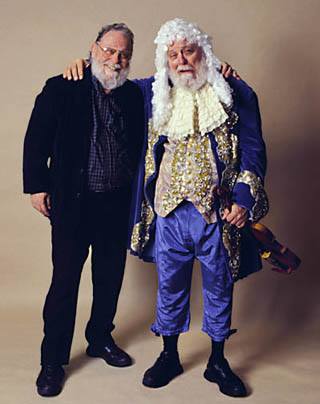
    PHOTOS (clockwise from left): Michael Gielen, Serge Baudo, and champion arm-wrestler Herbert Blomstedt

  • Marlboro Music Festival with Mitsuko Uchida

    Marlboro Music Festival with Mitsuko Uchida

    Each summer, the Marlboro Music School and Festival brings together the world’s most acclaimed artists and exceptional young talent in the foothills of rural, southern Vermont, for seven weeks of relaxed, inspired and joyful music-making.

    This year’s festival, already underway, will continue through August 13, on the campus of Marlboro College (a separate institution). More information about Marlboro Music may be found at marlboromusic.org.

    The Classical Network has been granted privileged access to the Marlboro archives, which contain many performances never before heard beyond the confines of the festival, all of them featuring chamber music luminaries and stars of tomorrow.

    On the next installment of “Music from Marlboro,” it will be an all-Czech program, including works by Erwin Schulhoff – his Divertissement for Oboe, Clarinet and Bassoon – and Antonín Dvořák, his beloved Piano Quintet in A major, Op. 81. Marlboro artistic director Mitsuko Uchida will be the pianist.

    I hope you’ll join me this Wednesday evening at 6 EDT, for another “Music from Marlboro,” on WWFM – The Classical Network and wwfm.org.


    Marlboro School of Music and Festival: Official Page

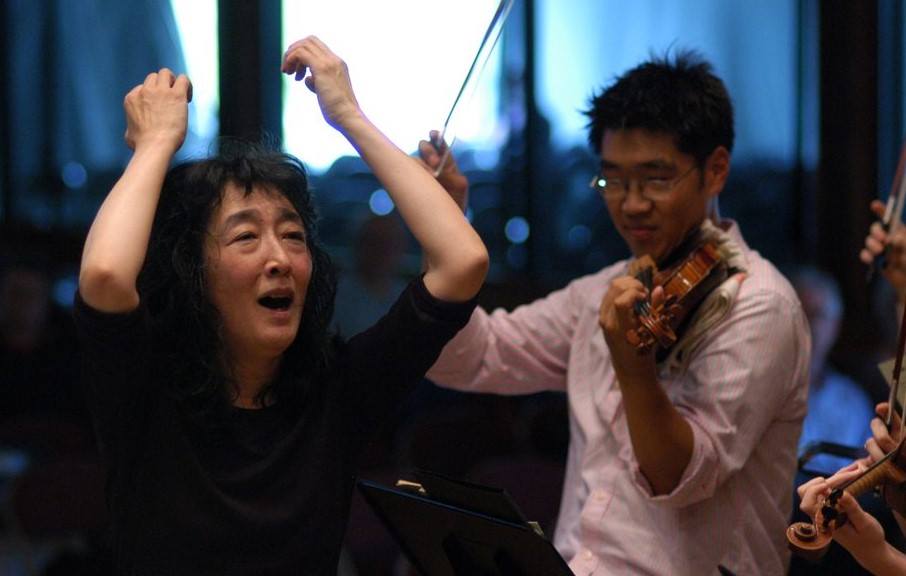
    PHOTO: Marlboro artistic director Mitsuko Uchida (left)

  • Remembering Kurt Masur on His 90th Birthday

    Remembering Kurt Masur on His 90th Birthday

    When Kurt Masur died two years ago at the age of 88, many of his obituaries lauded him as the conductor who rebuilt the New York Philharmonic. Masur, longtime kapellmeister of the Leipzig Gewandhaus Orchestra, brought no-nonsense discipline and a meat-and-potatoes diet of Beethoven and Brahms to Manhattan’s flagging flagship ensemble.

    He may not have always been the most exciting conductor, or the most charismatic, but he exuded authority and demanded respect. This was the man who managed to get a new concert hall built in East Germany during the Cold War and was permitted to lead the Gewandhaus Orchestra, ensconced behind the Iron Curtain, on international tours. In 1989, when violence threatened to erupt in the streets, Masur brokered peace, inviting protesters in to his concert hall to meet with the East German leadership.

    An unlikely candidate for the directorship of the New York Philharmonic, he improved the sound of both the orchestra and its hall, brought in new players like principle cellist Carter Brey, and began collaborating with trumpeter Wynton Marsalis, artistic director of Jazz at Lincoln Center. Interestingly, given his devotion to the core repertoire, Masur during his New York tenure also spearheaded the commissioning of over 40 new works.

    In addition, he held important posts with the Orchestre National de France, the London Philharmonic, the Israel Philharmonic, and, earlier in his career, the Dresden Philharmonic.

    I hope you’ll join me today, on what would have been Masur’s 90th birthday, as we listen to a selection of his recordings, including music by Felix Mendelssohn, Max Bruch, and Franz Liszt. We remember the maestro, from noon to 4 p.m. EDT, on WWFM – The Classical Network and wwfm.org.


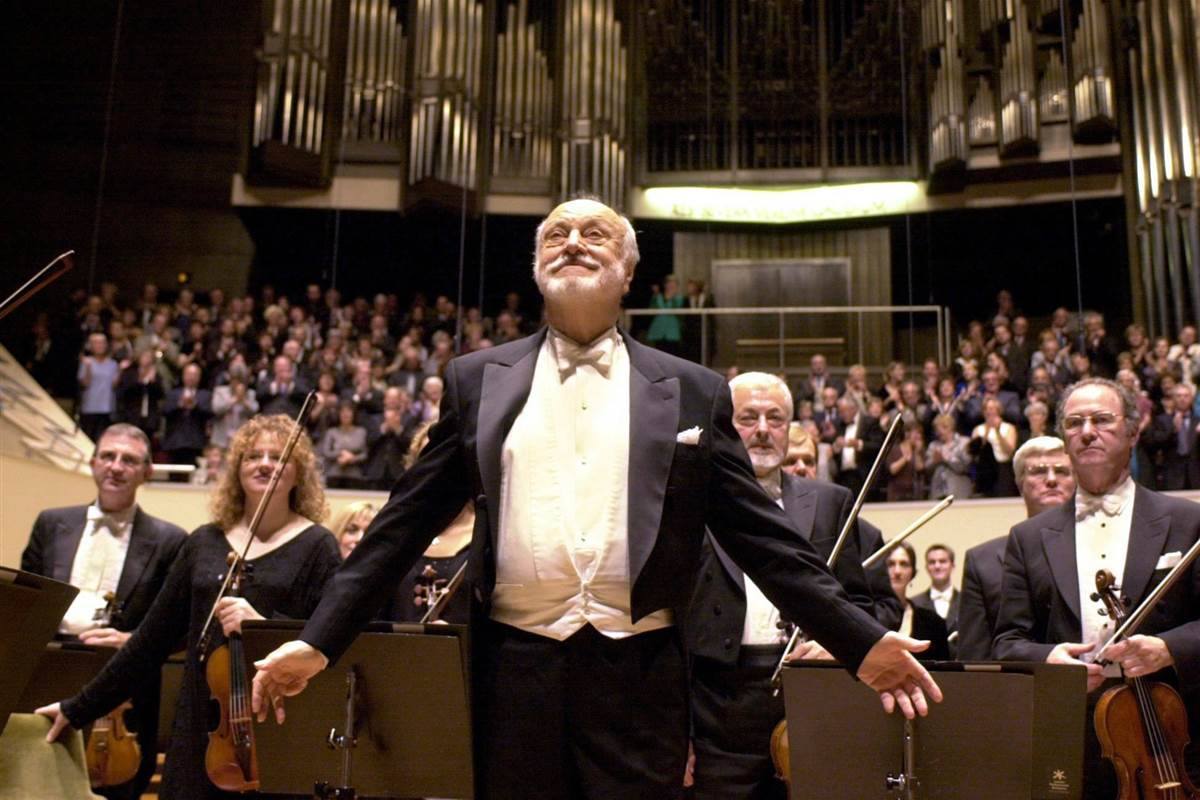
    PHOTO: Kurt Masur with the London Philharmonic at his old stomping ground, the Leipzig Gewandhaus, in 2010

  • Peter Schickele Birthday Bash on WWFM

    Peter Schickele Birthday Bash on WWFM

    Peter Schickele is best known for his “discovery” of the last and least of Bach’s alleged progeny, P.D.Q. Bach (the 21st of Bach’s 20 children). P.D.Q. Bach has been the vessel for musical parody ranging from high to low (frequently low) for more than 50 years – this often at the expense of Schickele the “serious” composer. Schickele, a pupil of Roy Harris, has composed over 100 works. It seems strange to describe them as serious, since, although they are not outright comic, they often convey a kind of genial wit. We’ll enjoy two faces of Peter Schickele today, on his birthday.

    We’ll also hear Samuel Barber’s “Knoxville: Summer of 1915,” after James Agee’s nostalgic reminiscence. It’s a coin toss as to whether it will be sung by Eleanor Steber, who commissioned the work, or Dawn Upshaw, who made one of the finest recordings of the digital age. Both singers were born on this date.

    In addition, there will be music by August Söderman, Woijiech Kilar and Donald Francis Tovey, all with birthday anniversaries on July 17.

    That’s a lot of candles to blow out. I’m saving my breath for between 4 and 7 p.m. EDT, on WWFM – The Classical Network and wwfm.org.

  • John Powell: Genius or Bigot?

    John Powell: Genius or Bigot?

    How can a deeply flawed human being write music of lasting beauty? That’s a question that is bound to assert itself when considering the case of John Powell (1882-1963).

    This Sunday night on “The Lost Chord,” I’ll be presenting Powell’s “Virginia Symphony” (originally titled “Symphony on Virginian Folk Themes and in the Folk Modes”), which is built on melodies collected by the composer over decades of folk song research. It was composed in 1945, and substantially revised in 1951. If at the times the music has something of an English flavor, it’s because most of the tunes Powell collected were of English, Irish or Scottish origin. A good many of them were already old when Elizabeth I was young. It’s useful to remember, Powell was a contemporary of Ralph Vaughan Williams. (He was roughly ten years Vaughan Williams’ junior.) Folk song collecting was very much in the air, on both sides of the Atlantic.

    Unfortunately, Powell had something of a blind spot for melodies outside of what he considered the acceptable Anglo-Saxon fold. In organizing folk festivals, he denied entry to spirituals, gospel and protest songs. More damningly, he was actively involved in the organization of the Anglo-Saxon Clubs of America, a magnet for white supremacists, which was instrumental in the passage of the Virginia Racial Integrity Law of 1924. Under the law, racial identity was clearly delineated. It recognized only two races – “white” and everyone else. Anyone of African ancestry was classified as “colored.” People who had previously identified themselves as multi-racial, some of whom were of one-sixteenth African ancestry, were now legally negroes (using the terminology of the time). The Racial Integrity Law criminalized marriages between whites and nonwhites. The law was passed at the same session during which the Virginia General Assembly legalized the sterilization of what were termed the “feebleminded,” defined as “insane, idiotic, imbecile, or epileptic.” The same ideas were percolating in Germany, of course, though it would take another ten years for the Nazis to catch up.

    Not content to work behind the scenes, Powell wrote a book on the subject, “Mongrels in America,” in which he expresses his views on the importance of keeping the races separate. Rather ironic, I think, in that Powell’s best-known piece is probably his “Rhapsodie nègre,” for piano and orchestra. He was a composer with some repugnant notions, certainly. How much of it is relevant to our enjoyment of the music is debatable. The controversial views of Richard Wagner seem almost tame by comparison.

    Even so, the music is worth hearing. Powell was clearly passionate about Anglo-American folk songs. It’s unfortunate that that passion spilled over into other areas that a good many today would, justifiably, find abhorrent. Still, the Virginians are understandably proud of their native son. We’ll hear a recording of his symphony made by JoAnn Falletta and the Virginia Symphony Orchestra, of which she has been music director since 1991.

    I hope you’ll join me for “Yes, Virginia, There is a Symphony,” this Sunday night at 10:00 EDT, on WWFM – The Classical Network and wwfm.org.


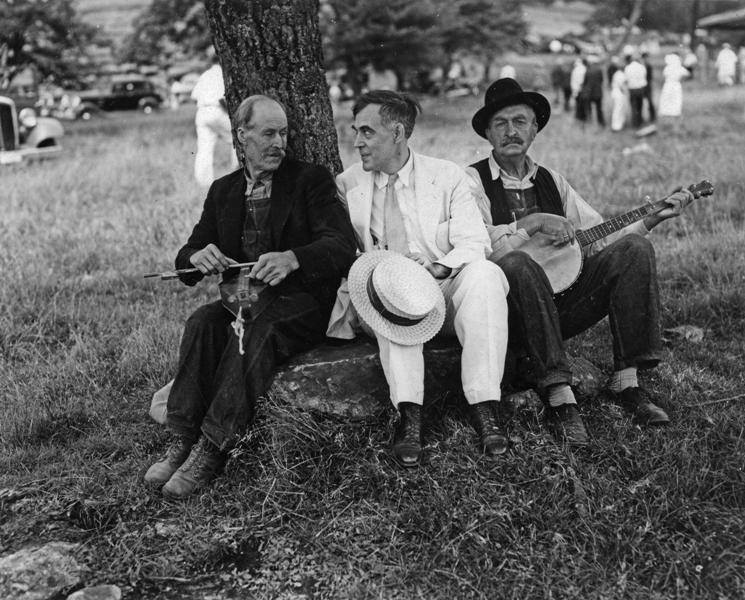
    PHOTO: John Powell (center) learns a thing or two about bowing a dulcimer at the White Top Folk Festival, the festival he helped found, in the 1930s.

Tag Cloud

Aaron Copland (94) Beethoven (95) Composer (114) Film Music (153) Film Score (143) Film Scores (255) Halloween (107) John Williams (198) KWAX (233) Leonard Bernstein (105) Marlboro Music Festival (125) Movie Music (168) Mozart (92) Opera (222) Philadelphia Orchestra (91) Picture Perfect (174) Princeton Symphony Orchestra (110) Radio (90) Ross Amico (244) Roy's Tie-Dye Sci-Fi Corner (290) The Classical Network (101) The Lost Chord (269) Vaughan Williams (107) WPRB (397) WWFM (881)

DON’T MISS A BEAT

Receive a weekly digest every Sunday at noon by signing up here


RECENT POSTS