Category: Daily Dispatch

  • Hubert Parry English Musical Renaissance

    Hubert Parry English Musical Renaissance

    Today is the 175th anniversary of the birth of Sir Charles Hubert Hastings Parry – who, let’s face it, had far too many names, which is why everyone generally refers to him, simply, as Hubert Parry.

    Parry was one of the foremost figures of the so-called English Musical Renaissance – not the actual Renaissance, mind you, but rather the flowering of English music that took place toward the end of the 19th century, after a nearly 200-year dearth of world-class composers following the death of Henry Purcell in 1695.

    A professor at the Royal College of Music in London, Parry eventually became the school’s head. He influenced an entire generation of much better-known musicians, people like Ralph Vaughan Williams, Gustav Holst, John Ireland, and Frank Bridge.

    Parry himself composed reams of music – symphonies, odes and oratorios, unaccompanied choral pieces, church music, an opera, chamber and instrumental works, incidental music for the stage, a piano concerto and, perhaps best of all, a set of “Symphonic Variations” – but he is probably best-recognized these days for his enduring choral work “Jerusalem” (still sung on the Last Night of the Proms) and the coronation anthem “I was glad.”

    The character of much of his music – and the fact that his works have been embraced by royals and nationalists – might lead one to assume that Parry the man was a little on the stodgy side. But nothing could be further from the truth. He was a free-thinker, humanist and Darwinian in outlook, who was described with affection by some as a radical, with a strong bias against Conservatism.

    Though he himself was enormously wealthy and never wanted for anything, he lived an ascetic life and a reflective one. He was against blood-sports and prone to bouts of depression – understandable in one disposed to reflection.

    He was generous with his pupils and broadminded with those he disagreed with. Though he held strong convictions, he seldom took anything at face value. Without Parry’s perception and support of his most promising students, English music might have developed very differently.

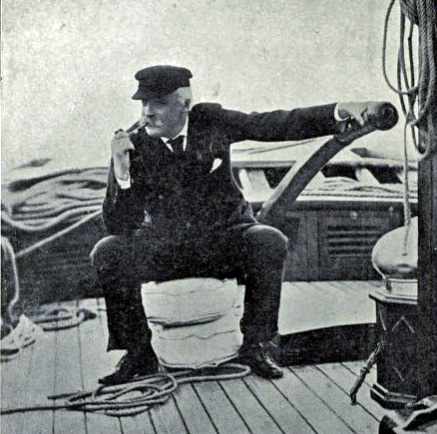
    It’s interesting to note that, even during his lifetime, his detractors used his “privilege” against him. But it seems his only indulgence was his yacht, which he dubbed “The Wanderer.”

    Parry is buried in St. Paul’s Cathedral, alongside Sir Arthur Sullivan and William Boyce.

    Happy birthday, Hubert Parry!


    “Symphonic Variations”

    Symphony No. 3 “The English”

    The “Lady Radnor Suite,” composed for Helen, Countess of Radnor, who led an all-female string orchestra

    “Jerusalem” at the Proms

    “I was glad” at the Queen’s Platinum Jubilee

    Vaughan Williams remembers Hubert Parry and Sir Charles Villiers Stanford

    Dave Hurwitz of classicstoday.com shares George Bernard Shaw’s evisceration of Parry’s oratorio “Job”

    “The Wanderer” Toccata and Fugue, named for Parry’s yacht

  • John Williams Not Done Scoring Films

    John Williams Not Done Scoring Films

    John Williams said “Indiana Jones and the Dial of Destiny” would be his final film project. He lied.

    Recording of his latest score was completed on February 10. He says it’s at least an hour and a half of new music.

    Entre nous: Williams is still taking offers.

    In the meantime, the 91-year-old composer will be at work on a piano concerto for Emanuel Ax.

    Some good anecdotes in this Variety article, involving Jacob Krachmalnick (Philadelphia Orchestra concertmaster from 1951-58) and Judd Hirsch (Academy Award nominee for Steven Spielberg’s “The Fabelmans”).

    https://variety.com/2023/artisans/news/indiana-jones-5-john-williams-score-1235534772/?fbclid=IwAR1Ywz6AUs00XYTx9AUGXHC5T-6B8eAFjPJQnkMxhV6_NRlUfPkGKQxtGkc

  • “Aliens” Stream Postponed Sci-Fi Corner

    “Aliens” Stream Postponed Sci-Fi Corner

    Nothing has burst out of my chest, but in light of all the stuff pouring out of my face, I hope you’ll understand why I requested a postponement of our discussion of “Aliens” (1986), originally scheduled to take place tonight on Roy’s Tie-Dye Sci-Fi Corner, to our usual time of FRIDAY EVENING AT 7:30 EST. See you then, when we livestream on Facebook, YouTube, etc.

    In the meantime, I appreciate everyone’s well-wishes, but please understand if I’m not up to chatting while I’m under the weather! Returning to stasis now.

    https://www.facebook.com/roystiedyescificorner

  • Explore the Kalevala Finnish National Epic

    Explore the Kalevala Finnish National Epic

    The Kalevala is frequently referred to as the Finnish national epic. Its fantastic and heroic tales informed the work of Finland’s greatest artists at a time when the country began its surge toward independence, after 700 years of Swedish rule and another century as a duchy of the Russian Empire.

    This Sunday night on “The Lost Chord,” with Kalevala Day right around the corner (celebrated in Finland with great pride on February 28), we’ll have music inspired by this disparate collection of long narrative poems.

    Robert Kajanus was the first great champion of Jean Sibelius. He conducted first performances of many of the composer’s major works and led the Helsinki Philharmonic for 50 years. He also wrote over 200 pieces himself. “Aino” was composed in 1885 for the Kalevala Society, to mark the 50th anniversary of the poem’s publication.

    One of the Kalevala’s central figures, Väinämöinen the wizard, always seems to be plagued by bad luck. He wins a singing contest, plunging his rival, Joukahainen, into a swamp, but when the latter promises him his sister’s hand in marriage if he will save him from drowning, the sister, Aino, drowns herself rather than submit to this seemingly intolerable fate. She returns to taunt the grieving Väinämöinen in the form of a salmon.

    Uuno Klami, one of the most important Finnish composers after Sibelius, brought a degree of French polish back from his studies in Paris, where he fell under the irreverent sway of Les Six. This led to the composition of an unusually anti-heroic take on the “Kalevala” legends, “Lemminkäinen’s Island Adventures.” Despite the Gallic influence on his music, Klami grew into one of Finland’s most respected composers. Sibelius recognized his talent and even lobbied for a small lifetime stipend for him from the Finnish government.

    Unlike Sibelius’ better-known “Four Legends from the Kalevala,” Klami’s “Kalevala Suite” scrupulously avoids the more swashbuckling elements of the epic’s narrative. Klami opts instead to paint on a much broader canvas, with movements titled “The Creation of the Earth,” “The Sprout of Spring,” “Terhenniemi” (replete with the sounds of nature and the sunny bliss of a summer’s day), “Cradle Song for Lemminkäinen” (Lemminkäinen’s mother’s song sung over the body of her son, soon to be resurrected), and “The Forging of the Sampo” (a kind of talisman everyone seems to want).

    Of course, no composer had more success drawing on the Kalevala legends than Sibelius himself. We’ll conclude the hour with a Sibelius rarity, “A Song for Lemminkäinen,” from 1896. This inspiring work for male chorus followed on the heels of the composer’s “Lemminkäinen Suite” (also known as “Four Legends from the Kalevala”), written earlier in the decade.

    I hope you’ll join me in acquiring some “Epic Finnish.” That’s music inspired by the Kalevala, this Sunday night at 10:00 EST, on WWFM – The Classical Network and wwfm.org.


    “Väinämöinen Sings Joukahainen into a Fen,” by Joseph Alanen (1885–1920)

  • Movie Concertos: Beyond the Warsaw Concerto

    Movie Concertos: Beyond the Warsaw Concerto

    The craze for the romantic movie concerto likely achieved its delirious apotheosis with the “Warsaw Concerto” from the film “Dangerous Moonlight,” a 1941 potboiler about a fictional pianist who escapes Nazi-occupied Poland, enlists in the RAF and, while suffering from amnesia, attains glory as a fighter pilot during the Battle of Britain.

    Richard Addinsell’s showstopper (arranged by Roy Douglas and performed on the soundtrack by Louis Kentner) is said to have yielded over 100 recordings. It certainly spawned numerous imitators.

    This week on “Picture Perfect,” we’ll hear five other movie concertos, including three for piano, one for cello, and a virtuosic showpiece for violin and orchestra.

    Tune in for the “Cornish Rhapsody” from “Love Story” (1944) by Hubert Bath; “Symphonie Moderne” from “Four Wives” (1939) by Max Steiner; and the “Concerto Macabre” from “Hangover Square” (1945) by Bernard Herrmann; also the Cello Concerto in C from “Deception” (1946) by Erich Wolfgang Korngold and the “Carmen Fantasy” for violin and orchestra from “Humoresque” (1946) by Franz Waxman.

    Enjoy these concerted efforts for the silver screen, on “Picture Perfect,” music for the movies, this Saturday evening at 6:00 EST, on WWFM – The Classical Network and wwfm.org.


    Bait-and-switch trailer for “Deception”

    Laird Cregar burning down the house in “Hangover Square”

Tag Cloud

Aaron Copland (94) Beethoven (95) Composer (114) Film Music (151) Film Score (143) Film Scores (255) Halloween (103) John Williams (198) KWAX (233) Leonard Bernstein (105) Marlboro Music Festival (125) Movie Music (166) Mozart (91) Opera (216) Philadelphia Orchestra (91) Picture Perfect (174) Princeton Symphony Orchestra (110) Radio (90) Ross Amico (244) Roy's Tie-Dye Sci-Fi Corner (290) The Classical Network (101) The Lost Chord (269) Vaughan Williams (107) WPRB (397) WWFM (881)

DON’T MISS A BEAT

Receive a weekly digest every Sunday at noon by signing up here


RECENT POSTS