
Too darn hot! Famous musicians hit the beach (identified as you click through the gallery).
Category: Daily Dispatch
-

American Music Greats Born on This Day
A great day for American music.
Seminal jazz artist and pop cultural icon Louis Armstrong was born on this date in 1901. Armstrong’s birth certificate didn’t come to light until years after his death, so he always celebrated his birthday on July 4. Can’t get much more American than that.
William Schuman, president of the Julliard School (1945-61) and Lincoln Center (1961-69), and first recipient of the Pulitzer Prize for Music for his cantata “A Free Song” in 1943, was born on this date in 1910. In his day, he was regarded as one of our great American symphonists. His Symphony No. 3 (1941) was especially well-regarded.
Film composer David Raksin, who got his start working with Chaplin on “Modern Times,” but best-remembered for his music for the noir classic “Laura,” was born in Philadelphia on this date in 1912. Due to his longevity – Raksin lived to see 92 – he became an invaluable fount of information about old Hollywood.
Pretty great country, that could produce that array of talent. Happy birthday, gentlemen. Thanks for all the music.
Armstrong live in 1933
With Velma Middleton, “All That Meat and No Potatoes”
William Schuman on “What’s My Line?”
Schuman, Symphony No. 3
Raksin talks about working with Chaplin on “Modern Times”
Raksin plays “Laura”
-
Vaughan Williams’ Antartica Symphony: Ice and Tragedy
Think cool thoughts with Ralph Vaughan Williams’ “Sinfonia Antartica” – his Symphony No. 7 – spun off of his score for the Ealing Studios film “Scott of the Antarctic” (1948).
The fatal polar expedition of Robert Falcon Scott and his companions enthralled the composer, who responded with music evocative of ice and wind, penguins and whales, and inexorable snows. Vaughan Williams wrote most of the score before even seeing the film.
The symphony is scored for large orchestra, including vibraphone, pianoforte, organ, and wind machine, with wordless women’s chorus and soprano soloist.
It falls into five movements – Prelude, Scherzo, Landscape, Intermezzo, and Epilogue – with the third movement leading directly into the fourth. The scherzo is propelled by whales and penguins. The “landscape” in question is the icy wasteland of Ross Island.
The score itself includes brief literary quotations – from Shelley, the Biblical Book of Psalms, Coleridge, Donne, and Captain Scott’s Last Journal – at the head of each movement. These are sometimes declaimed in performance and recordings, though the composer did not indicate that they were intended to be spoken.
The title of the work is frequently misspelled, since the composer opts for the Italian “Antartica” (spelled with only one “c”) – a decision he made at the last minute, so as to keep it consistent with his use of the Italian word “Sinfonia.”
Vaughan Williams was 80 years-old when he completed the symphony in 1952. It received its first public performance on January 14, 1953. Sir John Barbirolli conducted the Hallé Orchestra.
The tragic dimension of the overall tone of the symphony is unmistakable, with man’s endeavors insignificant in the face of implacable nature.
Here’s hoping your reception is a chilly one!
-

Yoko Sato Violinist Remembered
The Japanese violinist Yoko Sato has died. There is shockingly little documentation of her artistry available in the West, in terms of video and recordings, especially on CD, although she did make an album with Ennio Morricone, the soundtrack to “Dedicato al mare Egeo.” (All that’s posted on YouTube is a horrible disco cover, with no violin that I can perceive.) However, there is a great video that’s been circulating of her playing Khachaturian’s Violin Concerto at the age of 13, with the composer conducting.
Here, she appears at the Tchaikovsky Competition in 1966 (around the 3-minute mark), with some footage of her teacher, Leonid Kogan.
Wouldn’t mind hearing this album, in which Sato plays the rarely-heard concerto by Tikhon Khrennikov, who caused so much suffering for Shostakovich, Prokofiev, and others – including Khachaturian – as General Secretary of the Union of Soviet Composers.
http://www.musicweb-international.com/classrev/feb99/violin.htm
Oh, this is very interesting. Apparently “Dedicato al mare Egeo” is a quasi-skin flick, directed by Masuo Ikeda, the painter, printmaker, sculptor, and novelist (and Akutagawa Prize winner for his novel “Offering in the Aegean,” upon which the film is presumably based), who was Sato’s partner from 1980.
https://letterboxd.com/film/dedicato-al-mare-egeo/
Sato was 72 years-old. Ikeda died in 1997 at the age of 63.
Her obituaries have been succinct. None of them mention the movie.
R.I.P.
PHOTO: Sato as soloist, with a well-decorated Khachaturian on the podium, in 1965
-
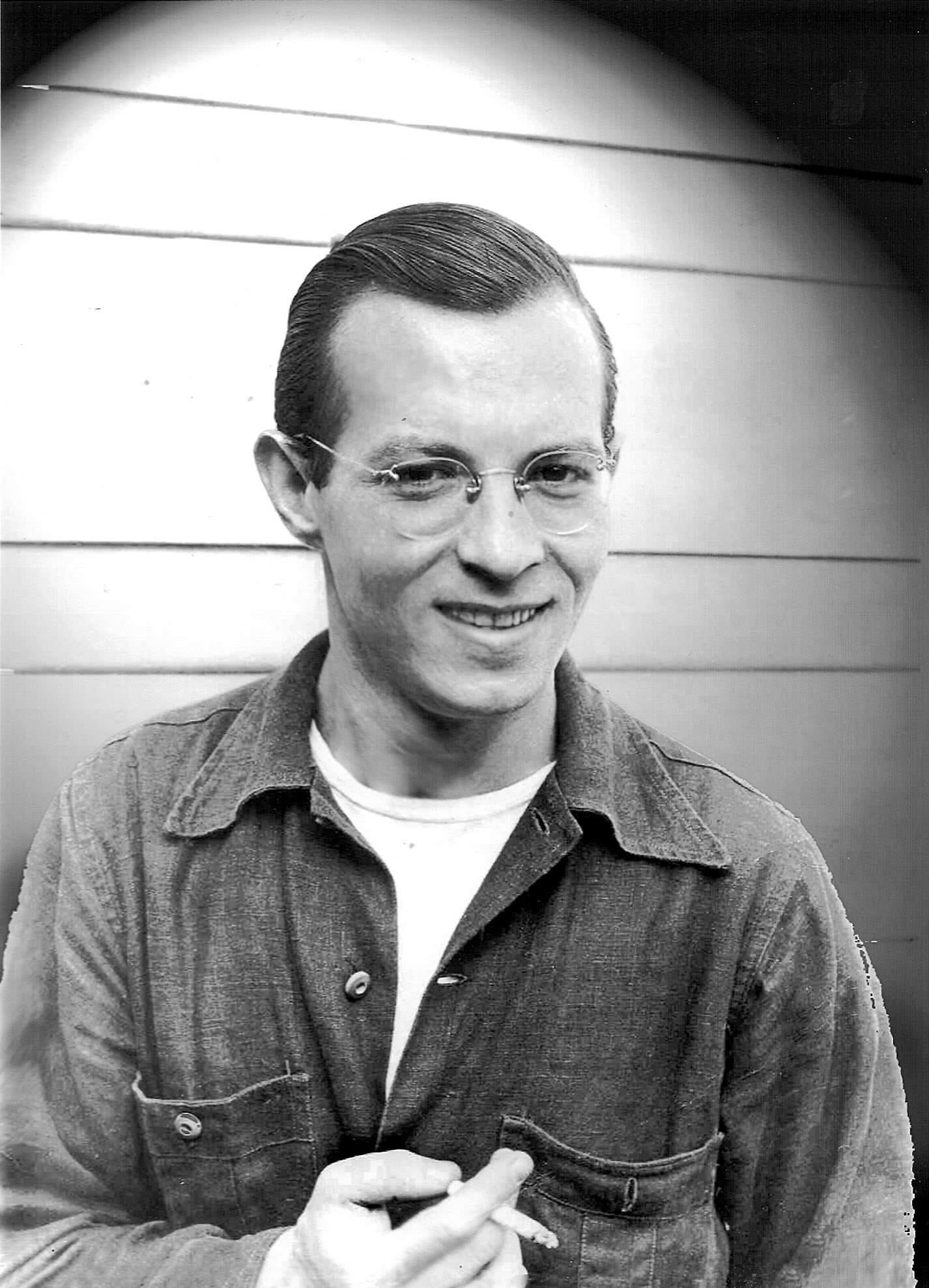
Jerome Moross Frankie and Johnny Rediscovered
Wow! Here’s a neat discovery. An actual performance of Jerome Moross’ ballet, “Frankie and Johnny.”
You probably know the bluesy song, inspired by one or more sensational crimes of passion, in which a betrayed woman shoots her lover. (“He was her man, but he done her wrong.”) There are now so many variants that it’s taken on the quality of a folk song. Elvis sang it. Johnny Cash sang it. It’s been covered by innumerable jazz artists.
Moross uses it as a kind of Greek chorus (sung by a trio Salvation Army sisters) in his brash and jazzy dance piece, which created a sensation at its premiere in 1938. The work predated Leonard Bernstein’s “Fancy Free” by six years and sent the censors into a moral panic.
Though Moross was adept at writing music in many forms – including concert pieces (a symphony for Beecham), musical theater (the cult classic “The Golden Apple,” including the evergreen “Lazy Afternoon”), and opera (“Sorry, Wrong Number”) – he is best known for his classic film scores. He spent much of his career ping-ponging back and forth between New York and Hollywood.
When “Porgy and Bess” concluded its New York run in 1935, George Gershwin invited Moross to join the show, on tour, as a pianist. It was while on a bus trip to Los Angeles to participate in “Porgy’s” west coast premiere that the 23 year-old made a stop in Albuquerque.
“[A]s we hit the Plains I got so excited,” Moross recollected. “. . . [T]he next day I got to the edge of town and then walked out onto the flat land with a marvelous feeling of being alone in the vastness, with the mountains cutting off the horizon. The whole thing was just too much for me . . . it was marvelous, and I just fell in love with it.”
The experience served him well. Moross drew on the memory of that trip in the writing of some of his most famous music, the Academy Award-nominated score for “The Big Country,” with its sense of wide-open excitement in the face of sweeping vistas. Western high-spirits and American jazz color most of Moross’ output.
Happy birthday, Jerome Moross. You tackled everything with exuberance and vitality.
One of the most thrilling credits sequences of all time?
Surely one of the greatest film scores ever written
Rare historic radio broadcast of the Symphony No. 1, with Moross himself at the piano
“Lazy Afternoon” from “The Golden Apple,” sung by Kaye Ballard from the 1954 original cast recording
Theme to “Wagon Train”
Sonata in G major for Piano Duet and String Quartet
Tag Cloud
Aaron Copland (94) Beethoven (95) Composer (114) Film Music (151) Film Score (143) Film Scores (255) Halloween (103) John Williams (198) KWAX (233) Leonard Bernstein (105) Marlboro Music Festival (125) Movie Music (166) Mozart (91) Opera (216) Philadelphia Orchestra (91) Picture Perfect (174) Princeton Symphony Orchestra (110) Radio (90) Ross Amico (244) Roy's Tie-Dye Sci-Fi Corner (290) The Classical Network (101) The Lost Chord (269) Vaughan Williams (107) WPRB (397) WWFM (881)