Category: Daily Dispatch

  • Henry Mancini Film Music Birthday Tribute

    Henry Mancini Film Music Birthday Tribute

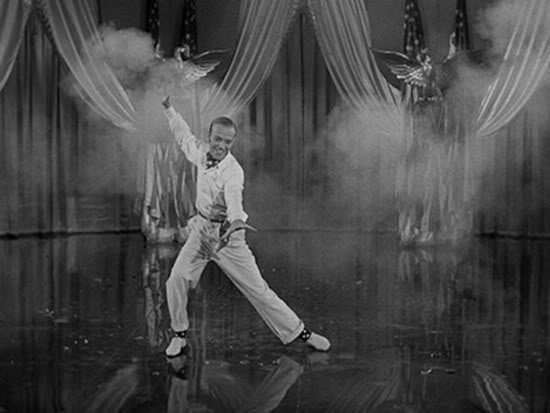
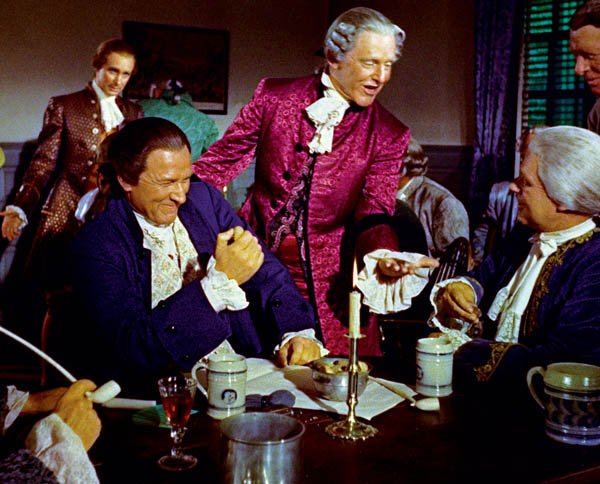
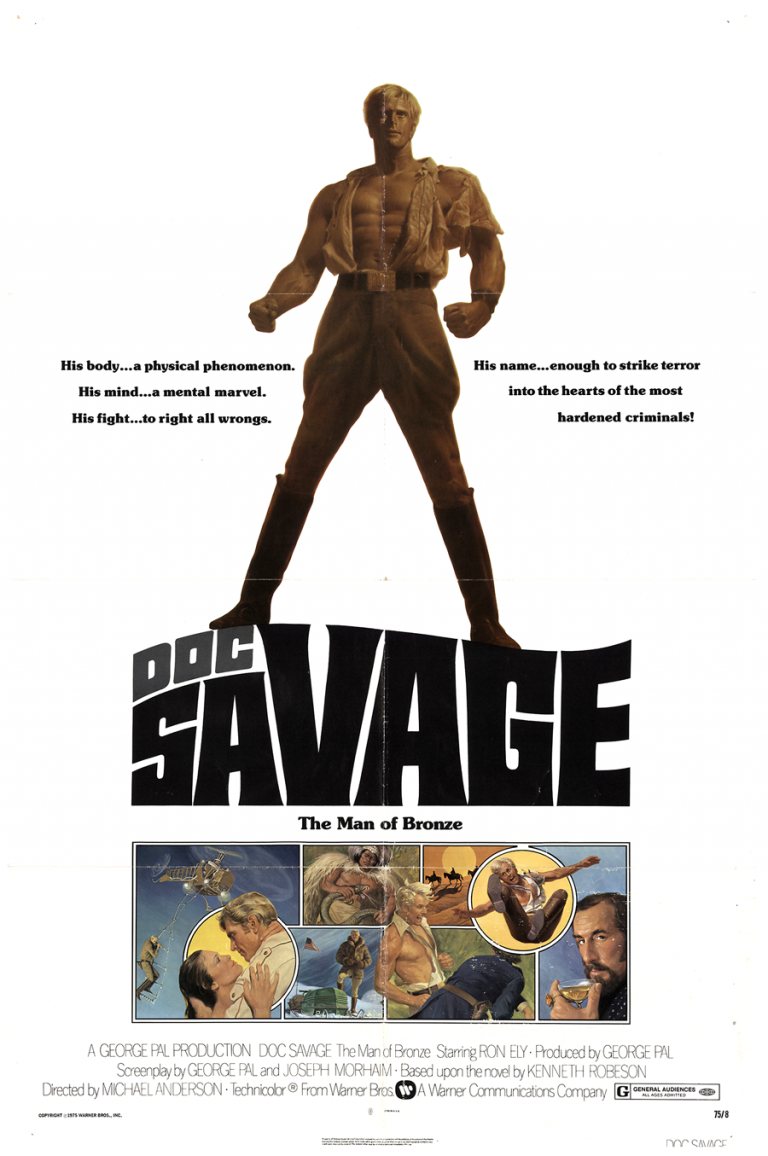
    Happy birthday, Henry Mancini! Like any great film composer, you always knew just how to set the tone.

    Musical hook for grappling hook

    Perambulating with pachyderms

    Sunday night by flashlight

    Early morning elegance

    Thanks, Hank. You helped make it a great age.

  • Kilar’s Exodus Passover and a Klezmer Motif

    Kilar’s Exodus Passover and a Klezmer Motif

    Chag Sameach! Passover begins at sunset.

    Wojciech Kilar (1932-2013) is probably best-known in this country for his film scores. He composed music for well over 100 movies, gaining a toehold in international cinema fairly late in his career. American audiences may recognize his work for “Bram Stoker’s Dracula” (1992), “The Portrait of a Lady,” (1996), and “The Pianist” (2002).

    But in his native Poland, he was also a major concert composer, of the same generation as Krzysztof Penderecki and Henryk Górecki. My own first exposure to Kilar was on a concert of the Philadelphia Orchestra, given back in 1987, when Witold Rowicki conducted a fascinating work titled “Krzesany” (1974), a symphonic poem evocative of a Polish mountain dance that employs aleatoric elements.

    In 1979-81, Kilar composed “Exodus,” a 23-minute crescendo, after the manner of Ravel’s “Boléro,” only crowned by the entrance of a chorus, which sings “Domine ecce venit populus tuus” (“Lord, behold, your people come”), in a spirit of mounting exultation.

    Though it is by no means film music, its genesis was in Kilar’s research in writing music for Peter Lilienthal’s film, “David” (1979). The composer stumbled across a klezmer motif in a Jewish songbook, and it basically took him over. He dedicated the finished piece to Krzysztof Zanussi, another filmmaker.

    Interestingly, Kilar’s “Exodus” did enjoy a brief vogue in the movies, in trailers, such as the one for “Schindler’s List.”

    You can view a live performance of it here:

    Be sure to stick around for a golf clap from the clergy at the end (except for the guy at the far end of the pew, who seems to have genuinely enjoyed it).


    Marc Chagall, “The Train Crossed the Red Sea” from “Exodus” (1966)

  • Wagner’s Parsifal Good Friday Soundtracks

    Wagner’s Parsifal Good Friday Soundtracks

    I mean no disrespect in saying that, for me, Good Friday is made better by Wagner’s “Parsifal.” I try to listen to it every year, whether I need it or not.

    Here’s my annual posting of Leopold Stokowski’s transcendent Houston recording of the “Good Friday Spell” from Act III.

    Also, a fascinating 1927 recording of the Transformation Music and Grail Scene from Act I, set down at the Bayreuth Festspielhaus. The recording employs the original bells designed by Wagner, which were later melted down by the Nazis for ammunition during World War II. A rare opportunity to experience “Parsifal” as Wagner actually knew it. (The bells begin at 5:57.)

    The conductor, Karl Muck, was associated with the Bayreuth Festival since 1892. He became its principal conductor in 1903. Between 1901 and 1930, he conducted “Parsifal” at Bayreuth 14 times.

    Another conductor who was a pillar at Bayreuth was Hans Knappertsbusch. Of Kna’s 95 appearances there, 55 were conducting “Parsifal,” for which he was especially renowned.

    I was going to post a link to one of his performances of the Prelude to Act I , but then I couldn’t help it. Here’s the whole blessed thing – all four hours of it – from 1962. The live recording is regarded as the benchmark by many, rivaled only by Kna’s performances from the 1950s.

    Sacrifice, compassion, healing, and rebirth. Every Friday is good, but Good Friday with “Parsifal” is subime.


    The metal canisters used to produce Bayreuth bell sounds from the 1880s to about 1929:

    https://www.monsalvat.no/parsifal-bells.htm

    IMAGE: Set design by Paul von Joukowsky for the 1882 Bayreuth debut of “Parsifal”

  • Maundy Thursday Music: Lekeu, Sabata, Palestrina

    Maundy Thursday Music: Lekeu, Sabata, Palestrina

    Is it Monday, or is it Thursday? Why, it’s Maundy Thursday!

    Of course, Maundy has nothing to do with Monday. The word is most likely derived from the Latin “mandatum,” as in “Mandatum novum do vobis ut diligatis invicem sicut dilexi vos” (“A new commandment I give you, That ye love one another; as I have loved you”). Or it could come from the Middle English and Old French words “maund” and “mendier,” respectively, after the Latin “mendicare,” meaning to beg.

    In any case, we are now entering the holiest days of the Christian calendar. Maundy Thursday commemorates Jesus’ washing of the feet of his disciples, the Last Supper, and the betrayal and arrest of Christ in the garden of Gethsemane.

    Here’s an exceedingly somber work for Maundy Thursday by the Belgian composer Guillaume Lekeu (1870-1894). Lekeu died of typhoid the day after his 24th birthday. In his short life, he managed to produce about 50 works. Admittedly, some are incomplete. If one were to judge solely from his music, he was a melancholy soul indeed.

    This is “Molto Adagio,” composed by a 16 year-old Lekeu, inspired by the words of Christ in the garden of Gethsemane, “My soul is exceeding sorrowful, even unto death.”

    From 1999 to 2014, the Brentano Quartet served as ensemble-in-residence at Princeton University. Among its other achievements, the ensemble played on the soundtrack of the 2012 film “A Late Quartet,” starring Christopher Walken, Philip Seymour Hoffman, Catherine Keener, and Wallace Shawn. The group’s cellist, Nina Lee, also appeared onscreen, as a fictionalized version of herself.

    A couple of days ago, I posted about conductor Victor de Sabata, for his birthday. De Sabata too wrote a lovely piece for Maundy Thursday, called “Gethsemani.” I highly recommend it in its orchestral guise, available on a CD of De Sabata’s symphonic poems on the Hyperion label. However, since either Hyperion or the algorithm is so hyper-vigilant, Hyperion recordings seem to get yanked off YouTube very quickly.

    So here’s the work in a version for piano. Still beautiful, still contemplative, but without the orchestral sheen.

    Finally, from a gorgeous album of Palestrina’s music for Maundy Thursday on the Chandos label, here’s a playlist of performances by Musica Contexta.

    All sensitively done, I think. There’s little maudlin in this Maundy.


    “Jesus in the Garden of Gethsemane,” c. 1500, by Pedro Berruguete (1450–1504)

  • Mozart’s Vatican Heist The Stolen Miserere

    Mozart’s Vatican Heist The Stolen Miserere

    When the 14 year-old Mozart perpetrated a daring theft from the most powerful institution in the world, there was no need to circumvent a laser grid by descending on cables from on high.

    Mozart and his father attended a Holy Week service at the Vatican in 1770. There, they encountered for the first time Gregorio Allegri’s haunting “Miserere.”

    Allegri composed his setting of Psalm 51 (50) in the 1630s. The piece was intended for exclusive performance in the Sistine Chapel, as part of the Tenebrae service of Holy Wednesday and Good Friday.

    Its conception is a striking one, with two choirs: one intoning a simple chant, and the other, spatially separated, providing ornamentation. The effect of a stratospheric top C makes the “Miserere” one of the most enthralling works in the choral literature of the late Renaissance.

    The Vatican, realizing it had a good thing, forbade performance of the piece or copies of the score to be circulated outside its walls, under pain of excommunication.

    It was Mozart who blithely liberated the piece, copying it down from memory and handing it off to author and music historian Charles Burney, who published it without delay.

    Mozart was summoned before the Pope, and rather than being excommunicated, he was showered with praise for his feat of musical genius. The ban on the “Miserere” was lifted.

    Mission accomplished!


    These portraits, of Allegri (left) and the teenage Mozart, will self-destruct in five seconds

Tag Cloud

Aaron Copland (93) Beethoven (95) Composer (114) Film Music (136) Film Score (143) Film Scores (255) Halloween (94) John Williams (195) KWAX (229) Leonard Bernstein (103) Marlboro Music Festival (125) Movie Music (151) Mozart (88) Opera (206) Philadelphia Orchestra (89) Picture Perfect (174) Princeton Symphony Orchestra (108) Radio (88) Ross Amico (244) Roy's Tie-Dye Sci-Fi Corner (290) The Classical Network (101) The Lost Chord (268) Vaughan Williams (103) WPRB (396) WWFM (881)

DON’T MISS A BEAT

Receive a weekly digest every Sunday at noon by signing up here


RECENT POSTS