Category: Daily Dispatch

  • Philly Record Store Memories

    Philly Record Store Memories

    As someone who lived and purchased records in Philadelphia for some 32 years, I hope you will enjoy reading this as much as I did. Anyone else remember Simon Roberts, who held court in the basement of Nathan Muchnik’s? I was just thinking about him the other day, recollecting his withering putdown of “deranged Bruckner fanatics,” even though it must be decades since he uttered it. How wonderful record shopping in Philadelphia used to be. Thank you, Princeton Record Exchange, for keeping the spark alive!

    At the core of this blog post, at the first link, is a reminiscence by Mark Obert-Thorn. If you’re unfamiliar with him, look more closely at the credits of any vintage reissues in your collection. Philadelphia-born Obert-Thorn and Ward Marston have dominated the field of historical restoration for decades. I believe Obert-Thorn’s musings, reprinted here, originally ran in the Philadelphia Inquirer in 2016.

    https://digital.nepr.net/music/2016/08/05/shopping-for-classical-music-a-remembrance/

    More about Obert-Thorn

    https://www.naxos.com/historical/engineer_thorn.htm

    His colleague, Ward Marston

    https://www.naxos.com/historical/engineer_marston.htm

    With the impending close of F.Y.E., this elegy for Center City record stores also ran in the Inky in 2016. I believe Peter Dobrin means the Schwann Catalog, not Schaum. I’m linking to Yahoo News, because the article in its Inquirer incarnation is paywalled.

    https://news.yahoo.com/era-ends-last-center-city-120000315.html?guccounter=1&guce_referrer=aHR0cHM6Ly93d3cuZ29vZ2xlLmNvbS8&guce_referrer_sig=AQAAABikwJRcqcCs-gn9RlrwCyTycUO20vdJn73UTAzuSYYzt-NTEgv1Vm215BIDdj5LO719-N_arZC67smrwjJ6wasInymoz8gqddSJhxBXPYLtg4tv2JGb71yc4V4m_vnpK-eVu4eEID5ruR6Kgcoy3jsImyIE3m0iBSZZdWXJULe9

    Personally, I found F.Y.E. a mite soulless. You had to brave whatever head-splitting commercial swill they were pumping into the cavernous primary sales floor in order to reach the classical oasis in the back (once it was ejected from upstairs to make way for DVDs). I did, however, meet Wolfgang Sawallisch there and hear a mini-Liszt recital performed by Lang Lang. Come to think of it, that may have been when the store, located at Broad & Chestnut, was still Tower Records. As it was, that Tower never filled the hole in my heart left by the Tower Records Classical Annex at 6th & South. When that store closed, part of me went with it.

    The line in Dobrin’s article that for me most resonates:

    “Back when music was harder to get, listeners valued it more. When you spent a lot of time hunting for something, you reveled in the triumph of finding it.”

    How many hours I spent on my back as a teenager, just listening to LPs and gazing at the cardboard sleeves, with their liner notes and eye-catching cover art. I learned as much about painting as I did about music back then, I think. When I only had a couple of crates of records, I knew every nuance, every crackle and pop so intimately. And intelligent classical music programming that honored the integrity of the music by broadcasting it in its entirely was available on the radio 24 hours a day. I miss those days so very, very much.
  • Princeton Festival: Schubert’s “Death and the Maiden”

    Princeton Festival: Schubert’s “Death and the Maiden”

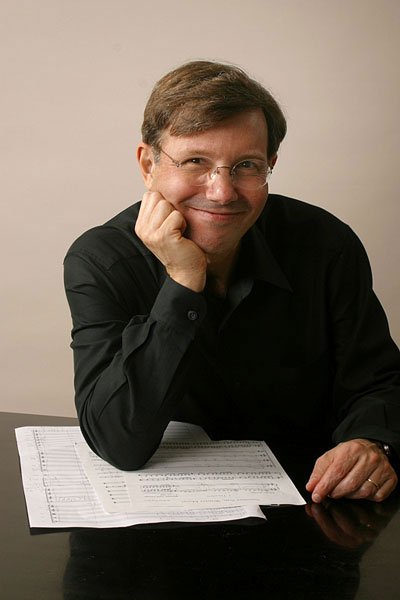
    The Princeton Festival continues, as commentator Rob Kapilow, host of the popular radio show “What Makes It Great?,” explores Franz Schubert’s String Quartet in D minor, “Death and the Maiden.” Kapilow will deconstruct key passages from the piece with live musical illustrations, to reveal what makes the music so extraordinary. On the second half of the program will be a complete performance of the work by the Signum Quartett. Tonight’s event is presented in partnership with WWFM – The Classical Network, and will be broadcast live at 89.1 FM and wwfm.org.

    “Death of the Maiden” stands near the pinnacle of the Romantic string quartet repertoire. If you’re an ardent Schubertophile, you’ll also want to be on hand for tomorrow evening’s concert, which will round out a complete cycle of the composer’s late quartets, with the Signum playing both the “Rosamunde” and the monumental Quartet in G major. Both concerts, tonight and tomorrow, will begin at 7 pm.

    This year, nearly all festival events take place in a specially-constructed outdoor 10,000 square foot state-of-the-art performance tent on the grounds of Morven Museum & Garden on Route 206 (55 Stockton Street), not far from the Princeton Battle Monument.

    Drop by early, before this evening’s concert to enjoy empanadas, available for purchase from the Hotpanada truck. Tables and chairs will be available for picnicking, or bring your own blanket.

    Tomorrow, enjoy a preconcert talk by Schubert scholar Charles Fisk of Wellesley College, who will chat about Schubert’s later years, with a special emphasis on the final quartets. The talk will take place at Morven’s Stockton Education Center, located on the grounds, at 5 pm.

    For Schubert, of course, “late” came early, as he died in 1828 at the age of 31. His productivity, and the depth and range of his music, is staggering.

    The Princeton Festival runs through June 25, with musical events in a variety of genres presented every evening: opera, jazz, cabaret, musical theater, chamber music, classical and Broadway pops. Baroque music concerts will be presented across the street at Trinity Episcopal Church.

    Indulge in free pre-concert talks, a poetry workshop, an on-site bar, and abundant lawn space at Morven for picnicking prior to the concerts. For a complete schedule, visit princetonsymphony.org/festival.

    Direct link to tickets for tonight’s concert

    https://princetonsymphony.org/performances/what-makes-it-great/2022-06-13

    With the balance of the quartet cycle tomorrow evening

    https://princetonsymphony.org/performances/schuberts-late-string-quartets/2022-06-14


    Signum in concert with “Death and the Maiden”

    Empanadas in the truck from Hotpanada

    https://hotpanada.com/

  • Górecki’s Fourth: A Tansman Tribute

    Górecki’s Fourth: A Tansman Tribute

    A performance of his Symphony No. 3 sold over a million copies, making it one of the best-selling classical records of all time.

    This Sunday night on “The Lost Chord,” we’ll hear the last major work by Polish composer Henryk Górecki – his Symphony No. 4, subtitled “Tansman Episodes.” The piece was written in tribute to his compatriot, Alexandre Tansman, who lived most of his life in Paris. Górecki was cajoled into writing the work by the organizer of an annual Tansman Festival, held in Łódź, the city of Tansman’s birth.

    The astounding success of his Symphony No. 3 was actually a source of consternation for Górecki. The celebrity and scrutiny thrust upon him had the effect of disrupting his routine and stirred up anguish about his future path. Remember, the Symphony No. 3 was composed in 1976. Most of the world had never even heard of Górecki before he skyrocketed to fame in 1992. That was the year that Nonesuch Records released its recording, which featured soprano Dawn Upshaw, and was conducted by David Zinman. However, in the 16 years or so between the work’s composition and its sudden, staggering popularity, Górecki had understandably moved on and continued to develop as an artist.

    The sudden recognition caused him, rather Sibelius-like, to agonize over his next symphony. The work wasn’t completed in short score until 2006. The composer died in 2010 without having orchestrated the piece. However, he did leave indications of his intentions and had played through the work at the piano for his son, Mikolaj Górecki, also a composer. It was Mikolaj who took up the task of fleshing it out into full score following his father’s death.

    The symphony was given its first performance on April 12, 2014, by the forces we’ll hear, the London Philharmonic Orchestra conducted by Andrey Boreyko, in its world premiere recording.

    Rather than reference any of Tansman’s actual music, Górecki decided to play on the letters of the composer’s name, devising a musical cipher made up of corresponding notes to act as a recurring theme. In the second movement, he also quotes Karol Szymanowski’s “Stabat Mater.” There are passing references to Stravinsky and John Adams in the work, as well, and an appearance by Wagner’s “Siegfried” theme toward the end. In general, he trades the mesmerizing lyricism of his Third Symphony for a more aggressive brand of minimalism in his Fourth.

    I thought we’d preface Górecki’s symphonic tribute with some music by Tansman himself, who was born on this date 125 years ago. We’ll hear the “Partita for Cello and Piano,” written in 1954 and 1955 for the famed Spanish cellist Gaspar Cassadó. It will be performed by the Cracow Duo – Kalinowski & Szlezer, Jan Kalinowski, cello, and Marek Szlezer, piano.

    I hope you’ll join me for “Repeating Episodes” – Henryk Górecki’s Symphony No. 4 “Tansman Episodes,” etc. – this Sunday night at 10:00 EDT, on WWFM – The Classical Network and wwfm.org.


    POLE POSITIONS: Alexandre Tansman (left) and Henryk Górecki

  • Princeton Record Exchange Film Score Haul

    Princeton Record Exchange Film Score Haul

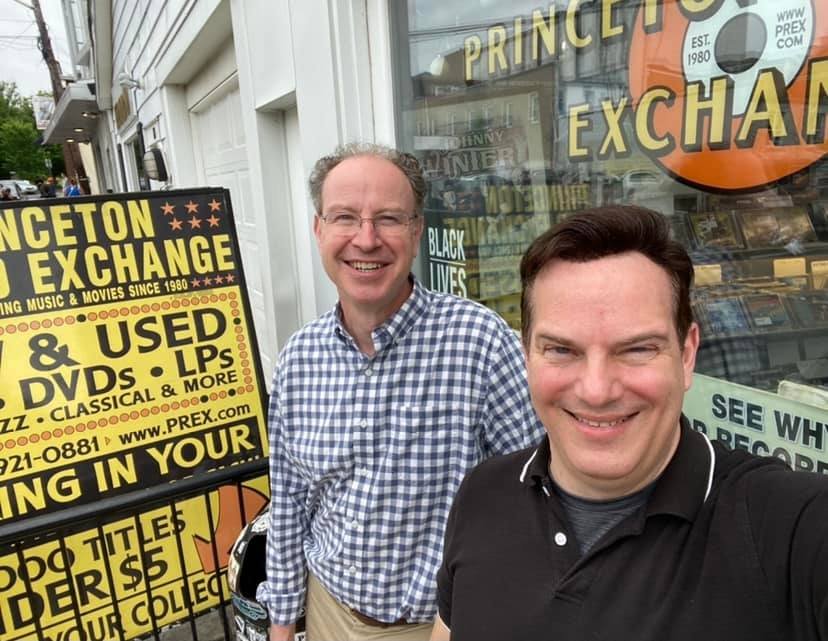
    Roy made the trek down to Princeton yesterday. I showed him around the town and campus and introduced him to Princeton Record Exchange, the Holy of Holies for savvy record collectors. Even just to get through the classical music section can sometimes take me a couple of hours, if I comb through everything, so there’s often little energy left to check out the other sections.

    Yesterday, even though I felt the perspiration beading on my forehead, I deliberately didn’t look too closely as we passed through. However, I had to fight hard not to grow roots when I happened to glance at the soundtracks and noticed a mother lode of classic film scores!

    Not wanting to waste our time together, I came back later and cleaned the place out. I filled up a bag with Max Steiner, Franz Waxman, Alfred Newman, Dimitri Tiomkin, David Raksin, Hugo Friedhofer, Victor Young, George Duning, Alex North, André Previn, Bronislau Kaper, Elmer Bernstein, Ernest Gold, Laurence Rosenthal, John Barry, Ron Goodwin, Ennio Morricone, Mario Nascimbene, Pino Donaggio, and Jerry Goldsmith (among others). I even found a suite from “The Skull” by Elisabeth Lutyens, some French scores for the films of Marcel Carné, and Alessandro Cicognini’s music for Kirk Douglas’ “Ulysses!”

    Roy, you’re my good luck charm!

  • Strauss’ Whipped Cream Ballet A Sweet Birthday Treat

    Strauss’ Whipped Cream Ballet A Sweet Birthday Treat

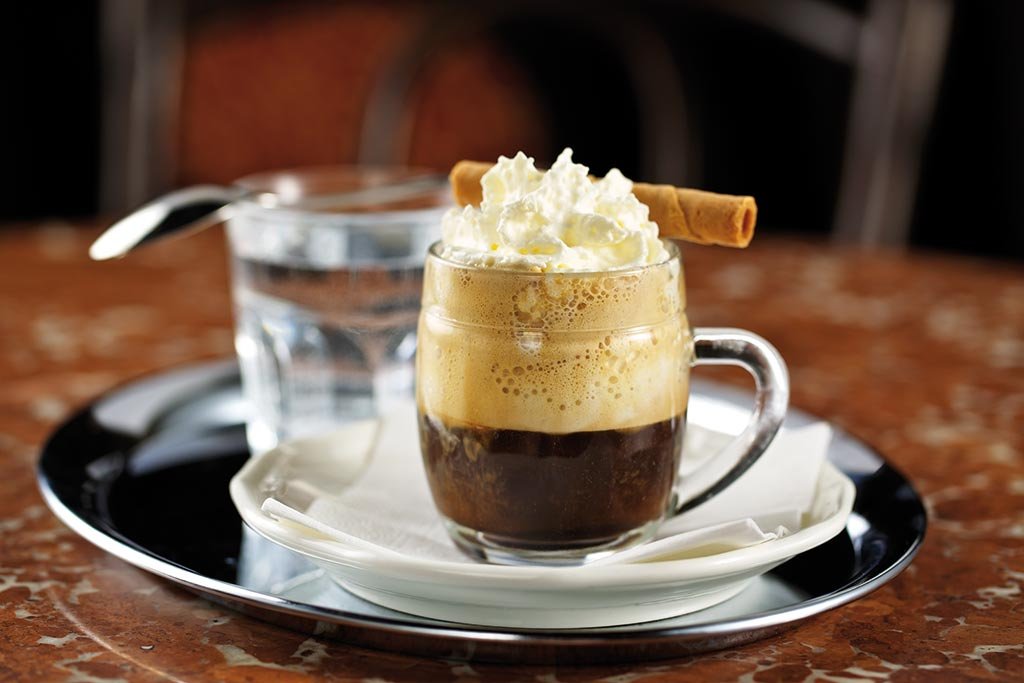
    On Richard Strauss’ birthday, enjoy a coffee break with his frothy ballet “Schlagobers” (“Whipped Cream”).

    Blog reflections on “Schlagobers”

    IT’S SCHLAGOBERS!!

    Caffeine-induced teaser for an American Ballet Theatre production

    Not to be confused with…

Tag Cloud

Aaron Copland (94) Beethoven (95) Composer (114) Film Music (151) Film Score (143) Film Scores (255) Halloween (103) John Williams (198) KWAX (233) Leonard Bernstein (105) Marlboro Music Festival (125) Movie Music (166) Mozart (91) Opera (217) Philadelphia Orchestra (91) Picture Perfect (174) Princeton Symphony Orchestra (110) Radio (90) Ross Amico (244) Roy's Tie-Dye Sci-Fi Corner (290) The Classical Network (101) The Lost Chord (269) Vaughan Williams (107) WPRB (397) WWFM (881)

DON’T MISS A BEAT

Receive a weekly digest every Sunday at noon by signing up here


RECENT POSTS