Cue the Queen soundtrack (on vinyl, of course) and join us as we discuss the Dino De Laurentiis cult classic “Flash Gordon” (1980).
We’ll talk about Flash’s colorful history, from Alex Raymond’s hit comic strip, to the fondly-remembered Buster Crabbe serials, to an unsuccessful early attempt by George Lucas to obtain the rights, so that he could direct a feature film. (Poor George had to create “Star Wars” instead.)
And of course, we’ll extensively fetishize the movie itself, which at times plays like “The Wizard of Oz” on mushrooms. With a campy script by Lorenzo Semple Jr., an unlikely director (Mike Hodges of “Get Carter”), and lurid set and costume design by Fellini favorite Danilo Donati, “Flash” is the film “Barbarella” only wishes it could be.
Max von Sydow, Brian Blessed, Timothy Dalton, Topol, Ornella Muti, Mariangela Melato, Peter Wyngarde, and any number of familiar faces from sci-fi and fantasy films of the ‘70s and ‘80s join a buff, gee-whiz Sam J. Jones as Flash – now a quarterback for the New York Jets (because a Yale-educated polo-player is just too effete?) – and Melody Anderson as Dale Arden.
Jon Haag will be our guest on the next Roy’s Tie-Dye Sci-Fi Corner for a colorful celebration of this gaudy, fleet-footed mash-up of art deco and pop art. Go, Flash, go! Lashes and bore worms will be dispensed in the comments section, when we livestream on Facebook, this Friday evening at 7:00 EST!
Kharkiv’s opera house and neighboring Philharmonic have been shelled. The opera house in Odessa is behind sandbags.
Of course, these are centers of leisure. They are not residences or hospitals or schools or marketplaces. Their loss may seem insignificant beside atrocity, misery, and mounting loss of life.
But as centers of culture, they are also powerful symbols, as culture is the very opposite of war. It implies cultivation, provides inspiration, and celebrates aspiration. It embodies the highest ideals, the very apex of what separates civilization from barbarity. When the opera houses are going full-steam, the only strife is on-stage. Okay, and maybe a little backstage.
But a strike on “Freedom” Square? Seriously? The next thing you’re going to tell me is that they’ve shelled Babi Yar.
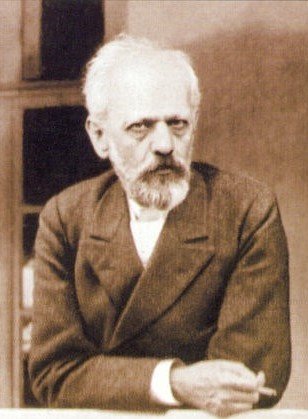
Chopin’s music may go right to the heart, but did you know that when the composer died, his heart went right to Poland?
Chopin had lived in exile in Paris since he arrived there in 1831 and became one of its most celebrated pianists; this in a city teeming with great pianists (including Chopin’s friend and rival, Liszt).
For most of his life, Chopin struggled against poor health. When he sensed his impending death in 1849, he made the request of his sister, Ludwika Jędrzejewicz, that his heart be removed from his corpse and transported back to the land of his birth.
Ludwika complied, smuggling her brother’s heart under her cloak in a jar full of booze (probably cognac), and delivering it to Holy Cross Church in Warsaw. The heart is now immured there in a pillar. A decorative monument to the composer soon became a rallying point for Polish nationalists.
During World War II, understanding the significance of Chopin as a source of national pride, the Nazis stole the heart (paging Indiana Jones!), but it was returned after the war and reinterred.
At Chopin’s funeral in Paris, Mozart’s Requiem was played, as were Chopin’s own Preludes No. 4 in E minor and No. 6 in B minor. His body was buried in Père Lachaise Cemetery. At his graveside was heard the famous and now-hackneyed “Funeral March” from his Piano Sonata No. 2, in an orchestration by Napoléon-Henri Reber. The plinth on his grave is capped by a statue of Euterpe, muse of music, weeping over her broken lyre.
Mozart’s Requiem has been performed annually at Holy Cross Church, per the composer’s request, as part of a solemn mass conducted every year on the anniversary of his death, October 17. The International Chopin Piano Competition also takes place during this time.
While the ultimate cause of Chopin’s early demise (at 38) has been the subject of speculation – his death certificate reads tuberculosis, but modern medicine has posited, among other things, cystic fibrosis, cirrhosis, and alpha-1 antitrypsin deficiency – an examination of Chopin’s preserved heart in 2014 (through the unopened jar) suggests the likely cause of his passing was a rare case of pericarditis indeed caused by complications of chronic tuberculosis.
To avoid risking a public outcry, the composer’s heart was exhumed by church officials, scientists, and medical experts under cloak of night. Their motive was no more sinister than ensuring that the container preserving the heart had not cracked. Happily, even though the patient appears to have died of tuberculosis, his heart remains in excellent health.
But enough about Chopin’s death. Let’s talk about his birth. Chopin was born on this date in 1810 – or was he? Chopin and his mom said so. However, his baptismal certificate, filled out on April 23, gives his natal day as February 22. The Chopin Society UK, in defiance of the composer and his family, is inclined to agree.
So it is that Chopin’s entrance into and exit from this world have been shrouded in mystery and mired in controversy. Moral of the story: don’t trust public records (at least in the 19th century)!
Happy birthday, Chopin.
Arturo Benedetti Michelangeli plays the Funeral March
Congratulations to Gemma New, now back on her home turf as principal conductor of the New Zealand Symphony Orchestra!
New is a familiar face here in New Jersey, thanks to her five-year stint as associate conductor of the New Jersey Symphony. Like her compatriot Edmund Hillary, she has been scaling mountains ever since, as resident conductor of the St. Louis Symphony Orchestra, principal guest conductor of the Dallas Symphony Orchestra, and music director of the Hamilton Philharmonic Orchestra in Hamilton, Ontario.
I saw her lead a concert at Richardson Auditorium here in Princeton in 2019, and her Sibelius 2nd was a knockout – an inspiring performance, with New, an unassuming presence off the podium, astonishingly authoritative, with a clean and confident baton technique.
I interviewed her in advance of the concert for the Trenton Times. Nice to see the article linked among the footnotes on her Wikipedia page. I think I broke the ice by being so well-versed in the music of Douglas Lilburn (New Zealand’s national composer).
Best wishes to Gemma New. Now on to the next peak!
What do you say about this fab-fashion free-association, with one go-go boot in “The Avengers,” and one calfskin glove in a fish bowl full of hallucinogens?
Roy and I grope our way through an elaborately booby-trapped funhouse during last night’s discussion of “The Final Programme” (1973). As always, the viewers toss us a rope, even as they yank the rug out from under us in the comments section. It’s all exquisitely-tailored jackets and altered states here:
Next time, we’re back to Friday, as we tackle another heavily design-driven film, Dino De Laurentiis’ primary-colored spectacle, after Alex Raymond’s classic comic strip, “Flash Gordon” (1980). Sam J. Jones and Melody Anderson are bolstered by a flamboyant supporting cast, including Brian Blessed, Timothy Dalton, Topol, Ornella Muti, Mariangela Melato, Peter Wyngarde, and Max von Sydow – the best possible choice in resurrecting Ming the Merciless. Oh yes, and the music is by Queen!
Our special guest will be Jon Haag, whose lair is an amorphous catacomb of sci-fi and ‘70s pop culture memorabilia. If you haven’t thought about something for 50 years, chances are The Haag has it.
“Flash,” like “Superman” and “Popeye,” came along at a time when big budget, big screen adaptations of two-dimensional comic heroes was still a fresh idea. Its legacy proved to be no flash in the pan.
We strike an uneasy alliance on Mongo, on the next Roy’s Tie-Dye Sci-Fi Corner. Camp it up in the comments section, as we livestream on Facebook, this Friday evening at 7:00 EST!