Category: Daily Dispatch

  • René Clemencic Early Music Pioneer RIP

    René Clemencic Early Music Pioneer RIP

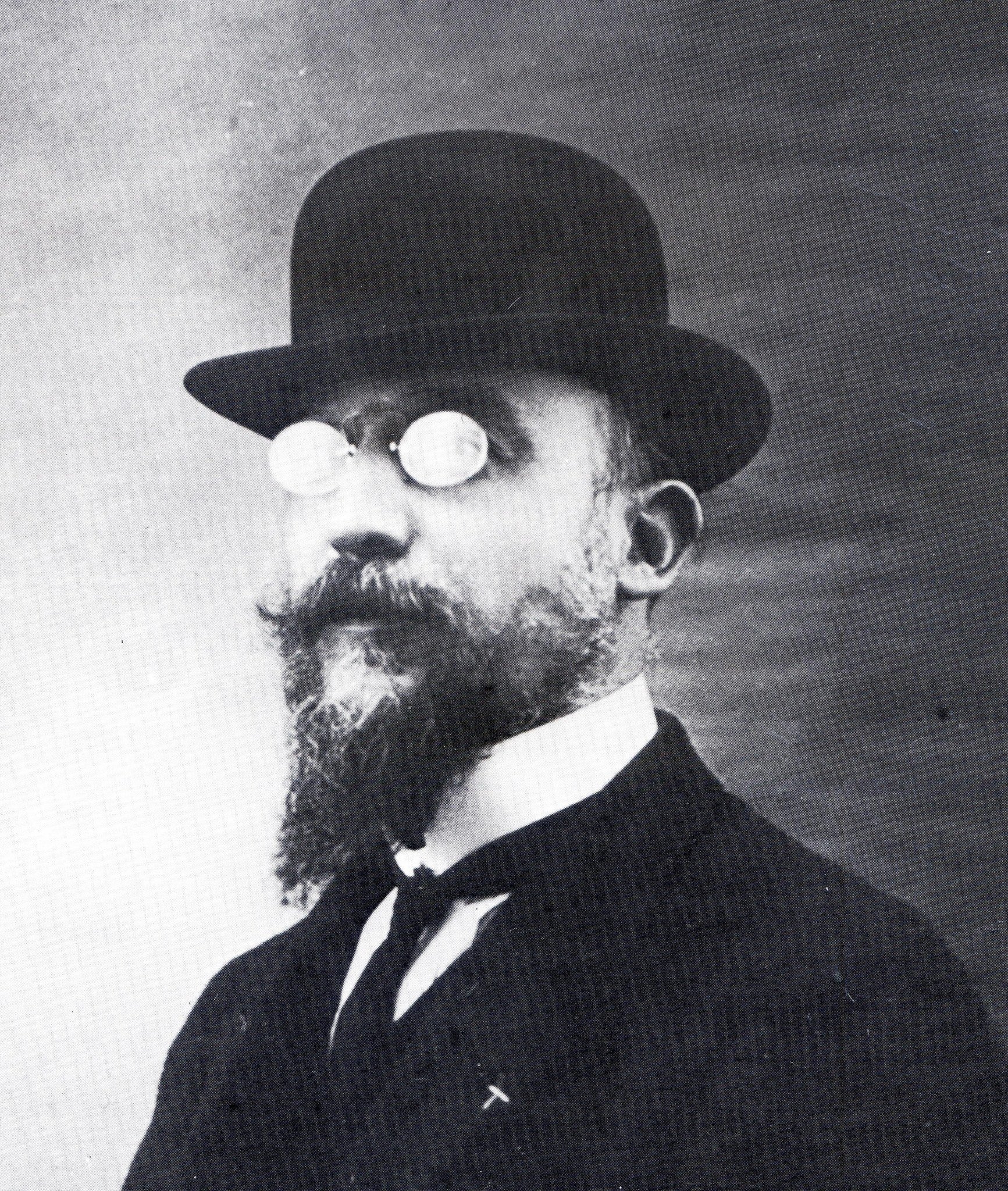
    An unfortunate consequence of living to a ripe age is that after a sustained period of retirement people tend to assume you are long-gone. Such is the case with René Clemencic, whom, I am stunned to learn, died only days ago at the age of 94. For all I know, he could have still been active until comparatively recently, but I have not seen any new recordings for decades.

    A true blast from the past, then, Clemencic was a major player from the infancy of the modern HIP (historically informed performance) movement. In 1958, he created Musica Antiqua with the purpose of resurrecting music of the Middle Ages and Renaissance on period instruments. A decade later, he founded the Clemencic Consort. His recordings on the Harmonia Mundi label now seem as ancient as the music he championed. The style is at times a little heavier, a little thicker than we’ve become used to in this particular repertoire. Still, there’s no denying the quality of the musicianship. And who can really say for sure what performance sounded like in the Middle Ages anyway?

    Interestingly, in addition to being a musicologist, a conductor, and a talented performer – with a mastery of the recorder, clavichord, and harpsichord – Clemencic was also a composer. In fact, with a well-rounded education and broader interests in art and philosophy, he was something of a renaissance man himself.

    I am happy to learn he seemed to have enjoyed life. He could have picked no better time to depart it than March, which is, after all, Early Music Month. R.I.P.

    https://www.archyworldys.com/early-music-specialist-rene-clemencic-died-kurier-at/

    A more extensive biography from his website

    http://www.clemencic.at/en/frbiography.html

    A favorite Clemencic album of old Hungarian dances

    https://www.youtube.com/watch?v=VsyDsydQxiU

    Centuries before Carl Orff, the roots of “Carmina Burana”

    Something entirely new to me, Clemencic’s opera “Gilgamesh”

  • Ukrainian Composers on WUSB Radio Today

    Ukrainian Composers on WUSB Radio Today

    Phil Merkel of Captain Phil’s Planet has been very kind in inviting me onto his radio show this afternoon on WUSB – the radio station of Stony Brook University – to talk a bit about composers and musicians of Ukraine.

    So I’ll be dropping by around 3:30/3:40 EST. Maybe we’ll even get to enjoy some music by Valentin Silvestrov and Mikola Lysenko. This is free-form radio, mind you, so if you tune in a little early, you might get an earful of Ukrainian metal! (It’s primarily a prog rock show.)

    Then stick around! At 4:00, Roy Bjellquist will join us to help drum up interest in tomorrow night’s program of classic television themes on our Facebook livestream, Roy’s Tie-Dye Sci-Fi Corner.

    Just putting it out there, in case you’re interested. You’ll get to hear us babble about music a bit. Maybe you’ll even have your interest piqued, so that you’ll want to check out some of the composers and performers who have contributed to making Ukraine such a rich cultural resource.

    Follow the link, and click on the little silver button at the upper left-hand side of the screen, beneath the station’s call letters:

    https://www.wusb.fm/

  • Classic TV Theme Song Singalong This Friday!

    Classic TV Theme Song Singalong This Friday!

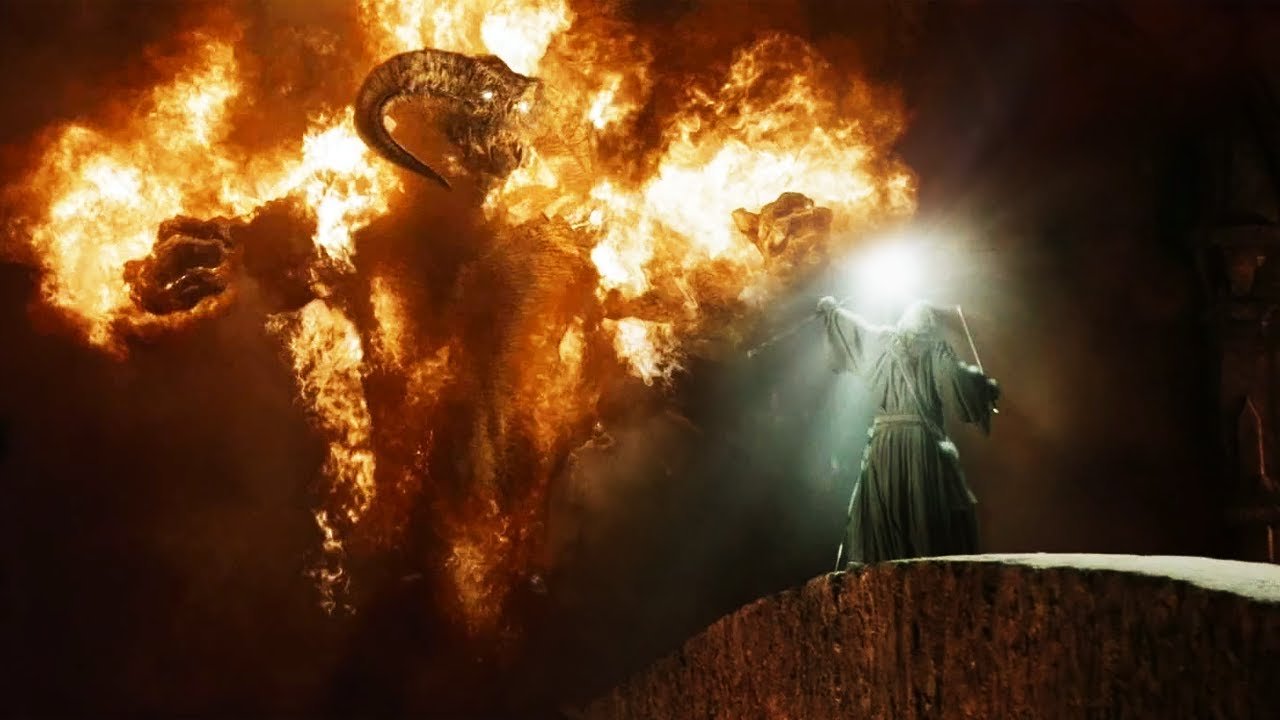
    This week on “Roy’s Tie-Dye Sci-Fi Corner,” there’s no homework for you, the viewer, as we’ll be playing to your innate knowledge of classic television themes.

    Roy and I have been busy assembling 20 of our favorites, taking into account viewer suggestions, and tomorrow night we’ll let slip the dogs of war. At least until Facebook A.I. shuts us down! Be advised that, for copyright reasons, there’s every possibility this show, if completed, will not be available from the archive. So it’s a matter of be there, or be square!

    Seemingly a lost art, the classic television theme is an elusive balance of melody, tone, and insistent memorability, serving as a kind of mini-overture, casting its spell in a minute or less – in the hope of reeling a prospective audience into the show and insidiously boring into its consciousness.

    Where are the Twilight Zones? The Hawaii Five-Os? The Bonanzas of yesteryear?

    Why, on Roy’s Tie-Dye Sci-Fi Corner, of course! Sing along in the comments section, when we livestream on Facebook, this Friday evening at 7:00 EST!

    https://www.facebook.com/roystiedyescificorner

  • Conrad Janis Mork & Mindy’s Dad Dies at 94

    Conrad Janis Mork & Mindy’s Dad Dies at 94

    It’s sobering to note how someone’s long and varied career can be distilled to a single credit – the father on “Mork & Mindy.”

    Conrad Janis has died at the age of 94.

    On “Mork & Mindy,” the television series that launched Robin Williams and co-starred Pam Dawber, Janis played Mindy’s dad, the owner of a music shop in Boulder, CO (and eventually conductor of the Boulder Symphony Orchestra). If I remember correctly, he had a marked preference for Igor Stravinsky.

    In real life, in addition to being a prolific actor for stage and screens (big and small), Janis was a jazz trombonist. In that capacity, he recorded, he appeared on “The Tonight Show,” and he played Carnegie Hall.

    I always found it most fascinating that he once assembled a team of jazz legends, all the way back in 1949, that included New Brunswick’s own James P. Johnson. Johnson, a pioneer of stride piano, composed what essential became the anthem of the 1920s, the “Charleston.” How short is history, anyway?

    If you want to get a taste of Janis the musician, here’s a great interview:

    https://musicguy247.typepad.com/my-blog/2015/08/conrad-janis-jazz-trombone-actor.html

    In 2018, at the age of 90, participating in an oral history for the NAMM Foundation (National Organization of Music Merchants)

    https://www.namm.org/library/oral-history/conrad-janis

    On the Jerry Lewis MDA Labor Day Telethon in 1984

    From 1952, Conrad Janis and His Tailgate Band

    https://www.youtube.com/watch?v=zRBQTq7RIc0

    James P. Johnson plays the “Charleston” in 1923 (presumably from a piano roll)


    PHOTOS: Conrad Janis, with (center right) Jonathan Winters on “Mork & Mindy” and (bottom right) Henry Goodwin on trumpet, Edmond Hall on clarinet, James P. Johnson on piano, and Pops Foster on bass

  • Samuel Barber: Rare Recordings & Insights

    Samuel Barber: Rare Recordings & Insights

    It is one of those things that would seem to go without saying, yet it should not be taken for granted – the blessing, as the 20th century progressed, of just how much recorded material exists relating to our great composers. Imagine what it would have been like to have had this kind of access to a conversational Brahms or Liszt.

    On the anniversary of his birth, here is Samuel Barber from 1978, speaking with WQXR’s Bob Sherman, prior to the premiere of the composer’s “Third Essay for Orchestra” with the New York Philharmonic. The conversation is punctuated by interesting recordings, including one of Pierre Bernac singing Barber’s “Mélodies passagères” – in French – with Francis Poulenc at the piano. Barber reveals that he acted as page-turner during the recording. Also, he mentions that he was originally expected to go to Princeton!

    https://www.wqxr.org/story/samuel-barber/

    The same interview, without ads for Scientific American (the program’s sponsor), but transferred at a lower level of sound:

    The “Third Essay for Orchestra,” the piece that would receive its premiere only a few days later:

    During the interview, Barber also teases the anticipated debut of a Concertino for Oboe, also with the New York Phil, a work that sadly never came to pass. This gorgeous “Canzonetta,” which would have served as the piece’s slow movement, is all that was released. It would be Barber’s final composition. The performance here is by Humbert Lucarelli and the now-defunct Lehigh Valley Chamber Orchestra.

    Here’s an earlier broadcast, from 1958, an intermission feature of the New York Phil, with Barber and James Fassett, the composer talking about his new orchestral work, “Medea’s Meditation and Dance of Vengeance,” distilled from the ballet for Martha Graham:

    Finally, Barber and composer Gian Carlo Menotti shared a home in Mount Kisco, New York, from 1943 to 1972. The two had met as students at the Curtis Institute of Music in Philadelphia. Menotti would serve as librettist for Barber’s Pulitzer Prize winning opera “Vanessa.” He later worked to rehabilitate Barber’s “Antony and Cleopatra” after its disastrous 1966 premiere at the grand opening of the new Metropolitan Opera House at Lincoln Center. Both composers were two-time Pulitzer Prize winners. Menotti talks about Barber, ten years after their split (the two remained friends), at Curtis in 1980:

    If you’re a Barberophile, you’ll also want to check out H. Paul Moon’s award-winning documentary, “Samuel Barber: Absolute Beauty.” You can view the trailer here:

    https://samuelbarberfilm.com/

    Thankfully, one of America’s most celebrated composers is so well-documented. Happy birthday, Samuel Barber!


    PHOTO: A road trip with (left to right) Aaron Copland, Samuel Barber, and Gian Carlo Menotti

Tag Cloud

Aaron Copland (93) Beethoven (95) Composer (114) Film Music (136) Film Score (143) Film Scores (255) Halloween (94) John Williams (195) KWAX (229) Leonard Bernstein (103) Marlboro Music Festival (125) Movie Music (151) Mozart (88) Opera (207) Philadelphia Orchestra (89) Picture Perfect (174) Princeton Symphony Orchestra (108) Radio (88) Ross Amico (244) Roy's Tie-Dye Sci-Fi Corner (290) The Classical Network (101) The Lost Chord (268) Vaughan Williams (103) WPRB (396) WWFM (881)

DON’T MISS A BEAT

Receive a weekly digest every Sunday at noon by signing up here


RECENT POSTS