Category: Daily Dispatch

  • Happy Lunar New Year Music & Spring!

    Happy Lunar New Year Music & Spring!

    新年快乐 / 新年快樂
    Happy Lunar New Year!

    Tomorrow, the Groundhog has his say – but for today, the Tiger says it’s spring!

    Li Huanzhi, “Spring Festival Overture”
    https://www.youtube.com/watch?v=iakMJSZ2t_g

    Sun Yi Qian, “Spring Dance”

    Chen Yi, “Chinese Ancient Dances: Ox Tail Dance”

    Ma Sicong, “Spring Dance”

    Masked medley

    Happy New Year from the TENG Ensemble

  • Philip Glass Birthday Arpeggios & More

    Philip Glass Birthday Arpeggios & More

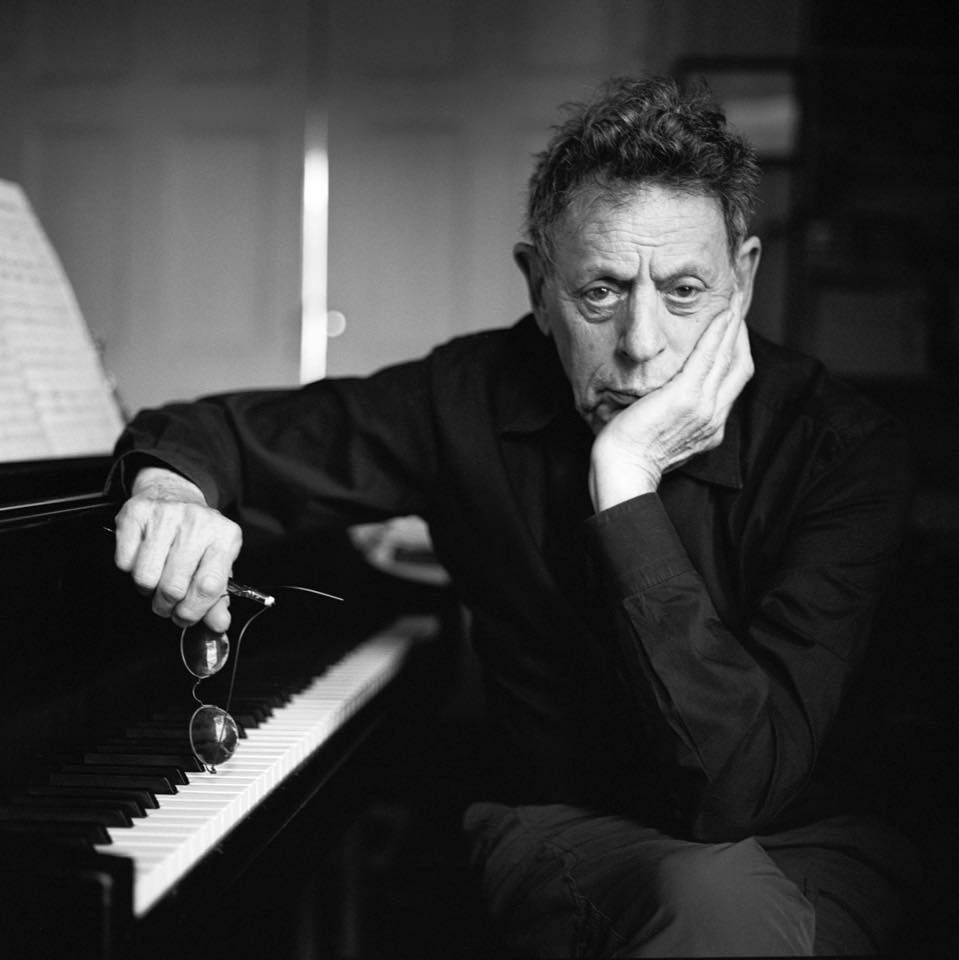
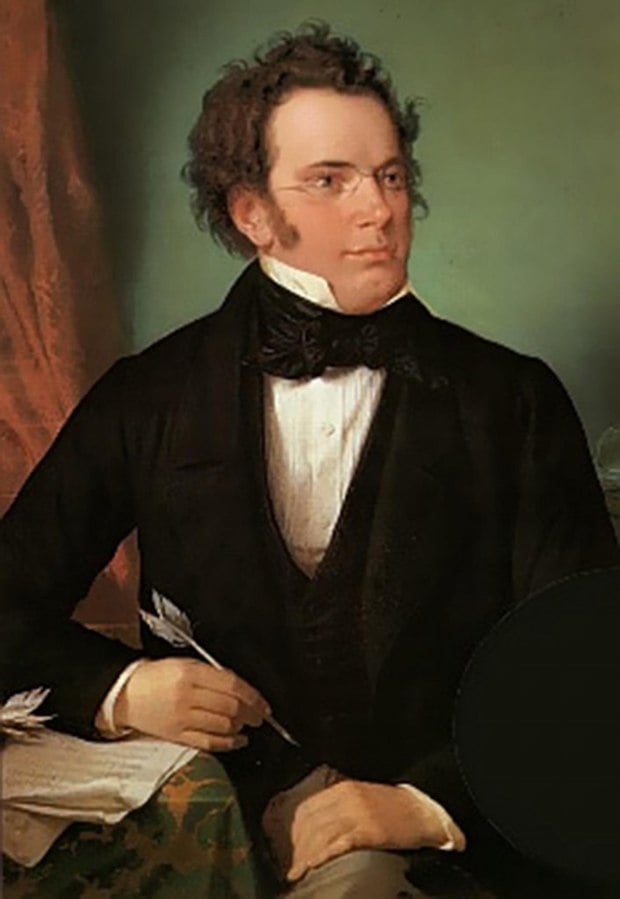
    From the arpeggione to arpeggios! Not only is today the anniversary of the birth of Franz Schubert, it’s also the 85th birthday of Philip Glass. Regardless of what you may think of Glass’ music, you’ve got to hand it to a composer who’s managed to stay relevant for the past half century or so. Here are some links to a few of my favorites.

    String Quartet No. 5

    Violin Concerto (now the Violin Concerto No. 1)

    “Modern Love Waltz,” arranged by Robert Moran, who enlisted Glass to join “The Waltz Project,” which culminated in an album for Nonesuch Records.

    The two composers also collaborated on an opera, “The Juniper Tree,” after the Brothers Grimm

    Glass’ “Akhnaten” at the Met, with Princeton University graduate Anthony Roth Costanzo – and jugglers!

    “Composing Myself: Philip Glass”

    https://www.youtube.com/watch?v=uqJ10fkznv4

    A conversation with Philip Glass

  • Schubert’s Arpeggione Sonata Rediscovered

    Schubert’s Arpeggione Sonata Rediscovered

    In honor of Franz Schubert’s birthday, I reserve the right to harp on the arpeggione.

    If you’re not familiar with the arpeggione (and who is these days?), it was an instrument invented around 1823. It possessed six strings and was fretted and tuned like a guitar, but was played with a bow, like a cello.

    Schubert’s “Arpeggione Sonata,” composed in 1824, didn’t see publication until 1871 – 43 years after the composer’s death in 1828. (Schubert died at the age of 31.) The only substantial work written for the instrument, Schubert’s sonata wasn’t recognized until long after the arpeggione had already slipped into obscurity. These days, Schubert’s sonata is almost always performed on the cello.

    Here’s a recording that presents the piece as Schubert originally intended, with Klaus Storck playing a rare surviving specimen, an arpeggione attributed to Anton Mitteis, pupil of the instrument’s inventor, Johann Georg Stauffer. Anton Kontarsky plays a Brodmann fortepiano built in Vienna around 1810.

    And here it is in concert, in the form it’s usually heard today, with cellist Mischa Maisky and pianist Martha Argerich.

    However it is you prefer your “Arpeggione Sonata,” Schubert’s message transcends the medium.

    Happy birthday, Franz Schubert!

  • Danish Classical Music From Dacapo Records

    Danish Classical Music From Dacapo Records

    Dacapo Records, the self-described “Danish National label,” was founded in 1989 to promote the classical music of Denmark. Danish music composed over a period of a thousand years forms the core of the Dacapo discography. This Sunday night on “The Lost Chord,” I hope you’ll “Dane” to join me for representative works by Emil Reesen and Asger Hamerik.

    Reesen made his mark in ballet, opera, and film score. He was also a concert pianist, who studied with Siegfried Langgaard, a pupil of Franz Liszt. In 1927, he was appointed conductor of the Danish Radio Symphony Orchestra. In 1931, he also began work as a ballet conductor at the Royal Danish Theatre. Later in life, he conducted the Vienna Symphony and made recordings with the Berlin Philharmonic.

    Reesen is probably best-known for his operetta “Farinelli.” We’ll hear his “Variations on a Theme by Franz Schubert” (on the eve of Schubert’s birthday), from 1928.

    Asger Hamerik studied at home with J.P.E. Hartmann and Niels Wilhelm Gade, in Berlin with Hans von Bulow, and in Paris with Hector Berlioz. Berlioz would remain a lasting influence, as would Dukas and Franck.

    Hamerik went on to serve as director of the Peabody Institute in Baltimore for over a quarter century (1871-98). Many of his large-scale orchestral works were first performed by the Peabody orchestra.

    He returned to Denmark in 1900. In his lifetime, he was considered the best-known Danish composer after Gade. (Things changed in a hurry with the rise of Carl Nielsen.)

    We’ll hear his final symphony, the Symphony No. 7 – the “Choral” Symphony – from 1897, a work that drew comparisons to the works of Mahler for its sheer size. Its first performance in Baltimore employed hundreds of musicians.

    I hope you’ll join me, as Danish music makes its mark this week, on “Denmarketing” – recordings from the Dacapo Records catalogue – this Sunday night at 10:00 EST, on WWFM – The Classical Network and wwfm.org.


    BONUS: Emil Reesen conducts the “Dance of the Cockerels” from Nielsen’s “Maskarade”

  • Tyrone Power Swashbucklers Alfred Newman’s Film Scores

    Tyrone Power Swashbucklers Alfred Newman’s Film Scores

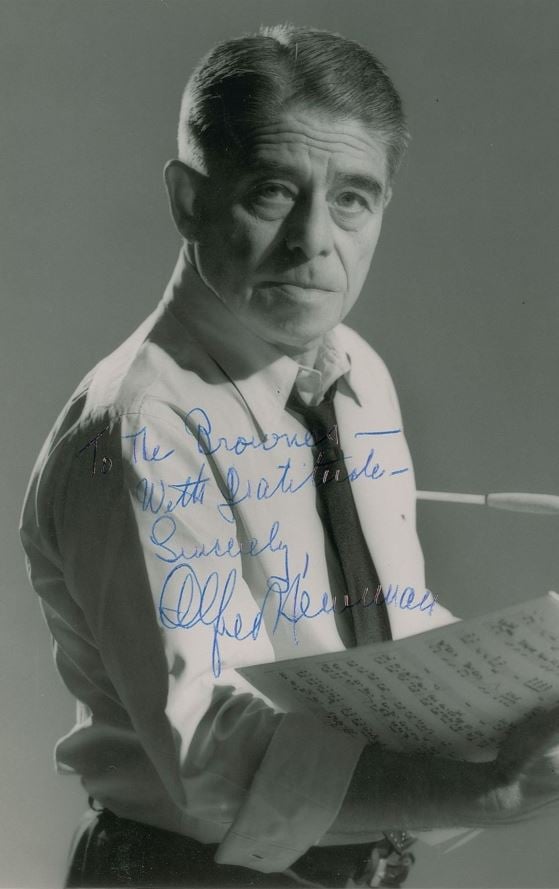
    This week on “Picture Perfect,” experience the Power of Alfred Newman – TYRONE Power, that is. It’s all music from Power swashbucklers made at 20th Century Fox, where Newman served as music director for 20 years.

    “Captain from Castile” (1947) was one of Power’s most opulent vehicles. Based on the novel by Samuel Shellabarger, the film relates Pedro de Vargas’ escape from persecution at the hands of the Inquisition and his accompaniment of Hernán Cortéz in the conquest of Mexico. Also starring Jean Peters and Cesar Romero (as Cortéz), the film capitalizes on the happenstance of a real-life erupting volcano. The climactic march, known as “Conquest,” went on to become one of Newman’s greatest hits. It’s entered the marching band repertoire and has been recorded many times.

    “The Black Swan” (1942) costars Maureen O’Hara and Laird Cregar (as Henry Morgan). Also, if you ever wanted to see George Sanders in a red beard, then this is the movie for you. This time the source material is a novel by Rafael Sabatini, who also created “Captain Blood,” “The Sea Hawk,” and “Scaramouche.”

    Of course, it was “The Mark of Zorro” (1940) that solidified Power’s reputation as 20th Century Fox’s resident swashbuckler. In its own way, the remake manages to match the delights of Douglas Fairbanks’ 1920 original, which was one of the silent era’s most thrilling adventures.

    Finally, it’s back to Shellabarger for “Prince of Foxes” (1949). This time, the setting is the Italian Renaissance. Orson Welles is Cesare Borgia, with an oddly cast Everett Sloane playing an assassin. Sloane was a veteran of Welles’ Mercury Theatre. You may remember him as Mr. Bernstein from “Citizen Kane,” or perhaps from the famous funhouse finale from “The Lady from Shanghai.”

    It’s interesting that all of the films represented this week were inspired by books. (Zorro was introduced in “The Curse of Capistrano” by Johnston McCully.) It was another day, as they say.

    I hope you’ll join me for music by Alfred Newman, written for the swashbucklers of Tyrone Power, on “Picture Perfect,” music for the movies, this Saturday evening at 6:00 EST, on WWFM – The Classical Network and wwfm.org.


    A fun reminiscence of Newman (“the best conductor who ever picked up a baton in Hollywood”) by composer David Raksin:

    https://ethoseducationonline.com/david-raksin-remembers-alfred-newman/

    PHOTOS: Catch a few Z’s with Al and Ty

Tag Cloud

Aaron Copland (93) Beethoven (95) Composer (114) Film Music (136) Film Score (143) Film Scores (255) Halloween (94) John Williams (195) KWAX (229) Leonard Bernstein (103) Marlboro Music Festival (125) Movie Music (151) Mozart (88) Opera (207) Philadelphia Orchestra (89) Picture Perfect (174) Princeton Symphony Orchestra (108) Radio (88) Ross Amico (244) Roy's Tie-Dye Sci-Fi Corner (290) The Classical Network (101) The Lost Chord (268) Vaughan Williams (103) WPRB (396) WWFM (881)

DON’T MISS A BEAT

Receive a weekly digest every Sunday at noon by signing up here


RECENT POSTS