Thanks to the support of listeners like you, we were able to make our 7-day goal of $70,000 yesterday, and the WWFM fall fund drive has concluded. Thank you again for your continued generosity! Here’s to a holiday season full of inspiring and cozy classics.
My movie music show, “Picture Perfect,” ordinarily broadcast on Saturdays at 6 p.m. EST, was to have been preempted this past week, because of fundraising obligations. But then we wound up making our quota for the day, and the show aired after all!
Due to the last-minute change in plans, the announcement wasn’t posted on Facebook until 6:00. I suspect very few people, beyond those actually listening to the station at the time, knew to tune-in in to be able to hear it.
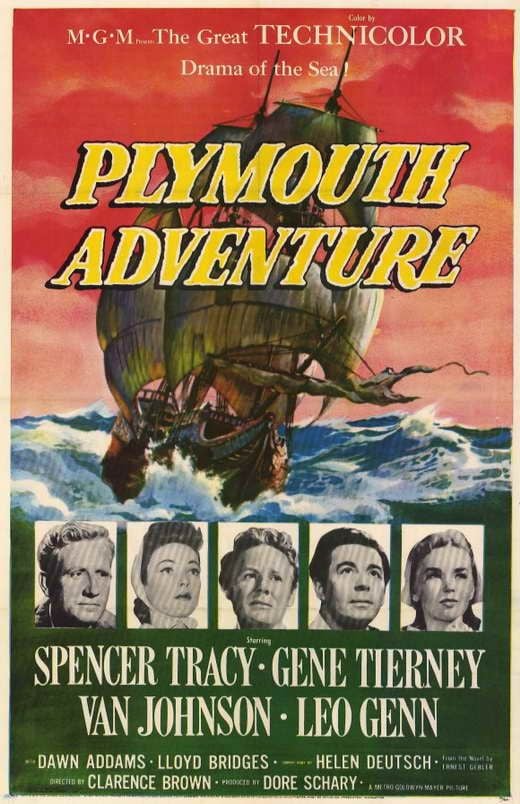
Therefore, here’s a link to the webcast, which might serve as an appropriate soundtrack to your Thanksgiving preparations. Enjoy selections from “Friendly Persuasion” (Dimitri Tiomkin), “Our Town” (Aaron Copland), “Plymouth Adventure” (Miklós Rózsa), and the building-the-barn sequence from “Witness” (Maurice Jarre). And if you’re so inclined, save me a piece of pie.
November 22 is St. Cecilia’s Day. Hail, bright Cecilia, the patron saint of music!
To coincide with this special day – a kind of musical Thanksgiving – The Classical Network will offer a GRAND FINALE to its fall fundraiser. You provide the fireworks; we’ll provide the music! Light up our skies with your contribution by calling us at 1-888-232-1212 or donating online at wwfm.org.
Every art can use a patron. Thank you for your support of great music on WWFM – The Classical Network!
When Malcolm Williamson was appointed Master of the Queen’s Music in 1975, Sir William Walton quipped that they had given the job to the wrong Malcolm.
Nevermind the fact that the other Malcolm, Sir Malcolm Arnold, could be something of a loose cannon. Alcoholism, promiscuity, manic-depression, possible bi-polar disorder. He once shot himself in the foot to get out of war service and attempted suicide several times. Still, he did manage to churn out much delightful music-to-order, often lickety-split and in an immediately accessible idiom. So who knows, maybe Arnold would have been a good choice.
Williamson, who would have been 90 years-old today, was always an establishment outlier. Born in Sydney, Australia, he arrived in England in his late teens. His antipodean origins led to sotto voce grumblings that his Royal appointment was but a utilitarian one, “cementing the cracks in the Commonwealth,” as Walton put it.
Whether or not a sense of alienation contributed to a kind of paralysis in the face of overwhelming pressure, Williamson developed an unfortunate reputation of being very bad with deadlines (and for that, he certainly has my sympathy). Most particularly, he failed to complete a symphony in time for the Queen’s Golden Jubilee in 1977. His ambitious “Mass for Christ the King,” also intended for the occasion, was also delivered late. Significantly, he was the first Master of the Queen’s (or King’s) Music in over a century not to be knighted.
Following the Jubilee debacle, his output slowed, though he was seldom unproductive. In all, he completed seven symphonies, concertos for piano, violin, organ, harp and saxophone, and numerous other orchestral, choral, chamber and instrumental works.
Williamson suffered from ill health in his later years. He too may have turned to the bottle to numb himself against stress and depression. However, those close to him assert that, at least toward the end of his life, he never drank, but rather struggled with aphasia, the effect of a series of strokes.
What’s certain is that he was the first non-Briton to be named Master. Following his death in 2003, the parameters of the appointment were revised. The position is no longer one for life, but rather a fixed, ten-year term. Sir Peter Maxwell Davies was the first to serve under the new guidelines. He was succeeded in 2015 by Judith Weir, the first woman to hold the post (and yes, she is still referred to as “Master”).
What’s puzzling is that, for someone with a reputation for being unable to meet deadlines, Williamson was able to write a fair amount of music for the cinema. The films were admittedly of varying quality. It’s always amusing to discover his name in the opening credits of Hammer productions like “The Brides of Dracula” and “The Horror of Frankenstein.” But it proves that he could write to order, and he could write very quickly, perhaps when he wasn’t under the microscope.
Now that the dust settled, it is the music he left us that’s important.
Happy birthday, Malcolm Williamson!
Williamson performs his attractive Piano Concerto No. 2
A rare recording of his Symphony No. 6
Ballet music from “The Display”
Orchestral excerpts from the opera “Our Man in Havana”
“With Proud Thanksgiving”
“Two Christmas Hymns”
“Lento for Strings”
Theme music for “The Brides of Dracula”
End credits for “The Horror of Frankenstein”
“Nothing But the Night,” starring Christopher Lee and Peter Cushing:
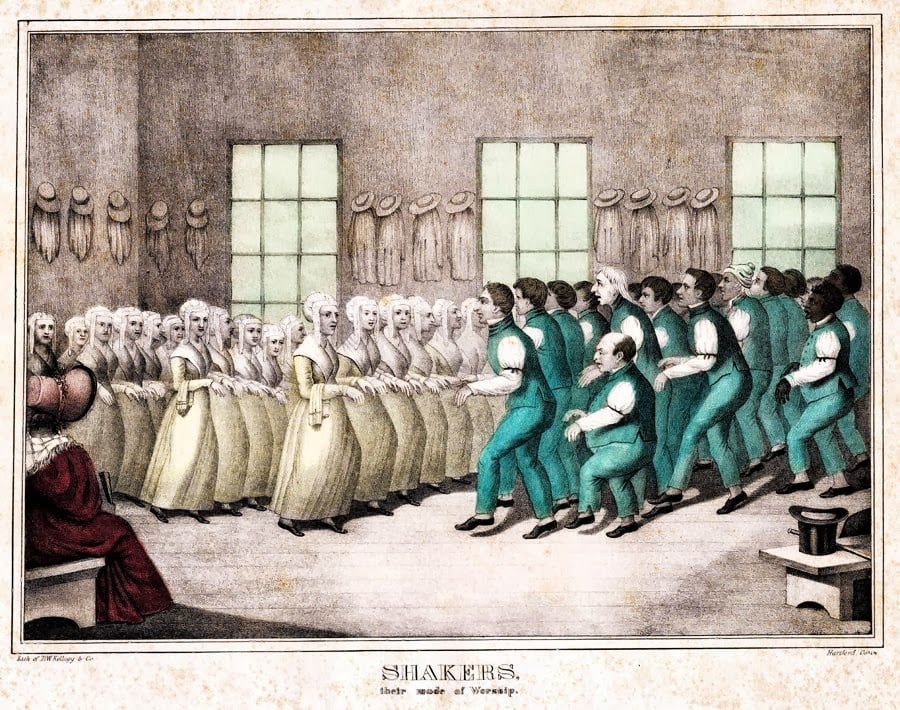
Classical music lovers are best acquainted with the Shakers by way of the hymn “Simple Gifts,” employed by Aaron Copland, of course, as the basis for a set of variations at the climax of his ballet “Appalachian Spring.” But the Shaker tradition predates Copland by nearly 200 years.
This Sunday night on “The Lost Chord,” we’ll hear ample selections from “Simple Gifts: Shaker Chants and Spirituals,” an unusual album of traditional Shaker melodies, spearheaded by Joel Cohen in 1995. With this remarkable project, Cohen sought to preserve music of the Shakers in somewhat authentic performances, augmenting his Boston Camerata and Schola Cantorum with members of the actual dwindling population of Sabbathday Lake, Maine, the last active Shaker community, established in 1783.
Music has always been an integral part of Shaker worship. There are over ten thousand songs extant. In Shaker society, musical revelation is considered a spiritual gift. As such, it was important to document these inspirations as they occurred. Since many of the scribes had no musical education, a system of notation reliant on letters of the alphabet evolved. These were often not positioned on a staff, and simple rhythmic values were employed. Lyrics sometimes involve syllables and words of unknown tongues.
The second half of tonight’s program will consist of “Shaker Loops,” a modern American classic by John Adams. This kaleidoscopic example of Minimalism was originally composed in 1978, as a four-part work for seven solo strings (three violins, one viola, two cellos, and double bass). It bears the influence of Adams’ early electronic experiments. On its surface, it may seem somewhat repetitive – each instrument assigned a loop of oscillations – but when heard simultaneously, the various strands are continually shifting. The resultant mesmeric quality neatly parallels the ecstatic writhings of the Shakers.
The work falls into four movements, flowing into one another without break: “Shaking and Trembling;” “Hymning Slews;” “Loops and Verses;” and “A Final Shaking.” Adams arranged the piece for string orchestra in 1983. We’ll hear the world premiere recording, with the San Francisco Symphony conducted by Edo de Waart.
Time to get shaking! Give thanks for simple gifts, on “All Shook Up,” this Sunday night at 10:00 EST, on WWFM – The Classical Network and wwfm.org.