Category: Daily Dispatch

  • Eugene Ormandy Rediscovered

    Eugene Ormandy Rediscovered

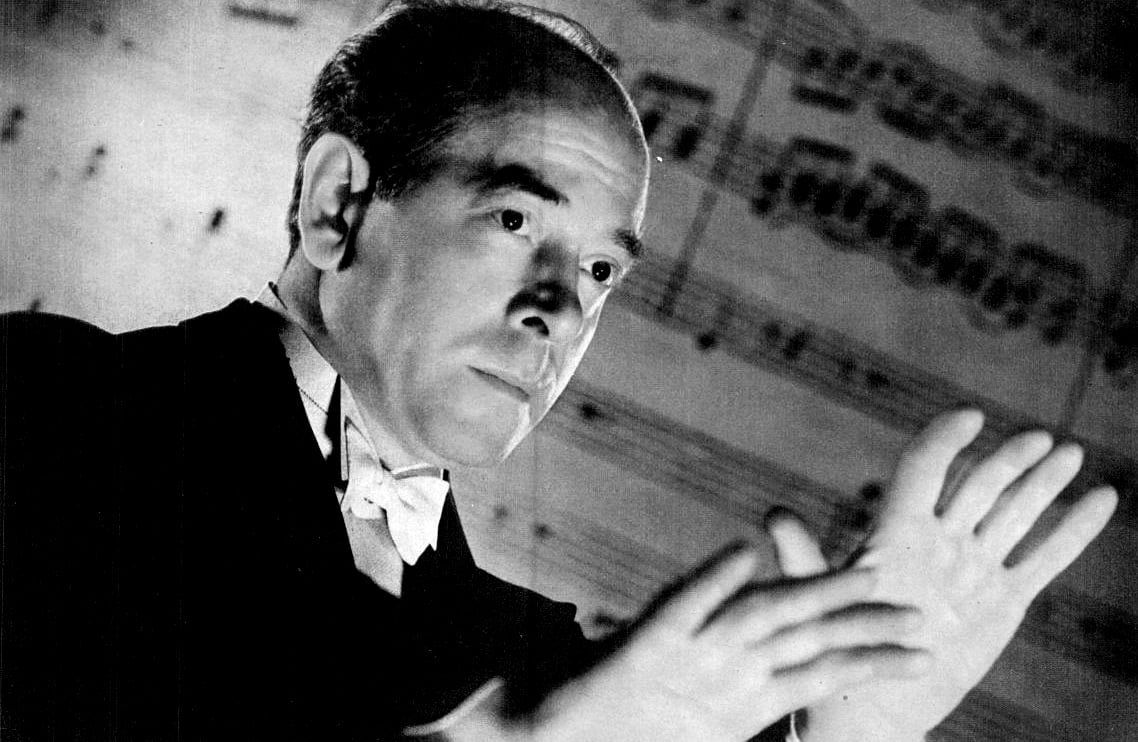
    What’s the big deal about this guy, Jenő Blau? Well, you probably know him better by his adopted name, Eugene Ormandy.

    Ormandy, a Hungarian-born violinist who studied with Jenő Hubay (for whom he was named), became a naturalized American citizen in 1927. Ultimately, he wound up directing The Philadelphia Orchestra for 44 years. In that capacity, he became one of the world’s most-recorded conductors.

    However, in some respects, he remains a vastly underrated one.

    In May, I breathlessly announced my acquisition of “Eugene Ormandy: The Columbia Legacy,” a 13-pound box set of 120 compact discs, newly remastered from original analogue sources, recorded between 1944 and 1958. I am just over halfway through my first, attentive journey through its contents, and I have no hesitation in proclaiming it the release of the year.

    At worst, there a handful of performances that never take flight as perhaps they should, and one or two interpretive misfires (I hasten to add, the execution is always impeccable), but by a staggering margin, the quality of the music-making documented in this set is both stunning and revelatory.

    It astounds me that any of the old saws about Ormandy being “workman-like,” a mere custodian of Stokowski’s “Philadelphia sound,” and too commercially successful ever to be taken seriously have not been exploded, once and for all.

    However, it remains obvious that, even with the evidence now freshly before their ears, some critics remain blinded by their preconceptions. How else to explain the blinkered, damning-with-faint-praise reception in the venerable British music magazine Gramophone and in The New York Times?

    The box is a knockout. Yes, the recordings are in mono, but there’s a vitality to the music-making that lights up the room. I’d be first in line for a sequel, in the form of an authorized box of Ormandy’s Columbia stereo recordings.

    But take your time, Sony Classical. There’s still plenty here for me to enjoy.


    One of my favorite Ormandy records was also one of his later ones, this one made for EMI. Throughout his career Ormandy succeeded in selling Sibelius’ “Four Legends from the Kalevala,” a collection of tone poems inspired by the Finnish national epic the “Kalevala,” for the early masterpiece that it is.

    The legendary Philadelphia strings in Vaughan Williams’ “Fantasia on a Theme by Thomas Tallis”

    Hindemith, “Concert Music for Strings and Brass” (the movements uploaded individually into a playlist)

    Ivan Davis joins Ormandy and the Philadelphians for Liszt’s “Hungarian Fantasy,” slightly abridged:

    Bruckner “Te Deum” with Temple University Choir

    World premiere performance of Samuel Barber’s Violin Concerto

    Shostakovich Symphony No. 4

    Reinhold Glière’s “Russian Sailor’s Dance”

    Rachmaninoff Piano Concerto No. 2, with Eugene Istomin

    Ormandy conducts “Scheherazade” (complete). This is the Philly Orchestra I remember from my college years.

    Debussy, “Reverie”

    Saint-Saens’ Symphony No. 3 “Organ”


    Happy birthday, Eugene Ormandy (1899-1985)!
  • Joanna Cameron Isis Tribute This Friday!

    Joanna Cameron Isis Tribute This Friday!

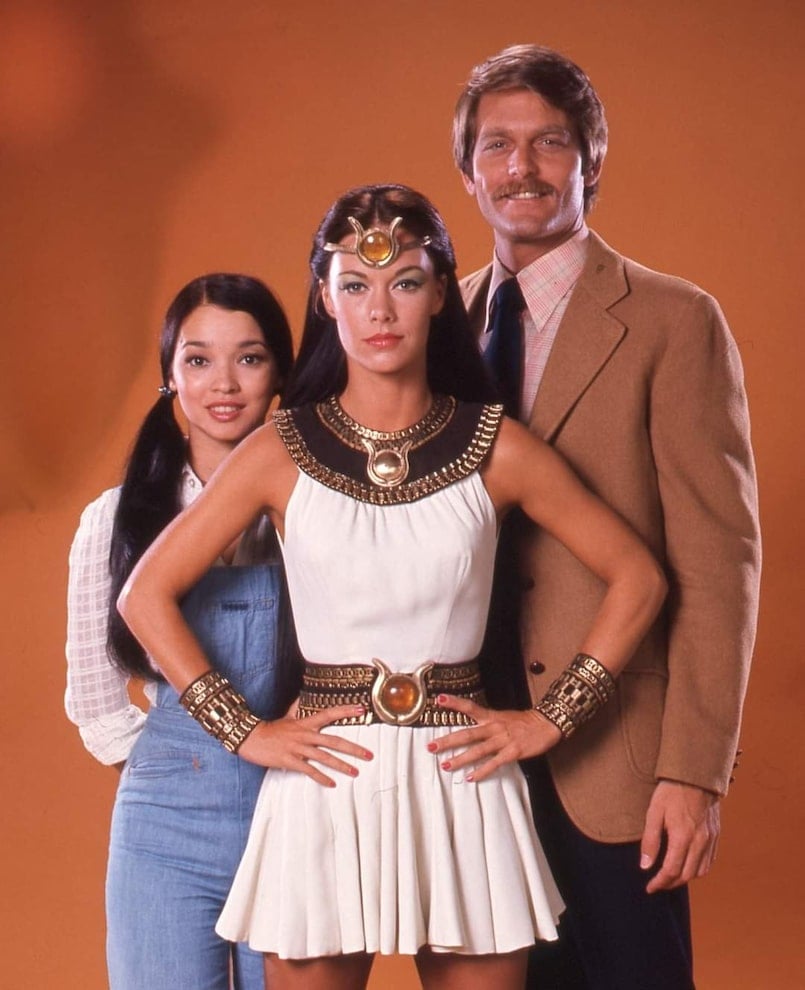
    Warning! If you watch a sizeable number of episodes of ‘70s Saturday morning staple “Isis” (1975-77), you will wake up at 4:00 in the morning with the theme music in your head. So far, I’ve watched up through Episode 18, and I fear it will follow me into the afterlife.

    But I’ll do anything for “Roy’s Tie Dye Sci Fi Corner.”

    This week, we’ll celebrate actress Joanna Cameron, most closely identified with the dual role of high school science teacher Andrea Thomas and her alter ego, the beneficent Egyptian goddess somehow recognized immediately by seemingly everyone in 20th century California. Cameron died last month at the age of 73. She starred in 22 episodes of “Isis” – later syndicated as “The Secrets of Isis” – and made several crossover appearances, opposite John Davey’s Captain Marvel, in “Shazam!”

    Joining us for this special salute will be Lisa Everetts, of the podcast POP ninja, who was a personal friend of Cameron, and Brian Cutler Actors Studio, who played fellow teacher Rick Mason on the show.

    We’ll excavate the secrets of Isis, in memory of Joanna Cameron, on the next Roy’s Tie-Dye Sci-Fi Corner. Don your amulets and tunics in the comments section. We’ll summon our powers in rhyming couplets, when we livestream on Facebook, THIS FRIDAY EVENING AT A SPECIAL TIME – 8:00 EST!

    https://www.facebook.com/roystiedyescificorner


    Past episodes of “Pop Ninja,” a program of nostalgic reflections on popular culture of 1970s and ’80s, are archived here:

    https://www.buzzsprout.com/1265612

  • David Amram Musical Polyglot Turns 91

    David Amram Musical Polyglot Turns 91

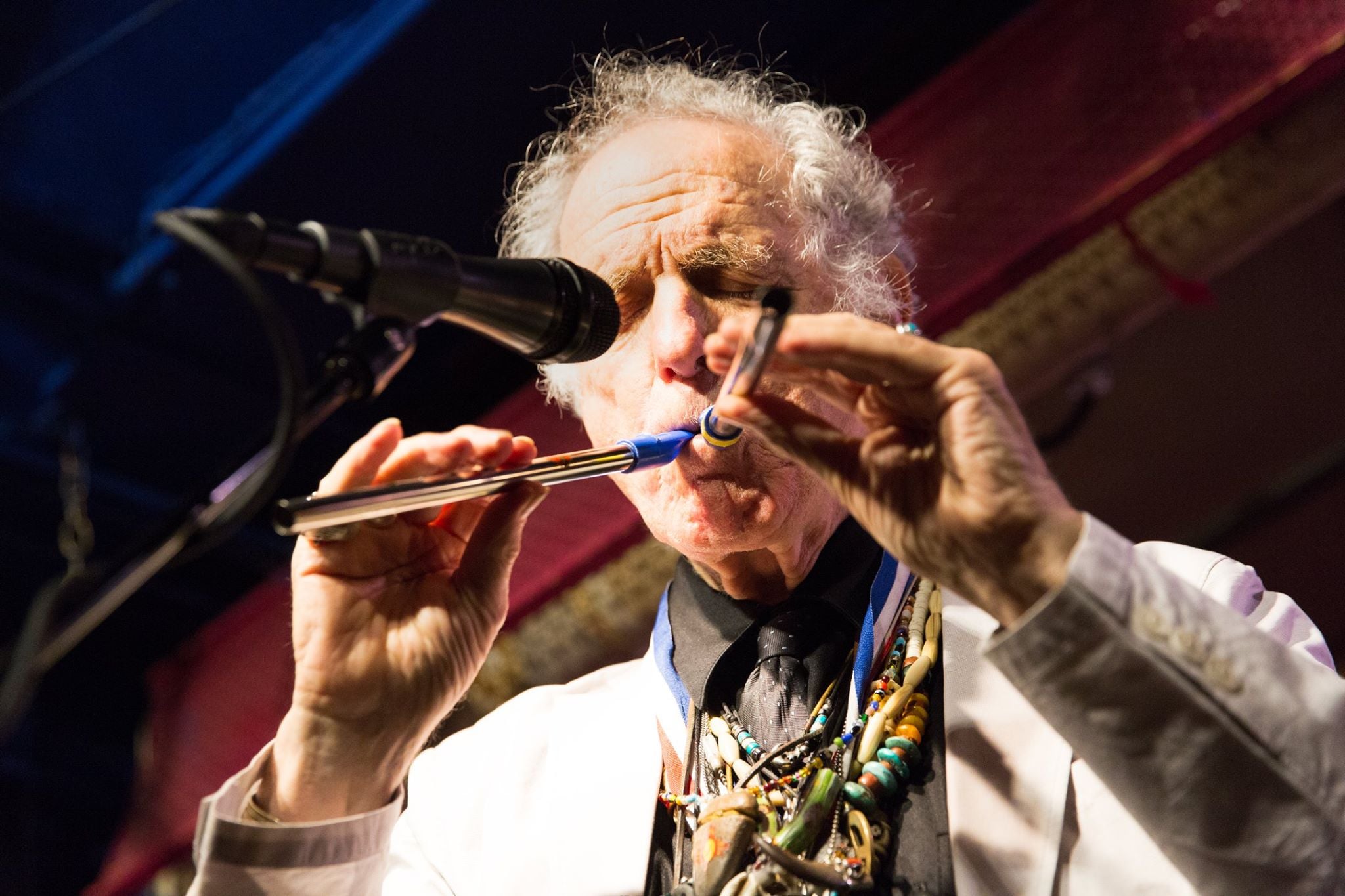
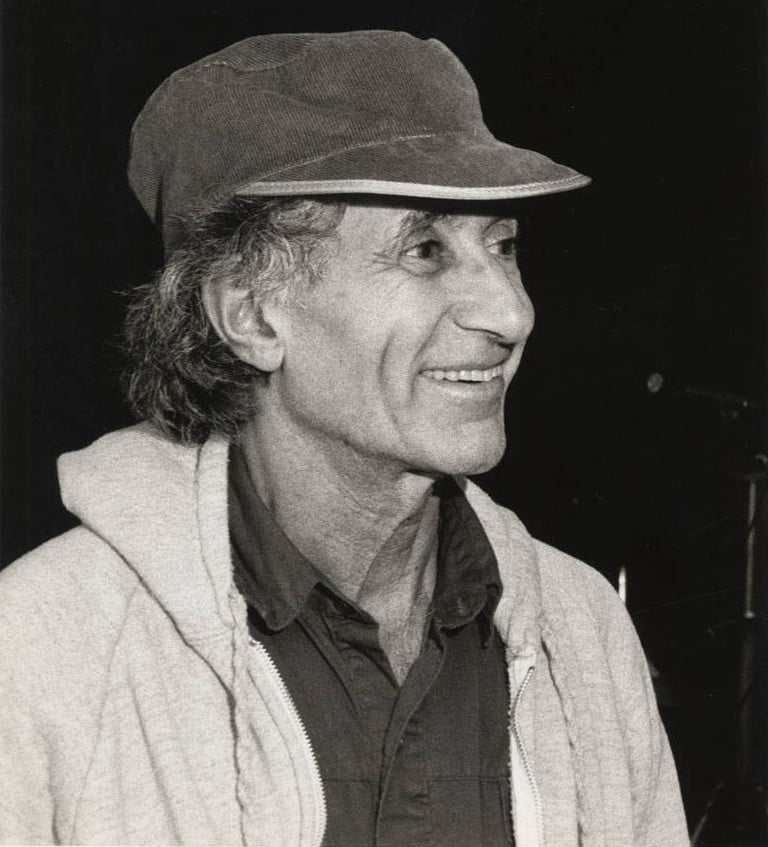
    Philadelphia’s musical polyglot is 91 today.

    David Amram, born in Philadelphia on this date in 1930, has always been equally at home in classical music, jazz, folk, and world music. The composer of over 100 orchestral and chamber works, music for Broadway and film (including the scores for “Splendor in the Grass” and “The Manchurian Candidate”), and two operas, he’s also the author of three books: “Vibrations: The Adventures and Musical Times of David Amram” (1968), “Offbeat: Collaborating with Kerouac” (2002), and “Upbeat: Nine Lives of a Musical Cat” (2007).

    Amram was raised on a farm in Bucks County. There, he was introduced to classical, jazz, and cantorial music by his father and uncle. He took piano lessons and experimented with instruments of the brass family, finally centering on the French horn. Following a year at Oberlin, he lit out for George Washington University, where he studied history. While there, he performed as a freelance hornist with the National Symphony. He also studied privately with two musicians in the orchestra.

    Amram became a pioneer of the “jazz French horn,” as well as the New York Philharmonic’s first composer-in-residence (designated such in 1966). He’s worked with artists ranging from Dizzy Gillespie to Bob Dylan to Leonard Bernstein, from Jack Kerouac to Arthur Miller, from Christopher Plummer to Johnny Depp. He’s a musician without borders, always open to new experiences.

    At 91, Amram is still cookin’. He’ll be performing tonight in Newport, RI, celebrating his birthday with a concert of his chamber music, jazz, and folk compositions. On Friday, he’ll be in Tarrytown, NY, with his jazz quartet. On December 3, he’ll be playing with pianist Dick Hyman in Sarasota, FL. And on December 5, he’ll be in Manhattan for his annual “Amram Jam” – a program of jazz and classical chamber music, the instrumentalists joined by vocalists, songwriters, actors, poets, and dancers that’s anticipated to stretch into the wee hours of the morning.

    For more information, check the Amram calendar at his website:

    https://davidamram.com/calendar.php

    If you can’t be at tonight’s concert, you might do as he suggested last year, during “stay at home,” and just take a moment to send him an ESP thought-o-gram. Happy birthday, David Amram!


    Trailer for “David Amram: The First 80 Years”:

    Amram Horn Concerto:

    Amram with Dizzy Gillespie:

    Amram’s music for “The Manchurian Candidate”
    https://www.youtube.com/watch?v=u4V0uQE-nRY

    Wonderful snapshot of the man and artist, who more and more seems a prophet of our age

    Amram jamming at the Philadelphia Folk Festival in 2011:

    “Pull My Daisy”

  • Discovering Hindemith’s Heart: Beyond the “Spaetzle”

    Discovering Hindemith’s Heart: Beyond the “Spaetzle”

    Who says Paul Hindemith didn’t have a sense of humor? Sure, his music could be as dry as dust, and he wrote too much of it, but the fact that he was so prolific practically guaranteed a trove of masterpieces amongst the stodgers.

    This one’s no masterpiece, maybe, but it is marked by a certain amount of wit and therefore refreshingly engaging. The full title is “Overture to the Flying Dutchman as Sight-read by a Bad Spa Orchestra at 7 in the Morning by the Well” (1925). Less well-known than Mozart’s “A Musical Joke,” it hits many of the same marks. It’s the kind of painful Hindemith I can get behind.

    Hindemith was kind of like a 20th century Telemann, spewing well-crafted music by the yard. But the price of such extraordinary productivity is that he often ran the risk of teetering into prolixity, and what we sometimes wind up with is an awful lot of spaetzle. Hindemith could be a real noodler. This one might be my most-hated Hindemith piece, “Gebrauchsmusik” at its worst:

    But when he was on, he was on, and some of the orchestral pieces, especially, can be glorious, thrilling, and even transcendent in their luminosity.

    My personal breakthrough with this composer came with an album released in the late 1980s, on London Records, with Herbert Blomstedt and the San Francisco Symphony. Not only does it contain the most exciting recording of Hindemith’s “Symphonic Metamorphosis of Themes by Carl Maria Weber” I have ever heard – and that’s saying something, since it must be his most-recorded work – but it also introduced me to an unexpectedly moving piece called “Trauermusik” (“Mourning Music,” or “Funeral Music”).

    Hindemith, also a violist, was in London to give the UK premiere of his new concerto, “Der Schwanendreher,” scheduled for January 22, 1936. The timing was lousy. King George V died a few minutes before midnight on January 20. Not surprisingly, the concert was cancelled, but the BBC and conductor Sir Adrian Boult wanted to make use of Hindemith in whatever it was they decided to do in its place. The next morning, they set Hindemith up in a quiet office, with plenty of pencils and a stack of blank staff paper, and six hours later he emerged with a new concert piece, which he played the same night as part of a special memorial broadcast. That’s the kind of a composer Hindemith was.

    Toward the end of the work Hindemith quotes a chorale by Johann Sebastian Bach, “Fur deinen Thron tret ich hiermet” (“Here I stand before Thy throne”). It was the composer’s great good fortune that the melody turned out to have added resonance, as it is widely recognized in England as “the Old 100th.” What could easily have been a mere occasional work, destined for a single performance and then lost to oblivion, actually turned out to be one of his most moving pieces.

    Here is Hindemith that actually touches the heart. The violist is Geraldine Walther, then principal violist of the SFS.

    Okay, Hindemith, so you have a soul. You’ve touched me with your humanity. Happy birthday.


    Here’s another worthwhile Hindemith piece I discovered as part of an extensive set of his orchestral works recorded by Werner Andreas Albert – a Concerto for Woodwinds, Harp and Orchestra (1949). Note the quotation from Mendelssohn’s “Wedding March” in the last movement, a surprise for the composer’s wife. The premiere took place on their silver wedding anniversary.

    Bernstein conducts the “Mathis der Maler” Symphony (1934) on TV in 1964

    https://www.youtube.com/watch?v=aX7wW5P78w0

    Hindemith conducts his “Symphonia serena” (1946):

    Kammermusik No. 1 (1921). I’m pretty sure Goebbels didn’t like this one. (Hindemith was banned by the Nazis.)

    Leon Fleisher plays the belated premiere of “Klaviermusik mit Orchester” (1923), rediscovered in a Pennsylvania farmhouse in 2002

    Earl Wild plays the Piano Sonata No. 3 (1936)

    Variations on an Old English Nursery Song, “A Frog He Went a-Courting” (1941)

    Herbert Blomstedt conducts the “Symphonic Metamorphosis of Themes by Carl Maria von Weber” (1943). The last movement is pure pirate music!

    Hindemith conducts his St. Francis of Assisi ballet, “Nobilissima visione” (1938)


    PHOTO: Hindemith (de)pressing the sheets

  • Ives Concord Sonata Orchestrated by Brant

    Ives Concord Sonata Orchestrated by Brant

    I’ve been spending the afternoon with Charles Ives’ “Concord Sonata,” which I mentioned earlier today, in writing about Nathaniel Hawthorne. Then I discovered this, which I’d totally forgotten I owned. It’s “A Concord Symphony” – Ives’ sonata, brilliantly orchestrated by Canadian-born American composer Henry Brant.

    Brant, the recipient of the Pulitzer Prize in 2002 for “Ice Field,” is probably best-known for his experiments with spatial music. Film music nuts will know him for his close association with composer Alex North. Brant’s bright, acerbic orchestrations lend zest to the soundtracks of “Spartacus,” “Cleopatra,” “Dragonslayer,” and so many others. In addition, he conducted the orchestra at the recording sessions for North’s rejected score to “2001: A Space Odyssey.”

    Less well known is that he also worked as an orchestrator on film scores of Aaron Copland, Virgil Thomson (including “Louisiana Story,” for which Thomson was awarded the Pulitzer Prize), George Antheil, Marc Blitzstein, Douglas Moore, and Gordon Parks.

    Brant says he wasn’t attempting to emulate Ives’ own orchestral style when searching for the right colors for “A Concord Symphony.” Rather, he approached the project in the manner Ravel or Schoenberg might have in their orchestrations of other composers’ works.

    The effort of some 30 years (since he worked at it very sporadically), Brant’s treatment was completed in 1994. I think he did a terrific job. If you have difficulty getting into Ives’ sonata, give this a listen. It particularly pays dividends in the “Hawthorne” section (the second movement), lending some lift to the patriotic tunes (“Columbia, the Gem of the Ocean” and “Battle Cry of Freedom”) and the ragtime inflections.

    My recording is on the Innova Records label (back of album pictured), with Dennis Russell Davies and the Royal Concertgebouw Orchestra. The link is to a concert performance from 2010, with Michael Tilson Thomas and the San Francisco Symphony.

Tag Cloud

Aaron Copland (93) Beethoven (95) Composer (114) Film Music (136) Film Score (143) Film Scores (255) Halloween (94) John Williams (195) KWAX (229) Leonard Bernstein (103) Marlboro Music Festival (125) Movie Music (151) Mozart (88) Opera (207) Philadelphia Orchestra (89) Picture Perfect (174) Princeton Symphony Orchestra (108) Radio (88) Ross Amico (244) Roy's Tie-Dye Sci-Fi Corner (290) The Classical Network (101) The Lost Chord (268) Vaughan Williams (103) WPRB (396) WWFM (881)

DON’T MISS A BEAT

Receive a weekly digest every Sunday at noon by signing up here


RECENT POSTS