It’s interesting that Gustav Holst and Ralph Vaughan Williams were born three weeks apart (though separated by two years). Uncle Ralph’s birthday is coming up on October 12, but today is a day to celebrate Holst, born on this date in 1874.
“Gustav” may seem like a strange name for one of England’s greatest composers. Even more peculiar, he was actually christened Gustavus. Also, there was a “von” in his name – Gustavus Theodore von Holst. Holst’s father was of Swedish, Latvian, and German descent. His great-grandfather had also been a composer, who taught harp at the Imperial Russian Court in St. Petersburg. Continuing in the family trade, his grandfather set up shop in England. In doing so, he added the “von,” thinking it lent a little gravitas and that it might help to drum up some business. With the outbreak of war with Germany in 1914, sensibly Gustav dropped the prefix
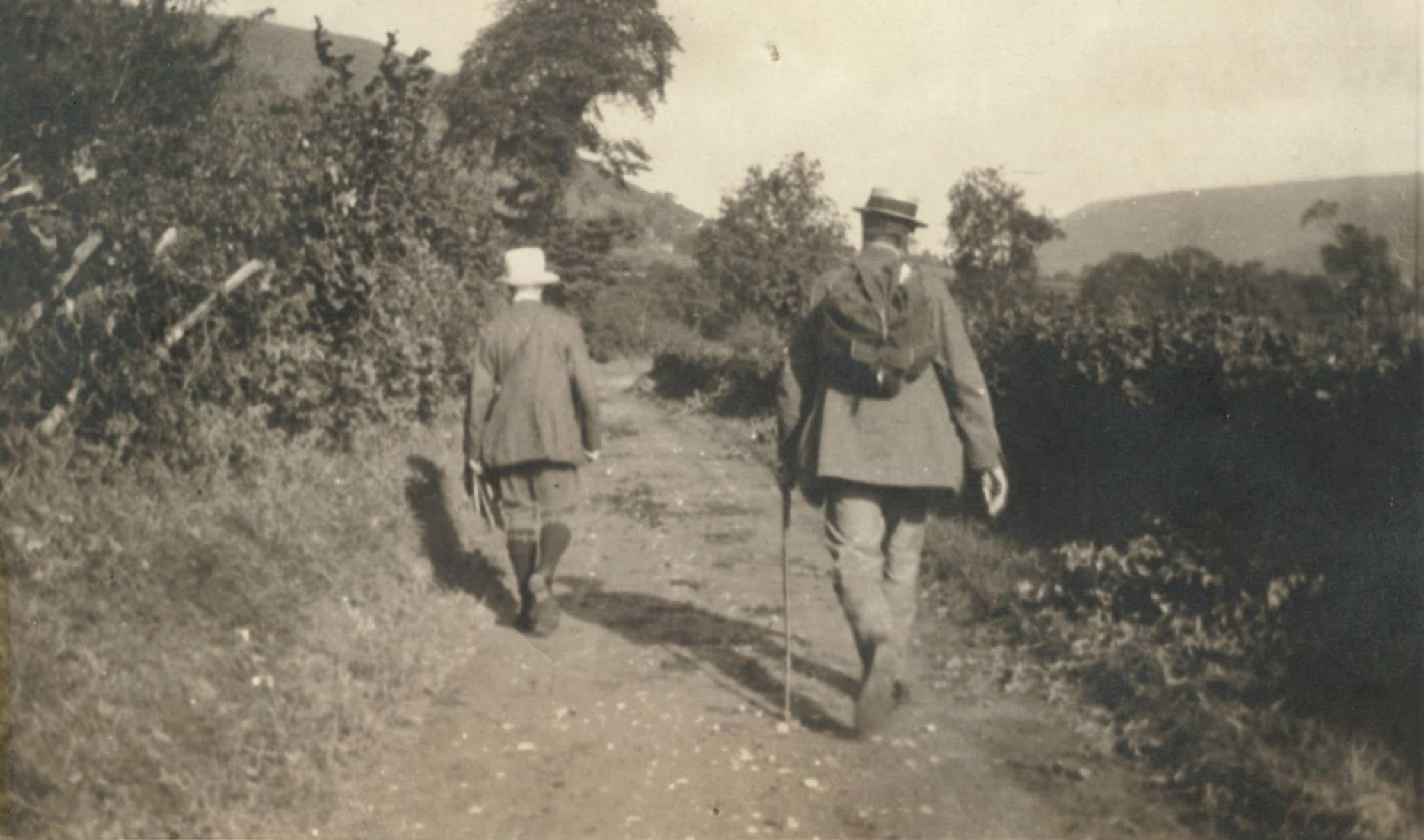
Like Vaughan Williams, Holst was born in Gloucestershire. Both were students at the Royal College of Music, who studied with Sir Charles Villiers Stanford. Significantly, they were also linked by a common destiny, spearheading a movement to establish a distinctly “English” national sound in music. They accomplished this by getting their hands dirty, tying on their boots and striking out for the fields and fens, documenting by cylinder and notating by hand songs of the English countryside, already endangered by encroaching industrialization. In some of their best original music, both composers assimilate native folk inflections into their respective styles.
Holst himself was an exacting teacher, who took his duties very seriously. However, in common with the best of his profession, he never imposed his will on his students, but rather shepherded them in finding their own voices and solutions. Holst served as director of music at St. Paul’s Girls’ School, Hammersmith, and at Morley College.
Of course his masterpiece would be “The Planets,” composed between 1914 and 1916. Hard to believe, in a world full of composers schooled on the piano, that Holst’s principal instrument was the trombone! I recall listening to this music for the first time in my teens and thinking “Jupiter,” in particular, exuded “England.” Its roistering, galumphing, perhaps Falstaffian antics give way to a stately, processional theme, later adapted by the composer into the patriotic hymn “I Vow to Thee, My Country.” But with the passage of time, and longer familiarity, “The Planets’” English identity, is detectable to me in every note.
For all that, Holst was never of a provincial mindset. On the contrary, he was a much more adventurous – and frequently modernist – composer than he is frequently given credit for. His literary inspirations were far-flung, from Thomas Hardy to Walt Whitman to Sanskrit. His music is often less emotive than Vaughan Williams’. I’ve always detected more of an objective detachment in Holst’s works. Remarked Vaughan Williams, “He was not afraid of being obvious when the occasion demanded, nor did he hesitate to be remote when remoteness expressed his purpose.”
The two were one another’s most constructive critics. When Holst died, young, at the age of 59, in 1934, Vaughan Williams felt his friend’s passing keenly. Adding to the personal loss of a lifelong companion, from a professional and artistic standpoint, suddenly he was bereft of his most valued confidante and advisor.
Holst’s legacy can be detected best in those composers who reacted against Vaughan Williams and the pastoral school. His economy and restraint appealed to the generation of Walton, Britten, and Tippett. Also – and I never see this remarked upon – I detect his spirit often in the film and concert music of Bernard Herrmann. (Herrmann was a great anglophile, who championed Holst.) There is a certain aloofness, a chill even, in the work of both artists, but also great sensitivity.
Happy birthday, Gustav Holst! You may be regarded by most as a one-hit wonder, but you connected squarely, and the resulting line drive carried further than is generally accepted.
“Jupiter” (1914)
“Beni Mora” (1910)
Bernard Herrmann conducts “The Planets” (complete)
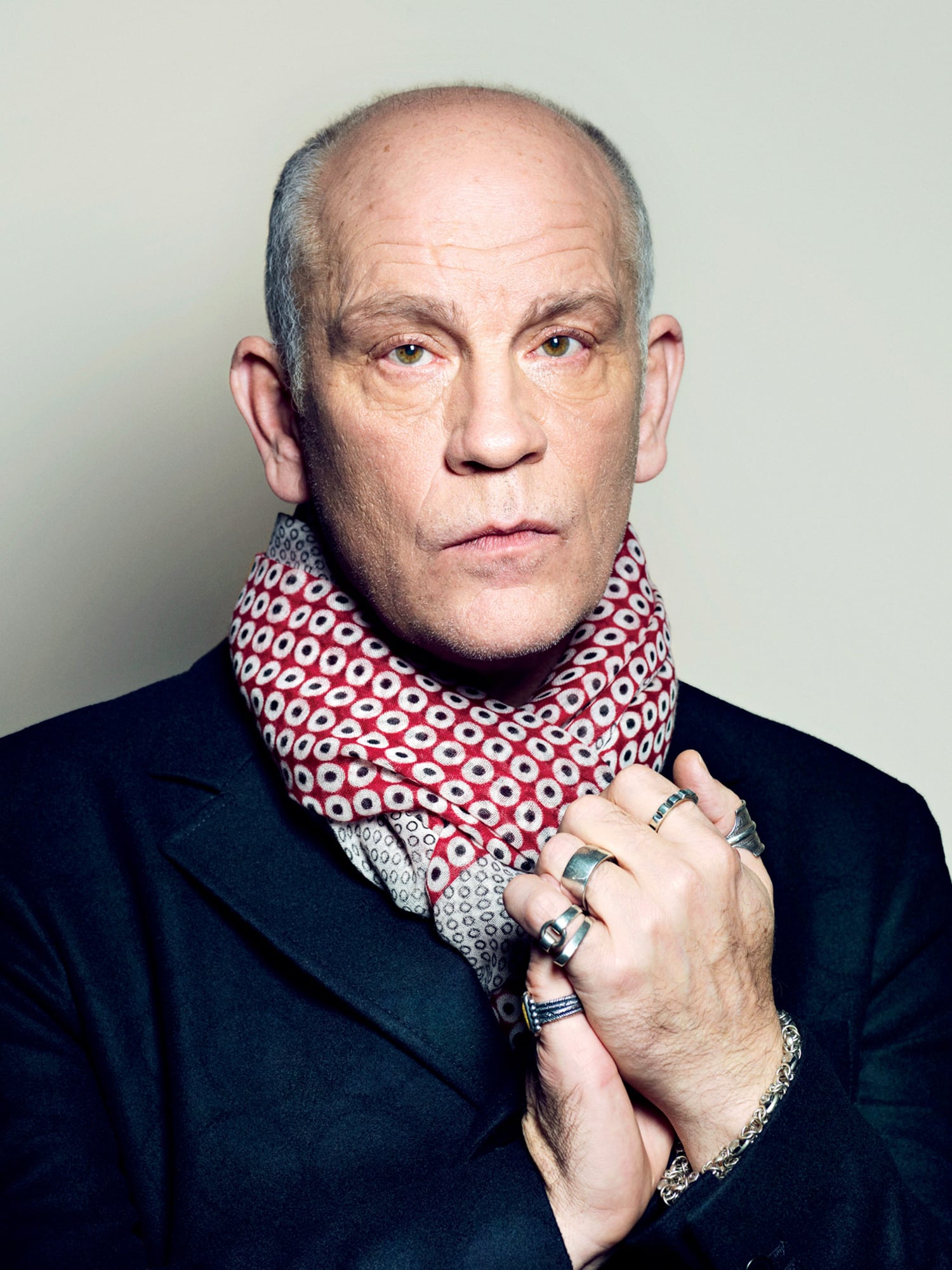
That John Malkovich will star in a film about the eccentric Romanian maestro Sergiu Celibidache. Celibidache, one-time conductor of the Berlin Philharmonic, gained notoriety for his uncompromising pursuit of “the transcendent moment,” his exhaustive rehearsals, and his refusal to record.
Of course, the market is flooded with Celibidache recordings, many of them from his years in Munich, but these are all byproducts of actual live concerts. Few of them could be described as pedestrian.
Equally, few would be described as “definitive.” When Celibidache was “on,” he could be like nobody else; but when he was “off” – again, he could be like nobody else.
The film, titled “The Yellow Tie,” is scripted by Celi’s son. Shooting will begin in Romania early next year.
The venture is the latest in a spate of movies about conductors. In the past week or two, it was announced that Cate Blanchett will play (the fictional) Lydia Tár, the first woman to conduct a major German orchestra. The Dresden Philharmonic will participate in the film, in which Blanchett will be seen conducting Mahler’s Symphony No. 5. The project is titled “TÁR.” Academy Award winning composer Hildur Guðnadóttir (“Joker”) will provide the film’s underscore.
And of course Bradley Cooper is headlining a Leonard Bernstein biopic, “Maestro,” initiated by Martin Scorsese, and co-produced by Steven Spielberg. Spielberg’s remake of “West Side Story” is due for release in theaters in December. It looks like “Maestro” quashed a rival Bernstein project, titled “The American,” that was to have starred Jake Gyllenhall, when the Bernstein estate opted to license Lenny’s music to Cooper, Scorsese, and Spielberg. Who could have seen that coming?
Movies about classical music and musicians are notoriously weak. I’m not holding my breath, but I am hoping at least one of these gets it right.
Celibidache has a fever, and the only prescription is more viola!
I am Master of the World in our conversation about “Master of the World” (1961).
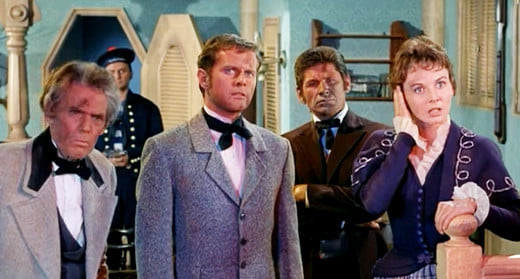
Roy and I finally got around to talking about the movie, based on a couple of Jules Verne classics, starring Vincent Price, Charles Bronson, and David Frankham.
David Frankham will be our guest next week, as we take our show on the road to Trekonderoga at the Star Trek Original Series Set Tour in Ticonderoga, New York. Roy and I will be on hand for two streamed broadcasts, the first on Saturday at 4 p.m., and the second, with Frankham as our guest, on Sunday at 1:30 p.m EDT. (Please note: there will be no show on Friday!)
Frankham appeared in the “Star Trek” original series episode “Is There in Truth No Beauty?” In addition, he has had ample experience from his decades in film and television, acting in movies like “Return of the Fly,” “King Rat,” “The Great Santini,” and “One Hundred and One Dalmatians” and classic television shows like “Alfred Hitchcock Presents”/”The Alfred Hitchcock Hour,” “The Outer Limits,” and “Thriller,” hosted by Boris Karloff. No doubt, his visit will be marked by plenty of colorful anecdotes!
George Takei will also be in attendance at the convention. The weekend will include tours, presentations, screenings, cosplayers, and collectibles.
For more information and a complete schedule, visit:
Then set phasers for stunned, and join us in the comments section for a double-dose of Roy’s Tie-Dye Sci-Fi Corner, as we livestream on Facebook from Upstate New York, on Saturday at 4 p.m. and Sunday at 1:30 p.m. EDT!
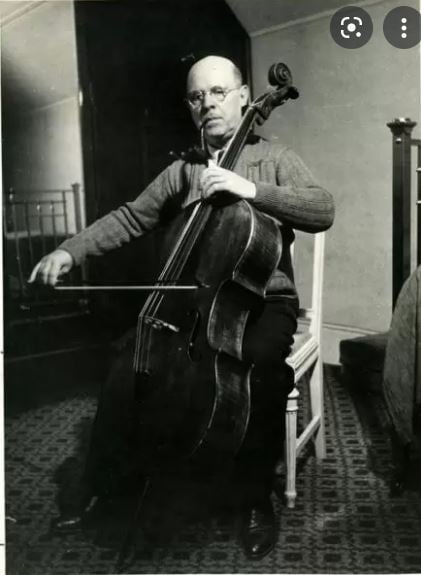
He put his career on hold to stand up to Franco. He rediscovered the Bach cello suites. He played for Queen Victoria and John F. Kennedy. He founded the Prades Festival. He established the Puerto Rico Symphony and Conservatory. He gave master classes, conducted and recorded at Marlboro. He was even a talented composer.
Pablo Casals was a giant of an artist and of a man. Is it any wonder so many of his colleagues were moved to write music for him?
This Sunday night on “The Lost Chord,” we’ll hear works dedicated to Casals by three of his composer friends and colleagues.
Ralph Vaughan Williams wrote his seldom-heard “Fantasia on Sussex Folk Tunes” around the time he was at work on his Piano Concerto and “Job: A Masque for Dancing.” Casals performed the piece in 1930. It was not heard again until 1983, the year of its world-premiere recording (featuring Julian Lloyd Webber). The composer later undertook a full-scale concerto for Casals. It was never completed, but the sketches for its slow movement were realized for a 2010 performance at the BBC Proms, under the title “Dark Pastoral.”
Donald Francis Tovey, who would achieve fame as a musicologist, composed quite a lot of music himself, most of it now forgotten. In 1935, he wrote a concerto for Casals. At nearly an hour in length, the work may be the longest cello concerto ever written.
In 1912, Tovey was a houseguest of Casals and cellist Guilhermina Suggia, at their summer home at Playa San Salvador on the Mediterranean coast. There, he played tennis, swam, and performed chamber music with the likes of Enrique Granados and Mieczyslaw Horszowski. He also made great strides on his opera, “The Bride of Dionysus.” As a show of thanks, he composed for his hosts a Sonata for Two Cellos in G major, which became part of the evenings’ entertainments. The work’s second movement is a set of variations on a Catalan folk song. We’ll hear it performed by Marcy Rosen and Frances Rowell, from a Bridge Records, Inc. release.
Finally, Arnold Schoenberg, himself an amateur cellist, had done editorial work on three pieces by the 18th century composer Georg Matthias Monn, for inclusion in the publication “Monuments of Music in Austria.” When Casals invited Schoenberg to conduct his orchestra in Barcelona, the composer set about arranging a “new” concerto, based upon a harpsichord work by Monn, written in 1746. We’ll hear Schoenberg’s transformation of the piece performed by Yo-Yo Ma.
Pau takes a bow! I hope you’ll join me for “Casals’ Pals” – music written for Pablo Casals by notable composer friends and colleagues – this Sunday night at 10:00 EDT, on WWFM – The Classical Network and wwfm.org.