Category: Daily Dispatch

  • Remembering Carlisle Floyd: American Opera Icon

    Remembering Carlisle Floyd: American Opera Icon

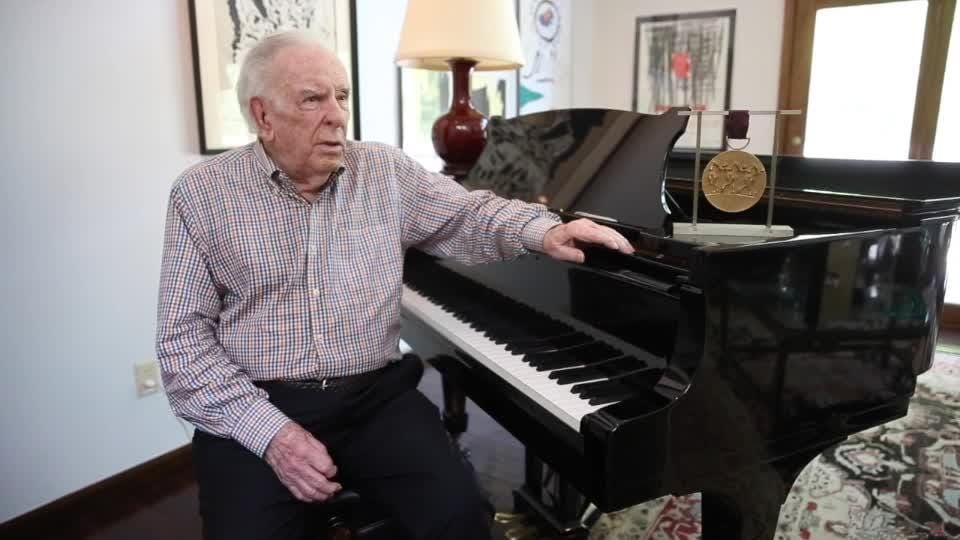
    I am saddened to learn of the death of Carlisle Floyd, whom I’ve lauded on this page many times.

    In 1956, even as tonality was slipping out of fashion, Floyd achieved something quite wonderful for an American composer of his time. He was not yet 30 when he enticed Phyllis Curtin and Mack Harrell to Tallahassee to sing in the world premiere of his opera, “Susannah.” It became one of the most successful operas this country has ever produced. Floyd transplants the Apocryphal tale of Susannah and the Elders to rural Tennessee, rendering it with touching simplicity.

    He wrote the libretto and music while on the piano faculty at Florida State University. The work’s success soon spread to New York, and “Susannah” became one of the most frequently performed of American operas. It does feature two heart-melting arias that remain favorites of aspiring American sopranos: “Ain’t It a Pretty Night” and “The Trees on the Mountain.”

    The directness of the drama and the uncluttered musical language struck a chord with both performers and audiences. Emboldened by his success, Floyd went on to compose ten more operas, all of them on his own librettos, drawing inspiration from such diverse sources as Emily Bronte’s “Wuthering Heights,” Robert Louis Stevenson’s “Markheim,” John Steinbeck’s “Of Mice and Men,” and Robert Penn Warren’s “All the King’s Men.”

    “Cold Sassy Tree,” based on the novel of Olive Ann Burns, was given its premiere in 2000. The composer had intended it to be his swan song. He had become too busy caring for his wife, who was suffering from Alzheimer’s disease, to devote much further thought to composition. But following her death, he found the inspiration for one last hurrah. The result was “Prince of Players,” about 17th century actor Edward Kynaston.

    It’s hard not to shed a few tears for Carlisle Floyd, but he had a very good run. “Prince of Players,” was given its debut at Houston Grand Opera in 2016, when the composer was 90 years-old.

    Floyd died yesterday at the age of 95.


    Dawn Upshaw breaks hearts with “Ain’t It a Pretty Night,” from “Susannah”:

    Cheryl Studer sings “The Trees on the Mountain,” from a complete recording of the work:

    Samuel Ramey as the Reverend Olin Blitch:

    A taste of “Prince of Players” from Little Opera Theater of New York:

    The 2021 Grammy-nominated recording (Best Opera Recording; Best Contemporary Classical Composition; Producer of the Year, Classical):

    Carlisle Floyd speaks:

    “Cold Sassy Tree”:

  • Captain Kronos Vampire Hunter A Hammer Horror Gem

    Captain Kronos Vampire Hunter A Hammer Horror Gem

    The pen may be mightier than the sword – but the sword is mightier than the vampire. At least when it’s wielded by Captain Kronos!

    Tomorrow being the first of October, I hope you’ll indulge Roy and me, as we anticipate Halloween with a month’s worth of movie horror, on “Roy’s Tie Dye Sci Fi Corner,” beginning with the cult curio “Captain Kronos: Vampire Hunter” (1974).

    Ever wonder what would happen if a Van Helsing-type enlisted D’Artagnan in the fight against Dracula? This looney late entry in Hammer horror is the brainchild of writer-director Brian Clemens (a relation of Mark Twain!), who contributed so much to the cool and quirkily compelling television series “The Avengers.”

    When a mysterious presence begins draining the youth out of the region’s comely young women, who you gonna call? Kronos (Horst Janson), the cigarillo-smoking, samurai sword-wielding soldier-of-fortune, and his sidekick, Professor Hieronymous Grost (John Cater), authority on all things supernatural – who, for added flavor, also happens to be a hunchback!

    Upon arrival, Kronos’ first act is to liberate Carla (Caroline Munro of “The Golden Voyage of Sinbad,” “The Spy Who Loved Me,” and “Starcrash”), a free-spirit sentenced to the stocks for dancing on a Sunday. So there’s plenty of eye candy to go with the tongue-in-cheek thrills. Janson also spends most of the movie with his shirt off.

    Stylized and suggestive, as opposed to workman-like and explicit, “Captain Kronos” is a cut above. It’s hard to believe this film merited an R-rating at the time of release. Now it wouldn’t even crack a PG-13.

    It was originally hoped that Kronos’ vampire adventure would be the start a series, with our heroes traveling from place to place and through time to combat the forces of darkness. Sadly, the House of Hammer collapsed not too long after.

    We meet sharp fangs with sharpened swords, as we discuss “Captain Kronos: Vampire Hunter,” on the next Roy’s Tie-Dye Sci-Fi Corner. Order extra garlic on your pizza when you join us in the comments section as we livestream on Facebook, this Friday evening at 7:00 EDT!

    https://www.facebook.com/roystiedyescificorner


    PLEASE NOTE: Our conversation with actor David Frankham, postponed from last week’s Trekonderoga, due to technical difficulties, will take place this Sunday at 7 p.m.!

  • Time Magazine’s Composer Covers

    Time Magazine’s Composer Covers

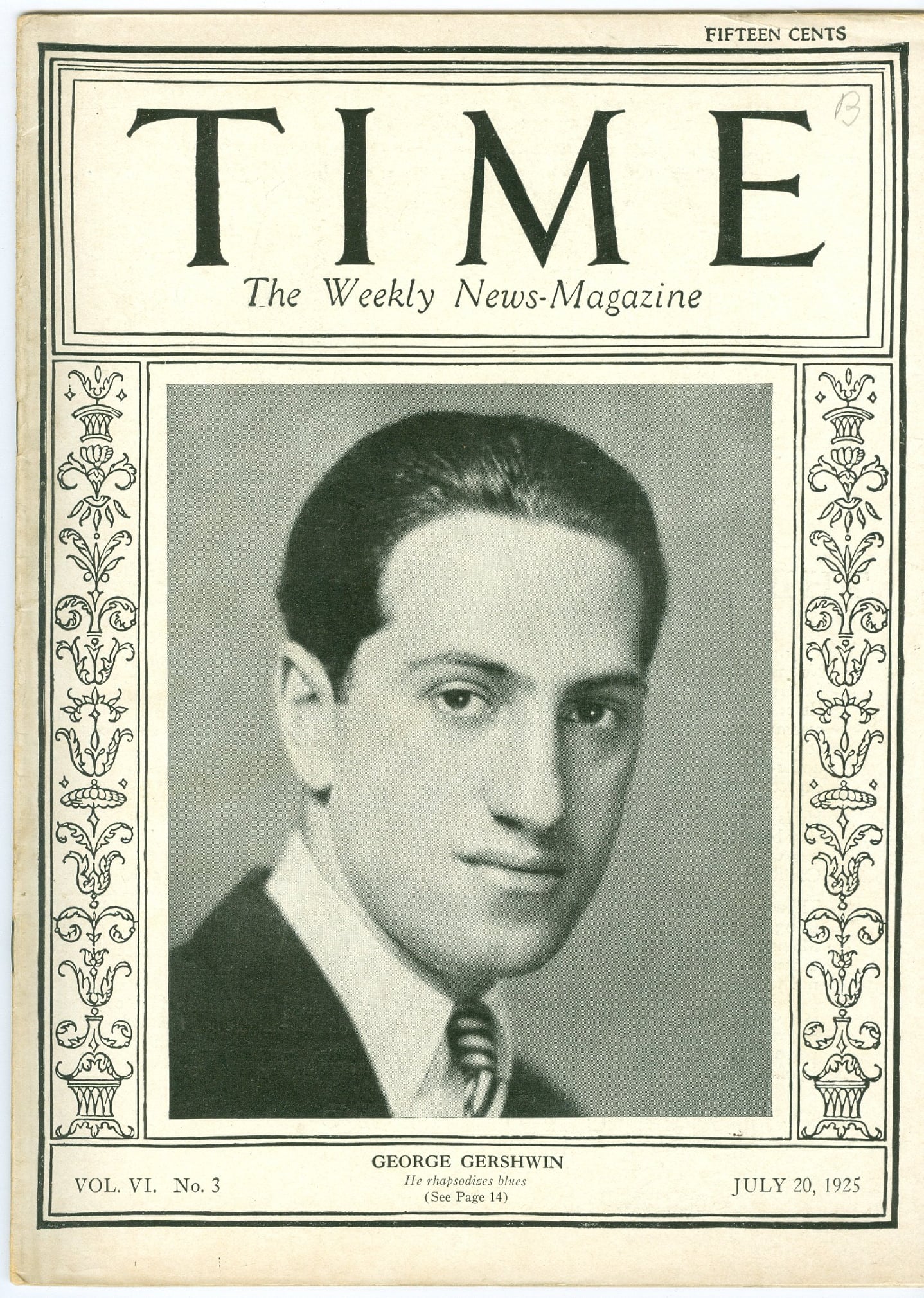
    Due to my hectic weekend in Ticonderoga, I was unable to honor Dmitri Shostakovich and George Gershwin on their birthdays. It did occur to me that both were featured on the cover of Time Magazine, which gave me the idea to compile ten Time covers of famous composers (which I am only just getting around to posting). Happy belated birthdays, boys!

    Shostakovich, born September 25, 1906 (died August 9, 1975)
    Gershwin, born September 26, 1898 (died July 11, 1937)

    Interestingly, both appeared on the cover on July 20, seventeen years apart!

    It’s sobering to be reminded of a time when classical music was still accepted as a part of our broader culture. I wonder who the last living composer was to be featured on the cover of Time?

    Andrew Lloyd Webber got a cover in 1988. No John Williams?


    Clockwise from left: Gershwin (July 20, 1925), Shostakovich (July 20, 1942), Richard Strauss (January 24, 1927), and Richard Strauss (July 25, 1938). More in the gallery.

  • Romeo Cascarino Rediscovering a Forgotten Composer

    Romeo Cascarino Rediscovering a Forgotten Composer

    O Romeo, Romeo, wherefore art thou Romeo? Why does no one play your music?

    It is well-crafted. It has heart. It is full of beauty.

    On the 99th birthday of Romeo Cascarino, I am asking, is there no one out there who might be able to program something to mark the composer’s centenary in 2022?

    Cascarino was born into a rough neighborhood in South Philadelphia in 1922. With a name like Romeo, you have to learn how to use your fists! While navigating the School of Hard Knocks, he taught himself privately, gleaning the mechanics of music theory from books checked out of the Free Library of Philadelphia. He was discovered by composer Paul Nordoff, who recognized his genius, and the two became more like friends than master-disciple.

    For many years, Cascarino was a professor of composition at Combs College of Music. The recipient of two Guggenheim Fellowships, he labored at his magnum opus, the opera “William Penn,” for the better part of three decades. The work received its premiere at Philadelphia’s Academy of Music in 1982 to mark the 300th anniversary of the founding of the city.

    Metropolitan Opera singer bass-baritone John Cheek sang the title role, Cascarino’s wife, soprano Dolores Ferraro, created the part of Penn’s wife, Gulielma, and Christofer Macatsoris conducted the Philadelphia Singers and the Concerto Soloists of Philadelphia.

    Cascarino died in 2002, at the age of 79. He left too little music. Fortunately, every piece is a treasure. A seductive, twilit beauty informs much of his output. If only he had completed “William Penn” 30 years earlier, I believe it would be as highly-regarded as Carlisle Floyd’s “Susanna” or Robert Ward’s “The Crucible.”

    Here’s hoping for a Cascarino revival, however modest, in 2022.


    “Pygmalion,” conducted by JoAnn Falletta

    “The Acadian Land,” performed by members of The Chamber Orchestra of Philadelphia

    The concise Bassoon Sonata, written for Cascarino’s Army buddy, Sol Schoenbach, for twenty years principal bassoonist of The Philadelphia Orchestra

    “Blades of Grass” for English horn and orchestra, after Carl Sandburg, performed by Orchestra 2001

    “Little Blue Pigeon,” from “Pathways of Love,” sung by Dolores Ferraro

    “Meditation and Elegy,” inspired by Edgar Allan Poe’s “Annabel Lee,” performed by Philadelphia Sinfonia

    Bruce Duffie interviews the composer

    http://www.kcstudio.com/cascarino2.html

    A list of his works

    https://romeocascarino.org/list_of_works.html

  • Humperdinck’s Name Fame Opera Pop

    Humperdinck’s Name Fame Opera Pop

    I imagine that if you were looking to break into show business, and you were born Arnold George Dorsey, you could do a lot worse than to change your name. But the choice of “Engelbert Humperdinck” would seem astonishingly counterintuitive. Even so, the pop singer who did just that managed to achieve international fame and sell more than 140 million records.

    Dorsey struggled for several years, trying to establish a toehold in the music industry under his own name, until a former roommate, Gordon Mills, suggested he appropriate that of a certain 19th century German composer. Mills turned out to have a certain genius for this kind of thing, since he also advised singer Tom Woodward to take the name of a roistering 1963 comedy, starring Albert Finney, that was adapted from Henry Fielding’s picaresque novel “Tom Jones.”

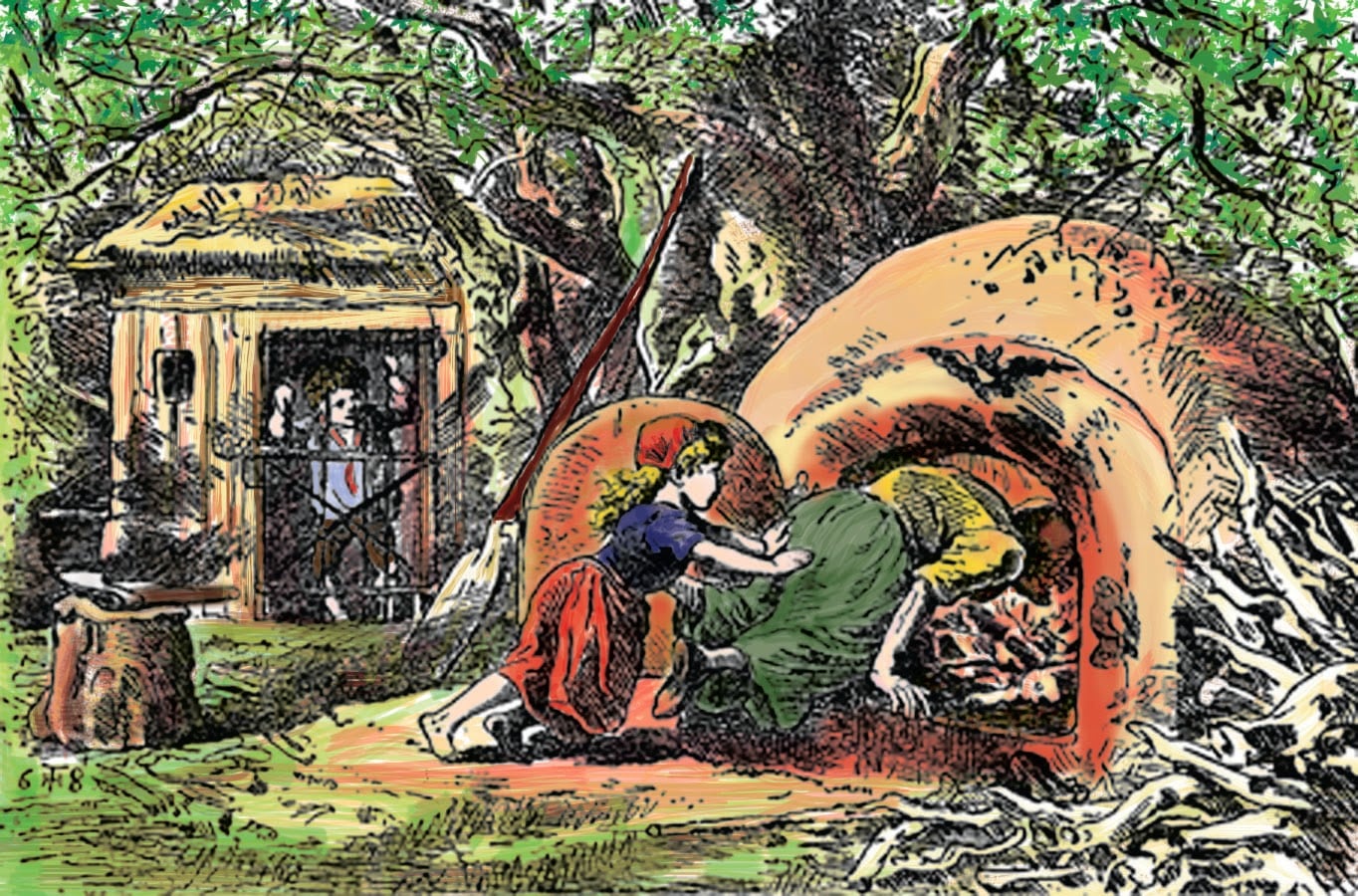
    Humperdinck the composer’s greatest hit was the opera “Hansel and Gretel,” which was given its first performance on December 23, 1893, with Richard Strauss conducting. Humperdinck’s magnum opus – which features a Sandman, a Dew Fairy, a Witch, and the imminent threat of cannibalism – has been associated with the Christmas season ever since.

    The Brothers Grimm inspiration is the best known in a wave of “märchenopern” (fairy tale operas) that swept Germany in the 19th century. To this genre, Humperdinck also contributed “Königskinder” (“Royal Children”) and “Dornröschen” (“The Sleeping Beauty”), along with a handful of other fantasies for the stage.

    Humperdinck died 100 years ago today.

    His name was borrowed yet again for the unscrupulous prince, played by Chris Sarandon, in the cult classic “The Princess Bride” – again, adapted from a novel, this time by William Golding.

    Actually, “The Princess Bride” would probably have suited composer Humperdinck just fine – although there is a notable lack of irony in his existing operas, a fact that seems to be lost on the Metropolitan Opera, judging from its current nightmare production of “Hansel and Gretel.” Sample it, shorn of all sentiment and spirituality, here:

    I mean, it looks cool, in an uncanny sort of way, but it’s also the furthest thing from an “Evening Prayer” I can possibly imagine. And that’s before the Holocaust allusions kick in.

    Director Richard Jones has suggested that, because the children’s experiences have hardened them, rather than strengthened them, it’s a valid creative decision to portray them as “incipient Hitler Youth.” Granted, this is a Grimm fairy tale, but it should be remembered that “Hansel and Gretel” has been a family Christmas attraction for generations, and the Met continues to market it as such. This particular banquet leaves a very bad taste.

    “Hansel and Gretel” was the first live opera broadcast on the radio from the Met in 1931.

    Here’s a lovely, classic staging from the Met, before the rage for Regietheater:

    My favorite recording of the “Dream Pantomime,” with Otto Klemperer:

    Elisabeth Schwarzkopf and Irmgard Seefried, with Josef Krips conducting, from 1947:

    A suite from “The Sleeping Beauty”


    Hansel and Gretel and the three Humperdincks

Tag Cloud

Aaron Copland (93) Beethoven (95) Composer (114) Film Music (136) Film Score (143) Film Scores (255) Halloween (94) John Williams (195) KWAX (229) Leonard Bernstein (103) Marlboro Music Festival (125) Movie Music (151) Mozart (88) Opera (207) Philadelphia Orchestra (89) Picture Perfect (174) Princeton Symphony Orchestra (108) Radio (88) Ross Amico (244) Roy's Tie-Dye Sci-Fi Corner (290) The Classical Network (101) The Lost Chord (268) Vaughan Williams (103) WPRB (396) WWFM (881)

DON’T MISS A BEAT

Receive a weekly digest every Sunday at noon by signing up here


RECENT POSTS