Category: Daily Dispatch

  • David Frankham Stories on Roy’s Sci-Fi Corner

    David Frankham Stories on Roy’s Sci-Fi Corner

    Warm thanks to David Frankham and Jonathan David Dixon for their return appearance last night to Roy’s Tie-Dye Sci-Fi Corner.

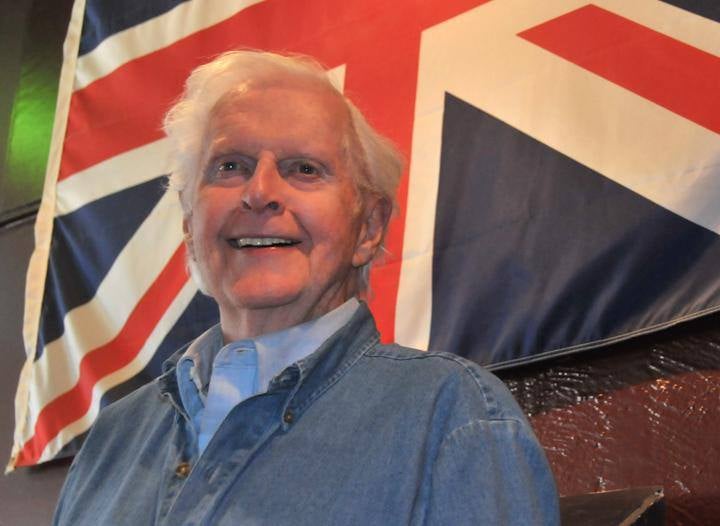
    Frankham shared anecdotes about Vincent Price, Walt Disney, Alfred Hitchcock, Barbara Stanwyck, Ernie Kovacs, his guest shot on the original “Star Trek,” and many more. A born entertainer, his recall is enviable, his stories colorful and amusing, and his joie de vivre, even at the age of 95, palpable.

    The show has been archived here:

    If it piques your interest, there’s plenty more in Frankham’s memoir, “Which One Was David?” I’ll be placing my order today!

    I hope you’ll join us on Friday, as Roy and I continue with our month-long celebration of Halloween and do our best to jumpstart your weekend with a discussion about “The Car” (1977), part of a befuddling trend in the 1970s of possessed vehicle movies (“Duel,” “Killdozer,” “Herbie the Love Bug”). James Brolin subjects himself to 98 minutes of Satanic honking and harassment in a remote town in the American Southwest. Drop by and oil our pistons in the comments section. We’ll be grinding our gears on “The Car,” this Friday evening at 7:00 EDT!

    https://www.facebook.com/roystiedyescificorner

  • Andrzej Panufnik Rediscovering a Polish Master

    Andrzej Panufnik Rediscovering a Polish Master

    Andrzej Panufnik is the sleeping giant of Polish music. He’s one of those figures, like Bohuslav Martinu, who always seems poised on the verge of greatness, and yet never quite achieves the full degree of recognition he deserves.

    To begin with, his particular brand of modernism was eclipsed by the avant-garde experiments of his friend and compatriot, Witold Lutoslawski. Panufnik’s relationship with Lutoslawski dated back to the war years. During the Nazi occupation, the two formed a piano duo that played in Warsaw cafés – at the time the only way to share live music in public, since there was a ban on organized gatherings.

    In the meantime, Panufnik quietly produced subversive works celebrating Polish heroism and the resistance. Following the war, he was instrumental in the re-establishment of the Warsaw Philharmonic. However, increasing friction with Poland’s communist regime led to the composer’s defection, under hair-raising circumstances, in 1954. He was granted asylum in England, where he received a knighthood in 1991, the year of his death.

    This Sunday night on “The Lost Chord,” we’ll pay tribute to Panufnik with two of his ten symphonies, both of them markedly “Polish” in character.

    His “Sinfonia Rustica” (1948, revised in 1955), as the title implies, is a work very much of the people, making use of fragmented Polish themes, meant to reflect the rustic, semi-abstract, paper-cut art of the peasantry. Not only the symphony’s framework, but also the layout of the orchestra, is meant to reflect the symmetry found in Polish folk art. Nevertheless, despite the work’s direct character, it was denounced in 1949 as “alien to the great socialist era.”

    Whenever I listen to Panufnik’s “Sinfonia Sacra” (1963), I always think of Henryk Sienkiewicz’s 1884 epic, “With Fire and Sword,” set in the 17th century Polish-Lithuanian Commonwealth during the Khmelnytsky Uprising. With its evocation of winged hussars in courageous battle against the Cossacks, Sienkiewicz’s monumental page-turner whipped readers living in a partitioned Poland into a patriotic fervor.

    Conceived as a tribute to Poland’s millennium of Christianity and statehood, the symphony reflects the composer’s religious and patriotic sentiments. Panufnik based the work on the first known hymn in the Polish language, “Bogurodzica.” Throughout the Middle Ages, this served as something of a national anthem, sung not only in the church, but also on the battlefields by Polish knights.

    Watch your toes – the giant stirs! Join me for two symphonies by Andrzej Panufnik, on “Andrzej the Giant,” this Sunday night at 10:00 EDT, on WWFM – The Classical Network and wwfm.org.

  • 80s Sword & Sandal Film Scores Unleashed

    80s Sword & Sandal Film Scores Unleashed

    “…To crush your enemies… to see them driven before you… and to hear the lamentations of their women!”

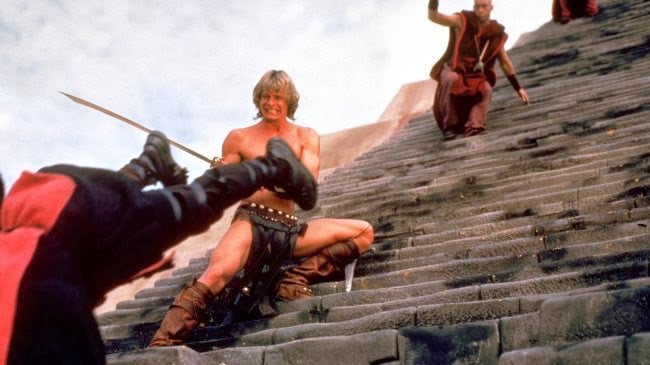
    This week on “Picture Perfect,” we venture very far from Turner Classic Movies territory with an hour of guilty pleasures, as we listen to music from sword and sandal flicks from the 1980s.

    These include “The Beastmaster” (1982), a film that was once so pervasive on cable that comedian Dennis Miller branded HBO as “Hey, Beastmaster’s On!” and TBS was known in some circles as “The Beastmaster Station.” I still haven’t seen it, believe it or not, but I know it has something to do with swords, sandals, two ferrets, and Tanya Roberts.

    The music by Lee Holdridge is given the royal treatment, in a performance conducted by Charles Gerhardt, of RCA’s legendary “Classic Film Scores” series, on an album produced by George Korngold (son of Erich Wolfgang Korngold).

    To prove that I have no reason to lie to you about not having seen “The Beastmaster,” I enthusiastically embrace the fact that, as a 15 year-old, I totally lapped up “The Sword and the Sorcerer” (1982). And since I still love everything now that I did when I was 15, you can draw your own conclusions.

    A pre-“Matt Houston” Lee Horsley stars as Talon, a mercenary-warrior of royal blood, who wields an improbable sword with three blades that can be projected, by unexplained means, like lethal rockets. There’s also a hideous wizard played by Richard Moll, who went on to play Bull on television’s “Night Court,” king of the B-movie villains Richard Lynch, and George Maharis.

    This is the best example I can think of of a really trashy movie with a fantastic score. Revisiting the music for “The Sword and the Sorcerer” merely affirms what I’ve known for a long time – that 1982 was a kind of second Golden Age for film scores, when even the terrible movies had fabulous music. The first Golden Age, of course, was roughly 40 years earlier – though the movies were generally better.

    English composer David Whitaker, a veteran of 1970s Hammer Films, relates in the album’s liner notes that he wrote and orchestrated 75 minutes of music at white heat. The result sounds like one of the great scores of three or four decades earlier. If you like Korngold, John Williams, or Vaughan Williams, for that matter, definitely check this one out.

    “Clash of the Titans” (1981) had a much more distinguished pedigree. It was the last film of stop-motion special effects genius Ray Harryhausen before his retirement. Harryhausen was responsible in large part for such classic films as “Mighty Joe Young,” “It Came from Beneath the Sea,” “Earth Versus the Flying Saucers,” “Jason and the Argonauts,” and any number of Sinbad movies.

    The supporting cast employed Sir Laurence Olivier as Zeus, Claire Bloom as Hera, Maggie Smith as Thetis, and Ursula Andress as Aphrodite, alongside Burgess Meredith and Flora Robson in her final film appearance. It was also the film that introduced Harry Hamlin, as Perseus. Hamlin went on to success on television’s “L.A. Law.”

    Laurence Rosenthal, who studied at the Eastman School and with Nadia Boulanger in Paris, wrote the score. Rosenthal was responsible for the music for, among others, “A Raisin in the Sun,” “The Miracle Worker,” and “Becket.” This one actually does turn up on TCM from time to time.
    While “The Clash of the Titans” was an end of an era of sorts, the success of “Conan the Barbarian” (1982) sparked a sword and sandal resurgence. Of course, most of the imitators it spawned were low-budget affairs that nobody ever saw. “Conan” proved a high-water mark of its kind. It also made Arnold Schwarzenegger one of the biggest stars in Hollywood.

    It sports unquestionably the best-loved score of its composer, Basil Poledouris. The music is regarded in soundtrack collector’s circles as a classic. The original soundtrack was revived in a lavish 3-CD set on the Intrada label, featuring all the available music, with alternate takes.

    If this hour serves to illustrate anything, it’s that the overall quality of a film (or lack thereof) need not hinder a composer. At least back then. If you decide to stick with it, I think you’ll be pleasantly surprised.

    Release the Kraken! Then slip on your man-flops for an hour of ‘80s sword and sandal flicks, on “Picture Perfect,” music for the movies, this Saturday evening at 6:00 EDT, on WWFM – The Classical Network and wwfm.org.

  • Kronos Vampire Hunter & David Frankham Discussion

    Kronos Vampire Hunter & David Frankham Discussion

    Last night, Roy and I were armed to the teeth for a discussion of “Captain Kronos, Vampire Hunter.” For once, the digressions were practically necessary to the conversation about this off-the-wall Hammer cult classic, in which basically anything goes. Is it horror? Swashbuckler? Spaghetti western? Japanese chanbara? The program has been archived for your belated enjoyment here:

    Tomorrow night, we’ll speak with actor David Frankham, on a special Sunday edition of Roy’s Tie-Dye Sci-Fi Corner. Frankham’s resume encompasses a colorful cross-section of classic film and television. In particular, he has been elevated to a kind of “Star Trek” nobility for his role in the original series episode “Is There in Truth No Beauty?” He also co-starred in the film “Master of the World,” with Vincent Price and Charles Bronson, which we only just discussed the week before last.

    Regrettably, because of technical issues at Trekonderoga, our conversation had to be rescheduled. We hope you used that extra time to prepare! Leave your questions in the comments section, during a frank discussion with David Frankham, when we livestream on Facebook, tomorrow evening at 7:00 EDT!

    https://www.facebook.com/roystiedyescificorner

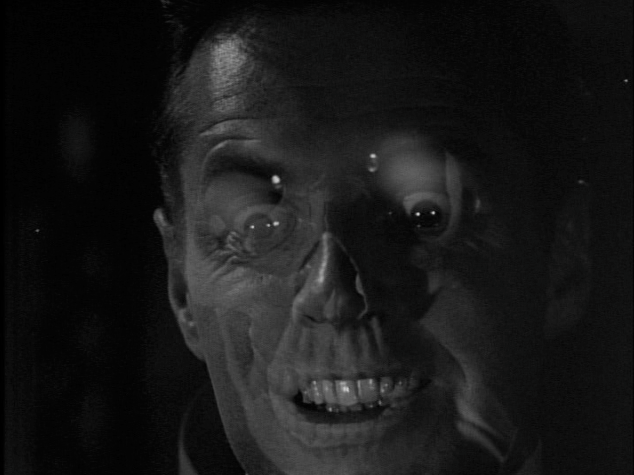
    In the meantime, watch Frankham transform into a monstrous skeleton, as a “magician,” in the opener of this classic episode of Boris Karloff’s “Thriller.” The episode also features Henry Daniell and Marion Ross, later “Mrs. C” on “Happy Days!”

    https://www.youtube.com/watch?v=xkKHxCBPLv8

  • October Fantasy with Classical Music’s Dukas

    October Fantasy with Classical Music’s Dukas

    Classical music lends itself well to fantasy. And fantasy lends itself very well to October, the month of Halloween.

    Take the case of Paul Dukas, born on this date in 1865. Dukas composed an opera about Bluebeard and his sixth wife, and a so-called dance poem, “La Péri,” about a fatal encounter with a Persian fairy.

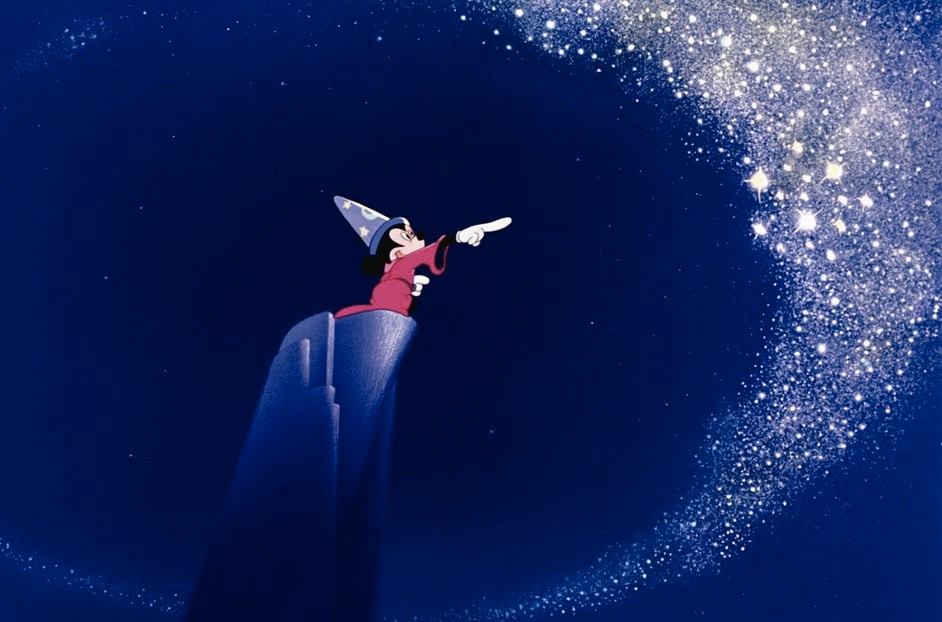
    But far and away his most famous work is “The Sorcerer’s Apprentice,” after Goethe, who based it on an ancient tale. It was that old wizard, Walt Disney, who did more for the piece than anyone else.

    The music is fantastic in more ways than one. Happy birthday, Paul Dukas!


    “La Péri”

    A production of “Ariane et Barbe-Bleue” from Lyon Opera

    https://www.arte.tv/en/videos/102815-000-A/dukas-ariane-et-barbe-bleue/

    The world’s most beloved vermin as “The Sorcerer’s Apprentice”

    https://video.disney.com/watch/sorcerer-s-apprentice-fantasia-4ea9ebc01a74ea59a5867853?fbclid=IwAR1YWAfXrDpearLdzRlxlpKC1Phe9aCh8D-Mxcz0sPkMP4rKPyEr2bTG_zs

Tag Cloud

Aaron Copland (93) Beethoven (95) Composer (114) Film Music (136) Film Score (143) Film Scores (255) Halloween (94) John Williams (195) KWAX (229) Leonard Bernstein (103) Marlboro Music Festival (125) Movie Music (151) Mozart (88) Opera (207) Philadelphia Orchestra (89) Picture Perfect (174) Princeton Symphony Orchestra (108) Radio (88) Ross Amico (244) Roy's Tie-Dye Sci-Fi Corner (290) The Classical Network (101) The Lost Chord (268) Vaughan Williams (103) WPRB (396) WWFM (881)

DON’T MISS A BEAT

Receive a weekly digest every Sunday at noon by signing up here


RECENT POSTS