Category: Daily Dispatch

  • Edgar Rice Burroughs Still Thrills

    Edgar Rice Burroughs Still Thrills

    It’s probably true that everything I liked as a kid, I still like now.

    I was already in my teens by the time I discovered Edgar Rice Burroughs. My family was about to move into a new house, and I was supposed to be painting the interiors. Instead, I spent huge swaths of the day reading about John Carter of Mars (or Barsoom, as it’s called by the natives). Eventually I finished the job, but it did not escape my mother’s notice that it took an awfully long time.

    Years later, as I was just getting sucked into the internet, I belonged to an online book chat, and one of the topics we discussed was what we enjoyed reading as we were growing up. I mentioned Burroughs, which spurred one of the other contributors to remark, “Some things are probably better left to memory.”

    Fast forward another decade. I was sifting through a box of my old paperbacks, when my eyes settled on Michael Whelan’s vibrant cover art, with its six-limbed Green Martians, scantily clad princesses, mad scientists, and swords everywhere. Why would I not want to re-explore?

    And you know what? The stories were still terrific.

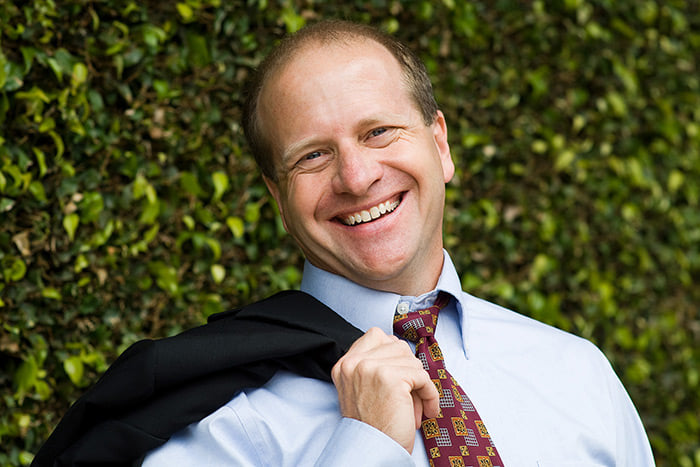
    Scott Tracy Griffin will be our guest on an upcoming episode of “Roy’s Tie-Dye Sci-Fi Corner.” Griffin is a world authority on Burroughs. In particular, he has written extensively on the author’s most famous creation, Tarzan of the Apes. Needless to say, I am taking my preparation entirely too seriously – if having this much fun can be considered serious. I have read literally thousands of pages of Burroughs in preparation for the interview.

    Is Burroughs a great writer? From a literary standpoint, probably not. Even his plots can seem a little slapdash, written as they were for the pulps. But he is unquestionably a master entertainer. There is a raw power to his stories and a flamboyant passion underlying his descriptions that defy criticism. It’s easy to understand why he had such a lasting impact on figures ranging from Ray Bradbury to George Lucas to Carl Sagan.

    And it’s not like he doesn’t have anything to say. The stories are full of interesting, amusing, and occasionally horrifying observations about social constructs (practical and peculiar), race relations, overweening science, religious fanaticism, ivory tower intellectualism, autocratic rule, greed, lust, love, honor, sacrifice, environmental peril, the beauty of nature, and the mysteries of existence. Furthermore, since his characters and settings extend over multiple narratives, he is able to fully develop these magical, transporting worlds.

    Maybe Africa and Mars are not as strange and distant as they once seemed in the nineteen-tens (the era that produced Tarzan and John Carter). But Burroughs’ imagination is evergreen in its inspiration and fascination.

    Also, I love his crazy science! It’s not enough for Burroughs to build these insane worlds; he actually attempts at many points to explain how everything works. That his speculative flights are rooted in the science and technology of his own time makes them all the more fascinating. I love that people on Mars travel in aerial warships powered by propeller, and that no one seems to have developed methods of long-distance communication.

    Furthermore, despite the existence of rifles and sidearms, swords are still the preferred method of defense. Castles and walled cities are common. So as much as Burroughs looks forward, he also looks back.

    Sure, a broken clock is right twice a day, but give Burroughs some credit. He may lack the respectability of Jules Verne and H.G. Wells, but he did anticipate wireless technology, the teletype, radar, sonar, the radio compass, autopilot, television, cloning, organ transplants, and the use of radiation in warfare.

    Now that “Tarzan of the Apes,” The Return of Tarzan,” and “A Princess of Mars” have all been picked up by Penguin Classics, it’s high time to give Burroughs his due. Tarzan has been as enduringly popular as Sherlock Holmes and more insinuatingly primal than Conan Doyle’s other hero, Professor Challenger. And if you only know Tarzan from the movies, you don’t know Tarzan! These are simple adventure tales, to be sure, but they are also thought-provoking reflections of the era in which they were written that still have the power to enthrall today. Who knew? They are classics, after all.

    It’s the summer of Edgar Rice Burroughs! Join us as we chat about these topics and more with author Scott Tracy Griffin, on Roy’s Tie-Dye Sci-Fi Corner, when we livestream on Facebook, Sunday, August 8, at 7 PM EDT.

    https://www.facebook.com/roystiedyescificorner

    PLEASE NOTE: There will be no show this weekend, but Roy and I will be back on Friday, August 6, to discuss the 1961 Irwin Allen film, “Voyage to the Bottom of the Sea.”


    PHOTOS (counterclockwise from top): Burroughs authority Scott Tracy Griffin, his book “Tarzan: The Centennial Celebration,” the last of the John Carter collections, and the master himself
  • Riccardo Muti at 80 A Maestro’s Legacy

    Riccardo Muti at 80 A Maestro’s Legacy

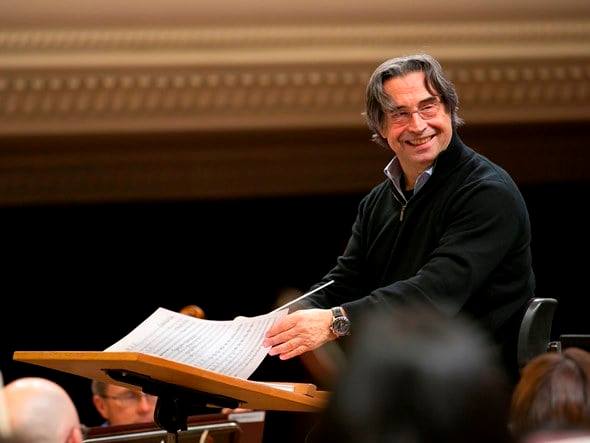
    Aloof. Self-serious. Inordinately proud of his hair. In many ways, he’s like the anti-Yannick. You would never catch him in his workout clothes. Though, come to think of it, it would have been very interesting had Riccardo Muti been music director of the Metropolitan Opera while he held the reins of the Philadelphia Orchestra.

    Like there’s not enough drama at the opera.

    Muti served as music director at La Scala, one of the world’s most venerable opera houses, for 19 years (from 1986 to 2005). By the end of his tenure, the collective mood of the musicians and administration was as black and thick as a Milanese espresso. Following his departure, he would not set foot in the theater again for eleven years, tensions thawing only for the occasion of his 75th birthday. That was in 2016.

    In May of this year, he returned – to lead the Vienna Philharmonic, no less, not the resident orchestra – to mark the 75th anniversary of La Scala’s reopening following World War II. But in-house conflict was still brewing.

    When, after the performance, the opera’s current music director, Riccardo Chailly, came to congratulate Muti – to whom he’d lent his own dressing room for the occasion – Muti reacted by telling Chailly to get lost. (More specifically, to “get off my balls.”) At first, those present thought Muti had to be kidding. But he had already eviscerated a television crew, there to document the concert, mistaking them for intrusive journalists, and torn into La Scala’s press officer. Later, he claimed not to have recognized Chailly, because Chailly was wearing a mask.

    Don’t ever change, Maestro.

    Muti is 80 years old today. If he has mellowed, it is perhaps only in the voltage of his performances. His ego is intact, his temper is in good health, and his hair has lost none of its bounce. And I say this as a Muti “fan.”

    This is not an artist without his flaws. There are those who contend that he dismantled the “Philadelphia sound,” cultivated for nearly seven decades by Leopold Stokowski and Eugene Ormandy. A more objective assessment would be that he brought the orchestra up to modern standards of adapting performance practice to suit the given repertoire, as opposed to applying the same overarching technique to, say, Mozart and Mahler.

    He certainly didn’t make any friends by dressing down his audience. If someone applauded at the wrong time, he or she would be met with, at the very least, a withering gaze. But it was also not unheard of for him to literally stop a performance to deliver a stern reprimand. I shudder to think how he would have reacted had it been the era of cell phones.

    Muti was never accessible or touchy-feely in the manner of Yannick, Philadelphia’s current music director, who has gone out of his way to be the people’s conductor. Dressed down and tattooed. Loquacious. A smile for everyone. Muti maintained the maestro mystique, with a fair amount of old school contempt perched coolly beneath a veneer of civility. There was always something of the aristocrat about him, a high priest ever-alert to the threat of profanation in his Temple of High Art.

    Now, nearly four decades later, Muti is one of classical music’s old lions. And I find I can’t help but agree with him on some points regarding the state of the art, as expressed in his interviews. I confess I haven’t really followed his career in Chicago. They seem to love him there. He currently commands the highest salary of any conductor (at roughly $3.5 million per annum).

    This has turned out to be a harder-edged post than I intended, certainly more so than the one I wrote a few years ago, on the occasion of Muti’s 76th birthday. I don’t want to give the impression that I am not forever grateful for all the thrilling performances I attended at Philadelphia’s Academy of Music, throughout the 1980s and into the ‘90s. In many ways, for me, these concerts have never been surpassed. Part of it must be attributable to the intimate nature of the hall, since abandoned for the cavernous Kimmel Center for the Performing Arts. At the Academy, Muti was like an uncaged lion in a miniature Coliseum.

    Muti wanted his new hall, and it frustrated him no end that it was so long coming. It’s no secret that the delays contributed to his departure from Philadelphia. As with La Scala, there was always the sense that the break was not entirely amicable. If memory serves, he has returned to conduct in Philadelphia only once.

    He has his vanities and shortcomings, to be sure, but it is evident he sincerely loves music. And he believes in the integrity of his art. He may not be the greatest conductor since Toscanini, whom he professes to emulate in his claimed deference to “the score.” But in concert, very few of Muti’s performances are museum pieces – or at least they weren’t, in Philadelphia. There was always plenty of passion roiling beneath the ermine cloak of “authenticity.”

    For the countless hours of thrilling performances, I thank you, Maestro Muti. Happy 80th birthday.


    Since I have painted him as such a horrible person, here’s a speech he delivered, in acceptance of the honor of Musician of the Year from Musical America. It shows that Muti is capable of exhibiting a sense of humor, if only on his own terms.

    Muti having the time of his life rehearsing – and singing! – “Nabucco” at La Scala:

    Muti demonstrates some of that Philadelphia electricity in this live performance of Elgar’s concert overture “In the South”

    A Muti specialty and an old favorite – Martucci’s “Notturno.” Good to see the old crew again – Norman Carol, William de Pasquale, Luis Biava, Joseph de Pasquale, Richard Woodhams, Anthony Gigliotti. A great orchestra. Although I do hate it when local news personalities are brought in to host these telecasts. They never can seem to talk enough. Totally stomps the enchantment woven by the music.

    https://www.youtube.com/watch?v=Etl4QqVN2sc

    “Va, pensiero” at the Rome Opera:

    The Maestro allowing a rare encore, with audience participation:

    https://www.youtube.com/watch?v=G_gmtO6JnRs

  • Granados and Freddie Mercury Barcelona Connection

    Granados and Freddie Mercury Barcelona Connection

    What do Enrique Granados and Freddie Mercury have in common?

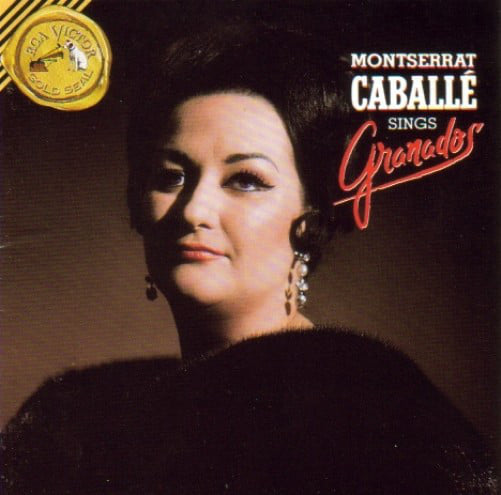
    Granados undertook piano studies in Barcelona and, following an interlude at the Paris Conservatory, returned to achieve his first successes there in the 1890s. A century later, Mercury sang his smash hit “Barcelona” in the city, in duet with soprano – and Barcelona native – Montserrat Caballé.

    Caballé, a champion of Granados’ songs, was approached to come up with something celebratory, after Barcelona was selected as the home of the 1992 Summer Olympics. She enlisted Mercury, an enthusiastic operaphile and a Caballé fan. Furthermore, she suggested that “Barcelona” should be more than just a single, and that their teaming should encompass an entire album. Mercury was delighted. They began recording together in 1987.

    Sady, both Granados and Mercury wound up dying before their time. Granados drowned while attempting to save his wife after their ship was torpedoed by a German submarine in 1916; Mercury succumbed to AIDS-related illness in 1991.

    Following Mercury’s death, “Barcelona” was embraced as the official anthem of the 1992 Summer Games. During the opening ceremony, Caballé sang her part live, opposite Mercury on a video screen. Fueled by Olympic fever, the song became one of the biggest “solo” hits of Mercury’s career.

    Finally, Granados and Mercury both wore signature mustaches. Mercury had already shaved his prior to this live performance:

    Caballé sings Granados’ “The Maiden and the Nightingale”:

    Caballé remembers Freddie Mercury in her final interview. (The subtitles are a little choppy, but someone provides a more fluent translation in the comments section beneath the video.)

    This post is what happens when the birthday of Enrique Granados coincides with the Summer Olympics!

  • Olympics Lost Arts Forgotten Games

    Olympics Lost Arts Forgotten Games

    Some things never change.

    It was the vision of Pierre de Coubertin, in founding the modern Olympic Games, that his competition would uphold the classical ideal of all-around excellence. This meant not only in athletics, but also in music and literature. This is what would elevate his Games above all other sports championships.

    Unfortunately, even in 1896, the concept proved to be a hard sell. In fact, it wasn’t until 1912, in Stockholm, that Coubertin’s original plan received any kind of traction. That’s the year Riccardo Barthelemy, Caruso’s pianist, received a gold medal for his “Marcia trionfale olimpica” (“Olympic Triumphal March”).

    It was not only the committee that proved to be suspicious of this particular aspect of the competition. The world’s great composers also demonstrably shied away. While undoubtedly well-intentioned, those who initiated the event had little experience in the arts. They were accustomed to judging speed and distance, as opposed to compositional excellence. Furthermore, the musical submissions were expected to be in some way sports-oriented. Composers love awards as much as anyone, but this particular contest, initiated in the Titanic year of 1912, seemed like a recipe for disaster.

    By 1924, for the Olympiad in Paris, the committee managed to assemble a panel of 43 judges, some of them very reputable indeed, including Igor Stravinsky, Béla Bartók, and Maurice Ravel. Unfortunately, with so many chefs, they couldn’t come to a consensus – or perhaps harbored reservations about the quality of the entries – and no medal was awarded.

    In 1928, the best they could muster was a bronze for Rudolph Simonsen, who later became director of the Royal Danish Academy of Music.

    The most famous composer to participate in these Olympic competitions was Josef Suk – pupil and son-in-law of Antonin Dvořák – and even he only merited a silver in 1932.

    Eventually, to cloak the embarrassment of not generating enough medals, the ranking system was replaced with “Honorable Mention.” It was hoped the category would continue to be attractive to promising young composers, but it virtually killed the possibility of drawing any big names.

    Arts competitions remained part of the Olympic Games until 1948. Other categories included architecture, literature, painting, and sculpture. Ultimately, these competitions were discontinued because of concerns about the artists being professionals, in contrast to the amateur status of the athletes. A non-competitive art and cultural festival has been presented in conjunction with the games since 1952. A vast majority of the music composed for these Olympic competitions has never been recorded.

    Rudolph Simonsen, Symphony No. 2 “Hellas” (1928 Bronze Medal winner)

    Josef Suk, “Towards a New Life” (1932 Silver Medal winner)

  • Arthurian Art The Lost Chord’s Musical Knights

    Arthurian Art The Lost Chord’s Musical Knights

    King Lot, Lancelot, Camelot – that’s a lot of “lots.”

    This Sunday night on “The Lost Chord,” we put the “art” in “Arthur” with musical treatments of the Arthurian legends by two peripatetic American Romantics,

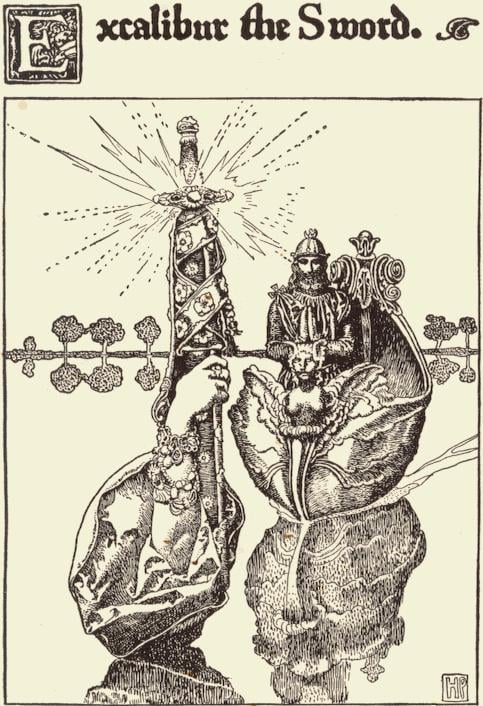
    We’ll hear “Excalibur,” a symphonic poem after Arthur’s enchanted sword, by Louis Coerne (pronounced “Kern”). Coerne was born in Newark, NJ, in 1870. As was the custom at the time, he studied abroad, in France and Germany, then closer to home with John Knowles Paine. In Munich, he pursued organ and composition studies with Josef Rheinberger.

    After that, it was back and forth to Germany, between church and conducting appointments in the United States, and then the assumption of a series of academic posts throughout the American Northeast and Midwest. Despite all the worn shoe leather, in his 52 years he managed to produce 500 works.

    The remainder of the hour will be devoted to the Straussian tone poem “Le Roi Arthur,” a work in three movements, by George Templeton Strong, son of the famous Civil War diarist, born in 1856. Strong Jr. studied at the Leipzig Conservatory, where Joachim Raff was among his teachers. For a time, he played viola in the Gewandhaus Orchestra. He rubbed shoulders with Liszt and Wagner, then was lured back to the United States by the offer of a teaching position (by former European transplant Edward MacDowell) at the New England Conservatory.

    However, in part because the work didn’t agree with him, and in part because of health issues, Strong soon took off for Switzerland, where he settled on the banks of Lake Geneva. There, he dedicated the remainder of his life to painting watercolors and composing. Even after musical fashion had changed, he continued to play an active role in Geneva’s musical life.

    I hope you’ll join me for “Kinetic Yankees in King Arthur’s Court.” Break a lance for Arthur, this Sunday night at 10:00 EDT, on WWFM – The Classical Network and wwfm.org.


    BONUS! Wholly by coincidence, this year’s opera at Bard Summerscape is Ernest Chausson’s rarely-staged “Le Roi Arthus.” I can’t speak for the production, not having seen it, but Bard generally does a fine job with anything they put their musical minds to. You can make it a full Arthurian evening by enjoying the livestream tonight at 6:30 pm. The running time of the opera is 3 ½ hours, so it should end just in time for the start of “The Lost Chord.”

    https://fishercenter.bard.edu/events/king-arthur/

Tag Cloud

Aaron Copland (93) Beethoven (95) Composer (114) Film Music (136) Film Score (143) Film Scores (255) Halloween (94) John Williams (195) KWAX (229) Leonard Bernstein (103) Marlboro Music Festival (125) Movie Music (151) Mozart (88) Opera (207) Philadelphia Orchestra (89) Picture Perfect (174) Princeton Symphony Orchestra (108) Radio (88) Ross Amico (244) Roy's Tie-Dye Sci-Fi Corner (290) The Classical Network (101) The Lost Chord (268) Vaughan Williams (103) WPRB (396) WWFM (881)

DON’T MISS A BEAT

Receive a weekly digest every Sunday at noon by signing up here


RECENT POSTS