Category: Daily Dispatch

  • Richard Strauss: Nazi Puppet or Pragmatist?

    Richard Strauss: Nazi Puppet or Pragmatist?

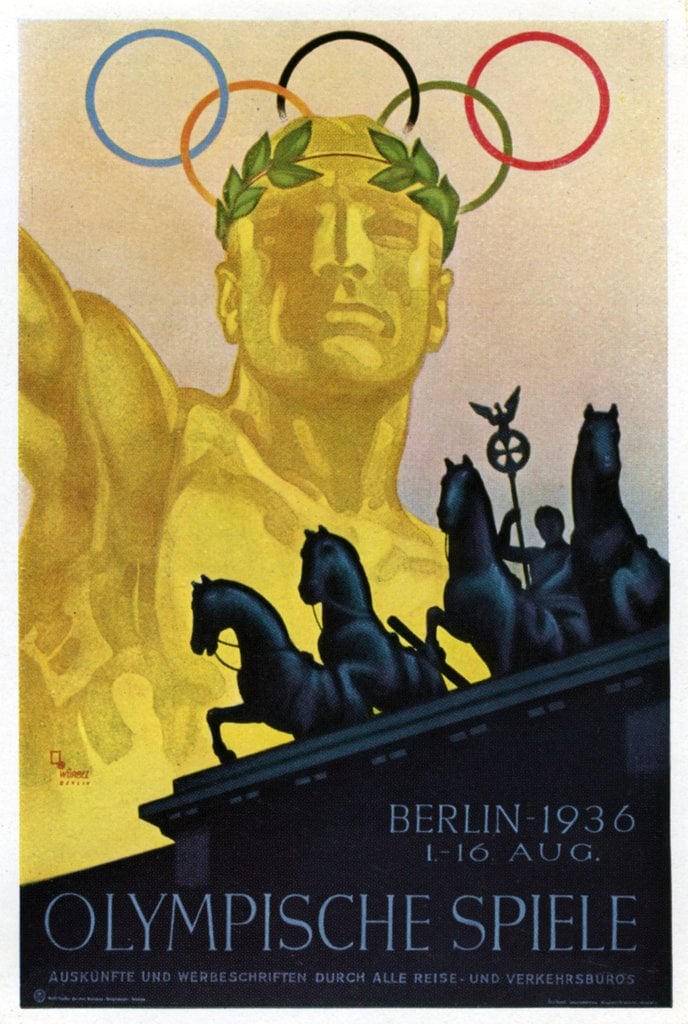
    When Richard Strauss wrote and conducted his “Olympic Hymn” for the 1936 Berlin Games, his seeming willingness to act as a puppet for the Third Reich earned him international criticism. But Strauss was no Nazi.

    In 1933, Strauss was named president of the newly instituted Reichsmusikkammer. He was not consulted on the appointment and accepted it as what he saw as a preventative measure, hoping to head-off reorganization of German musical life by “amateurs and ignorant place-seekers.”

    Professionally, he did what he could to preserve musical culture, extending copyrights, conducting works by banned composers (like Mendelssohn and Mahler), and continuing to collaborate with Jewish artists (like Stefan Zweig). In fact, he became such a thorn in the side to the Nazi regime that Goebbels wrote in his diary, “Unfortunately we still need him, but one day we shall have our own music and then we shall have no further need of this decadent neurotic.” For his part, Strauss referred to Goebbels as a “pipsqueak.”

    Unfortunately, the composer’s subversive correspondence was intercepted by the Gestapo and forwarded to Hitler himself. Strauss was quietly demoted (on the grounds of “ill health”), dismissed from his position in the Reichsmusikkammer, and trotted out thereafter only for propaganda purposes, most notably at the 1936 Games. His music was appropriated by filmmaker Leni Reifenstahl for her paean to German athletic prowess, “Olympia.”

    Part of Strauss’ motivation in playing along was to protect those closest to him, including his daughter-in-law, Alice Grab Strauss (née von Hermannswörth), and his grandchildren, all Jewish. Late in the war, Alice was arrested, and Strauss was barely able to secure her release. Thereafter, everyone was kept under house arrest. Strauss could do nothing to save to her relations. 32 members of Alice’s family died in concentration camps.

    Strauss never joined the Nazi Party and refused to give the Nazi salute. He may have been naïve to think he could do anything to stem the regime’s calamitous torrent, but he wasn’t stupid. With the rise of Hitler, he believed, or rather hoped, that he could keep his head down and quietly accomplish what good he was able until the storm had passed.

    In 1948, at the age of 84, he was cleared of any wrongdoing by a denazification tribunal. Still, for many, a pall hung over his reputation. The demonstratively anti-fascist Toscanini, who resigned his position as director of the Bayreuth Festival in 1933 (to be replaced by Strauss), is said to have told Strauss to his face, “For Strauss the composer, I take my hat off. For the Strauss the man, I put it on again.”

    It was in the final months of World War II that Strauss composed his “Metamorphosen,” a lament for strings spanning nearly half an hour. In the work, he ruminates on the funeral march from Beethoven’s “Eroica” Symphony. At the bottom of the score is inscribed “In Memoriam.”

    Though Strauss never commented on the inspiration for the piece, it’s generally been interpreted as an elegy for German civilization, as symbolized by the opera house in Munich, city of his birth, laid waste by bombs. Strauss had a deep personal connection to the theater. He had attended performances there since boyhood and enjoyed many successful productions of his own works. His father played first horn in the orchestra for 39 years. Further, the destruction of the Vienna State Opera took place on the very eve of Strauss putting pen to paper.

    It may have been Allied bombs that brought physical devastation to the structures of Munich and Vienna, but Strauss harbored no illusions as to what was truly responsible for the ruination of all he loved.

    The composer confided in his diary, “The most terrible period in human history is at an end, the twelve year reign of bestiality, ignorance and anti-culture under the greatest criminals, during which Germany’s 2,000 years of cultural evolution met its doom.”


    Strauss’ “Olympic Hymn”

    “Metamorphosen”
  • Enrico Caruso Silent Film Superstar

    Enrico Caruso Silent Film Superstar

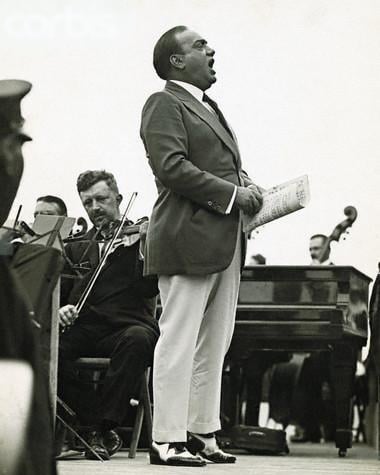
    It’s a cruel irony that the first superstar of the gramophone would have appeared in a silent movie. Here’s Enrico Caruso in a dual role, in the 1918 film “My Cousin.”

    Caruso’s “Vesti la giubba,” from Leoncavallo’s “Pagliacci,” was the first million-selling recording. He performs it in the movie – without sound!

    However, he did record it three times, in 1902, 1904, and 1907. Here are all three versions, the first two with piano, and the last with orchestra. It’s one of those arias you know, even if you think you don’t.

    Caruso was paid $100,000 to appear in “My Cousin.” Unfortunately, the film bombed at the box office. I guess no one thought about Caruso’s celebrity being tied up with, you know, HIS EXTRAORDINARY VOICE (though Caruso was hardly the only opera singer to appear in the silents). In the meantime, a second Caruso vehicle, “The Splendid Romance” – for which he was also paid $100,000 – was shot, but apparently never released.

    The Great Caruso died 100 years ago today. It’s believed that an on-stage injury precipitated his untimely demise at the age of 48. But the overeating, sedentary lifestyle, and strong Egyptian cigarettes couldn’t have helped. His final months were a phantasmagoria of ailments and surgeries.

    Thousands turned out for his funeral in Naples. For the better part of a decade, his remains were kept on display in a glass sarcophagus, until his wife had him sealed up in an ornate tomb.

    Thanks in part to his 247 records, which wound up earning millions of dollars in royalties, Caruso became one of the first global celebrities. In all, he appeared at the Old Met 863 times. He toured extensively throughout Europe, and North and South America, singing in all the major opera houses. A single appearance in Cuba earned him $10,000. That he was able to achieve the level of superstardom he did, before radio, television, or even transatlantic telephone service, is astonishing.

    “Di quella pira” from “Il Trovatore”

    One of the best-known Neapolitan songs

    Caruso does his part for the war effort

  • Shelley’s Summer Serenade on The Lost Chord

    Shelley’s Summer Serenade on The Lost Chord

    Music, when soft voices die,
    Vibrates in the memory…

    This Sunday night on “The Lost Chord,” ‘tis an hour of seasonal works inspired by Percy Bysshe Shelley and friends.

    Hearken to Geoffrey Bush’s “A Summer Serenade,” from 1948, settings of poems by Shelley, James I of Scotland, Samuel Daniel, William Blake, Thomas Heywood, and the ever-prolific Anonymous.

    Then listen, listen, Mary mine, to Arnold Bax’s “Enchanted Summer,” from 1918, the text drawn from Act II, Scene 2, of Shelley’s “Prometheus Unbound.” Composed in the midst of a run of Bax’s better-known nature poems (on the one hand, “Into the Twilight” and “In the Fairy Hills,” and on the other, “Nympholept” and “The Garden of Fand”), the work opens with the play of light and shadow on a forest floor, traverses mysterious caves and crags, and conjures woodland spirits; dallies with “voluptuous nightingales;” and eavesdrops on the exchange of two fauns, who contemplate the wondrous things they have witnessed.

    In conclusion, bring hot blushes to thy cheek, with one of Romantic poetry’s most protracted pick-up lines and Roger Quilter’s “Love’s Philosophy,” from 1905.

    ’Tis mine hope that thou wilt join me for “Summer Shelley, Some Are Not.” The dulcet music swells, this Sunday night at 10:00 EDT on WWFM – The Classical Network and wwfm.org!

  • Tyrannical Sea Captains in Movie Music

    Tyrannical Sea Captains in Movie Music

    This week on “Picture Perfect,” taste the lash and prepare to be keelhauled! We’ll have music from movies featuring tyrannical sea captains.

    Tyranny and sadism are common ingredients in nautical adventure films, where hard-bitten sea captains find it “Better to reign in Hell, than serve in Heaven.”

    At least that’s the mantra of Wolf Larsen, who does his best to uphold the philosophy of Milton’s Satan, in Jack London’s “The Sea Wolf” (1941). Larsen is a tough Norwegian sea captain who presides over his ship, the Ghost, with strength and brutality.

    Edward G. Robinson plays Larsen. John Garfield is the working class seaman who opposes him. And Ida Lupino is the castaway with a past, with whom he falls in love in spite of himself. The score is by Erich Wolfgang Korngold, who also provided the music for the seafaring adventures of Errol Flynn.

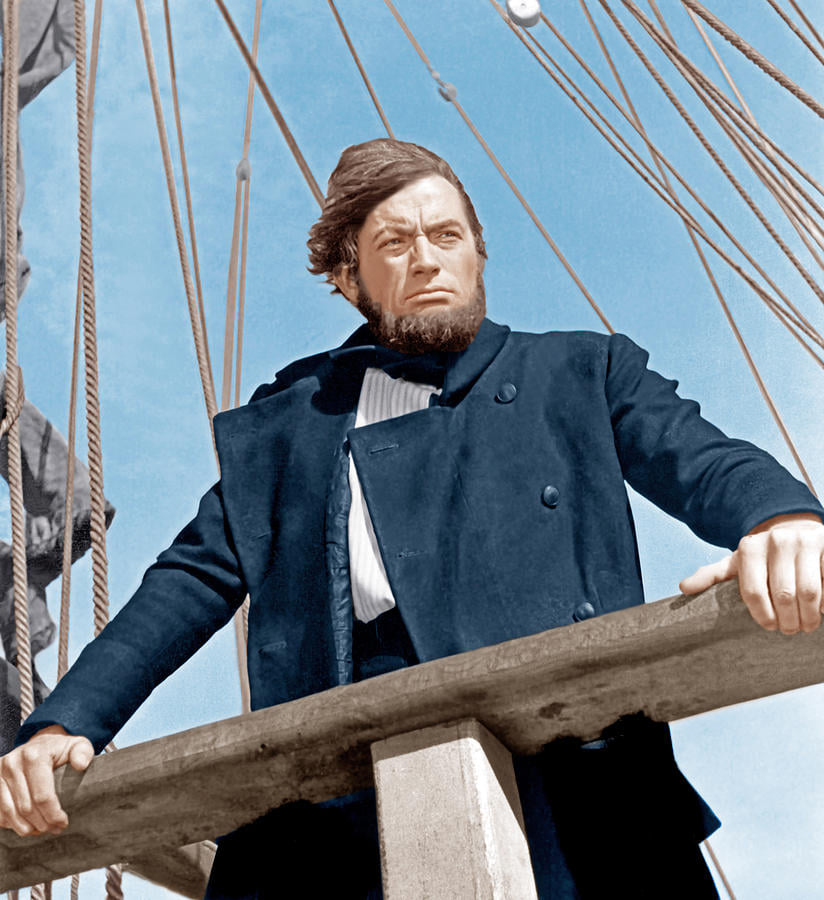
    Captain Ahab requires little introduction. Everyone knows his ivory leg and his obsessive quest for the White Whale. Gregory Peck plays him in a film version of Herman Melville’s “Moby Dick” (1956), which was adapted by Ray Bradbury and directed by John Huston. The score is by English composer Philip Sainton.

    Humphrey Bogart was nominated for an Academy Award for his performance as Lieutenant Commander Phillip Francis Queeg, in a big screen adaptation of Herman Wouk’s “The Caine Mutiny” (1954). Queeg, in charge of a U.S. Navy destroyer-minesweeper, is pushed over the edge by his obsession for strawberries pilfered from the officers’ mess. Max Steiner’s upbeat, patriotic theme provides a nice counterpoint to the interpersonal turmoil aboard the Caine.

    Finally, the most iconic of tyrannical sea captains, Captain Bligh, is represented by “Mutiny on the Bounty” (1962). Historical novelists Charles Nordhoff and James Norman Hall make hay from the 1789 insurrection aboard the HMS Bounty.

    The classic film version from 1935 starred Charles Laughton as Bligh and Clark Gable as Fletcher Christian. The remake featured Trevor Howard as Bligh, with Marlon Brando, envisioning Christian as a kind of high seas dandy.

    It’s said that Brando essentially directed all his own scenes himself. The film was colossal failure, earning back only $13 million of its $19 million budget. Nonetheless, it managed to inspire Bronislau Kaper to compose one of his most monumental scores.

    Take a bucket of salt water with your stripes, you dog! Then join me for tyrannical sea captains on “Picture Perfect,” music for the movies, this Saturday evening at 6:00 EDT, on WWFM – The Classical Network and wwfm.org!


    CAPTAINS OUTRAGEOUS (clockwise from left): Gregory Peck as Captain Ahab, Edward G. Robinson as Wolf Larsen, Humphrey Bogart as Captain Queeg, and Trevor Howard as Captain Bligh

  • Grant Johannesen A Centenary Celebration

    Grant Johannesen A Centenary Celebration

    Nobody likes a know-it-all.

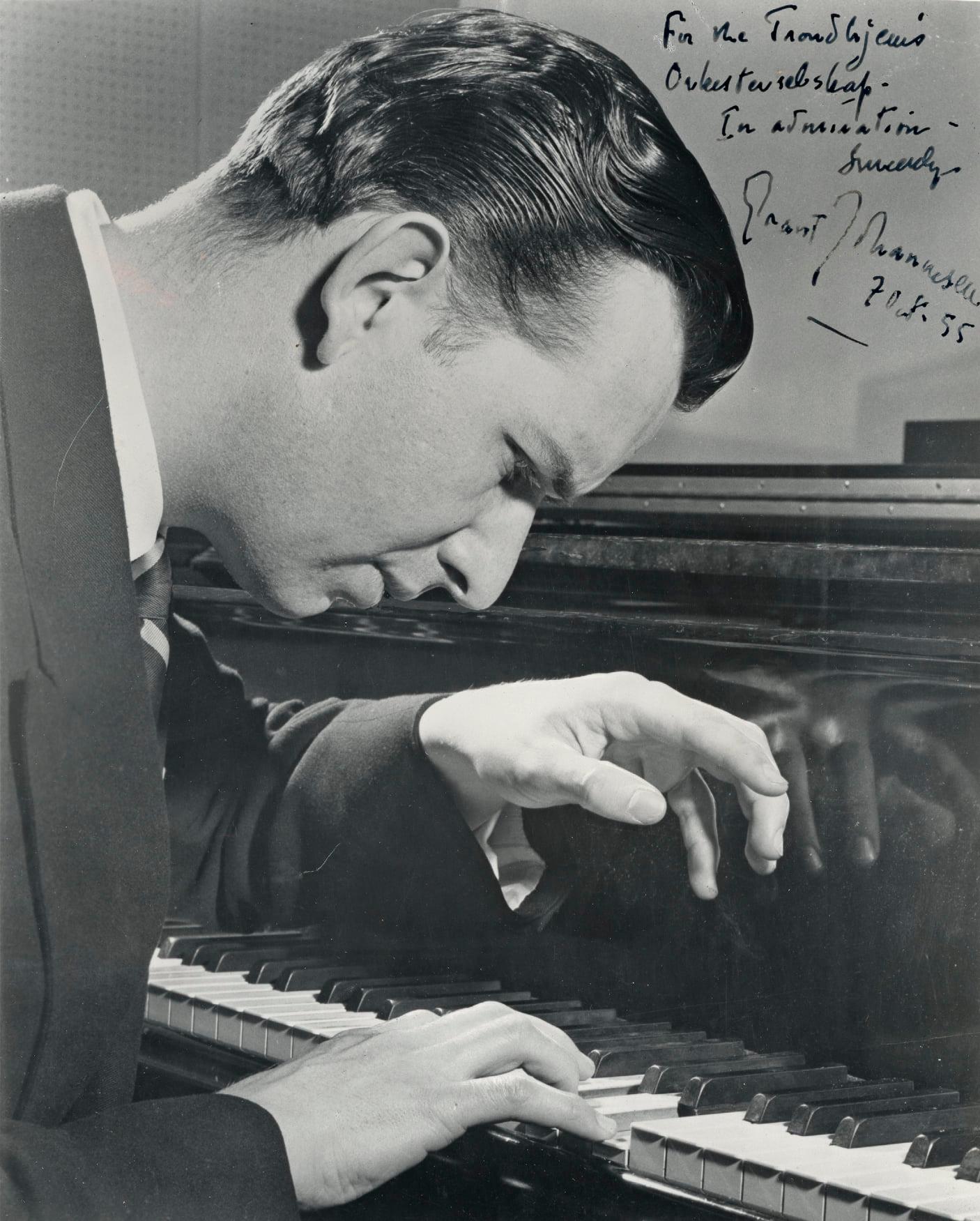
    When five-year-old Grant Johannesen’s first music teacher recognized his talent, as she heard him noodling on a piano across the street, her generosity soon turned to annoyance when she discovered that he could emulate anything she played. He went on to study with Robert Casadesus, Egon Petri, Roger Sessions, and Nadia Boulanger.

    Johannesen was born in Salt Lake City 100 years ago today.

    As an adult, he toured extensively, both with the New York Philharmonic under Dmitri Mitropoulos, and as a solo pianist. He was particularly acclaimed for his elegant performances of French music, especially that of Gabriel Fauré.

    From 1974 to 1985, he served as director of the Cleveland Institute of Music. He was a frequent soloist with the Cleveland Orchestra and his hometown band, the Utah Symphony.

    Happy centenary, Grant Johannesen!


    Johannesen performs music by “American Indianist” Arthur Farwell (“Navajo War Dance”) and Samuel Barber (“Homage to John Field”)

    Johannesen plays “Nights in the Gardens of Spain” with the Cleveland Orchestra

    A lovely recital of French music presented at the Bergen Festival in 1973

    Fauré’s Fantaisie for Piano and Orchestra, Op. 111

    In conversation with David Dubal, now host of WWFM – The Classical Network’s “The Piano Matters”

Tag Cloud

Aaron Copland (93) Beethoven (95) Composer (114) Film Music (136) Film Score (143) Film Scores (255) Halloween (94) John Williams (195) KWAX (229) Leonard Bernstein (103) Marlboro Music Festival (125) Movie Music (151) Mozart (88) Opera (207) Philadelphia Orchestra (89) Picture Perfect (174) Princeton Symphony Orchestra (108) Radio (88) Ross Amico (244) Roy's Tie-Dye Sci-Fi Corner (290) The Classical Network (101) The Lost Chord (268) Vaughan Williams (103) WPRB (396) WWFM (881)

DON’T MISS A BEAT

Receive a weekly digest every Sunday at noon by signing up here


RECENT POSTS