Category: Daily Dispatch

  • Burroughs’ Lost World & Sci-Fi Livestream!

    Burroughs’ Lost World & Sci-Fi Livestream!

    It’s high adventure on a shoestring budget!

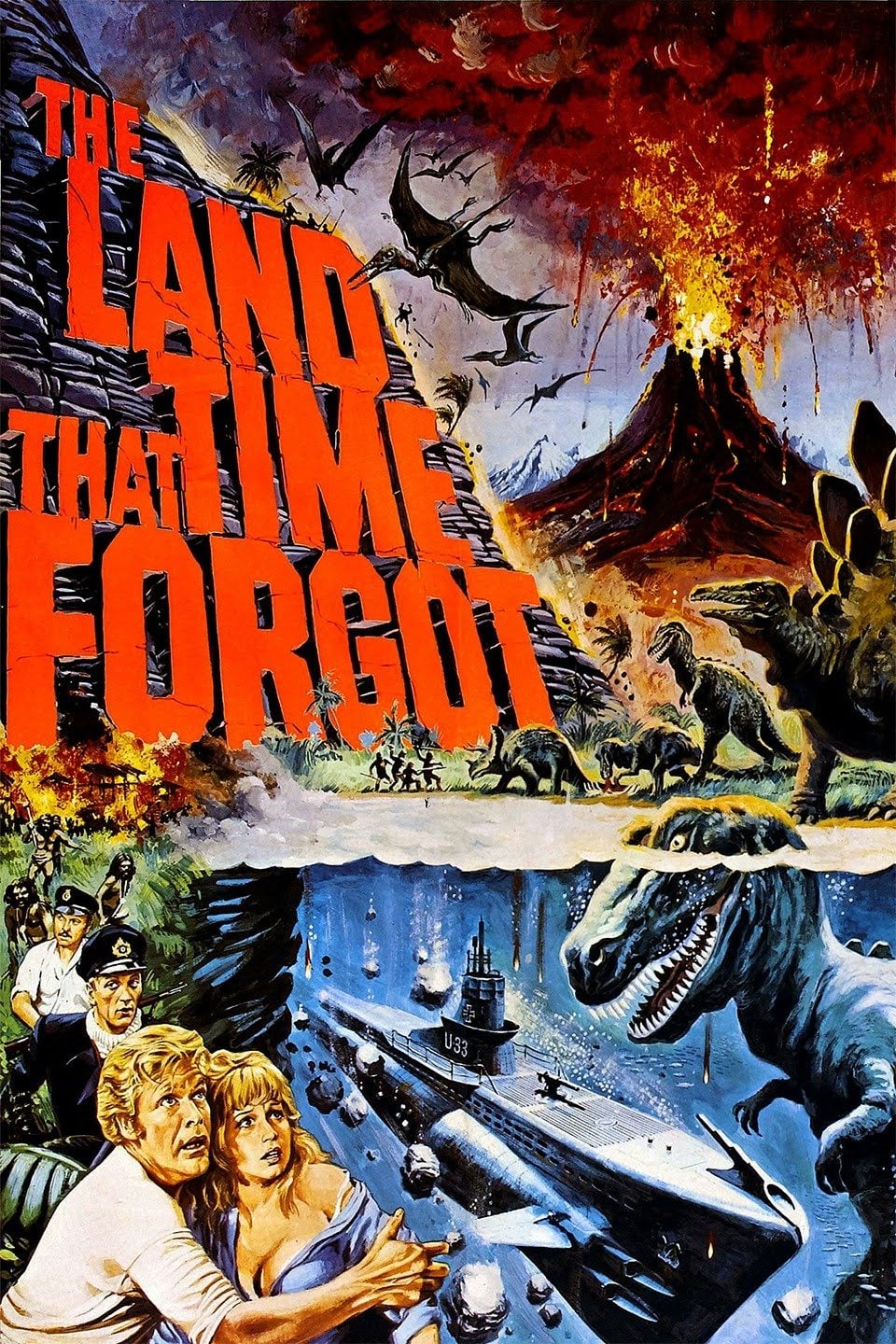
    In anticipation of our upcoming interview with Edgar Rice Burroughs authority Scott Tracy Griffin (to be livestreamed on Facebook on Sunday, August 22, at 7 pm EDT), Roy and I will sink our teeth into Burroughs’ “lost continent” adventure, “The Land That Time Forgot” (Amicus Productions, 1975).

    A commandeered submarine, crewed by World War I adversaries, arrives at an uncharted island somewhere off the coast of Peru. The island’s formation is such that conditions have not changed in millions of years! An uneasy alliance is formed as Germans, English, and Americans pull their resources to fight for their lives against prehistoric beasts.

    Man-eating dinosaurs! Unwashed Neanderthals! Erupting volcanoes! Doug McClure!

    RRRRRRRRRRRRRRRAAAAAAAAAAAAAA!!!!!!!!!!!!!!!!!!

    The U-boat departs this Sunday at 7 pm EDT!

    Griffin, who’s written extensively on Burroughs, including two lavish quasi-coffee table books, “Tarzan: The Centennial Celebration” and “Tarzan on Film,” will join us next weekend. He’ll have a lot to tell us about the unlikely success of Burroughs, a failed businessman who didn’t publish his first story until the age of 35!

    Burroughs’ imaginative works became sensations, hugely popular all around the world, from his heyday as King of the Pulps in the nineteen-tens, through his reign as King of All Media in the 1930s and ‘40s. Tarzan of the Apes remains one of the most recognizable of all fictional heroes.

    Movies, television, and comics have kept the Burroughs legacy alive, from the remote jungle of Tarzan, to the inner Earth of Pellucidar, to the Mars of John Carter. Burroughs’ fiction is full of passion, wonder, romance, and blood-pumping action.

    Remember “The Land That Time Forgot,” this Sunday! Then visit with Scott Tracy Griffin, August 22. Both programs are scheduled to commence at 7:00 EDT.

    Burrow into Burroughs, in the thickets of the comments section, over the next two Sundays, as we livestream on Facebook, on Roy’s Tie-Dye Sci-Fi Corner!
    https://www.facebook.com/roystiedyescificorner

  • Discovering Mancinelli Forgotten Italian Composer

    Discovering Mancinelli Forgotten Italian Composer

    I have so much music at this point, there’s probably no way I’ll ever be able to listen to all of it. Certainly, there are records and CDs I own that I will never hear again. But it is gratifying to have such an extensive library. It marks me as something of a dinosaur, I know, in this age of digital downloads and streaming.

    And I am at a point of life now that it vexes me to wonder who will be around to appreciate it all when I am gone. Even if I were to bequeath it to some institution or other, I envision everything being scanned into a computer and the physical media winding up in a thrift shop or a landfill. My own fault, I suppose, for not cultivating any heirs. I guess I’ll just have to have it all bundled up and carted off with me to my pyramid.

    Meditations on the impermanence of things aside, one of the delights of having such a vast collection is stumbling across music I didn’t even know I owned. As a patron of Princeton Record Exchange, I frequently walk out of the store with shopping bags full of CDs marked down to a dollar or two, and being involved with radio and the press for so long, I receive promos in the mail all the time. Is it any wonder I have only the vaguest idea of what I own?

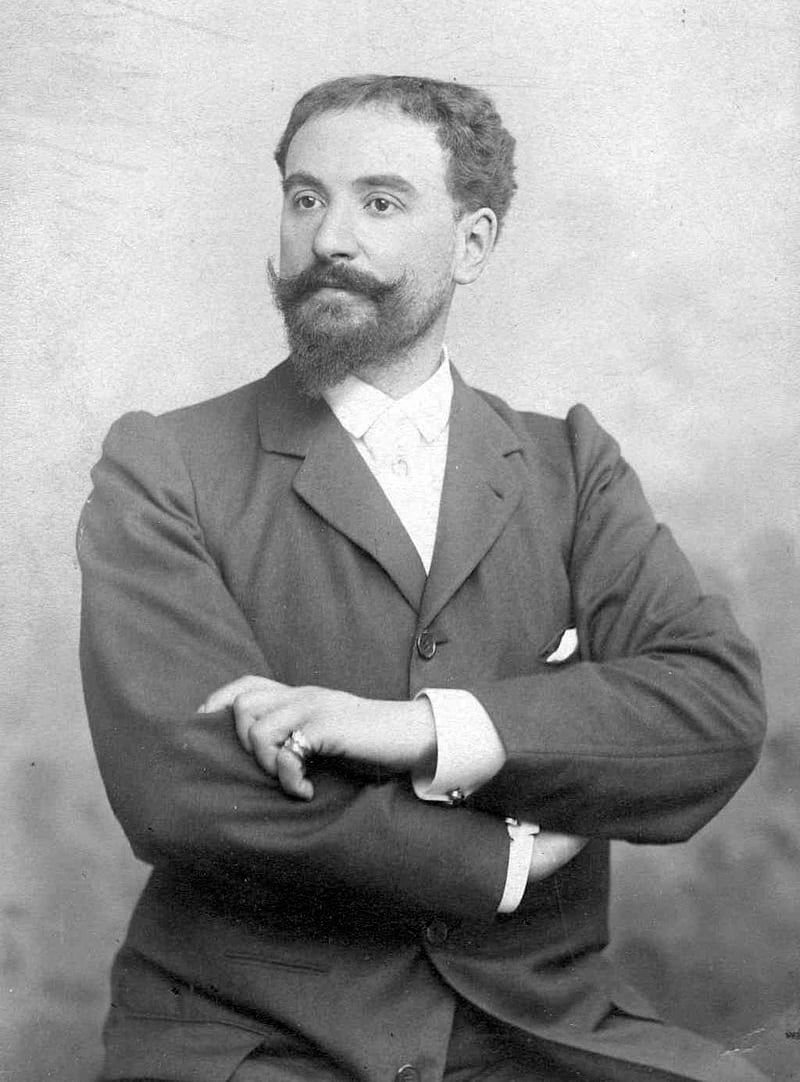
    At some point during the pandemic, I was eyeballing the shelves and happened across a Naxos album of works by Luigi Mancinelli (1848-1921). I didn’t know the first thing about the composer. In fact, I had never even heard his name.

    Mancinelli was a cellist and composer, but in his lifetime, apparently, he received most of his recognition as a conductor. He held principal conducting posts at home (that is to say, in Italy) and abroad, scoring great success at both the Royal Opera House, Covent Garden, and New York’s Metropolitan Opera. He also held appointments in Madrid, Rio de Janeiro, and Buenos Aires. He inaugurated the Teatro Colón with a performance of Verdi’s “Aida” in 1908.

    Arrigo Boito called him the ideal interpreter of “Mefistofele,” and he was highly regarded as a Wagner conductor, even receiving the endorsement of the composer himself. Mancinelli introduced Verdi’s “Falstaff” at both Covent Garden and the Met. He also conducted the first Met performances of “The Magic Flute,” “Don Giovanni,” and “La bohème.”

    Mancinelli composed several operas himself. Sadly, none of his works, operatic or otherwise, have entered the repertoire. I find it surprising that one of the criticisms leveled against him in the “Grove Dictionary of Music and Musicians” is an inability to craft memorable melodies, since one of the things that struck me immediately, based on the works on this CD (issued in 2013), is Mancinelli’s distinctly Italianate flair for long-limbed, singable tunes.

    “Scene veneziane” (1889), in particular, is a winner, a piece I would program happily on any radio air shift. It would make an absolutely charming addition to any mid-morning, or perhaps even dinner hour. Mancinelli’s mastery of the orchestra is colorful and felicitous. The opening sounds like something out of Respighi’s “Three Botticelli Pictures,” though predating that other work by nearly 40 years!

    But don’t take my word for it. Give a listen for yourself.

  • Barnum & American Composers Fry and Moore

    Barnum & American Composers Fry and Moore

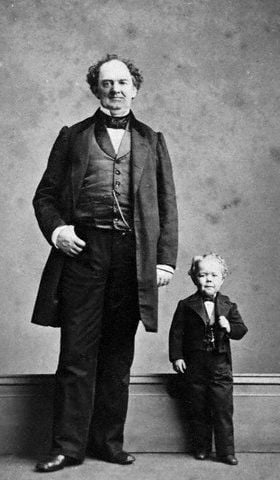
    P.T. Barnum is in the center ring today, with two works by American composers born on this date.

    William Henry Fry was born in Philadelphia in 1813. Credited with being the first U.S.-born composer to write music on a large scale. he composed orchestral works and the first opera by an American to be performed publicly in his lifetime (“Leonora,” in 1845). He was an outspoken advocate of American music at a time when German imports ruled the roost. It would be decades before music by our native composers would gain a toehold in the concert halls, which makes Fry an even more remarkable figure.

    Fry studied music with a former bandleader in Napoleon Bonaparte’s army, who went on to become the head of Philadelphia’s Musical Fund Society. Fry himself would become the society’s secretary.

    He was also a journalist, a writer on music, and the first music critic to write for a major American newspaper. He was a foreign correspondent for the Philadelphia Public Ledger and acted as music critic for the New York Herald Tribune.

    He composed seven symphonies, all of them of a descriptive nature. One of his most audacious works was commissioned by Barnum. The “Niagara Symphony” (1854) was conceived for enormous forces, augmented by a mind-blowing eleven timpani. Someone should consider putting this on the same program with Berlioz’s Requiem. Though it is possible all that percussion really would turn out to be too much of a good thing!

    Barnum once tried to buy Niagara Falls, but New York State wasn’t selling. So he constructed a replica, in miniature, “with real water,” for his American Museum (ironically, destroyed by fire in 1865), then located at the corner of Broadway, Park Row, and Ann Street, in Lower Manhattan. Among the other featured attractions was the notorious “Feejee Mermaid.”

    80 years after Fry’s birth, Douglas Moore was born into an established Long Island family. (The family had lived there since the island’s settling in the 17th century.) He attended, among other institutions, Yale University, where he earned two degrees; then he was off to Paris to study with Vincent d’Indy, Ernest Bloch, and Nadia Boulanger.

    Moore went on to serve as president of the National Institute and American Academy of Arts and Letters and director of music at the Cleveland Museum of Art. In 1926, he joined the faculty of Columbia University, where he remained until his retirement in 1962. With Otto Luening and Oliver Daniel, he cofounded the CRI (Composers Recordings, Inc.) label.

    Moore was the recipient of the Pulitzer Prize for Music in 1951 for his opera “Giants in the Earth.” But he is probably best-known for the opera “The Ballad of Baby Doe,” which became such a memorable vehicle for Beverly Sills.

    Moore’s Barnum connection is by way of a concert suite, composed in 1924. “The Pageant of P.T. Barnum” was inspired by the greatest showman’s life and outlandish attractions. The work falls into five movements:

    “Boyhood at Bethel”

    “Joice Heth – 161 Year Old Negress” [sic]

    “General and Mrs. Tom Thumb”

    “Jenny Lind”

    “Circus Parade”

    Barnum’s circus may have folded in 2017 (after 146 years in existence), but there’s still a sucker born every minute.


    CLOCKWISE FROM LEFT: Barnum & Tom Thumb, William Henry Fry, and Douglas Moore

  • Facebook Fail Correcting Composers Photo

    Facebook Fail Correcting Composers Photo

    Okay, I admit it. I over-edit my posts. I reread them and alter them until I think they read best. I especially edit them if I happen to notice a factual error.

    I was scrolling through some old posts last week, and paused when I came to an amazing photo, taken after a New York Philharmonic concert in 1977, of all the contemporary composers whose works Pierre Boulez programmed during his tenure as music director of the orchestra.

    I had previously identified one of them, in the front row, as Hershy Kay, but glancing at it again, I realize, to my embarrassment, that it is actually Ulysses Kay. So even though the post was committed over a year ago (on April 14, 2020), I hit the “edit” option to correct it. And, wouldn’t you know it, the photo disappeared.

    You see, it’s one of the quirks of “New Facebook” that when you attempt to edit a post with forwarded content as the image, the image goes away. I’ll never be able to get the photo back on the old post, but since it’s a slow news day, I figured I’d plug it in again today.

    I actually discovered it for the first time after it was shared on the Aaron Copland page, from a post by composer Daniel Plante, over at the Pierre Boulez Appreciation Group.

    Here are the names of the subjects (hopefully now correct), with Boulez standing in the foreground, proudly displaying his trophies.

    First row (left to right): Milton Babbitt, Lucia Dlugoszewski, Ulysses Kay, George Rochberg, and Mario Davidovsky.

    Second Row: David Gilbert, Stephen Jablonsky, Jacob Druckman, Roger Sessions, William Schuman, and Aaron Copland.

    Third Row: Donald Martino, Donald Harris, Daniel Plante, Morton Gould, Vincent Persichetti, and Roy Harris.

    Fourth Row: Charles Wuorinen, Carmen Moore, Sydney Hodkinson, David Del Tredici, Earle Brown, Harley Gaber, Stanley Silverman, John Cage, and Elliott Carter.

    It will surprise no one (except me, apparently) that we are living in a disposable world, and that Facebook is no place for perfectionism!

  • Czech Composers’ Forbidden Love Affairs

    Czech Composers’ Forbidden Love Affairs

    Anyone at all acquainted with the life story of Leoš Janáček knows about his relationship with Kamila Stasslova. Stasslova was the married woman, 38 years Janáček’s junior, who was the recipient of his “intimate letters” (hence, the subtitle of his autobiographical String Quartet No. 2). Though the relationship was a chaste one, she instilled in the composer an ardor which propelled him into the creation of a series of masterworks that spanned his final decade. This is the music which essentially made Janáček’s reputation as a composer for the ages.

    This Sunday night on “The Lost Chord,” we’ll have two more examples of Czech extramarital love that resulted in flowering creativity. Vitězslava Kaprálová undoubtedly would be much better known had she not died of tuberculosis at the age of 25. Kaprálová was already launched on a promising, if sadly abbreviated, trajectory as a brilliant composer-conductor, attaining a level of respect unusual at the time for a woman in her field. Her teachers included Vitězslav Novák, Václav Talich, Charles Munch, Nadia Boulanger, and Bohuslav Martinů.

    Her relationship with Martinů deepened into one of romantic love, which fueled some of the older composer’s most resonant works, as he grappled with the emotional turmoil, caught as he was between his wife and an irresistible attraction to his star pupil.

    Kaprálová reciprocated his feelings, in the meantime producing a number of pieces under his influence, then submitting them for his appraisal. One such work was the “Partita for Piano and String Orchestra,” composed in 1938-39. Martinů is said to have made a substantial contribution to its final form.

    The idea for the thesis of tonight’s show grew out of a consideration of Zdeněk Fibich, the unsung Czech master, who was roughly nine years younger than Dvořák. Fibich too suffered a turbulent emotional life. When his first wife was about to give birth to twins, one of her sisters came to help out with the delivery. The sister and one of the newborns fell ill and died. Within two years, they were followed by the other child and Fibich’s wife.

    Fibich promptly married another of his wife’s sisters, only to abandon her and the son she bore him, for one of his pupils, Anežka Schulzová. Schulzová would serve not only as his muse, but also as an artistic collaborator. Fibich documented the affair musically in his collection of piano pieces, “Moods, Impressions and Reminiscences,” composed between 1892 and 1899. He would reference material from this collection in a number of other works written during the final decade of his life.

    One of these was the Symphony No. 2, a musical remembrance of the day he declared his love to Schulzová. Material from Fibich’s “Moods” forms the basis of the second movement of the symphony, with another heartfelt quotation in the finale.

    Life is complicated.

    I hope you’ll join me for “Bohemian Lifestyle,” illicit love in Czech Music, this Sunday night at 10:00 EDT,” on WWFM – The Classical Network and wwfm.org.


    PHOTO: Vítězslava Kaprálová (center) with Bohuslav Martinů

Tag Cloud

Aaron Copland (93) Beethoven (95) Composer (114) Film Music (136) Film Score (143) Film Scores (255) Halloween (94) John Williams (195) KWAX (229) Leonard Bernstein (103) Marlboro Music Festival (125) Movie Music (151) Mozart (88) Opera (207) Philadelphia Orchestra (89) Picture Perfect (174) Princeton Symphony Orchestra (108) Radio (88) Ross Amico (244) Roy's Tie-Dye Sci-Fi Corner (290) The Classical Network (101) The Lost Chord (268) Vaughan Williams (103) WPRB (396) WWFM (881)

DON’T MISS A BEAT

Receive a weekly digest every Sunday at noon by signing up here


RECENT POSTS