Category: Daily Dispatch

  • Artistic Drama Behind the Masterpieces on Screen

    Artistic Drama Behind the Masterpieces on Screen

    How to translate visual art to the big screen? Generally, by focusing on the drama in the artists’ lives, that’s how.

    And what drama!

    This week on “Picture Perfect,” expand your palette with music from movies about the great artists. “The Agony and the Ecstasy” (1965), based on the novel of Irving Stone, dramatizes the friction between Michelangelo (Charlton Heston) and his benefactor, Pope Julius II (Rex Harrison), over the painting of the ceiling of the Sistine Chapel. For his part, Michelangelo would have been perfectly content to stick to sculpture. Alex North’s score is an Early Music banquet, with allusions to – and sometimes outright quotations of – music of the Renaissance.

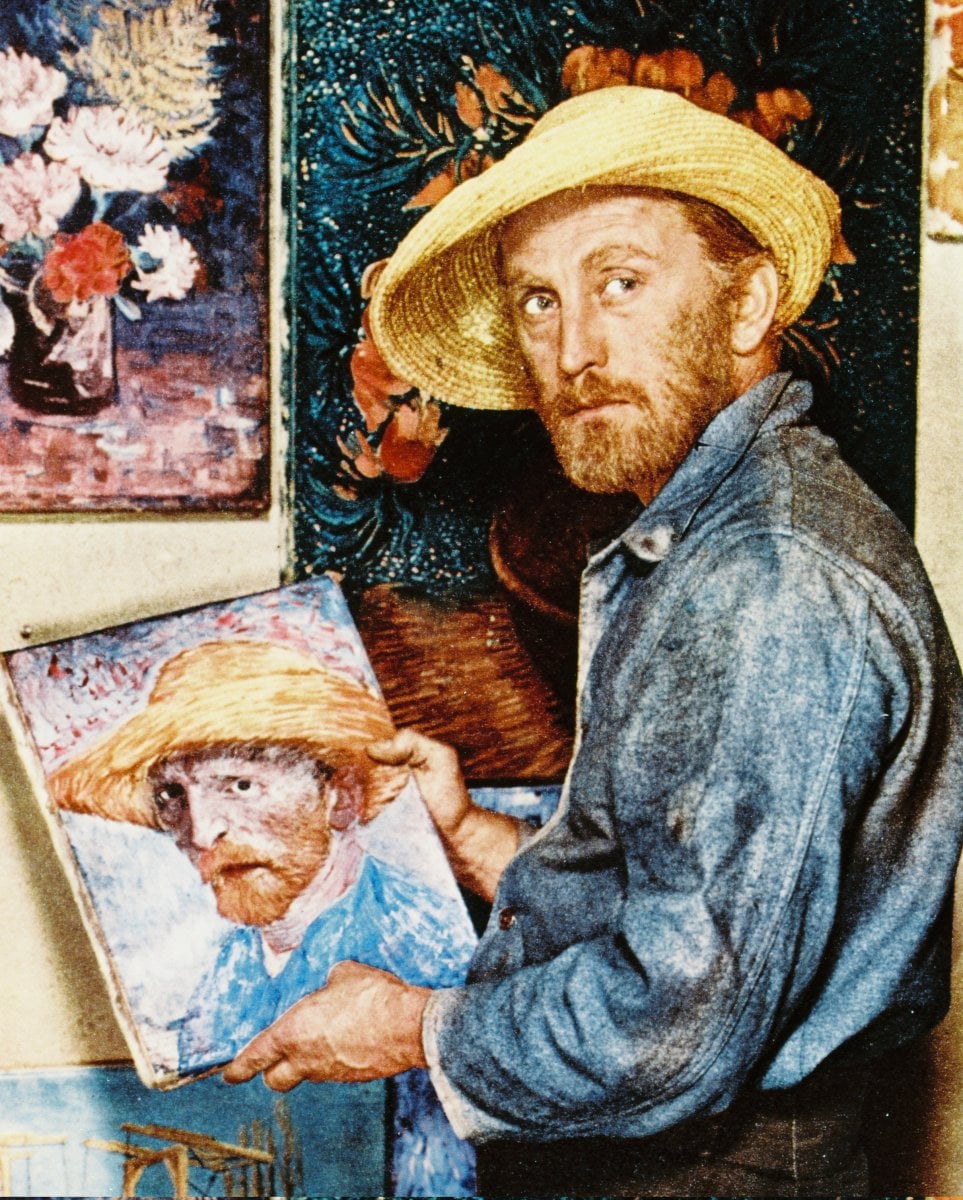
    Stone had another bestseller in “Lust for Life” (1956), about the tormented Vincent van Gogh. This time Kirk Douglas plays one of his most sympathetic roles – and looks remarkably like the artist. Anthony Quinn turns up as his “frenemy,” the painter Paul Gaugin, and earns an Academy Award for Best Supporting Actor. The great Miklós Rózsa wrote the music, softening up the edges of his brawny Hungarian sound with the softer palette of the French Impressionists.

    John Huston brought Pierre La Mure’s novel about Henri de Toulouse-Lautrec to the big screen as “Moulin Rouge” (1952) – not to be confused with the more recent Baz Luhrmann spectacle starring Nicole Kidman and Ewan McGregor, which relegated the artist to a supporting role. José Ferrer dominates the earlier version, spending most of the film walking through off-camera trenches and shuffling along on his knees. Georges Auric, one of the composers of Les Six (which also included Francis Poulenc and Darius Milhaud), captures the spirit of the titular cabaret. The score became one of Auric’s best-known, thanks to the waltz becoming a popular hit, “Where is Your Heart?”

    “The Picasso Summer” (1969) is a departure from the usual formula of focusing on the artist himself. Instead, a young couple (Albert Finney and Yvette Mimieux), admirers of Picasso’s work, take off on a European adventure in an attempt to track him down. Originally Picasso had agreed to appear, but he was driven off by some off-screen drama involving a matador friend and Yul Brynner’s wife! The film was based on a short story by Ray Bradbury. Bradbury hated the adaptation, as did the studio, and “The Picasso Summer,” after being heavily cut and patched with new footage, was never released theatrically in the United States. The film is striking for its extended animation sequences inspired by Picasso’s paintings, and for its score by Michel Legrand.

    I hope you’ll join me for brushes with the great artists, on “Picture Perfect,” music for the movies, this Saturday evening at 6:00 EDT, on WWFM – The Classical Network and wwfm.org.
  • Land That Time Forgot Burroughs Sci-Fi

    Land That Time Forgot Burroughs Sci-Fi

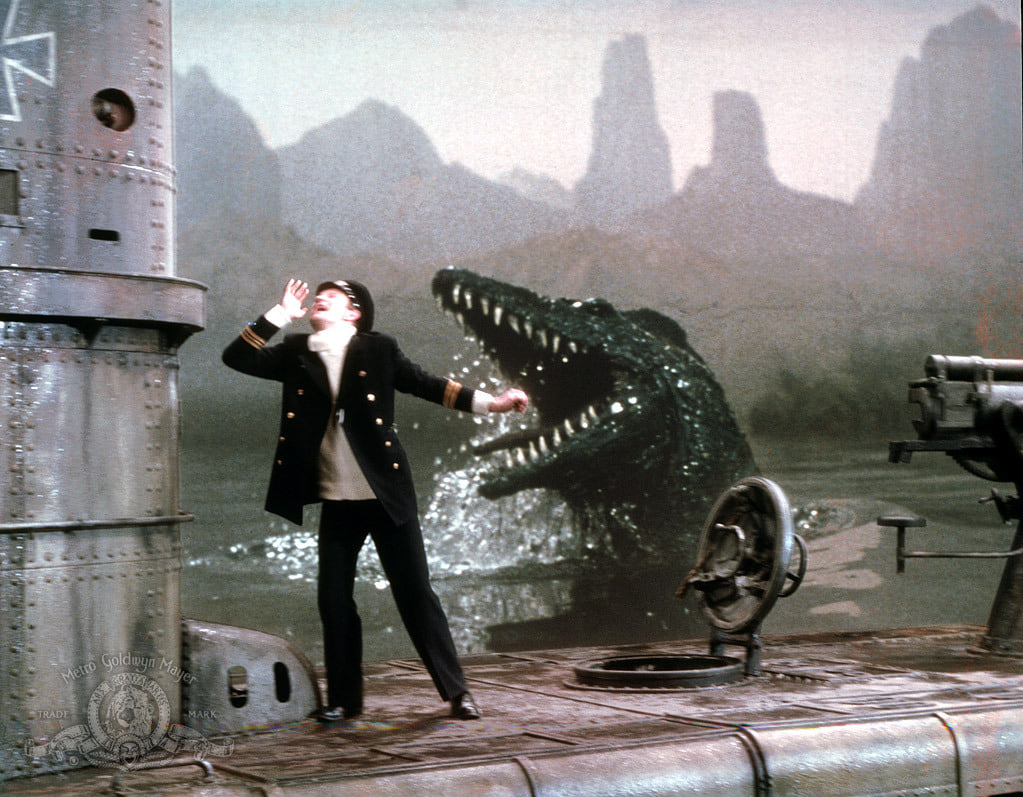
    It occurs to me, I never got around to sharing last week’s show. I suppose it’s only appropriate that I, Old Man Time, would have forgotten “The Land That Time Forgot” (1974). To be fair, I was awfully tired on Sunday night. But you know what? I just watched it, and it turned out to be a pretty entertaining conversation, if I do say so myself.

    “The Land That Time Forgot” is based on yet another rip-roaring adventure by Edgar Rice Burroughs. We hope you’ll join us THIS Sunday for a visit with author and Burroughs authority Scott Tracy Griffin. Griffin has spent most of his life steeped in Burroughsiana and shares his wealth of knowledge through public speaking, interviews, film commentary, comics, and lavish coffee table books. He’s the author of “Tarzan: The Centennial Collection” and “Tarzan on Film.”

    As a massive Burroughs fan myself, I’ve been looking forward to this show for a long time. But then, as you know, I was raised by apes. I hope you’ll join us for the next Roy’s Tie-Dye Sci-Fi Corner, with Scott Tracy Griffin. Bring your Burroughs questions to the comments section, as we livestream on Facebook, this Sunday evening at 7:00 EDT!

    https://www.facebook.com/roystiedyescificorner

  • Edgar Rice Burroughs Worlds with Scott Tracy Griffin

    Edgar Rice Burroughs Worlds with Scott Tracy Griffin

    I set my foot upon the stack of Edgar Rice Burroughs paperbacks that have fueled my summer – 6 Tarzan books, 8 from the John Carter of Mars series, all 3 of the Caspak novels, and a Burroughs lark titled “The Cave Girl” – raise my eyes to the full moon, and give vent to the wild, uncanny challenge of the bull ape!

    Collectively, these will supply so much pulp and grist for a conversation with Scott Tracy Griffin, on the next “Roy’s Tie Dye Sci Fi Corner.”

    A veritable fount of Burroughsiana, Griffin is the author of two lavishly-illustrated, delightfully informative tomes, “Tarzan: The Centennial Celebration” and “Tarzan on Film.”

    Of course, Burroughs’ imagination roamed far beyond the jungle habitat of Tarzan of the Apes – one of the most famous literary creations of all time – to explore lost continents, the hollow earth, neighboring planets, and beyond the farthest star. Nobody knew how to build fantastic worlds over the course of a series quite like Edgar Rice Burroughs.

    Ray Bradbury, a lifelong fan, called him “probably the most influential writer in the entire history of the world.” There’s no question he was one of the most popular writers in the first half of the 20th century.

    He was also a pioneer of merchandizing, so that his creations came to dominate print, movies, radio, and related memorabilia. In fact, Burrough’s ape man became the first pop cultural icon to achieve global recognition. Not bad for a frustrated adventurer and failed businessman who didn’t publish his first story until the age of 35!

    We hope that you’ll swing on by for a wild time with Scott Tracy Griffin, on Roy’s Tie-Dye Sci-Fi Corner. Don your loincloths in the comments section, as we livestream on Facebook, THIS SUNDAY NIGHT AT 7:00 EDT!

    https://www.facebook.com/roystiedyescificorner


    Five-minute intro to Burroughs that does a good job of placing him in context of his world

    Opera singer Lloyd Thomas Leech, one of those who claimed to have recorded the M-G-M Tarzan yell, singing Leoncavallo’s “Mattinata”

    Animated demo of John Carter for a projected 1936 film

    Tarzan at tax time

    Carol Burnett on “The Jack Benny Program” (Tarzan parody begins about 11 minutes in)

    https://www.youtube.com/watch?v=SqV9WAVJiAo

  • Beyond Romanian Rhapsody Discover Enescu’s Genius

    Beyond Romanian Rhapsody Discover Enescu’s Genius

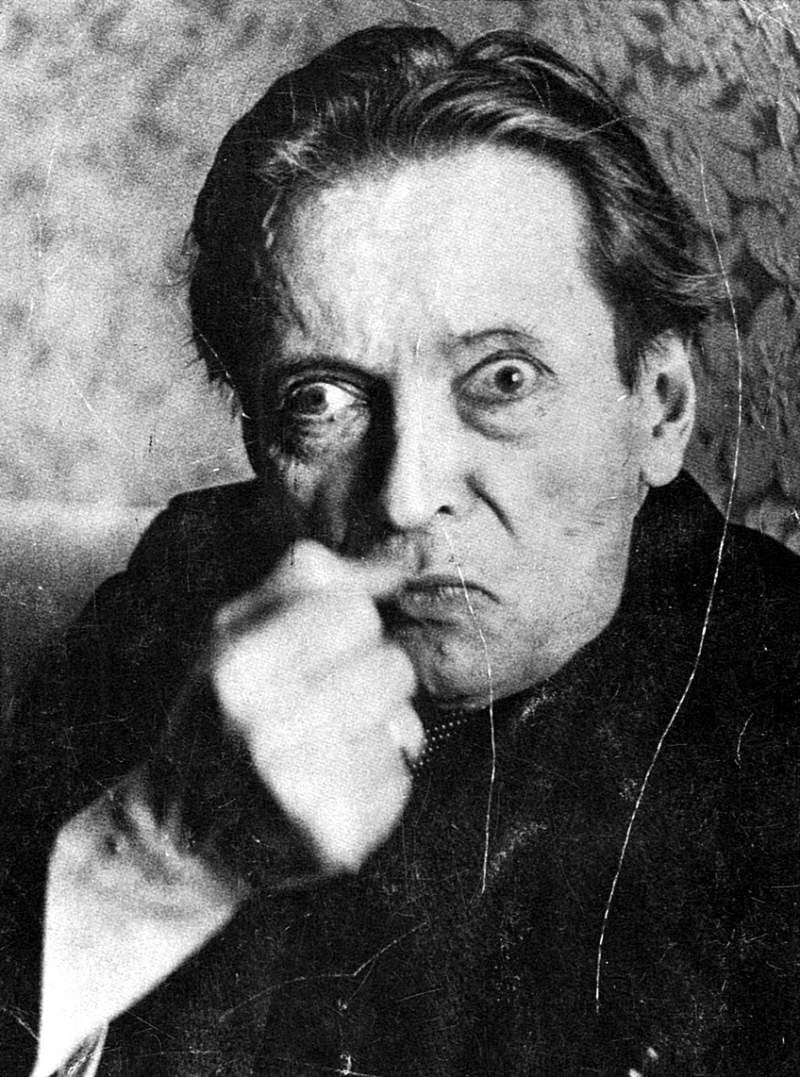
    Why exactly is composer George Enescu apoplectic? Because, still, 66 years after his death, all we ever hear is his Romanian Rhapsody No. 1.

    Enescu (1881-1955), arguably Romania’s greatest musical export, was a child prodigy who excelled also as a violinist, a pianist, a conductor, and a teacher. At the age of seven, he became the youngest student ever to be admitted to the Vienna Conservatory. He graduated before his 13th birthday. From there, he went to Paris and embarked on a charmed career with too many highlights to detail here. Pablo Casals, described him as “the greatest musical phenomenon since Mozart.”

    He composed his biggest hit, the Romanian Rhapsody No. 1 (1901), at the age of 19. So popular did it prove that it became a kind of millstone to Enescu. People didn’t want to hear anything else. They still don’t!

    On Enescu’s birthday, give the gift of an open mind and take a few minutes to sample some of his other music!


    A lovely piece for a summer’s day, the Decet for Winds (1906)

    A live performance of Enescu’s first published piece, the “Romanian Poem” (1898), written when he was only 16:

    Concert Overture on Popular Romanian Themes (1948)

    Enescu plays his own Violin Sonata No. 3 (1926), with legendary Romanian pianist Dinu Lipatti:

    Lipatti plays Enescu’s Piano Sonata No. 3 (1933-35)

    Symphonie Concertante for Cello and Orchestra (1901)

    The visionary Symphony No. 3, with choral finale (1916-18; rev. 1921-51)

  • Salieri Beyond Amadeus The Real Story

    Salieri Beyond Amadeus The Real Story

    In the words of Wilde’s Lord Henry, there is only one thing in the world worse than being talked about, and that is not being talked about.

    While it might be true there’s no such thing as bad publicity, it would be nice if Antonio Salieri could transcend his notoriety – as the alleged murderer of Mozart and a second-rate hack – to be recognized for some of his actual achievements. Especially since none of the charges leveled against him happen to be true!

    I like “Amadeus” as much as the next guy, and while I am very happy it has served to keep Salieri’s name alive, and perhaps lent a greater degree of commercial viability to subsequent recordings of his music, it is worthwhile to examine the historical facts.

    In reality, Salieri was a generous teacher, who fostered Beethoven, Schubert, Liszt, and even Franz Xaver Mozart, his rival’s son, who was born a little more than four months before his father’s death.

    Salieri himself was a prolific and successful composer. He wrote 37 operas, in addition to orchestral works, concertos, chamber music, and sacred pieces. While he was no Mozart – who was? – his music is finely crafted and often quite enjoyable, certainly no worse than that of a majority of his contemporaries.

    Yes, Mozart believed Salieri and the Italian faction ensconced at the Viennese court (including future Mozart librettist Lorenzo Da Ponte) were against him. And there may have been something to it at first. However, beyond a rivalry pertaining to certain specific jobs, Mozart and Salieri appear often to have been better than cordial acquaintances.

    The two even collaborated on a cantata, “Per la ricuperata salute di Ofelia” (“For the recovered health of Ophelia”), rediscovered in 2016, a joint venture apparently entered into voluntarily (in contrast to an earlier contest, in which two one-act operas were juxtaposed, purely for the edification of the emperor). The cantata was written in 1785, to celebrate the recently-convalesced soprano Nancy Storace, who would soon create the role of Mozart’s Susanna in “The Marriage of Figaro.”

    When Salieri was appointed Kapellmeister in 1788, his first act was to revive “Figaro.” He was also responsible for arranging first performances of Mozart’s Piano Concerto No. 22 (K. 482), the Clarinet Quintet, and the Symphony No. 40. He was full of praise for “The Magic Flute.” And as I said, he took it upon himself to educate Mozart’s son.

    Sadly, Salieri’s enormous compositional output gradually faded from memory already during the latter years of his life. Ironically, it is the scandalmongers who kept his name alive.

    Rumors of Salieri’s involvement in Mozart’s death were codified by Alexander Pushkin in 1831, a few years after Salieri himself had passed, in the poetic drama “Mozart and Salieri.” This was later set as an opera, in 1898, by Nikolai Rimsky-Korsakov.

    Peter Schaffer picked up the thread in 1979, when he wrote the play “Amadeus,” which of course was adapted into the Academy Award-winning film in 1984.

    As the compact disc era progressed, more and more of Salieri’s output became available for first-hand assessment – and guess what? A lot of it is quite good!

    Happy birthday, Patron Saint of Mediocrity!


    Russian film version of Rimsky’s “Mozart and Salieri” (without subtitles):

    In English, if a bit fuzzy:

    Salieri’s Concerto for Flute, Oboe and Orchestra:

    Overture to “Les Horaces”

    “Das Lob der Musik” (“The Praise of Music”)

    A Mozart and Salieri collaborative effort, the cantata “Per la ricuperata salute di Ofelia”

    “I absolve you.”

Tag Cloud

Aaron Copland (93) Beethoven (95) Composer (114) Film Music (136) Film Score (143) Film Scores (255) Halloween (94) John Williams (195) KWAX (229) Leonard Bernstein (103) Marlboro Music Festival (125) Movie Music (151) Mozart (88) Opera (207) Philadelphia Orchestra (89) Picture Perfect (174) Princeton Symphony Orchestra (108) Radio (88) Ross Amico (244) Roy's Tie-Dye Sci-Fi Corner (290) The Classical Network (101) The Lost Chord (268) Vaughan Williams (103) WPRB (396) WWFM (881)

DON’T MISS A BEAT

Receive a weekly digest every Sunday at noon by signing up here


RECENT POSTS