Category: Daily Dispatch

  • Hulk & Moon Zero Two Discussion

    Hulk & Moon Zero Two Discussion

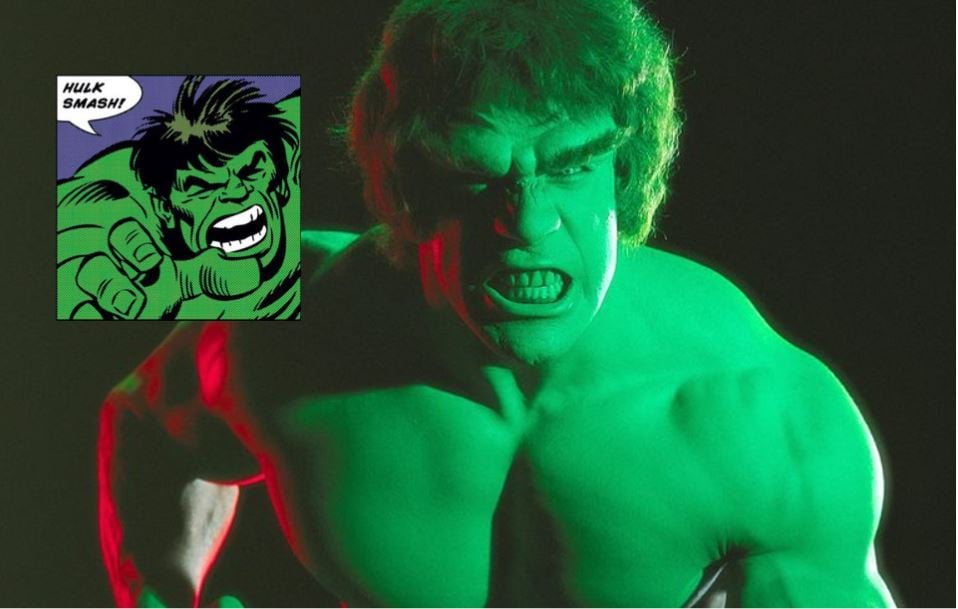
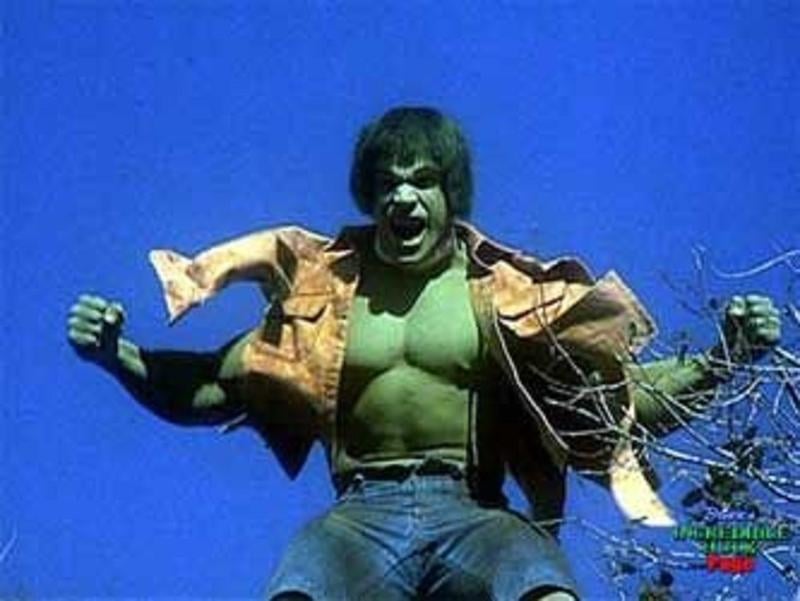
    Green with envy over missing last night’s discussion about “The Incredible Hulk?” Keep your shirt on! The show is archived at Roy’s Tie-Dye Sci-Fi Corner.

    We’ll be back on Friday to talk about “Moon Zero Two” (1969), a British science fiction opus set in the year 2021! The film was slated for release three months after the Apollo 11 moon landing, so a couple of references to Neil Armstrong were hurriedly inserted during post production.

    What did this visionary tale get right? Essentially, Catherine Schell.

    We’ll be over the moon, I’m sure, when you join us in the comments section, as we all go Schell-hunting on the next “Roy’s Tie Dye Sci Fi Corner,” this Friday evening at 7:00 EDT.

    https://www.facebook.com/roystiedyescificorner

  • Childhood Nostalgia in Classical Music

    Childhood Nostalgia in Classical Music

    The end of summer can be a time of reminiscence, sentiment, and undefined yearning. The limpid air, the lambent, silvery light of late August imbue one with a sense of nostalgia, swaddled in the gentle melancholy of an idyllic dream. How I feel for the young ‘uns straining against the inescapable vortex of another school year.

    This Sunday night on “The Lost Chord,” we’ll hear music by four composers who indulged in musical reminiscences of childhood.

    William Schuman grew up to become President of Lincoln Center – and one of our country’s most respected symphonists – but his “American Festival Overture” (1939) is permeated by a three-note call-to-play (“Wee-Awk-Eee!”) recollected from his boyhood.

    Haskell Small’s “Visions of Childhood” (2011) is a piano cycle in the Robert Schumann “Kinderszenen” mode, again a mature artist reflecting on halcyon days. The suite falls into ten brief movements: “A Long Time Ago,” “Playing Rough,” “A Little Story,” “Feeling Lonely,” “School’s Out,” “Haunted House,” “Frolicking,” “Look at Me!,” “Roller Coaster,” and “Lullaby.”

    Charles Ives may have been a radical innovator, but his music is often infused with a nostalgia for the New England of his youth. His Violin Sonata No. 4 (1906-1915, revised in 1942) bears the subtitle, “Children’s Day at the Camp Meeting,” a programmatic work that balances hymn tunes and rowdy boyhood high jinks.

    Finally, as he entered his eighth decade, George Crumb embarked on a remarkably productive Indian Summer, which resulted in no less than seven volumes of “American Songbooks,” the last completed in 2011, when the composer was 82 years-old. Each volume consists of deeply personal treatments of folk songs and hymns Crumb recollected from his formative years in West Virginia.

    We’ll hear selections from “American Songbook III: The River of Life” (2008). By employing his characteristic shades and cross-hatchings by way of an assortment of ear-tickling percussion effects, the composer provides his own commentary on the time-worn source material, lending it both unsuspected depth and an aura of timelessness.

    It’s a far cry from “Kinderszenen.” I hope you’ll join me for “Nostalgia Isn’t What It Used to Be” – 20th and 21st century composers look back on childhood – this Sunday night at 10:00 EDT, on WWFM – The Classical Network and wwfm.org.

  • Back to School Movie Music on WWFM

    Back to School Movie Music on WWFM

    It’s back to school time! Enjoy it while you can.

    Take notes, as we get all pedantic about music from movies with academic settings, including selections from “Goodbye, Mr. Chips” (Richard Addinsell), “Dead Poets Society” (Maurice Jarre), “Back to School” (Danny Elfman), “Mr. Holland’s Opus” (Michael Kamen), and “Tom Brown’s School Days” (again, Richard Addinsell).

    Minds will be sharpened and buttons will be pushed, on “Picture Perfect,” music for the movies, this Saturday evening at 6:00 EDT, on WWFM – The Classical Network and wwfm.org.

  • Incredible Hulk TV Show Nostalgia Review

    Incredible Hulk TV Show Nostalgia Review

    My first passion was probably monster movies, especially the old Universal horror classics that I was already watching, in the reassuring presence of my mother, by the age of five.

    My second passion was comic books, especially those emanating from the mighty Marvel bullpen. The Amazing Spider-Man. Captain America. The Silver Surfer and Prince Namor the Sub-Mariner.

    So in 1977, when CBS scored a ratings success with a television movie inspired by “The Incredible Hulk,” you’d think I would have been in Seventh Heaven.

    But I was also a purist, and the show made so many changes to the source material that the 11 year-old critic in me received it with decidedly mixed feelings. To me, the series was a little too much like “The Six Million Dollar Man” meets “Kung Fu.” (I was too young at the time to be wholly aware of “The Fugitive.”) Little “originalist” that I was, I was judging it against the impossibly destructive, brutishly monosyllabic, gloriously over-the-top Hulk of the comics.

    Returning to it now, 44 years later, what do you know? For a TV movie, “The Incredible Hulk” is actually pretty good! In fact, the show’s pilot does everything right. Strong characterizations. Doomed romance. Abundant pathos. An awareness of classic monster movie conventions. In fact, it’s only sin is that it was made in the ‘70s.

    Hulk’s origin, world, and situation may be totally different from those created by Stan Lee and Jack Kirby in 1962, but his TV incarnation is overflowing with humanity and heart. If only they had had the technology and production values back in 1977 that are available today, it would easily stand head and shoulders above just about any of the current crop of sterile, production line Marvel movies.

    Hand-painted Olympic-hopeful Lou Ferrigno, in tattered pants and yak-hair wig, may not have been my ideal vision of the comic’s Green Goliath – the real Hulk would have dismissed him as “puny” – but he’s about as close as a real-life stand-in is ever going to get, and he does bring a Karloffian pathos to the role. And earnest Bill Bixby, as David Bruce Banner, brought two decades’ worth of accrued good will from his seemingly constant presence in America’s living rooms, thanks to his work on “My Favorite Martian,” “The Courtship of Eddie’s Father,” and “The Magician.”

    I hope you’ll join Roy and me on our platform of rage, as we overdose on gamma rays, for a nostalgic trip back to “The Incredible Hulk,” on the next Roy’s Tie-Dye Sci-Fi Corner. Dispense your anger management therapy in the comments section, when we livestream on Facebook, this Sunday evening at 7:00 EDT! (PLEASE NOTE: There will be no show tonight.)

    https://www.facebook.com/roystiedyescificorner
  • Clarke & Coates: A Musical Birthday in 1886

    Clarke & Coates: A Musical Birthday in 1886

    On this date in 1886, two noteworthy figures in English music were born.

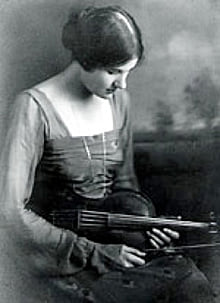
    Rebecca Clarke entered London’s Royal College of Music at a time when female students were still considered an oddity. Her teacher, Sir Charles Villiers Stanford, persuaded her to switch from violin to viola, since from that vantage she would be better able to absorb the mechanics of the orchestra. Also, thanks to musicians like Lionel Tertis, the viola was just beginning to be viewed as a viable instrument in itself.

    Clarke played in the Queen’s Hall Orchestra, under Sir Henry Wood. Then in 1916, she packed up and moved to America. Critics tended to praise her works which were listed in concert programs under male pseudonyms, while those identified as her own were often dismissed.

    The notable exception of her career was her Viola Sonata, which tied for first place in a competition sponsored by Elizabeth Sprague Coolidge with a work of Ernest Bloch. Even so, there were some who grumbled that the work couldn’t possibly have been composed by a woman, and that perhaps Bloch himself had even written it.

    Clarke married James Friskin, a founding member of the Juilliard School faculty, in 1944, and although he was supportive of her endeavors, lack of recognition and struggles with depression resulted in her ultimately giving up on composing. She died in 1979, at the age of 93. Today, her sonata is considered one of the great works written for the viola.

    Here is Rebecca Clarke’s “Morpheus”:

    By contrast, Eric Coates (1886-1957) enjoyed enormous popularity as a master of British Light Music. Ironically, Coates had taken viola lessons with Tertis at the Royal Academy of Music.

    Among his best-known works are his “London Suite,” and this one, the perfect Coates confection for a late summer’s day:

    Happy birthday, Rebecca Clarke and Eric Coates!

Tag Cloud

Aaron Copland (93) Beethoven (95) Composer (114) Film Music (136) Film Score (143) Film Scores (255) Halloween (94) John Williams (195) KWAX (229) Leonard Bernstein (103) Marlboro Music Festival (125) Movie Music (151) Mozart (88) Opera (207) Philadelphia Orchestra (89) Picture Perfect (174) Princeton Symphony Orchestra (108) Radio (88) Ross Amico (244) Roy's Tie-Dye Sci-Fi Corner (290) The Classical Network (101) The Lost Chord (268) Vaughan Williams (103) WPRB (396) WWFM (881)

DON’T MISS A BEAT

Receive a weekly digest every Sunday at noon by signing up here


RECENT POSTS