Category: Daily Dispatch

  • Carl Orff Birthday & Rare Music on WWFM

    Carl Orff Birthday & Rare Music on WWFM

    Today is the anniversary of the birth of one-hit wonder Carl Orff. We’ll hear something a little different than his oft-performed “Canina Burrito.” Tune in to enjoy his “Kleines Konzert,” a suite for wind instruments based on Renaissance lute music. If you’re a Respighi aficionado, you’ll recognize at least one of the movements, which is based on a melody which also appears in one of the “Ancient Airs and Dances” suites.

    We’ll also mark the birthdays today of Polish virtuoso Henryk Wieniawski, Czech composer Iša Krejčí, and American banjoist Béla Fleck.

    I’ll have mine with extra jalapeños, please, from 4 to 7 p.m. EDT, on WWFM – The Classical Network and wwfm.org.


    Canine enjoys a bean burrito:

  • Hans Gál Rediscovered Composer

    Hans Gál Rediscovered Composer

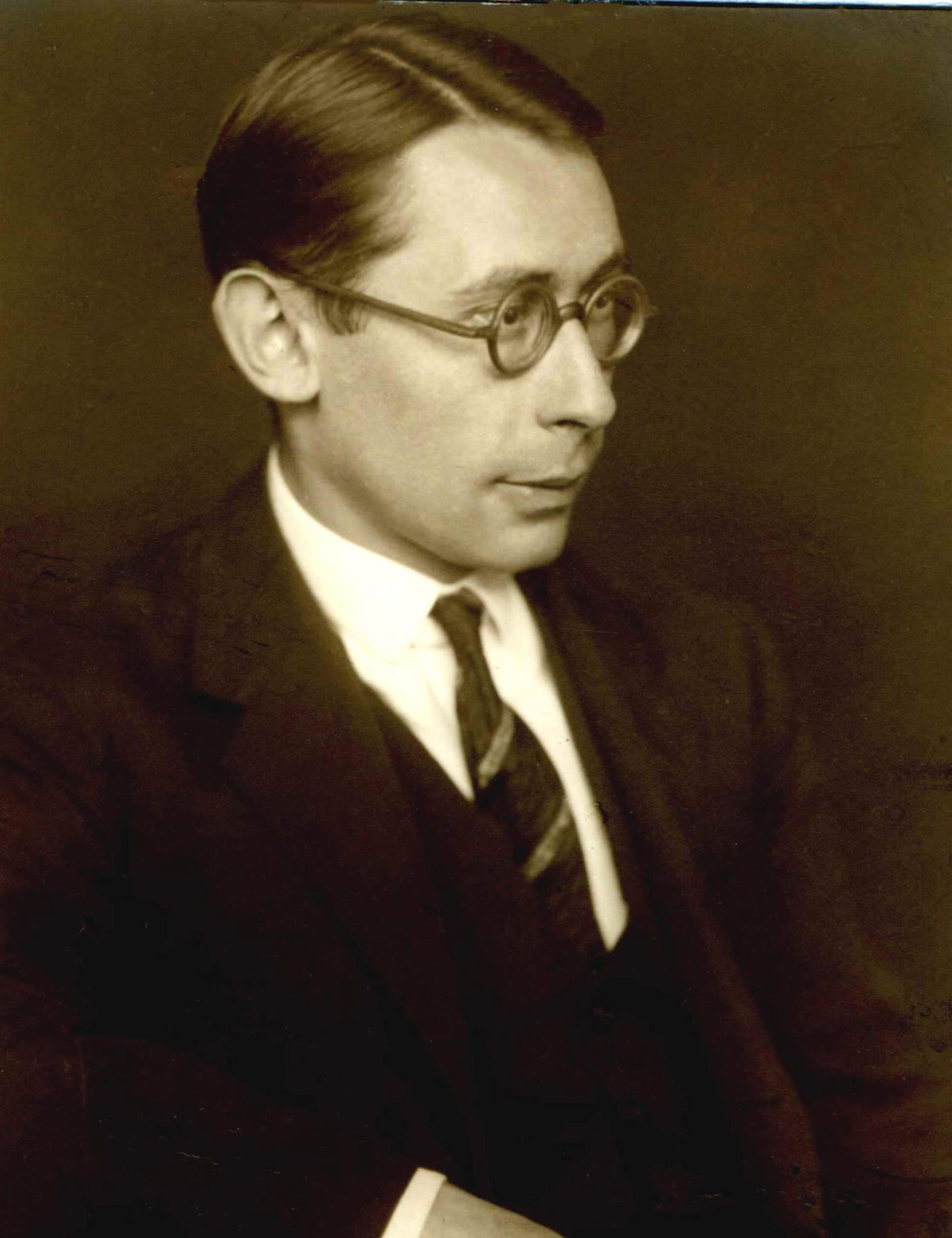
    Composer, pianist and teacher Hans Gál was born outside Vienna in 1890. He studied with, among others, Eusebius Mandyczewski, lifelong friend of Johannes Brahms and a key figure in Brahms’ circle. Gál himself became a serious Brahms scholar, co-editing the master’s complete works, in cooperation with Mandyczewski, in ten volumes. He edited other scholarly volumes on Brahms, as well.

    It was while Gál was director of the Mainz Conservatory of Music that the Nazis came to power. Forced out of his position, he returned to Austria. Then the Anschluss drove him to Great Britain.

    He was held in an internment camp during the war. However, before that, he had managed to make friends with the Scottish musicologist Donald Francis Tovey. And although Tovey suffered a fatal heart attack, Gál was at last able to find permanent employment at Endinburgh University. He died in 1987 at the age of 97.

    Gál composed in nearly every genre. He was an influential teacher in Great Britain, and was lauded by many of the greatest musicians of his day. Yet his music and reputation haven’t really pervaded the wider musical consciousness.

    This Sunday night on “The Lost Chord,” we’ll hear two works by this neglected composer, issued on the Avie label, which has done much to document Gál’s orchestral, chamber and instrumental music.

    First, we’ll have the Piano Sonata, Op. 28, from a complete, 3-CD set devoted to Gál’s output for the keyboard. Gál was about 37 years-old at the time of the sonata’s composition. It’s sobering to think he yet had 60 years of life ahead of him!

    Then we’ll hear Gál’s Cello Concerto, from 1944. Gál’s mother died in 1942. Shortly after that, his aunt and sister took their own lives to avoid deportation to Auschwitz. Unable to bear up under the strain, the composer’s youngest son also committed suicide at 18 years-old. The concerto is elegiac, lyrical and deeply personal. For all the personal turbulence and tragedy in Gál’s life, he managed to craft a rewarding and mellifluous work, which on occasion offers glimpses of his beloved Brahms.

    I hope you’ll join me for music by this remarkable figure, who weathered much to create works of lasting beauty. Gál went on to flourish in Great Britain. He was an influential teacher, a respected member of the faculty at Edinburgh University, where he remained for the rest of his very long life.

    I hope you’ll join me for “Gál’s Worthy,” worthwhile music of Hans Gál, this Sunday night at 10:00 EDT, on WWFM – The Classical Network and wwfm.org.

  • George Antheil Trenton’s Bad Boy of Music

    George Antheil Trenton’s Bad Boy of Music

    Today is the birthday of original Trenton cracker George Antheil (1900-1959), self-proclaimed “Bad Boy of Music.” Antheil’s “Ballet Mécanique,” scored for player pianos, airplane propellers, siren and electric bells, inspired one of classical music’s great riots at its Paris premiere in 1926.

    Antheil would practice the piano with such ferocity that he would have to pause periodically to thrust his hands into two fish bowls filled with ice water. During his recitals, he would ostentatiously remove a pistol from a silk holster sewn into his jacket and place it atop the piano in full view of the audience to let them know that he would brook no nonsense.

    Later, he became a Hollywood film composer, a war correspondent, the author of a column of advice to the lovelorn, an expert in endocrinology, and co-inventor, with actress Heddy Lamarr, of a frequency-hopping system for the guidance of Allied torpedoes that would become the basis for today’s communications technologies.

    Happy birthday to Trenton’s prodigal son.

    The “Ballet Mécanique:”

    This manically edited version makes ME want to riot!
    https://www.youtube.com/watch?v=58H0hC96zDg


    PHOTO: Bad Boy in the 1920s

  • Hitchcock & Herrmann: The Torn Curtain Fall

    Hitchcock & Herrmann: The Torn Curtain Fall

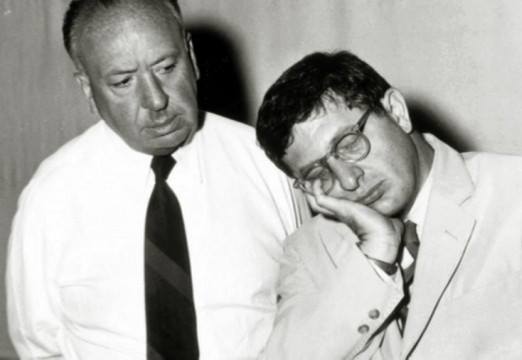
    Composer Bernard Herrmann produced three indisputable masterpieces with Alfred Hitchcock: “Vertigo,” “North by Northwest,” and “Psycho” (the biggest success of them all).

    However, Hitchcock became increasingly insecure as things began to change within the studio system. The emphasis shifted more and more to the bottom line, and the pressure exerted extended to every aspect of his subsequent films.

    Following “The Birds” and “Marnie,” Hitchcock became desperate for another hit. It was the studio’s thinking that its music scores should forthwith be attuned to a younger sensibility. In particular, they were interested in a hit single which would help promote their films. Herrmann’s reliance on a symphony orchestra was deemed old fashioned.

    By the time Hitchcock and Herrmann began work on “Torn Curtain,” in 1966, the tension between director and composer was at a breaking point. When Herrmann didn’t produce what Hitchcock requested, the composer was fired halfway through the first day’s recording sessions.

    Herrmann’s replacement was John Addison, who was a hot commodity, having won the Academy Award in 1963 for his music for Tony Richardson’s freewheeling adaptation of “Tom Jones.” Ironically, instead of going “popular,” as the studio wanted, save for one incongruous, Mancini-esque song at the end, Addison did what all of Hitch’s subsequent composers did – he emulated Herrmann. “Torn Curtain” failed to gain traction with younger audiences, and the film was not a success.

    Herrmann and Hitchcock would never work together again. The “Torn Curtain” debacle spelled the end of one of the greatest artistic partnerships in all of cinema.

    Join me for selections from Herrmann’s original, rejected score, alongside jettisoned music for “2001: A Space Odyssey” (by Alex North), “Edge of Darkness” (John Corigliano) and “The Battle of Britain” (Sir William Walton), this Friday evening at 6:00 EDT. It’s an hour of rejected scores on “Picture Perfect,” music for the movies, on WWFM – The Classical Network and wwfm.org.
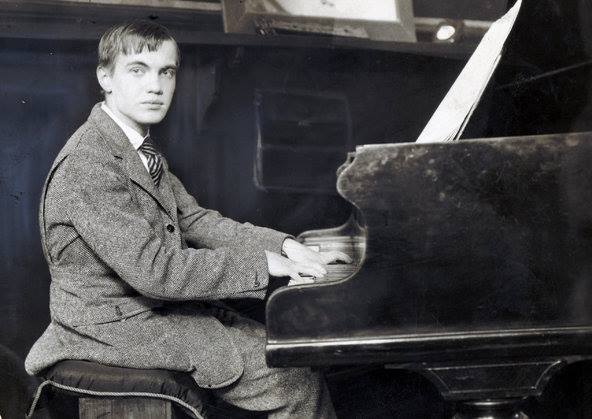

    PHOTO: Hitch and Herrmann – who’d have predicted anything could have gone wrong?

  • Ashkenazy at 80 Uncommon Classics on WPRB

    Ashkenazy at 80 Uncommon Classics on WPRB

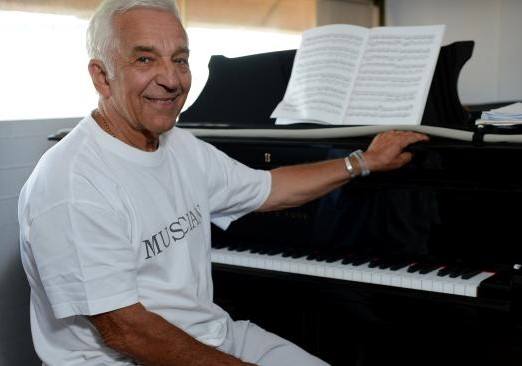
    Classical music radio stations around the world will be celebrating the 80th birthday of Vladimir Ashkenazy. How many will do so, I wonder, by playing “B-sides?”

    This morning on WPRB, we’ll take our usual tack and try to focus on the unusual and neglected, with Ashkenazy as pianist, performing music by Taneyev, Stravinsky, Previn and Rautavaara (okay, we’ll toss in a little Rachmaninoff, too), and as conductor, performing works by Franck, Prokofiev, Scriabin and Boris Blacher.

    At 9:00, we’ll pause for a visit from accordionist Robert Young McMahan. McMahan, who is on the faculty of The College of New Jersey, is one of the foremost authorities on his instrument. He is on the governing board of the American Accordionists’ Association, which will hold its annual festival at the Westin Princeton at Forrestal Village, from July 12 to July 16. Tune in to learn more, or look online at http://www.ameraccord.com. The AAA has commissioned prominent contemporary composers to write for the accordion for over 65 years. McMahan will share some of his insights and recordings.

    It will be mostly Ashkenazy, with a dash of accordion, this morning from 6 to 11 EST, on WPRB 103.3 FM and wprb.com. Come to think of it, when are we not dashing, on Classic Ross Amico?


    PHOTO: Ashkenazy, oblivious of the dress code

Tag Cloud

Aaron Copland (93) Beethoven (95) Composer (114) Film Music (139) Film Score (143) Film Scores (255) Halloween (94) John Williams (195) KWAX (229) Leonard Bernstein (103) Marlboro Music Festival (125) Movie Music (154) Mozart (88) Opera (209) Philadelphia Orchestra (89) Picture Perfect (174) Princeton Symphony Orchestra (108) Radio (88) Ross Amico (244) Roy's Tie-Dye Sci-Fi Corner (290) The Classical Network (101) The Lost Chord (268) Vaughan Williams (103) WPRB (396) WWFM (881)

DON’T MISS A BEAT

Receive a weekly digest every Sunday at noon by signing up here


RECENT POSTS