Category: Daily Dispatch

  • Schumann’s Life Music on WPRB

    Schumann’s Life Music on WPRB

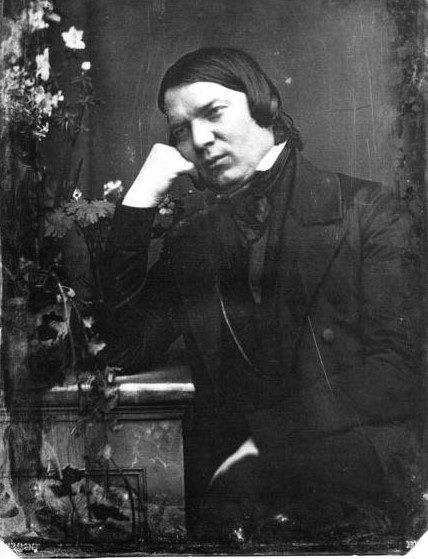
    A would-be concert pianist, he’s said to have destroyed his hand through the use of a finger-strengthening device of his own design. He took his underage sweetheart’s father, who also happened to be his teacher, to court to sue for the right to marry, ultimately winning that right the day before she came of age. He went mad from syphilis, hurled himself into the Rhine, and spent his final months in an asylum. His name was Robert Schumann, and he was one of the most romantic of Romantic composers.

    Join me tomorrow morning on WPRB, as we celebrate Schumann on the anniversary of his birth with rarely-heard works by the musicians he championed, pieces by lesser-known figures from his circle, and fabulous recordings of some of his own enduring classics. A highlight will be Sir Thomas Beecham’s reading of incidental music composed for Lord Byron’s dramatic poem “Manfred.”

    If you’ve got a craving for cravats, drop in (to the Rhine or otherwise) this Thursday morning from 6 to 11 EDT, on WPRB 103.3 FM and wprb.com. It will be all the Schumann we can shoe in, on Classic Ross Amico.

  • GEMS Concert & Havergal Brian’s Gothic Symphony WWFM

    GEMS Concert & Havergal Brian’s Gothic Symphony WWFM

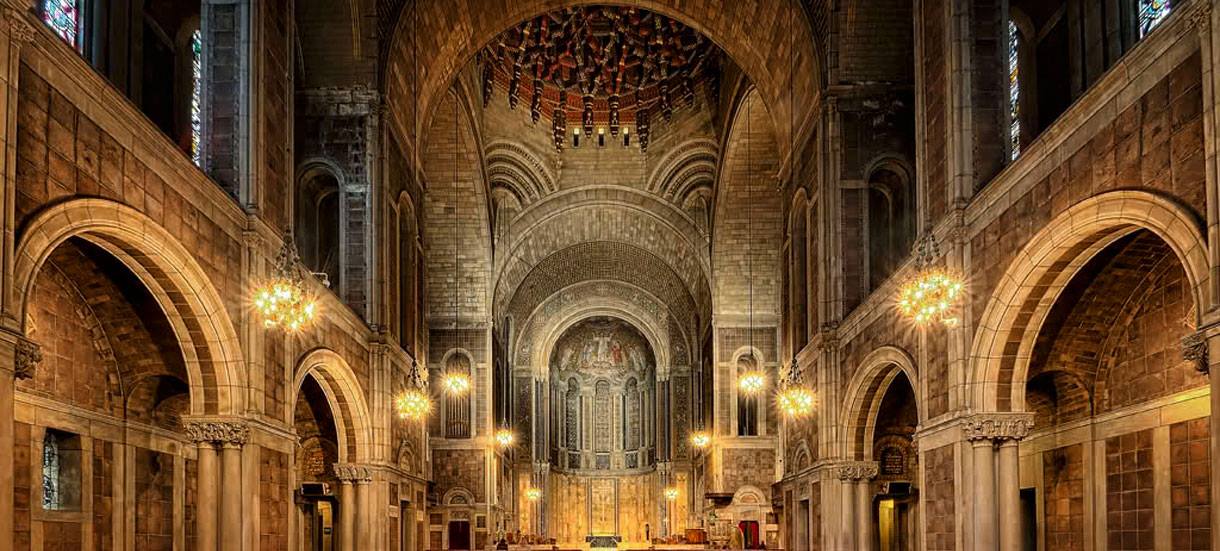
    On Tuesday and Thursday, this week and next, The Classical Network renews its partnership with Gotham Early Music Scene (GEMS). Join me on today’s Noontime Concert for a recital from the Chapel at St. Bartholomew’s Church in midtown Manhattan of works by Girolamo Frescobaldi. The performer, harpsichordist Gavin Black, is founder and director of the Princeton Early Keyboard Center.

    Then stick around for Havergal Brian’s Symphony No. 1, his “Gothic Symphony.” At nearly two hours in length, the “Gothic” is one of the longest symphonies ever written, and certainly one of the largest, requiring multiple choirs and orchestras. The composer had to paste multiple sheets together in the writing of the piece in order to accommodate its titanic demands. Brian dedicated the work to Richard Strauss, who declared it magnificent.

    Join me for music from Gotham, and then the “Gothic Symphony,” this afternoon from 12 to 4 p.m. EDT, on WWFM – The Classical Network and wwfm.org.


    PHOTO: St. Bartholomew’s Episcopal Church, 50th St. & Park Ave., New York City

  • I Love to Singa: Al Jolson’s Cartoon Classic

    I Love to Singa: Al Jolson’s Cartoon Classic

    “I love to singa, about the moona and the Juna and the springa…”

    Owl Jolson:

    http://www.dailymotion.com/video/x2ijkn_i-love-to-singa_shortfilms

    Al Jolson and the irrepressible Cab Calloway:

    https://www.youtube.com/watch?v=_jchyev9bNk

  • Remembering Sir Jeffrey Tate on The Classical Network

    Remembering Sir Jeffrey Tate on The Classical Network

    Conductor Sir Jeffrey Tate died on Friday at the age of 74. Join me this afternoon on The Classical Network, as we remember him through a selection of his recordings. We’ll also hear music by American composer Daniel Pinkham and Englishman Arthur Somervell on their birthday anniversaries, as part of our Monday mix. Those and more today, from 4 to 7 p.m. EDT, on WWFM – The Classical Network and wwfm.org.

  • Water Spirits in Music Rusalka Week

    Water Spirits in Music Rusalka Week

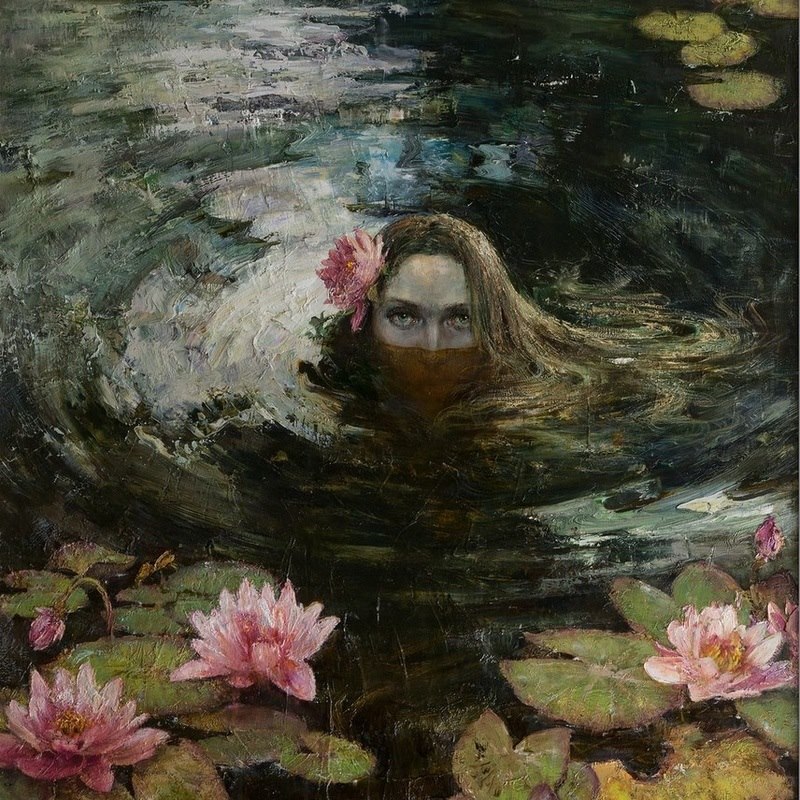
    There have been innumerable pieces of music written about water spirits – sirens, naiads, lorelei, undines, mermaids and melusinas. This Sunday night on “The Lost Chord,” we’ll sample just a couple of these for Rusalka Week.

    In Slavic mythology, a rusalka is a spirit that dwells at the bottom of a river or lake. She lures unsuspecting men with her song, invariably resulting in a watery doom. Rusalki are never more dangerous than in early June, when the spirits roam free.

    Rusalka Week plays a role in Rimsky-Korsakov’s opera, “May Night,” drawn from Gogol’s collection, “Evenings on a Farm Near Dikanka.” Alexander Dargomizhsky’s opera, “Rusalka,” is based on a dramatic poem by Pushkin. And the best known of the bunch, Dvorak’s “Rusalka,” was inspired by Czech fairy tales of Karel Jaromir Erben and Bozena Nemcova.

    Of course, we won’t be listening to any of these. (We’ve treated Rimsky and Dargomizhsky in the past.) Instead, we’ll have a flute sonata from 1882, by Carl Reinecke, which bears the subtitle “Undine,” an allusion to a novella by Friedrich de la Motte Fouqué, which was very popular among the Romantics. Fouqué’s “Undine” tells the tale of a water spirit who marries a knight in order to gain a soul.

    Then we’ll hear the complete ballet, “Les Sirènes,” from 1946, by Lord Berners. Berners, notorious for his sense of the absurd (a horse was a regular guest at his indoor tea parties) was a talented composer, writer and painter. “Les Sirènes,” after a scenario by Frederick Ashton, features mermaids combing their hair and singing on rocks at a seaside resort, where sirens of another sort behave coquettishly on shore.

    I hope you’ll join me – you shouldn’t be out wandering during Rusalka Week anyway – for “Come on in, the Water’s Fine,” this Sunday night at 10:00 EDT, on WWFM – The Classical Network and wwfm.org.


    I notice Dargomizhky’s “Rusalka” will be performed at the Academy of Vocal Arts in Philadelphia, as part of a Russian Opera Workshop, August 1-3. More information here:

    http://www.russianoperaworkshop.com/

    (Painting by Anna Vinogradova)

Tag Cloud

Aaron Copland (93) Beethoven (95) Composer (114) Film Music (139) Film Score (143) Film Scores (255) Halloween (94) John Williams (195) KWAX (229) Leonard Bernstein (103) Marlboro Music Festival (125) Movie Music (154) Mozart (88) Opera (210) Philadelphia Orchestra (89) Picture Perfect (174) Princeton Symphony Orchestra (108) Radio (88) Ross Amico (244) Roy's Tie-Dye Sci-Fi Corner (290) The Classical Network (101) The Lost Chord (268) Vaughan Williams (103) WPRB (396) WWFM (881)

DON’T MISS A BEAT

Receive a weekly digest every Sunday at noon by signing up here


RECENT POSTS