• Wagner’s Wild Ride: Hated by the Greats!

    Wagner’s Wild Ride: Hated by the Greats!

    by 

    in
    4 responses

    “Of all the bête, clumsy, blundering, boggling, baboon-blooded stuff I ever saw on a human stage, … and of all the affected, sapless, soulless, beginningless, endless, topless, bottomless, topsiturviest, tongs and boniest doggerel of sounds I ever endured the deadliness of, that eternity of nothing was the deadliest, so far as the sound went. I never was so relieved, so far as I can remember in my life, by the stopping of any sound – not excepting railway whistles – as I was by the cessation of the cobbler’s bellowing.”

    – John Ruskin on “Die Meistersinger”

    “For me Wagner is impossible… he talks without ever stopping. One just can’t talk all the time.”

    – Robert Schumann

    “One can’t judge Wagner’s opera ‘Lohengrin’ after a first hearing, and I certainly don’t intend hearing it a second time.”

    – Gioachino Rossini

    “I love Wagner. But the music I prefer is that of a cat hung up by its tail outside a window and trying to stick to the panes of glass with its claws.”

    – Charles Baudelaire

    “I like Wagner’s music better than any other music. It is so loud that one can talk the whole time without people hearing what one says. That is a great advantage.”

    – Oscar Wilde

    “Is Wagner a human being at all? Is he not rather a disease? He contaminates everything he touches – he has made music sick. I postulate this viewpoint: Wagner’s art is diseased.”

    – Friedrich Nietzsche

    “Every time I listen to Wagner, I get the urge to invade Poland.”

    – Woody Allen

    “I have witnessed and greatly enjoyed the first act of everything which Wagner created, but the effect on me has always been so powerful that one act was quite sufficient; whenever I have witnessed two acts I have gone away physically exhausted; and whenever I have ventured an entire opera the result has been the next thing to suicide.”

    – Mark Twain

    “Wagner’s music is better than it sounds.”

    – Edgar Wilson “Bill” Nye

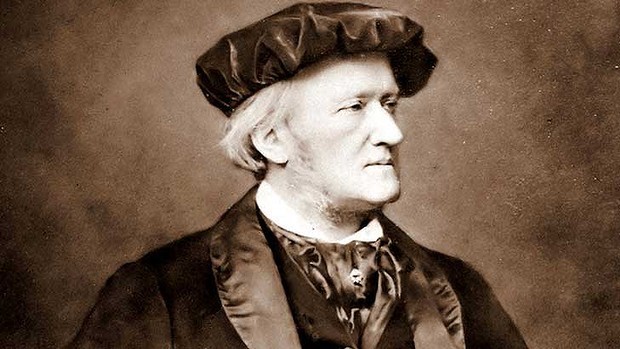
    Happy Birthday, Richard Wagner (1813-1883)!

  • Górecki’s Fourth: A Tansman Tribute

    Górecki’s Fourth: A Tansman Tribute

    by 

    in
    7 responses

    A performance of his Symphony No. 3 sold over a million copies, making it one of the best-selling classical records of all time.

    This Sunday night on “The Lost Chord,” we’ll hear the last major work by Polish composer Henryk Górecki – his Symphony No. 4, subtitled “Tansman Episodes.” The piece was written in tribute to his compatriot, Alexandre Tansman, who lived most of his life in Paris. Górecki had been cajoled into writing the work by the organizer of an annual Tansman Festival, held in Łódź, the city of Tansman’s birth.

    The astounding success of his Symphony No. 3 was actually a source of consternation for Górecki. The celebrity and scrutiny thrust upon him had the effect of disrupting his routine and stirred up anguish about his future path. Remember, the Symphony No. 3 was composed in 1976. Most of the world had never even heard of Górecki before he skyrocketed to fame in 1992. That was the year that Nonesuch Records released its recording, which featured soprano Dawn Upshaw, and was conducted by David Zinman. However, in the 16 years or so between the work’s composition and its sudden, staggering popularity, Górecki had understandably moved on and continued to develop as an artist.

    The sudden recognition caused him, rather Sibelius-like, to agonize over his next symphony. The work wasn’t completed in short score until 2006. The composer died in 2010 without having orchestrated the piece. However, he did leave indications of his intentions and had played through the work at the piano for his son, Mikolaj Górecki, also a composer. It was Mikolaj who took up the task of fleshing it out into full score following his father’s death.

    The symphony was given its first performance on April 12, 2014, by the forces we’ll hear, the London Philharmonic Orchestra conducted by Andrey Boreyko, in its world premiere recording.

    Rather than reference any of Tansman’s actual music, Górecki decided to play on the letters of the composer’s name, devising a musical cipher made up of corresponding notes to act as a recurring theme. In the second movement, he also quotes Karol Szymanowski’s “Stabat Mater.” There are passing references to Stravinsky and John Adams in the work, as well, and an appearance by Wagner’s “Siegfried” theme toward the end. In general, he trades the mesmerizing lyricism of his Third Symphony for a more aggressive brand of minimalism in his Fourth.

    I thought we’d preface Górecki’s symphonic tribute with some music by Tansman himself. We’ll hear the “Partita for Cello and Piano,” written in 1954 and 1955 for the famed Spanish cellist Gaspar Cassadó. It will be performed by the Cracow Duo – Kalinowski & Szlezer, Jan Kalinowski, cello, and Marek Szlezer, piano.

    I hope you’ll join me for “Repeating Episodes” – Henryk Górecki’s Symphony No. 4 “Tansman Episodes” – this Sunday night at 10:00 EDT, with a repeat Wednesday evening at 6; or that you’ll listen to it later as a webcast at wwfm.org.


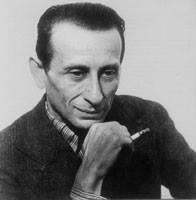
    POLE POSITIONS: Alexandre Tansman (left) and Henryk Górecki


  • Chandos Airbrushes Tansman’s Cigarette?

    Chandos Airbrushes Tansman’s Cigarette?

    by 

    in
    7 responses

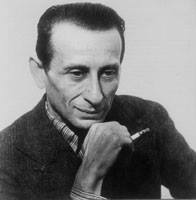
    Is it my imagination, or did Chandos Records really Photoshop out Alexandre Tansman’s cigarette? I’m not a smoker myself, but I think that’s taking political correctness a bit far. What’s next, Photoshopping Shostakovich’s liver spots? Let Slavs be Slavs aleady.

    You can experience Tansman’s neoclassical mastery in his Partita for Cello and Piano tonight on “The Lost Chord,” along with Henry Górecki’s Symphony No. 4. Listen at 10:00 EDT at wwfm.org. The program will repeat Wednesday evening at 6, and then be archived as a webcast.


  • Easter Vivaldi and Mom’s Love of Music

    Easter Vivaldi and Mom’s Love of Music

    by 

    in
    5 responses

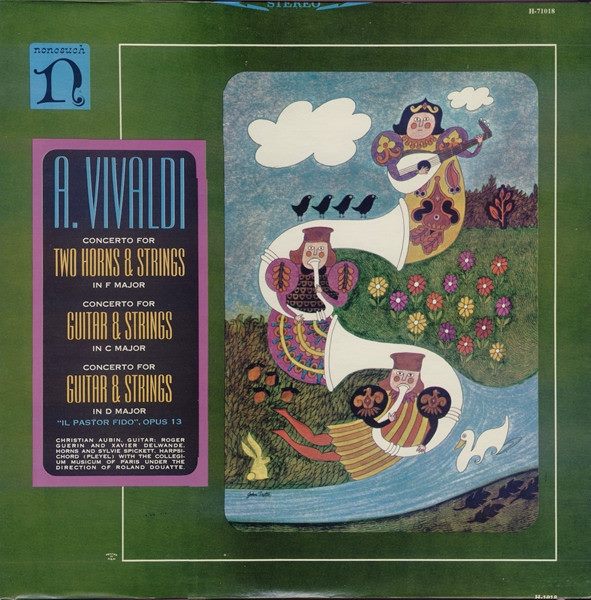
    One of my favorite Easter memories is of when I came downstairs and found a couple of Vivaldi LPs next to my basket. Now, Vivaldi isn’t even remotely my favorite composer, but I thought that was just the greatest thing ever. I listened to those records with every bit as much pleasure as I experienced when I devoured my chocolate rabbit (and of course they’ve lasted a great deal longer).

    That’s the kind of thoughtful gesture my mom would make. She always started with something nice and then took it to the next level. Mom was fond of Vivaldi’s Guitar Concerto in D. We weren’t a “classical music” family – I was the first to fall under the spell – but Mom caught on fast. She liked Vivaldi and Bach and jogged to Sousa marches.

    That’s not to say she didn’t always have an appreciation for it. She took me to plenty of piano and chamber recitals after she realized I had been bitten by the bug, and we attended every Gilbert & Sullivan production in the area. She encouraged me in my record collecting. I wonder if she ever thought, “My god, what have I done?”

    In her last few years, Mom became interested in learning more about opera, after I had gotten her a nice compilation of arias for a gift. I could see she was a little puzzled by it at first, though Mom being Mom, she never would have expressed anything other than gratitude. But she actually grew to really enjoy it.

    A number of years earlier, she had attended part of a dress rehearsal for “The Marriage of Figaro” I had assistant stage managed with what was then the Opera Company of Philadelphia. It made her proud to see me in the wings with my headset, doing something I enjoyed (which was mostly cueing singers when it was time for them to go on and signaling stage hands when to smash flower pots). There was a lot of funny business on stage, though no supertitles until the actual performances. But it was pure farce, with powdered wigs flying around and people diving under furniture. I think she probably was already interested in seeing a complete opera then. I don’t know why my parents couldn’t make that one – they lived only about an hour and a half away – since that would have been pretty much ideal.

    Instead, I wound up taking her to a threadbare production of Boito’s “Mefistofele” at the New York City Opera. It was essentially the same production Norman Treigle had triumphed in, in the early 1970s, but 20 years later it was looking kind of shabby – which surprised me, since everything I had seen at City Opera up until that point (Korngold’s “Die tote Stadt,” Busoni’s “Doktor Faust,” Hindemith’s “Mathis der Maler,” Tippett’s “The Midsummer Marriage”) had been so good. I should have just taken her across the plaza to the Met for a buffo romp. It’s one of my regrets that I did not. Hopefully they’ve got “Figaro” in heaven.

    Our last concert together featured the Chamber Orchestra of Philadelphia in Mozart’s final three symphonies.

    Happy birthday, Mom. Thanks for everything.


  • Hollywood’s Dark Underbelly Self-Reflexive Films

    Hollywood’s Dark Underbelly Self-Reflexive Films

    by 

    in
    6 responses

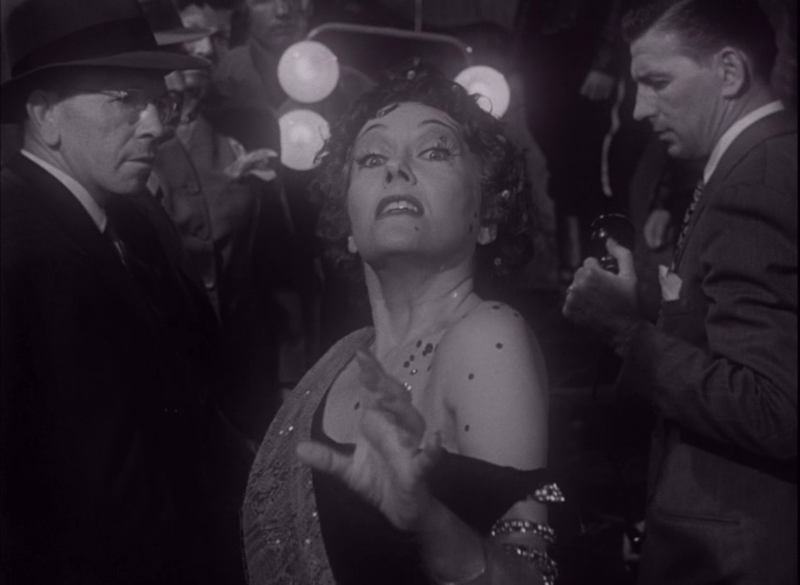
    “All right, Mr. DeMille, I’m ready for my close-up.”

    This week on “Picture Perfect,” we take a look behind the scenes at self-reflexive movies that offer glimpses of the dark underbelly of the film industry.

    We’ll have music from Billy Wilder’s “Sunset Boulevard” (1950), a film that’s been called the greatest movie about Hollywood ever made. Gloria Swanson plays Norma Desmond, a faded silent movie actress who believes she’s still “big; it’s the pictures that got small,” and William Holden is an unsuccessful screenwriter-turned-gigolo. Real life director Erich von Stroheim appears in an interesting role as Desmond’s butler – who was once a director! There are also cameos by Cecile B. DeMille and Hedda Hopper, who play themselves. Franz Waxman wrote the Academy Award winning score.

    Vincent Minelli’s “The Bad and the Beautiful” (1952) stars Kirk Douglas as a ruthless producer, who uses and abuses everyone around him – including Lana Turner, Walter Pigeon, Dick Powell, and Gloria Grahame. Yet everyone’s career seems to blossom from exposure to this S.O.B. The music is by Philadelphia-born David Raksin, who is best-remembered for his theme to the all-time noir classic “Laura.” His theme for “The Bad and the Beautiful” has also become a jazz standard.

    Peter O’Toole dominates “The Stunt Man” (1980) as a tyrannical director who blackmails a fugitive from the law into acting as a stunt man in his current film. The line between fantasy and reality begins to blur. Dominic Frontiere wrote the music. It’s probably not what anyone wants to be remembered for, but I always find it amazing that Frontiere served time for scalping tickets to the Super Bowl! Of course he scalped a half-million dollars worth, and his wife owned the Los Angeles Rams.

    Finally, director Michel Hazanavicius succeeds brilliantly in his virtuosic homage to classic American cinema, “The Artist” (2011). To my knowledge, if we discount Mel Brooks’ “Silent Movie,” from 1976, “The Artist” was the first silent feature to be released since Charlie Chaplin’s “Modern Times,” which was already an anachronism in 1936. The film was the recipient of five Academy Awards – half of its ten nominations – including one for Best Picture.

    The story deals with “A Star is Born”-type dynamic with a fading actor of the silent era gradually eclipsed by the success of rising young actress. Yet Hazanavcius manages to turn it around to come up with an honest-to-goodness, feel-good movie, a real rarity in contemporary film.

    Ludovic Bource’s Oscar-winning score manages to be evocative of time and place, breezy, yet when necessary, poignant, with moments of spectacular action music which could have been written by Alfred Newman or Franz Waxman. This just might be my favorite film of the past decade, maybe two. For a classic movie lover, the first five minutes alone are priceless. And love that Uggie!

    I hope you’ll join me for “Behind-the-Scenes Hollywood,” on “Picture Perfect,” this Friday evening at 6 EDT, with a repeat Saturday morning at 6; or that you’ll listen to it later as a webcast at wwfm.org.


    More about Uggie here.

    https://en.wikipedia.org/wiki/Uggie


Tag Cloud

Aaron Copland (93) Beethoven (95) Composer (114) Film Music (144) Film Score (143) Film Scores (255) Halloween (94) John Williams (195) KWAX (229) Leonard Bernstein (104) Marlboro Music Festival (125) Movie Music (159) Mozart (91) Opera (213) Philadelphia Orchestra (89) Picture Perfect (174) Princeton Symphony Orchestra (109) Radio (88) Ross Amico (244) Roy's Tie-Dye Sci-Fi Corner (290) The Classical Network (101) The Lost Chord (269) Vaughan Williams (105) WPRB (397) WWFM (881)

DON’T MISS A BEAT

Receive a weekly digest every Sunday at noon by signing up here


RECENT POSTS