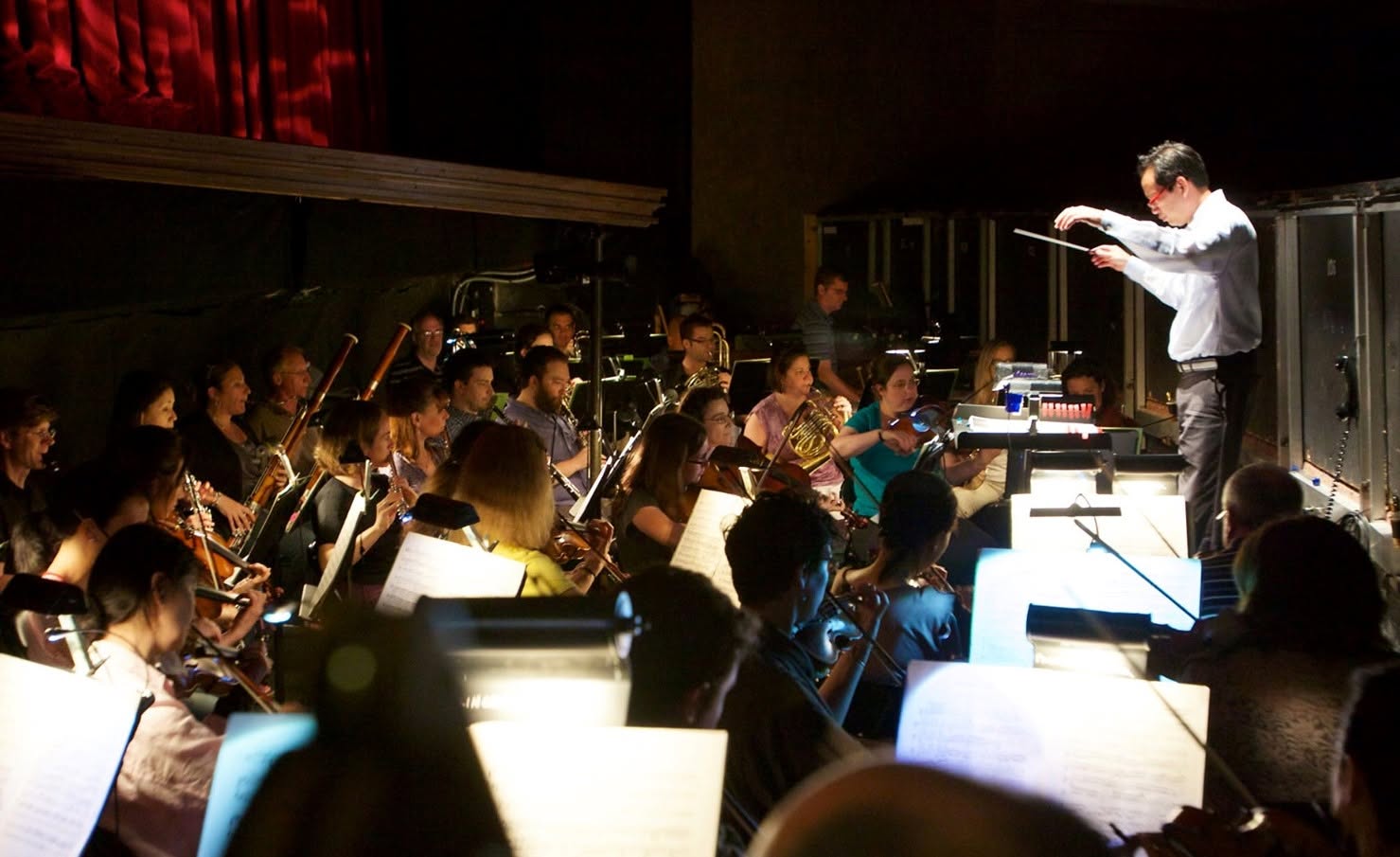
I am surprised and so very sorry to learn Richard Tang Yuk died on Friday in Trinidad and Tobago, where he made his home. He was 65-years-old.
For years, Tang Yuk was instrumental in making Princeton a June destination for music-lovers, through his founding of The Princeton Festival in 2004. As executive and artistic director, he oversaw quality opera, musical theater, chamber music, Baroque, jazz, dance, and multi-media presentations.
The festival grew in scale under his leadership, from two events and four performances at its inception, to encompass eight events and 22 performances, in addition to 20 free lectures and workshops, in 2019. The coronavirus pandemic led to the cancellation of live musicmaking in 2020. The organization pivoted by offering material for online streaming, but Tang Yuk stepped down from the directorship a few months after the season, such as it was, concluded.
His opera performances at McCarter Theatre earned acclaim in such publications as Opera News and The New York Times. Repertoire during his tenure was always an engaging balance of the familiar and unusual. Tang Yuk and his crackerjack team of technicians presented uniformly excellent productions of “The Flying Dutchman,” “Peter Grimes,” “Porgy and Bess,” “The Rake’s Progress,” “Nixon in China,” Handel’s “Ariodante,” and a double-bill of “Gianni Schicchi” and Rachmaninoff’s “Francesca da Rimini,” among others.
At various points in his career, he also served on the music faculties of Westminster Conservatory of Music, Indiana University Bloomington, and Princeton University.
I interviewed him several times, on the air, and most recently for an oral history of The Princeton Festival for the Princeton Symphony Orchestra (which revived the enterprise in 2022, with performances over several weeks each June, including opera presented under a state-of-the-art performance pavilion on the grounds of Morven Museum and Garden).
Tang Yuk did much to enrich the musical life of his adopted hometown, here in Central Jersey. His passing comes as a shock. He preserved his youthful appearance, trim and seemingly in good health when I saw him last year. I’m glad I got to see him again so recently and to tell him how much those opera performances at McCarter meant to me.
Thank you, Richard, and R.I.P.
-
Princeton Festival Founder Richard Tang Yuk Has Died
by
in Daily Dispatch
-
Laboring in the Bardo
by
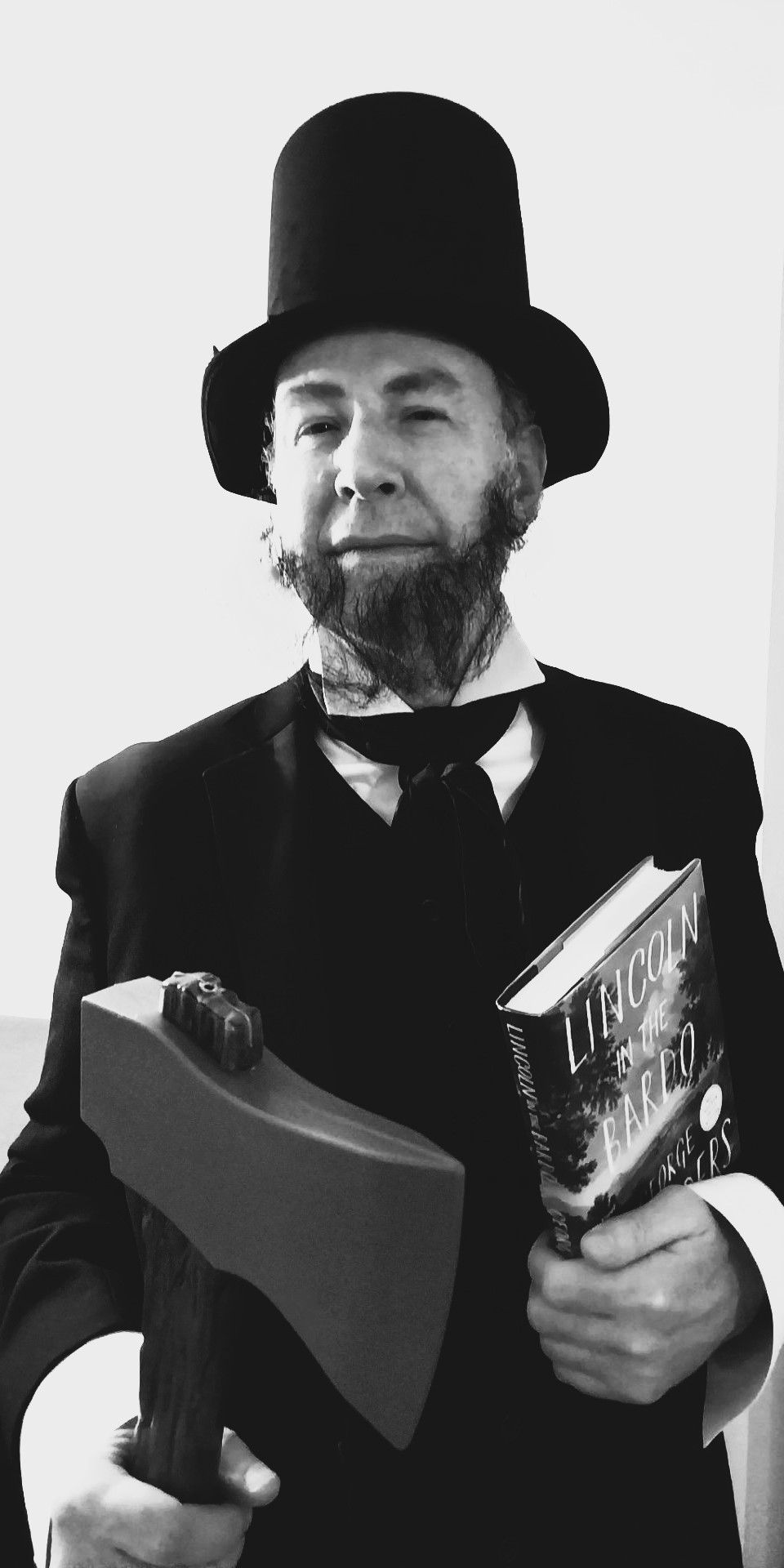
Still at work on my review of Missy Mazzoli’s “Lincoln in the Bardo,” so keep the hatred flowing. Just remember, this is eating into my much more pleasurable Halloween posts!
-
Countdown to Halloween with Hungarian Playlist on “Sweetness and Light”
by
2 responses
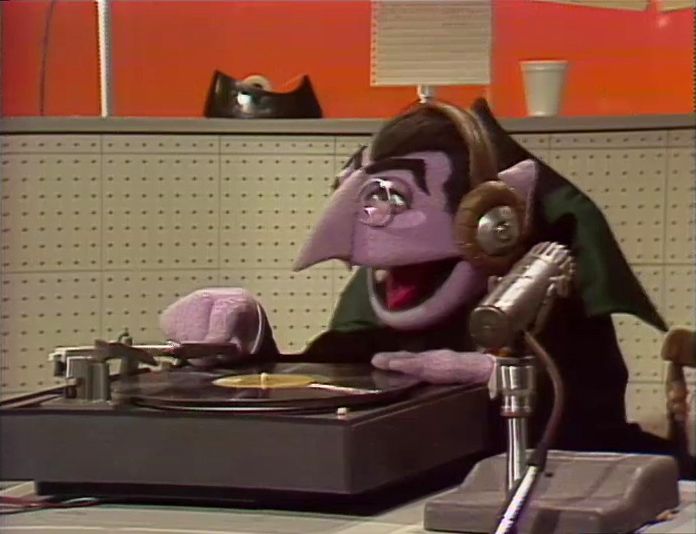
There’s no Halloween music on tonight’s rebroadcast of “Sweetness and Light,” though I have it on good authority that some of the selections are among the Count’s personal favorites. Pull up a coffin or strap on the gravity boots, and forget all your cares with a chillaxing playlist of works by Eugene Zador, Miklós Rózsa, Ferenc Farkas, Franz Lehár, Franz Doppler, Franz Liszt and Jenő Hubay. We’ll put the love bite on Hungarian light music classics when “Sweetness and Light” repeats, this Sunday evening at 9:00 EDT/6:00 PDT, exclusively on KWAX Classical Oregon! Stream it, wherever you are, at kwax.com.
-
To Paraphrase Lincoln: A Man’s Reviews Should Be Long Enough to Reach the Ground
by
37 responses
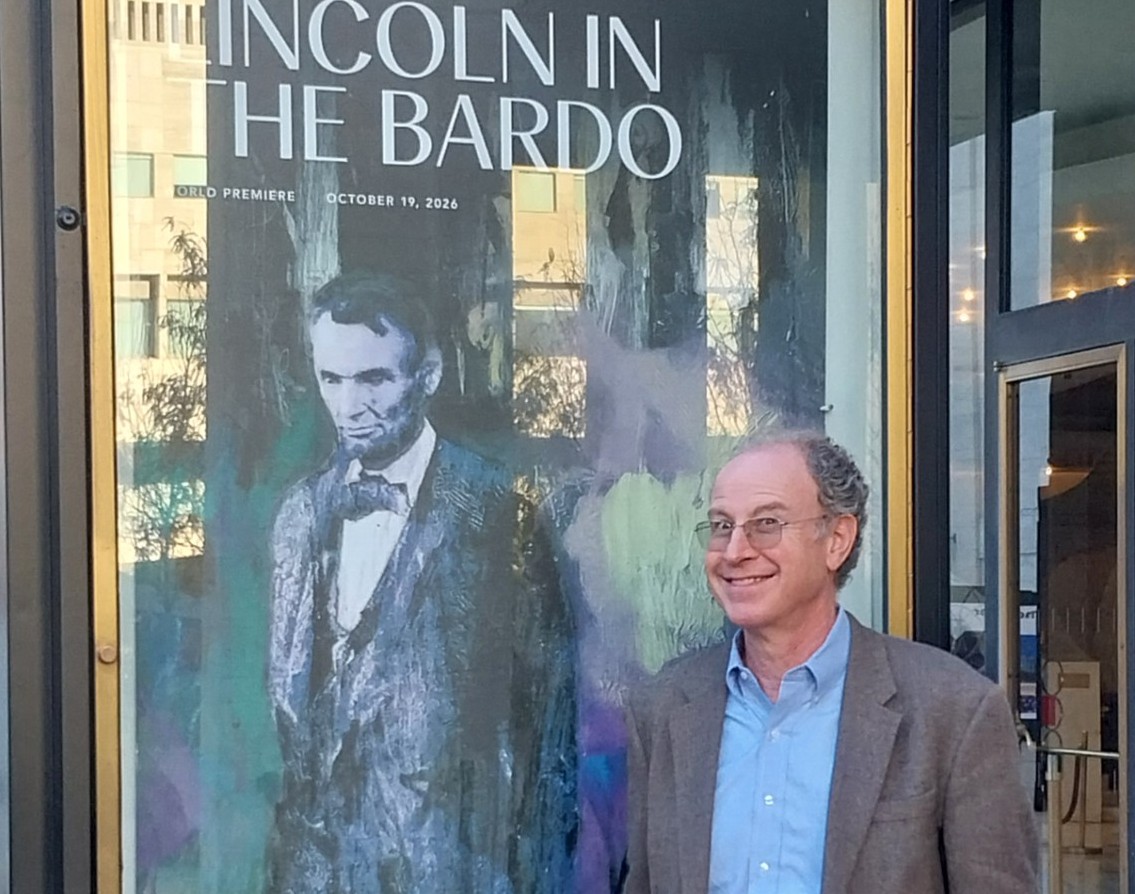
I just spewed close to 3,000 words about Missy Mazzoli’s “Lincoln in the Bardo,” now playing at the New York’s Metropolitan Opera through November 14. You can tell by the look on my face that I’ve got a lot to say about it, and very little of it will be in line with any other review I’ve seen of the piece. I’m hoping to have it smoothed out to share with you tomorrow. Fans of Mazzoli and George Saunders’ overrated novel, upon which it is based, better start amassing their brickbats now. I will not be holding back – although perhaps I’ll temper some of my language. Remember, we are all entitled to our opinions, and mine are always right!
-
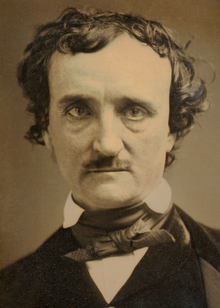
Edgar Allan Poems on “The Lost Chord”
by
With Hallowe’en lurking like a tell-tale heart of a black cat full of amontillado in a pit full of pendulums, it’s time to get the frock coat out of moth balls, this week on “The Lost Chord,” as we celebrate Edgar Allan Poe, with an hour of music inspired by his mad and melancholy verse.
We’ll hear a “melo-declamation” for narrator and orchestra on “The Raven” by Arcady Dubensky (1890-1966), a violinist in the New York Philharmonic. The piece was given its world premiere at the Academy of Music in Philadelphia in 1932, captured in an experimental recording by RCA Victor, on 35mm optical film. It was issued on a special 78 rpm, 2-record set, with the poem, together with monochrome engravings of Stokowski and Poe etched into the shellac. Benjamin de Loache is the speaker.
Then we’ll have a symphonic poem inspired by Poe’s “Ulalume” by English composer Joseph Holbrooke (1878-1958). Holbrooke evidently adored Poe, as he wrote a number of pieces inspired by his writings, including “The Raven,” “The Bells” (which predated the work by Rachmaninoff), and “The Masque of the Red Death.” “Ulalume” was first performed in 1905. The composer thought it one of his finest pieces. Again, the source poem is a gloomy meditation on the loss of a loved one.
Then, from the Princeton-based Affetto label, we’ll hear selections from a song cycle, “Lenoriana,” by Benjamin C.S. Boyle (b. 1979). Boyle was on the faculty of Westminster Choir College of Rider University, as were the performers, baritone Elem Eley and pianist J.J. Penna. Of the seven songs, we’ll sample Boyle’s settings of “Annabel Lee,” “The Conqueror Worm,” and “To Helen.”
Finally, we’ll have an orchestral etude on “The Haunted Palace,” which Poe incorporated into his story “The Fall of the House of Usher.” The French composer Florent Schmitt (1870-1958) knew the work from a translation by Stéphane Mallarmé. It tells of a king of olden times who is full of presentiments of impending doom to his palace and himself. The house and the royal family are destroyed, and remnants of the court may still be glimpsed as phantoms flickering in the windows and doors.
“The Haunted Palace” may be the first piece of music by a French composer to be inspired by Poe. It was completed in 1904, and first performed the following year.
Get ready to brood over many a quaint and curious volume of forgotten lore. That’s “Edgar Allan Poems,” on “The Lost Chord,” now in syndication on KWAX Classical Oregon!
——–
Clip and save the start times for all three of my recorded shows:
PICTURE PERFECT, the movie music show – Friday at 8:00 PM EDT/5:00 PM PDT
SWEETNESS AND LIGHT, the light music program – Saturday at 11:00 AM EDT/8:00 AM PDT (***now with a repeat Sunday at 9:00 PM EDT/6:00 PM PDT***)
THE LOST CHORD, unusual and neglected rep – Saturday at 7:00 PM EDT/4:00 PM PDT
Stream them, wherever you are, at kwax.com!
Tag Cloud
Aaron Copland (94) Beethoven (95) Composer (114) Film Music (151) Film Score (143) Film Scores (255) Halloween (103) John Williams (198) KWAX (233) Leonard Bernstein (105) Marlboro Music Festival (125) Movie Music (166) Mozart (91) Opera (217) Philadelphia Orchestra (91) Picture Perfect (174) Princeton Symphony Orchestra (110) Radio (90) Ross Amico (244) Roy's Tie-Dye Sci-Fi Corner (290) The Classical Network (101) The Lost Chord (269) Vaughan Williams (107) WPRB (397) WWFM (881)