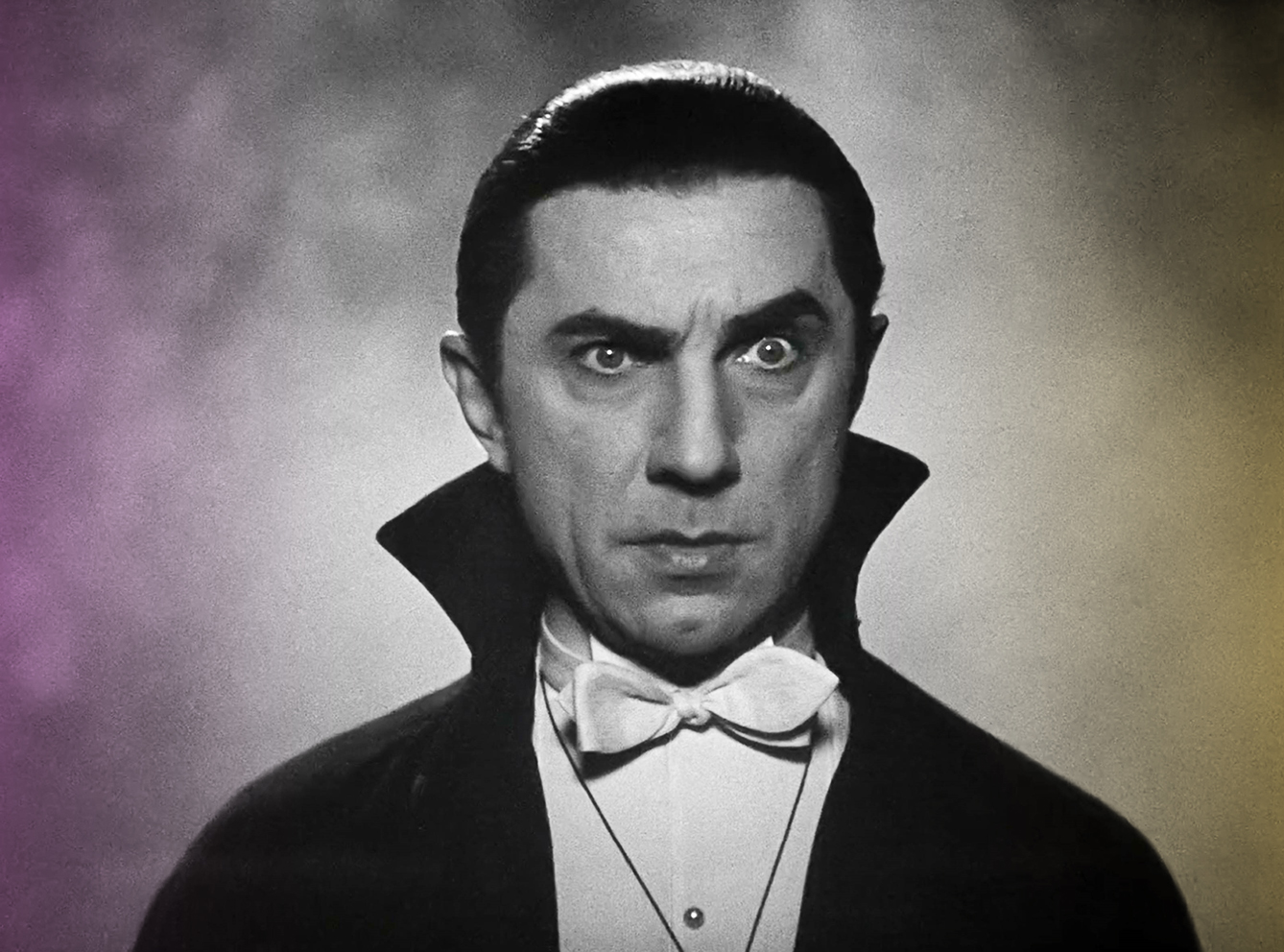
It’s got to be tough being Hungarian going into Halloween week. So many vampires. So many bad Bela Lugosi impressions.
This week on “Sweetness and Light,” we forgo any mention of Castle Dracula and lean into the paprika and poppyseed for an hour of Hungarian delights.
Enjoy a selection from a beloved film score by Miklós Rózsa (you can take the composer out of Hungary, but you can’t take Hungary out of the composer!), a “Hungarian Capriccio” by Eugene Zador (who assisted Rózsa as an orchestrator), some old Hungarian dances arranged by Ferenc Farkas, Hungarian fantasies by Franz Lehár and Franz Doppler, Doppler’s orchestration of a work by Franz Liszt, Liszt’s arrangement of a patriotic melody, and a schmaltzy treatment of a work by Jenő Hubay.
Next week, we’ll pull out the stakes for a supernatural celebration. For now, we’ll disregard the ghouls in favor of goulash, on “Sweetness and Light.” There will be two chances to indulge – this Saturday morning at 11:00 EDT/8:00 PDT, WITH A REPEAT Sunday evening at 9:00 EDT/6:00 PDT – exclusively on KWAX Classical Oregon!
Stream it wherever you are at the link:
https://kwax.uoregon.edu/
-
Goulash and Czardas on “Sweetness and Light”
by
-
Madness and the Piano on “Picture Perfect”
by
4 responses
If the definition of insanity is doing the same thing over and over and expecting a different result, then surely Hanon etudes are a ticket to the madhouse.
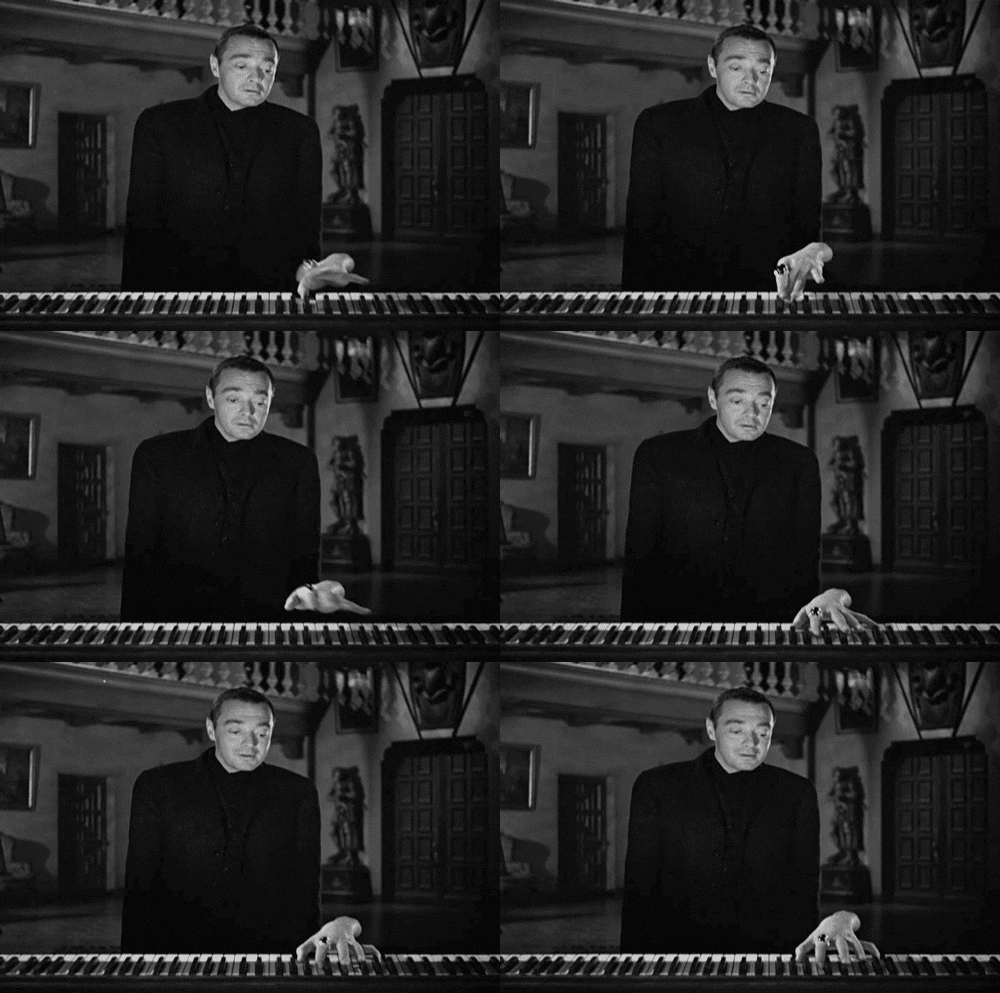
This week on “Picture Perfect,” get keyed-up with music from movies about madness and the piano.
Whenever he hears a loud, discordant sound, unhinged pianist-composer Laird Cregar is compelled to commit murder, in the 1945 film “Hangover Square.” Bernard Herrmann wrote the moody, romantic score, which includes a piano concerto, played by Cregar’s character during the film’s conflagration finale.
Peter Lorre is an unstable musicologist who is haunted by the disembodied hand of a murdered pianist with a penchant for Brahms’ arrangement of Bach’s Chaconne, in “The Beast with Five Fingers,” from 1946. Max Steiner was the composer. The hand is played by concert pianist Victor Aller, brother-in-law of Felix Slatkin and Leonard Slatkin’s uncle.
Alan Alda plays a frustrated pianist who falls in with a ring of Satanists, in “The Mephisto Waltz” from 1971. This time, Jerry Goldsmith blends Franz Liszt with amplified instruments and electronics to memorably eerie effect. Five years later, Goldsmith would win his only Academy Award for his music to “The Omen.”
Finally, Hans Conried plays a dictatorial pedagogue in “The 5,000 Fingers of Dr. T,” released in 1953. “5,000 Fingers” holds the distinction of being the only feature ever written by Dr. Seuss. The film sports an outrageous production design (including a gargantuan keyboard for 500 enslaved boys) and whimsical songs.
The composer was Frederick Hollander. Born in London, Hollander attained fame in Germany as Friedrich Hollander. His best-known international success was “The Blue Angel,” starring Marlene Dietrich, who introduced his song, “Falling in Love Again.” With the rise of the Nazis, Hollander fled to the United States, where he worked on over 100 films.
We go crazy for the keyboard this week. Practice makes psychotic on “Picture Perfect,” music for the movies, now in syndication on KWAX Classical Oregon!
——–
Clip and save the start times for all three of my recorded shows:
PICTURE PERFECT, the movie music show – Friday at 8:00 PM EDT/5:00 PM PDT
SWEETNESS AND LIGHT, the light music program – Saturday at 11:00 AM EDT/8:00 AM PDT (***now with a repeat Sunday at 9:00 PM EDT/6:00 PM PDT***)
THE LOST CHORD, unusual and neglected rep – Saturday at 7:00 PM EDT/4:00 PM PDT
Stream them, wherever you are, at the link!
https://kwax.uoregon.edu/
-
Holy Cow, It’s Arrau… As Franz Liszt!
by
6 responses
As the greatest pianist of his day – in fact, the inventor of the modern piano recital – Franz Liszt was so “Hollywood” before there was such a thing. A master showman, he mesmerized audiences with superhuman transcriptions and paraphrases, whipping them into frenzies. Ladies forgot their manners and rushed the stage. Skirmishes broke out, as they wrestled for his gloves and cigar butts, carelessly, calculatedly, left behind. He enjoyed enormous fame, accumulated staggering wealth, and engaged in prodigious love affairs.
That’s not to say he lacked substance. He knew he was more than a vulgar showman, and he was eager to explore other avenues. He may have been a man who savored the privileges of celebrity, but he was also an intellectual and an artist of the spirit. At the age of 35, he simply walked away. The most legendary keyboard titan of the Romantic era would reinvent himself as one of the most innovative musical thinkers who ever lived.
He pioneered a technique known as thematic transformation, a radical departure from Classical sonata form. He is also credited with having created the symphonic poem. Without Liszt, there would have been no Wagner as we know him. In fact, Romantic music would have had to find its own way. His later works at times anticipate the experiments of the 20th century, by composers as diverse as Debussy, Scriabin, and Schoenberg. “My sole ambition as composer,” he once pronounced, “is to hurl my lance into the infinite space of the future.”
He was also extraordinarily generous. He never took payment from any of his pupils. He programmed the operas of Wagner and Berlioz, when nobody else would touch them. He selflessly promoted the works of Grieg, Smetana, Debussy, Saint-Saëns, Fauré, Borodin, and many others. He was lured back to the concert stage only for charitable purposes – for the relief of victims of fire and flood, in support of political refugees, and to raise money for a Beethoven monument in Bonn.
For his pains, he was unrelentingly lambasted by critics and intrigued against by jealous rivals. At various points throughout his career, he was dismissed for pandering to the mob, ridiculed as a charlatan and a hypocrite, and shunned for his long-term relationships with two women who fled troubled marriages.
Yet there is a depth and spirituality in his greatest music that defies all charges. Liszt may have been something of a glamor puss, but he was not a shallow man. He was an intellectual, and he was also devoutly religious, even to the point of taking minor orders and living in a cell in Rome. In all, he was a fascinating amalgam of charlatan and visionary, sinner and saint, peacock and messiah.
Is it any surprise that such a figure would capture the imagination of filmmakers? And yet seemingly few – perhaps none – have done him justice.
Many actors have played him, among them Dirk Bogarde (“Song without End”), Henry Daniell (“Song of Love”), Julian Sands (“Impromptu”), and most notoriously, Roger Daltrey (“Lisztomania”).
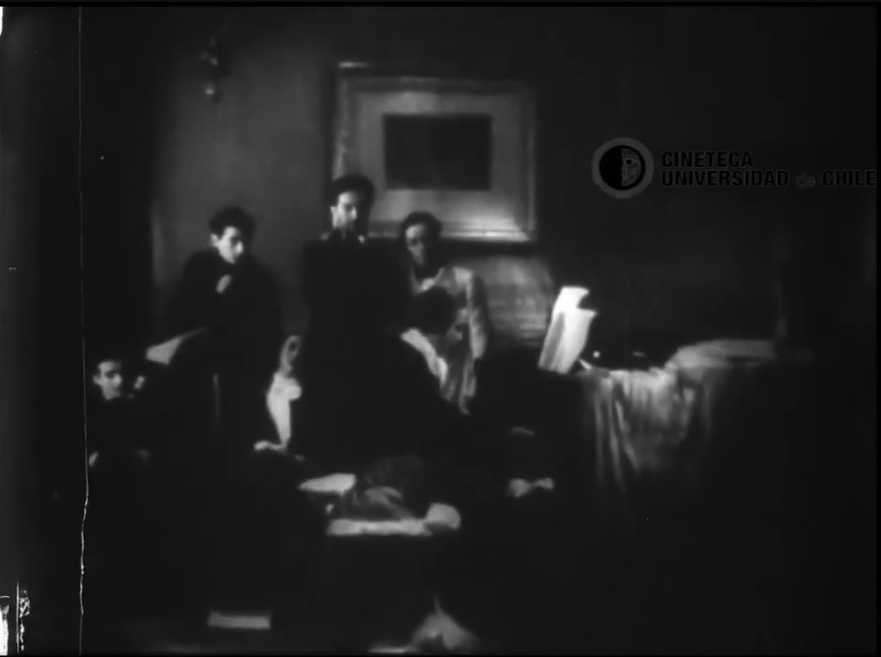
Here’s a remarkable discovery that perhaps at last succeeds: the pianist Claudio Arrau plays, as in acts the part of, Liszt in a 1935 Mexican film, “Sueños de Amor” (“Dreams of Love”), the title a translation of the composer’s famous piano work of the same name, the third of three collected as “Liebestraüme.” Keep in mind, this was only 49 years after Liszt’s death!
In this clip, Arrau performs “Un sospiro” (“A Sigh”), in character, in a scene evidently meant to recall the famous painting, “Liszt at the Piano,” by Josef Danhauser.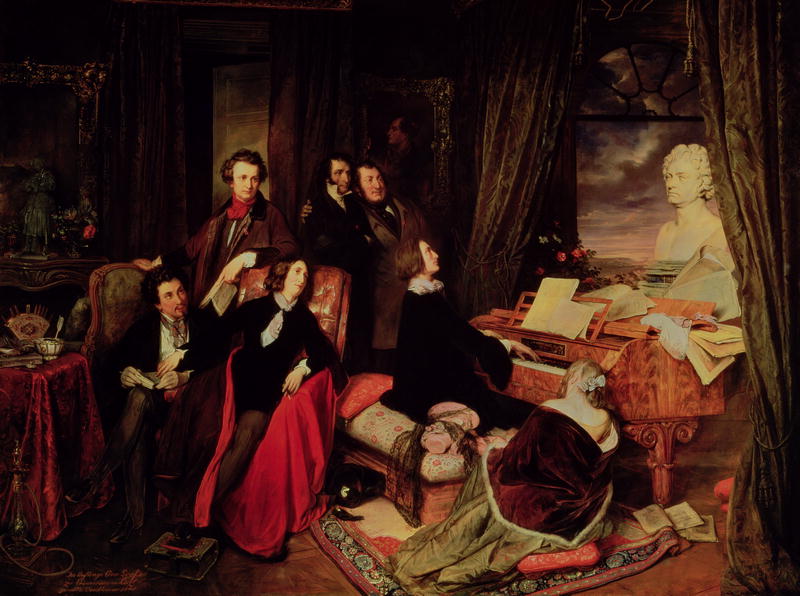
I’ve yet to watch it, but here’s the complete film.
Arrau was not the only world-class pianist to play Liszt in a movie. A couple of years ago, I posted about Sviatoslav Richter, one of the great Liszt interpreters, who played him in a Soviet film about Mikhail Glinka.
https://rossamico.com/2024/10/22/liszt-on-film-richter-bogarde-daltrey-more/
A couple of months after that, I posted some reflections on Danhauser’s painting
https://rossamico.com/2024/12/16/liszts-piano-beethovens-ghost-romantic-salon/
Arrau plays Liszt’s “Liebestraum No. 3”
Liszt, who studied with Carl Czerny (who in turn studied with Beethoven), taught Martin Krause, who taught Arrau. It’s crazy how short history is.
Happy birthday, Franz Liszt!
-
Extra! Extra! Read My (Uncredited) Article About Princeton Composer Vince Di Mura in U.S. 1
by
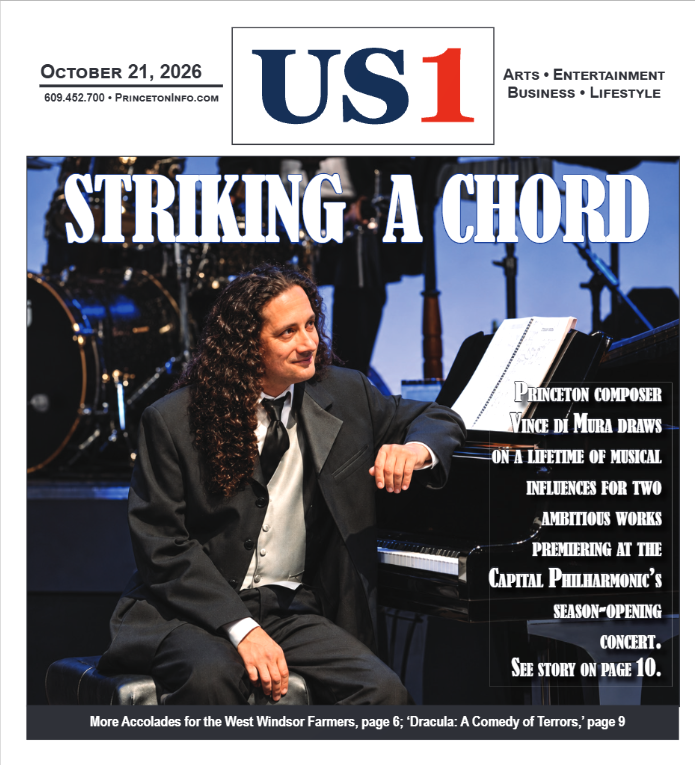
The good news is that my article on composer Vince Di Mura is the cover story in the Princeton weekly U.S. 1. The bad news is that I didn’t receive a byline, anywhere – not on the cover, not on the story – but I’m hoping at least I’ll get a credit on the Community News website at some point.
For now, take a look at the cover, enjoy the article, and definitely consider checking out this weekend’s season-opener with the Capital Philharmonic of New Jersey, at Trenton’s Patriots Theater at the War Memorial, Saturday at 7:30 p.m.
The concert will feature two celebratory premieres of Di Mura’s work and, if you get there early, a World War II era fashion show, with the composer at the piano. Doors open at 6:10.
Read more about it at the link! (Scroll down to the cover image on the right side of the screen, click it, and use the little arrow to “flip” to page 10.)
https://princetoninfo.com/category/coverstories
-
Malcolm Arnold, Robert Burns, and the Thrill of the Chase
by
3 responses
As any dog will tell you, there’s nothing as fun as a good chase. Certainly, it heightens the enjoyment of a satisfying Halloween story. Anyone craving a vicarious thrill appreciates the unbearable suspense of a good old-fashioned, adrenalin-pumping flight from supernatural terror.
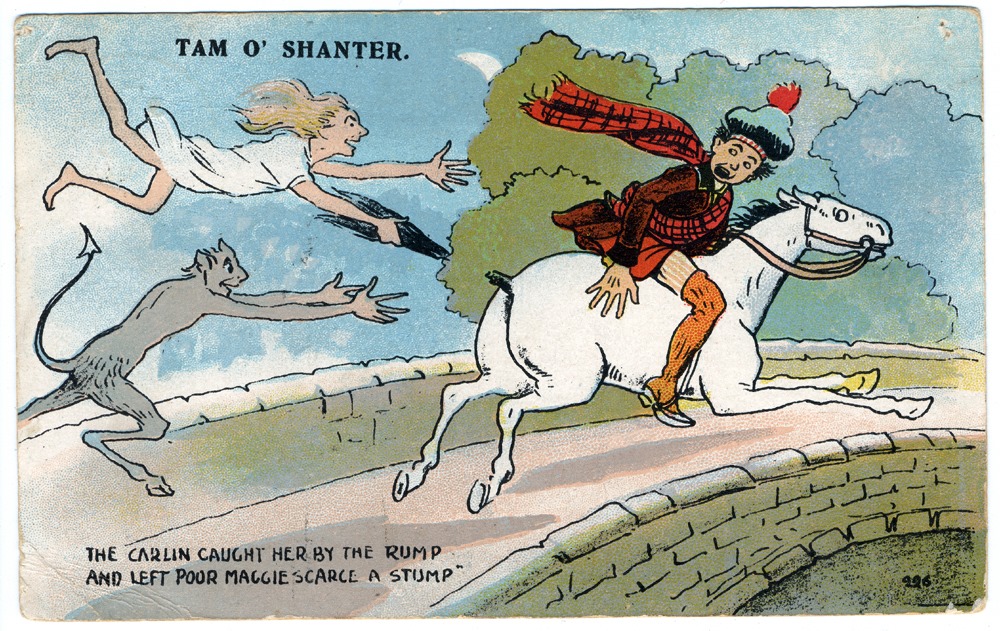
One of my favorite pieces of music related to Halloween is Malcolm Arnold’s descriptive overture “Tam O’Shanter” (1955), after the tongue-in-cheek narrative poem of Robert Burns.
Burns’ antihero tarries at a pub on market day, in defiance of his wife, then staggers out into the night. Under ominous skies (a storm is brewing), he detects the sound of bagpipes emanating from the ruins of an old church. Pressing his face to a chink in the masonry he espies “Auld Nick,” the Devil himself, “in shape o’ beast,” presiding over a coven of high-stepping witches and warlocks. When a particularly comely witch catches Tam’s eye, he exclaims in his drunkenness, “Weel done, Cutty-sark!” (in reference to her short skirt). This brings the forces of darkness down up him, and there is a hell-for-leather sprint on horseback for a nearby river, since spirits are said not be able to cross running water.
If you’re interested in the rest, you can read for yourself here:
http://loki.stockton.edu/~kinsellt/litresources/ayr/tam.html
Burns’ characterization of Tam as “a skellum… A blethering, blustering, drunken blellum,” might just as well apply to the composer. Both men were, more or less, fond of the bottle and also driven by demons.
Arnold was born on this date in 1921. He started out as a trumpeter with the London Philharmonic Orchestra. He became its principal in 1943.
During World War II, he registered as a conscientious objector. However, following the death of his brother, a pilot in the RAF, he decided to enlist. At least for a time. Though he never saw action beyond a military band, he quite literally shot himself in the foot in order to get back to civilian life.
In 1948, he retired from orchestral playing to devote himself exclusively to composition. He had an attractive melodic gift, which served him well in the writing of light music and film scores. He won an Academy Award in 1957 for his work on “The Bridge on the River Kwai.”
However, Arnold also had his dark side, as can be detected in passages of his symphonies. He was frequently cantankerous, often inebriated, and also highly promiscuous. He tried to kill himself at least twice. He was treated for depression and alcoholism, overcoming both, but then in the early 1980s he was given only a year to live. In the event, he actually lasted another 22, during which he completed his Symphony No. 9, among other works.
Arnold died in 2006, one month shy of his 85th birthday. He was a brilliant composer, of great facility. After Malcolm Williamson was named Master of the Queen’s Music in 1975, Sir William Walton quipped that they had given the job to the “wrong Malcolm.” For a man with so many personal demons, he wrote reams of perfectly delightful music.
An inebriated Tam gets himself into hot water with the forces of darkness, at the link. The program builds to a hell-for-leather race for a bridge, since, as I say, witches and devils are supposed not to be able to cross running water.
Addicted to the thrill of the chase? Try also Edgar Stillman Kelley’s “Headless Horseman.”
Or César Franck’s “Le Chausseur maudit” (“The Accursed Huntsman”), in which a nobleman spurns his religious obligations on the Sabbath to enjoy the pleasures of the hunt and himself winds up pursued by furies!
There are plenty more where these came from! Happy birthday, Malcolm Arnold, and happy Halloween.
Tag Cloud
Aaron Copland (94) Beethoven (95) Composer (114) Film Music (151) Film Score (143) Film Scores (255) Halloween (103) John Williams (198) KWAX (233) Leonard Bernstein (105) Marlboro Music Festival (125) Movie Music (166) Mozart (91) Opera (217) Philadelphia Orchestra (91) Picture Perfect (174) Princeton Symphony Orchestra (110) Radio (90) Ross Amico (244) Roy's Tie-Dye Sci-Fi Corner (290) The Classical Network (101) The Lost Chord (269) Vaughan Williams (107) WPRB (397) WWFM (881)
2 responses