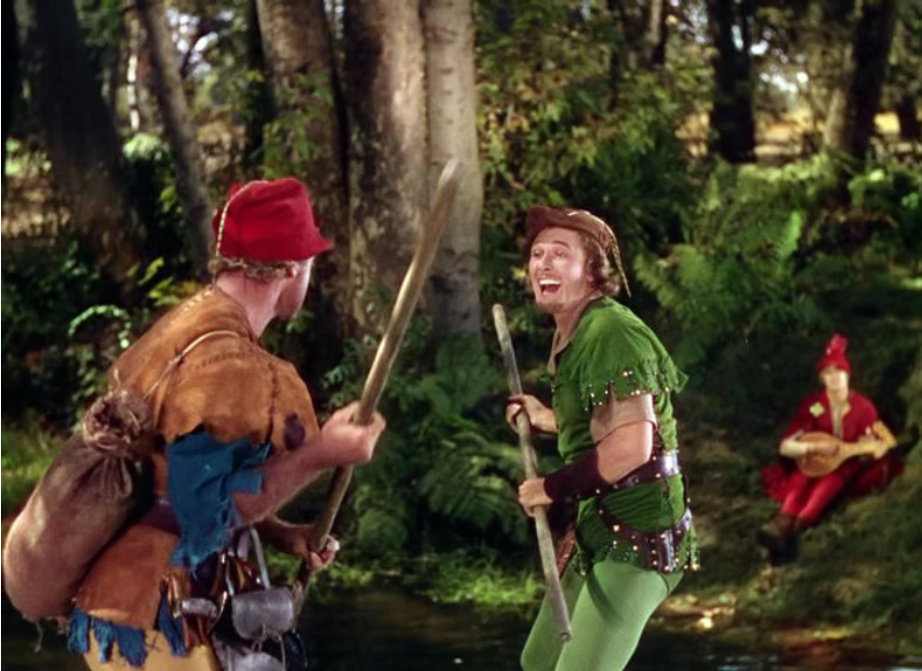
I’ve loved the music of Erich Wolfgang Korngold since I was a kid. I was humming the quarterstaff contest from “The Adventures of Robin Hood” (1938) before I knew a thing about classical music, thanks to enraptured television viewings of the Errol Flynn classic. On one memorable occasion, my best friend and I took down his mom’s curtain rods after the movie and sang Korngold’s gleeful fight music while dueling all over the house.
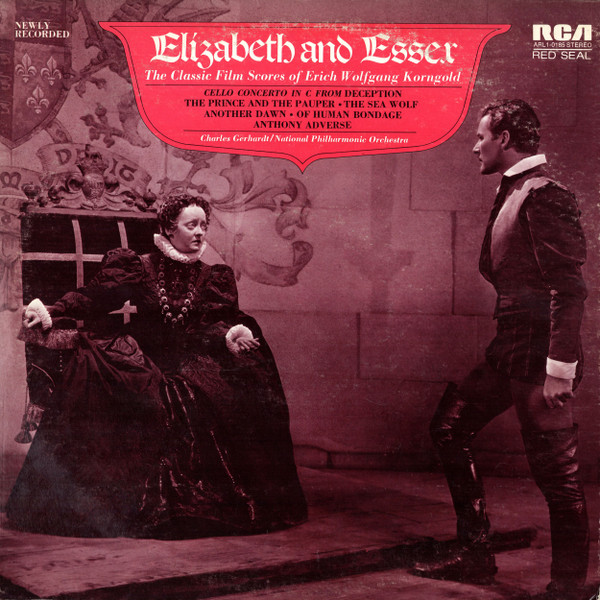
What I wouldn’t know until I was in high school, when I discovered the benchmark Charles Gerhardt LPs of his classic film scores, was that Korngold was one of classical music’s most gifted child prodigies. The toast of Vienna (Mahler declared him a genius and Richard Strauss was “terrified” by his talent), he was already writing operas in his teens. A contract with Warner Bros. brought further fame and fortune and likely saved his life. He was in Hollywood, writing the music for “Robin Hood,” when Hitler annexed Austria.
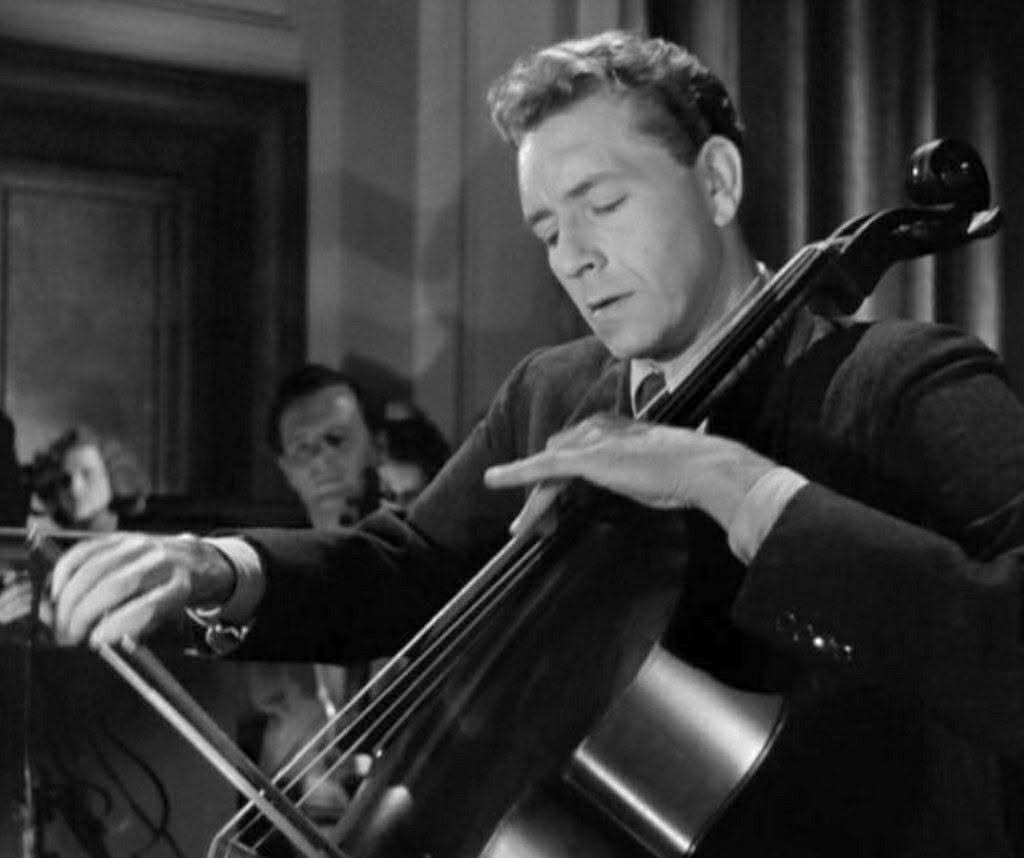
Korngold remained in the U.S. throughout the war, providing scores for Flynn and Bette Davis vehicles. Davis’ “Deception” (1946) brought a noir sensibility to a sinister love triangle involving three musicians. Claude Rains plays an overbearing composer, who attempts to push a psychologically fragile cellist (Casablanca’s Paul Henreid), who survived a concentration camp, past the breaking point with the rigors of his new cello concerto! Naturally, music would play a central part in the story, and Korngold provided an onscreen concerto for the film’s dramatic center.
Once upon a time, Korngold’s postwar Violin Concerto (in 1947 witheringly dismissed by the New York Sun’s Irving Kolodin as “more corn than gold”) was something of a rarity in concert halls, but in recent decades a younger generation of performers has given it a boost into the standard repertoire. Korngold’s Cello Concerto and Piano Concerto for the Left Hand have not been so lucky. Because much of it had to be performed on screen, as part of the action of the film, the cello work is understandably shorter. It could be awkward and expensive to include it on a real-life classical music concert, with the orchestra having to pay a star soloist for a work only half the length of a standard concerto.
So it’s very seldom done, and frankly, even for a Korngold admirer like myself, I always regarded it as something of a poor stepchild. Not that I don’t adore the melodic content (of a character I am certain would NOT please Kolodin). There are some heart-meltingly lovely moments, like pools of sweet refreshment disturbed by intermittent squalls. Following in the footsteps of Liszt (who wrote no cello concertos), Korngold takes elements of the standard concerto form and compresses them into a vertiginously brief span, roiling with dramatic tension. On recordings, the overheated soloist is often pushing back against aggressive tutti passages.
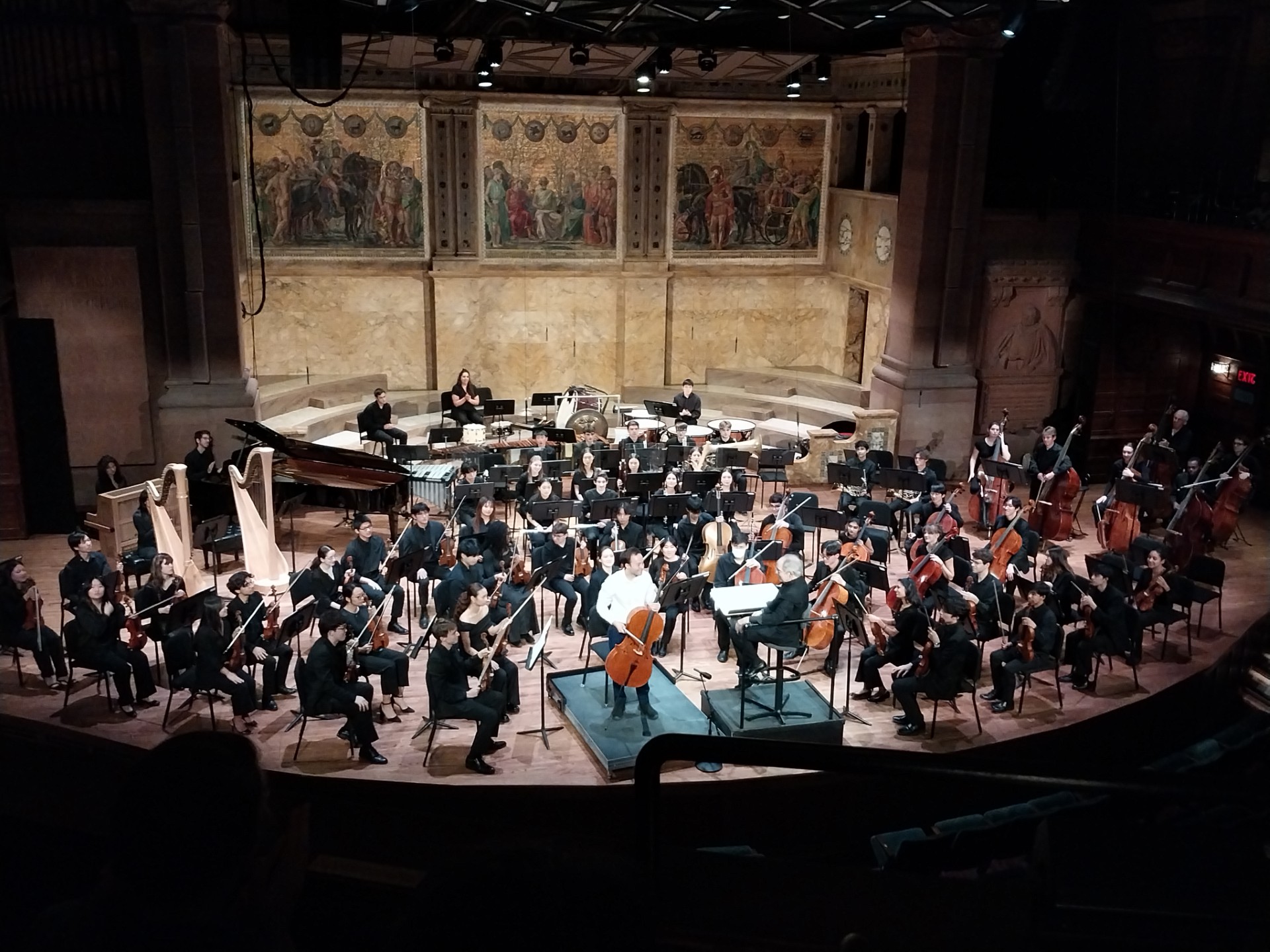
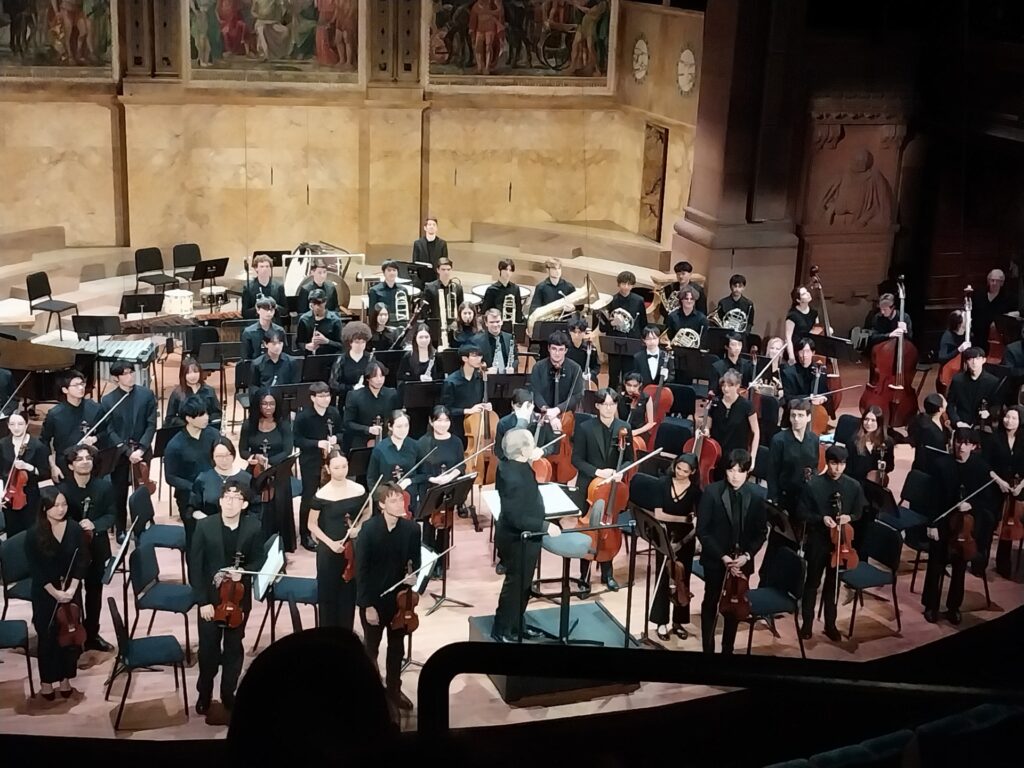
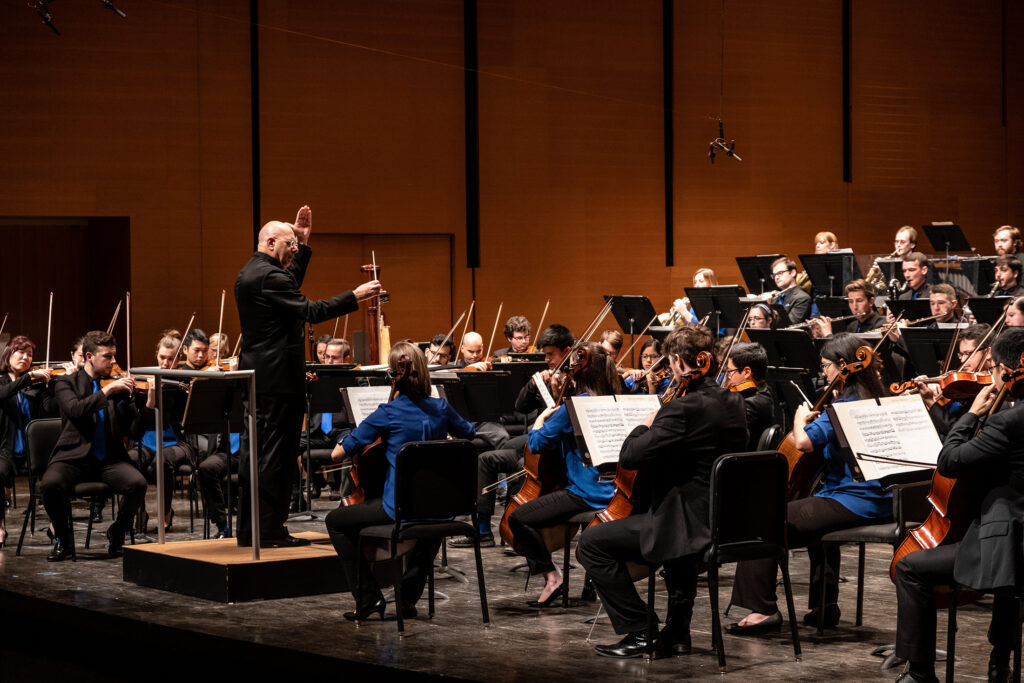
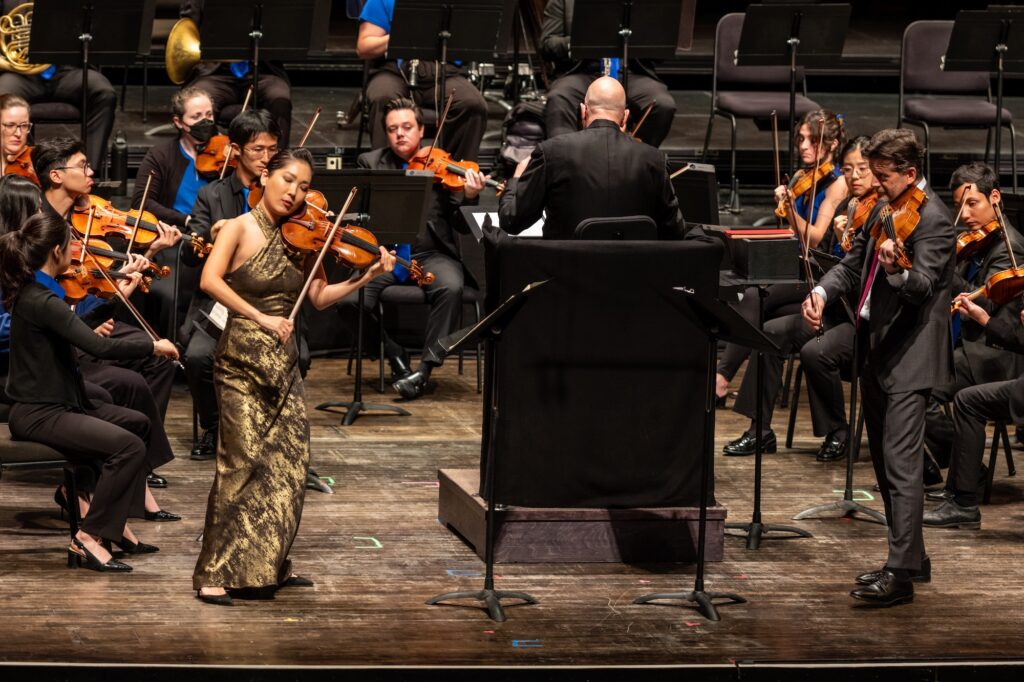
I’ve only heard it performed live once before, so it was with great anticipation that I attended Friday evening’s concert of the Princeton University Orchestra at Richardson Auditorium, on which Korngold’s concerto formed the centerpiece of the program (which was repeated on Saturday night). Now, this is a student orchestra, mind you, but the young musicians play as if they’ve long ago forgotten the fact. Michael Pratt, the ensemble’s music director since 1977, has no qualms about programming the most challenging and at times esoteric works in the repertoire. Granted the personnel turns over all the time, as the students graduate, but I’ve heard this group tackle “Ein Heldenleben,” the complete “Daphnis and Chloé,” several Mahler symphonies, and “The Dream of Gerontius!”
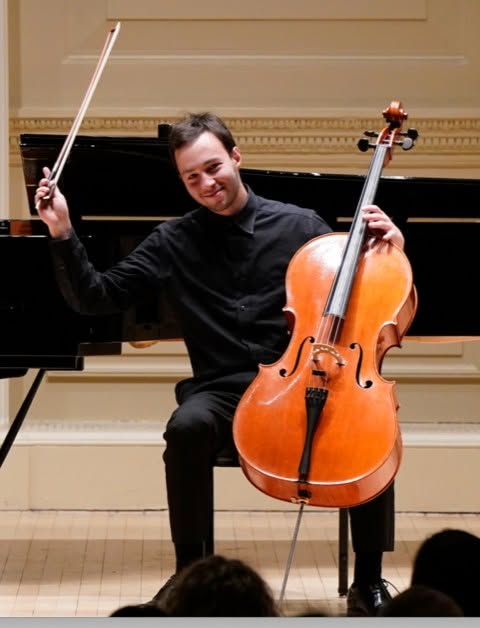
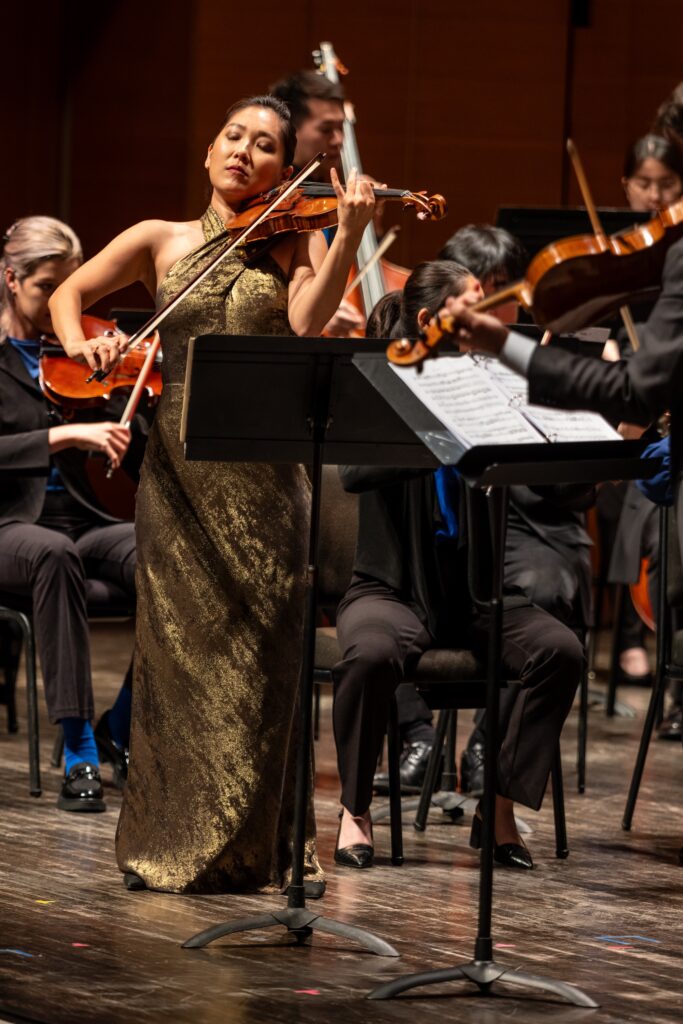
The Korngold soloist was Max Salzinger, now a Princeton sophomore, and he played beautifully, with all the assurance of someone who had clearly internalized the score. The performance was spacious, sumptuous, and wistfully romantic. Lyrical passages breathed. Soloist and orchestra offered a more expansive account, or the appearance of one, than those to which I had grown accustomed. The experience was luxurious and revelatory. Suddenly the piece sounded less like a made-to-order Hollywood film concerto and more like an honest-to-goodness concert work that, yes, really does deserve to take its place alongside the Violin Concerto. This was the Korngold I didn’t know I needed. Listening to it made me feel like a teenager again.
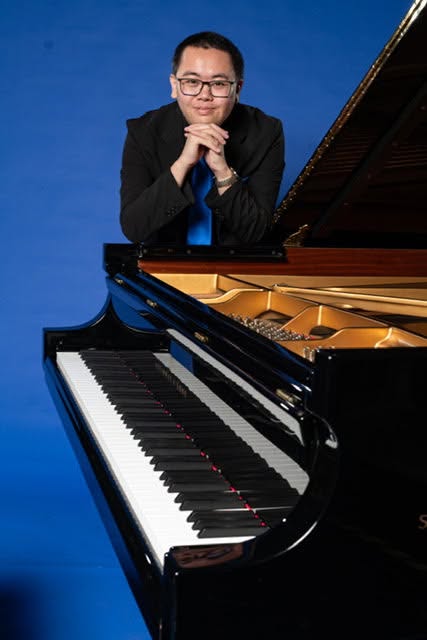
Keep in mind, few of these university performers are music majors. Most of them are pursuing degrees in other fields. Salzinger is an aspiring economist. But clearly the cello is central to his being. He’s already had a ton of experience playing with the orchestra of Indiana’s Hotchkiss School (from which he graduated in 2025), the Hartford Symphony, and the Indianapolis and Interlochen Youth Orchestras, among others. Last year, he won Princeton’s Concerto Competition. It was not the first contest in which he’s come out on top.
Equally impressive was the concert’s opening performance, of Alberto Ginastera’s “Pampeana No. 3,” a piece evocative of the pampas, the grasslands of the composer’s native Argentina, which was played at a near-professional standard. Seriously, this was as fine a performance of this piece as I will likely ever experience, especially live. And what a battery of percussion at its center! I’d be lying if I said I was shocked by the quality of the playing, but it was still a great pleasure to be reminded of just how good these student musicians can be – 80+ performers, with two harps, piano, celesta, and three percussionists, putting their shoulders to it. The woodwind playing, especially some flute duets, played by Liam Browne and Hugh Choi, lent idiomatic color.
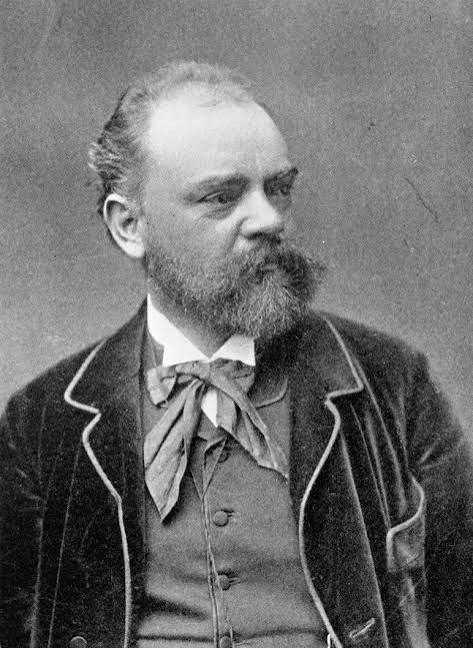
The second half of the program, consisting of Dvořák’s Symphony No. 8, was markedly wilder and woollier, which made me wonder if the bulk of the rehearsal time had been devoted to the other, less familiar pieces. Any kind of shading in the first movement was out the window, with most of the music played at one dynamic – loud – so that many felicitous details of the composer’s score were overwhelmed. I would be remiss, however, not to to give credit to trumpeters Austin Clinard and Matt Cline, who nailed their exposed fanfares both here and in the last movement, which must have taken not only technique, but nerves of steel.
The middle movements were better, especially the second, which was presented with more variety and shading, and all the soloists hit their marks and played with confidence. The third movement, an elegant waltz, was a little underarticulated, but mostly successful. But in the last movement, we were back to everyone going full tilt, subtlety be damned. But my goodness, what an exciting noise!
With the crazy chromaticism of Dvořák’s coda, just as the players are required to really bring on the steam, it already seems as if the entire work is about to fly off the rails (by coincidence, Dvořák was a great admirer of trains), but pile on the youthful energy of the Princeton University Orchestra, with timpanist Milo Salvucci, and you really experience the terror of the sublime. The sensation was so harrowing, I couldn’t help but burst into laughter. What great fun!
So, they’re not the Czech Philharmonic. Who cares? Put your hands together for these kids. They did a great job.
The next set of concerts will take place on November 20 & 21, and will include Benjamin Britten’s “Four Sea Interludes” from “Peter Grimes” and Tchaikovsky’s Symphony No. 6 “Pathétique.”
On February 26 & 27, winners of this year’s concerto competition will be heard.
In the spring, on April 15 & 16, Pratt will conduct Mahler’s Symphony No. 9.
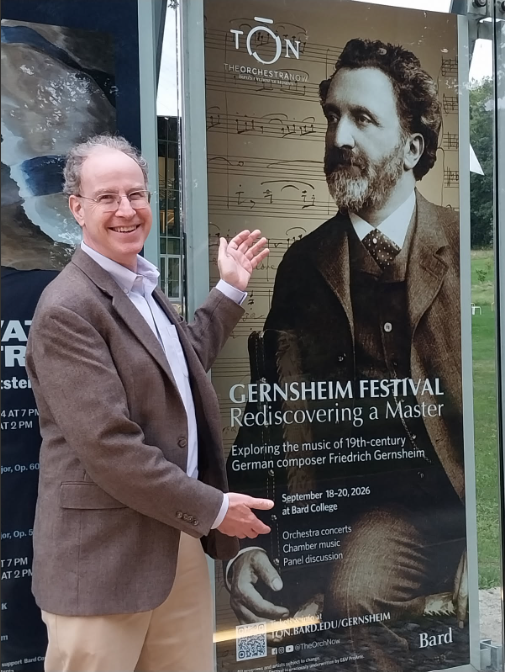
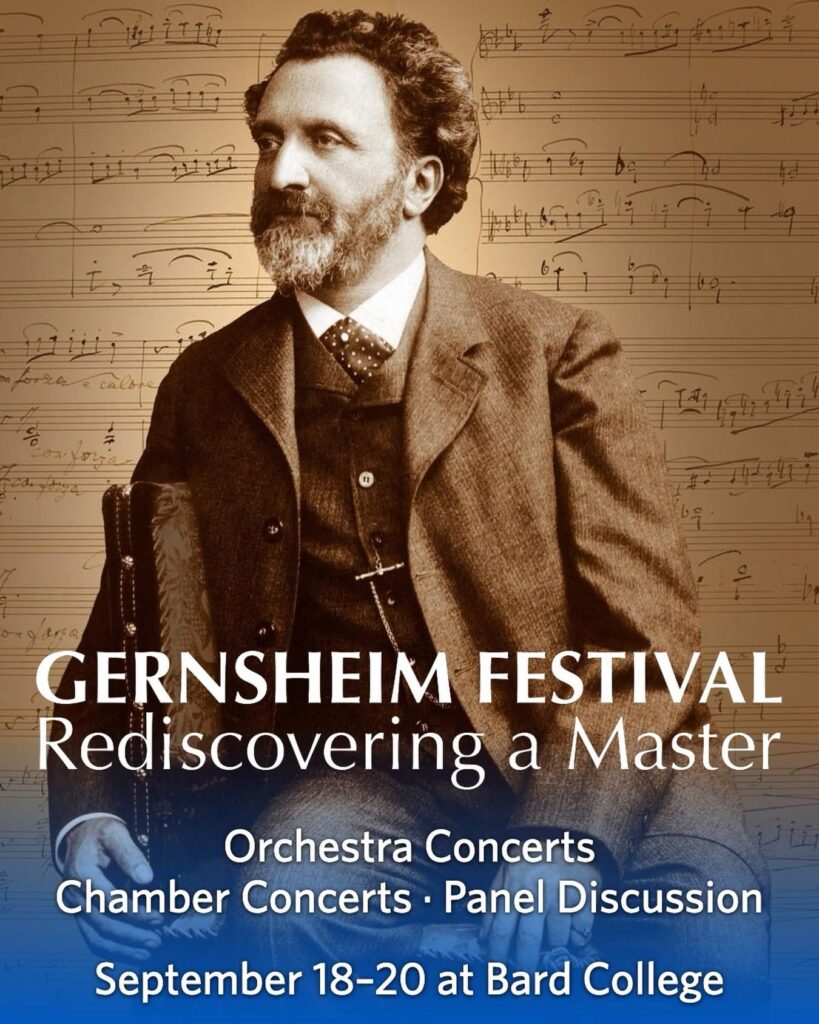
If you ever wished Johannes Brahms had written more orchestral music, then Friedrich Gernsheim just might be the gift you’re looking for.
Gernsheim, who knew Brahms – the two respected one another and championed one another’s music – shared the master’s conservative, classical-Romantic outlook. Both artists favored traditional forms and structural rigor over a more subjective approach and the emotional extremes of the New German School. Yet Gernsheim remains all but unknown to most of Brahms’ admirers.
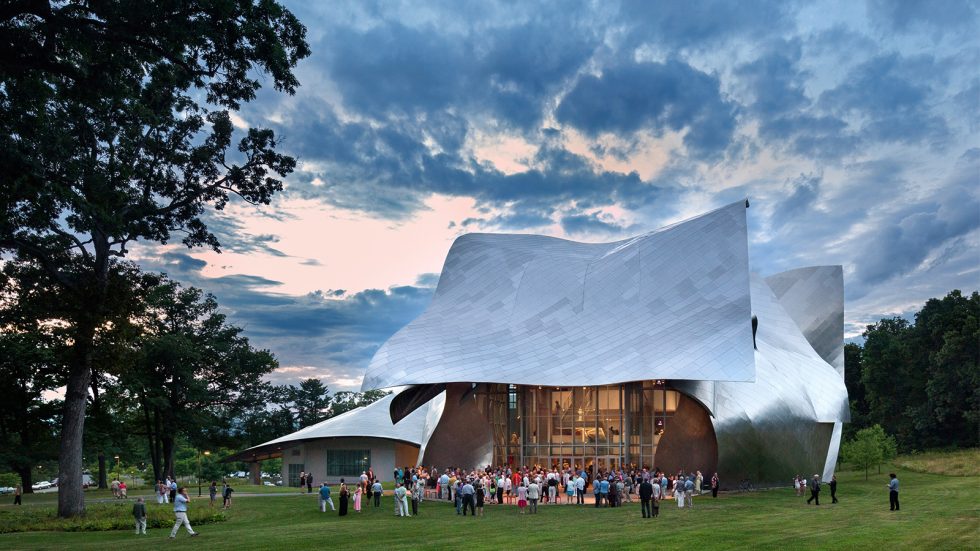
Bard College’s The Orchestra Now (TŌN) – a graduate training orchestra founded and conducted by Leon Botstein – is hoping to change all that by way of a three-year initiative to revive Gernsheim’s major works. Thanks to a grant from E&V ProArte, the first of TŌN’s Gernsheim festivals was held this past weekend. The three-day affair consisted of evening orchestral concerts at the Frank Gehry-designed Fisher Center at Bard, and afternoon chamber music concerts across campus in Olin Hall. There was also a scholarly panel held in Olin on Saturday morning.
While the festival was nowhere on the scale of its summertime flagship event, the Bard Music Festival – itself the crown jewel in the diadem of the college’s annual celebration of the arts, Bard SummerScape – it proudly extended the artistic mission of offering fine performances of worthwhile, though under-programmed, or even basically forgotten, music.
What’s more, you couldn’t beat the price: the panel and chamber concerts were presented free of charge (with the option of making a donation) and the seats for the orchestral concerts were very reasonable.
For me, it made the most sense to head up on Saturday, as the Friday night orchestral program was to be repeated. I could also take in a chamber concert and, if I could get myself moving, I might even catch the panel.
Well, I was too late to attend the 11 a.m. panel (hardly surprising, as I had a lot to do before I left, and I was coming from Princeton). I was genuinely sorry to miss it, since I always find what the scholars have to say informative, and this one included some real Gernsheim advocates. But I got there in plenty of time for the afternoon chamber program, for which there was unreserved seating. The turnout was okay, but it was by no means packed.
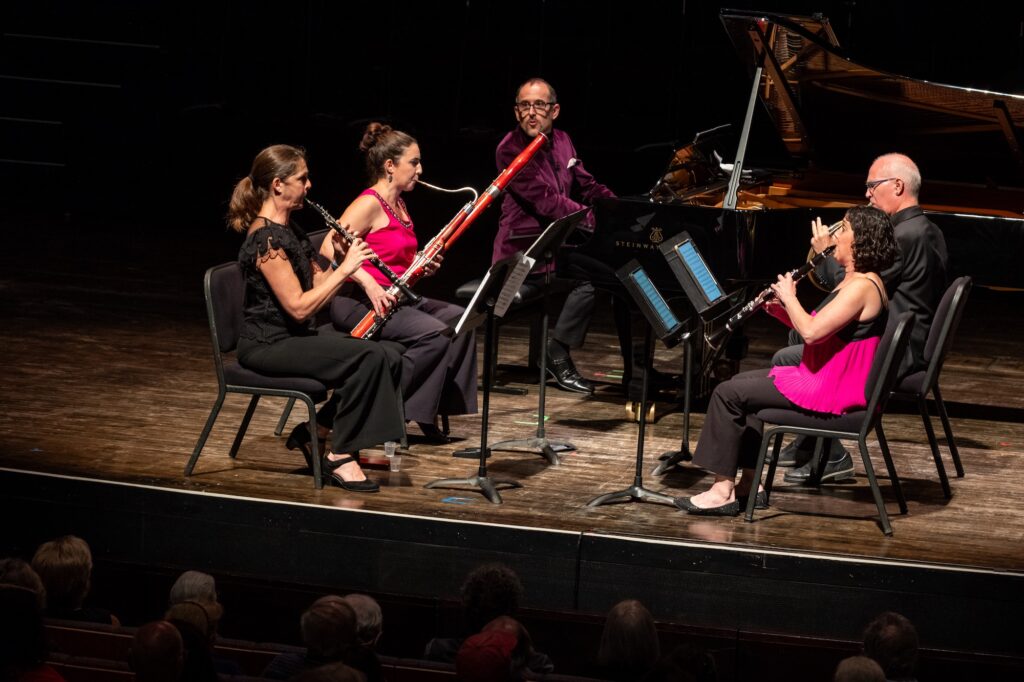
The program consisted of chamber music with piano. (Sunday afternoon’s concert would be devoted to chamber music for strings alone.) The Piano Quartet No. 3 in F major, Op. 47 (1883) was given its U.S. debut. The Piano Quintet No. 2 in B minor (1897) was heard for the first time in New York. Both pieces were performed with commitment and a striking level of maturity by TŌN musicians.
The pianist, Francis Chung-Yang Huang, deserves special mention, as he played throughout. The Quintet was almost like a reduction of a piano concerto. Altogether, the concert was a very pleasant experience. The music was well-crafted, full of long-limbed cantabile melodies, but also punched up with some energetic scherzandi. Violinists Carlos Torres and Jolin Yi-Lin Lin seemed to enjoy it too, as they exchanged smiles frequently during the Quintet.
As I say, the evening concert was a repeat of Friday. So I got to hear the U.S. premiere – or rather the second performance, since it was also done the night before – of Gernsheim’s Symphony No. 3 (1887), which bears the subtitle “Song of Miriam.” Gernsheim was inspired to write it after hearing a performance of Handel’s “Israel in Egypt.” It was a rare example of Gernsheim program music – music reflecting on extramusical matters – but the approach was definitely more Brahms than Liszt.
In fact, if there is any composer Gernsheim resembles, it’s Brahms! I would say he’s like Brahms’ more immoderate younger brother. You know, the black sheep who uses instruments like English horn, bass clarinet, and harp in his symphonies.
Because Gernsheim outlived Brahms (he died in 1916), he also tried his hand at a late Romantic tone poem, “Zu einem Drama” (“For a Drama”) – in this case, the drama unspecified – another piece of program music, which opened the concert. But again, next to Strauss, Mahler, and Schoenberg, it was pretty tame stuff. Imagine Brahms letting his hair down and using a tam-tam. Fun to listen to, but no masterwork.
In fact, for as much as his champions are no doubt hoping otherwise, I can’t imagine Gernsheim ever becoming standard repertoire. His music is well-crafted, dramatically persuasive, and often very beautiful (the second movement of the “Miriam” symphony is gorgeous), but again, he sounds too much like Brahms. That, more than any of the injustices the Nazis perpetrated against his music and reputation, is going to relegate him to, if not obscurity, then at least curiosity.
Of course, Gernsheim was long gone by the time Hitler came to power. There is nothing at all threateningly modernist about his music – like Brahms, Gernsheim is German classical-Romantic to his core – but he was Jewish and despised as such. Agenda deafened the Nazis to the evidence of their own ears.
It would have been instructive to hear Orion Weiss perform Brahms’ Piano Concerto No. 1 on the concert’s second half, but I had to slip out at intermission in order to get home at a reasonable hour. Hungry cats are angry cats, and as it was, I didn’t walk in the front door until 11:00.
My summation of the day? In general, I found the chamber works to be more successful, in terms of not having Brahms ever before my ears. It was hardly unusual for anyone writing chamber music in the latter decades of the 19th century to have been influenced by him. But Gernsheim’s orchestrations of the symphonies are a step too far.
That’s not to say the music is bad – his symphonies easily surpass those of his nearest musical friend, Max Bruch, in terms of maintaining and rewarding interest – but there were moments in “Miriam” when I couldn’t help but smile (the hymn-like theme in the last movement, which could have been a sketch for the last movement of the Brahms’ First) and even laugh (the work’s coda, which was about as Brahms as anyone not Brahms could get).
I’m not trashing Gernsheim’s symphonies. If you’re a classical music lover and fond of the period, I definitely recommend them. They’ve been recorded, which is how I got to know them. But I can’t hear them as lost masterpieces. I would not sneer to encounter them on any orchestra program, and I look forward to whatever TŌN unearths for future festivals. But in Gernsheim’s case, I’m sorry to say, I think posterity got it right.
However, for anyone looking to add an element of surprise to their chamber music concerts, I would highly recommend checking out his piano quartet and quintet.
Thank you, TŌN, and I look forward to hearing more Gernsheim in the future!
————-
The lovely second movement of Gernsheim’s Symphony No. 3, a musical response to the idea of Miriam, Moses’ sister, on the banks of the Nile on a summer night, confiding her sorrows and hopes to the stars.
The complete symphony, with more information in the write-up beneath the video.
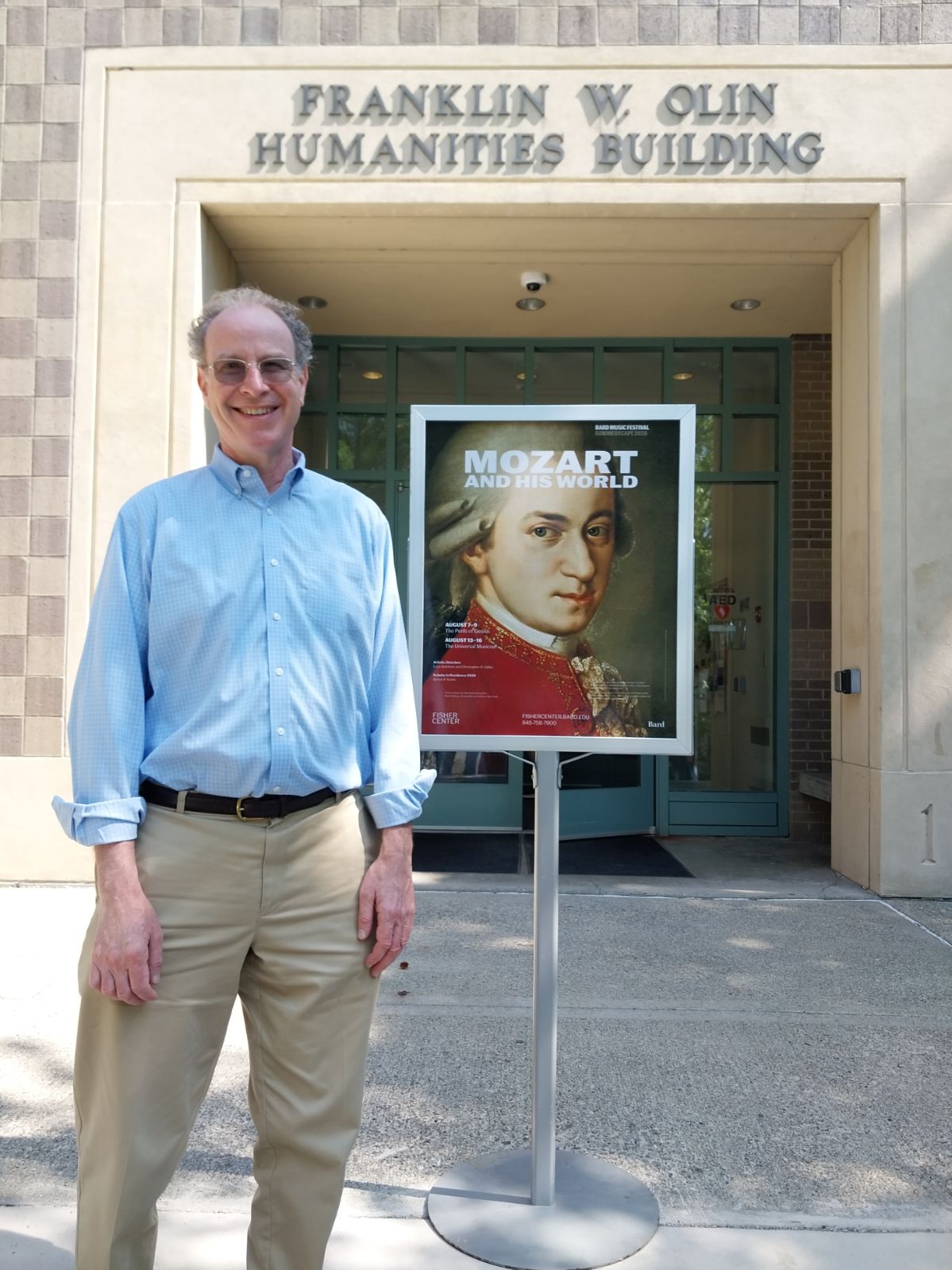
Time to roll up my sleeves and continue (from yesterday’s post), in the hope of documenting the rest of my impressions of the first weekend of this year’s Bard Music Festival, “Mozart and His World.”
Saturday mornings at the festival are devoted to scholarly panels. The first of these (“Gottlieb or Amadé? Who Was Mozart?”) included presentations by Columbia University’s Elaine Sisman and Princeton emeritus professor Scott Burnham (now teaching at CUNY Graduate Center). Gottlieb and Amadé are variants on Mozart’s middle name – he seldom actually used Amadeus (the Latin form of “beloved of God”), except in a few humorous circumstances – and the question served as a springboard for explorations of his identity and character.
A portion of Sisman’s talk was devoted to the balance of art and accessibility in Mozart’s music. She spoke of Mozart’s disdain for “asses” (ignoramuses) and how the composer frequently attempted to appease his father, Leopold, by including in his letters references to passages in his music that should appeal even to “asses’ ears” – a reference not only to Ovid’s King Midas, with his donkey ears, but also to more accessible music, the idea of which would naturally mollify Leopold for its potential profitability.
Burnham offered some interesting examples of Mozart as he’s appeared in literature, including Eduard Mörike’ 1855 novella “Mozart’s Journey to Prague.” During the Q&A portion, Burnham engaged in a little experiment. You’ll recall, in the film “Amadeus,” when the priest visits an elderly Salieri, hoping to hear his confession, Salieri plays the first half of the opening phrase of Mozart’s “Eine kleine Nachtmusik.” The priest is able to complete it from memory, much to Salieri’s annoyance. So it was that, when Burnham sang the rising figure as a kind of call, inviting response from those in the audience, to a person, everyone was able to round off the theme. In an age when classical music has become so marginalized, it is remarkable that anything remains. But Mozart’s most famous serenade is still bouncing around our collective cultural memory.
Also on the panel was conductor Leon Botstein, seemingly always prepared to speak profusely and with inspiration, armed on Saturday with only a few jottings and a small cup of coffee. Aside from expanding and expounding upon the morning’s topic, he offered a melancholy observation that historical scholarship of the kind practiced by those on the morning’s panel is dying. Festival co-artistic director (with Botstein) Christopher H. Gibbs served as moderator.
Saturday afternoon’s chamber music concert was titled “Fathers and Sons.” Byron Adams delivered his pre-concert talk with an impeccable balance of concision, relevance, insight, and dry wit. An emeritus professor of University of California, Riverside, Adams possesses flair and a certain je ne sais quoi that never disappoints. The program itself was constructed of works by Bach sons (and Mozart influences), Carl Philipp Emanuel and Johann Christian, and Mozart’s father, Leopold; also a piece for harpsichord by Padre Giovanni Battista Martini (one of Mozart’s teachers, alongside Leopold and J.C. Bach).
Highlights were Mozart’s String Quartet in F Major, K. 168 (with violinists Luosha Fang and Jenny Huenigen, violist William Frampton, and cellist Raman Ramakrishnan), his Sonata in C Major for Piano and Violin, K. 296 (with violinist Grace Park, whom I exalted yesterday, and pianist Michael Stephen Brown), and J.C. Bach’s chipper Sextet in C Major (with oboist Alexandra Knoll, violinist Fang, cellist Ramakrishnan, hornists Karl Kramer-Johansen and Brittaney Pertsas, and pianist Anna Polonsky). Keep in mind, here and elsewhere, that while, for reasons of space, I can’t gush over everyone, the musicians are all astonishingly gifted.
On Saturday night, the theme was “Mozart and Prague” (with Sisman providing the pre-concert talk). It would have to include the “Prague” Symphony, right? Well, by the time we got there, as with the Friday night concert I described in my last post, it was almost too much of a good thing – despite it being one of the composer’s great symphonies, appealing to connoisseurs and long-ears alike. I just had to reset my brain during the first movement so that I could muster the stamina to experience it in the moment, as opposed to being wrapped up in the distraction of my fatigue.
For one thing, the concert included not one, but two piano concertos. I mean, I can see why. They were by no means repetitive. The Concerto No. 5 was written when Mozart was 17, his first original composition in the form (as opposed to elaborating on existing models). The work is full of energy and exuberance. In a sense, the soloist, George Xiaoyuan Fu, was well-chosen, even though – or perhaps because – he is a bit of a showboat and a hotdog. But you know I can’t really complain about that. I admit I chuckled when he got to the end of a run, following his fingers up the keyboard with his eyes, so that he basically wound up shamelessly mugging straight into the audience. Always be wary of young pianists in off-white double-breasted suits! That said, I hope he comes back.
By contrast, the Piano Concerto No. 18, had the starrier soloist in Simone Dinnerstein, but generally speaking it was a more Apollonian affair, Dinnerstein playing with beauty, elegance, and serenity, and not one trace of hotdog.
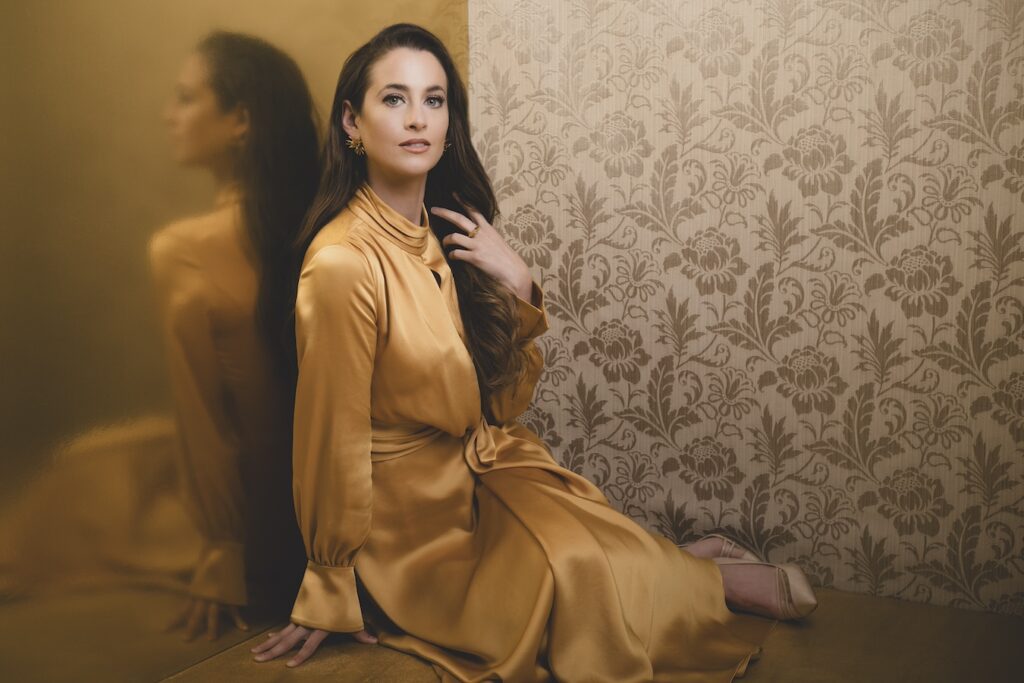
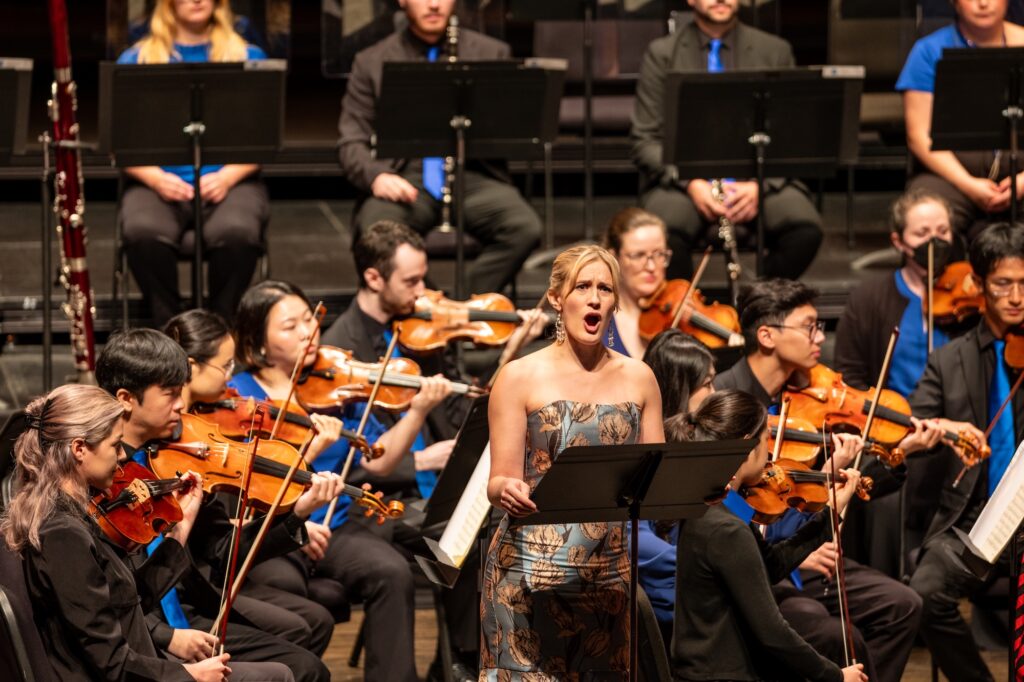
The true star of the show (and perhaps the entire weekend) was soprano Jana McIntyre, whom I first encountered at the Berlioz festival a couple of years ago, and who sang the sorceress Aithra in Richard Strauss’ “The Egyptian Helen” at Bard only last month. What a gift she has! Poise, presence, beauty, youth, and an unflaggingly nimble coloratura voice. On Saturday, her “Exsultate, jubilate” stopped the show.
In the second half, she returned to sing arias by a couple of composers who influenced Mozart, Christoph Willibald Gluck and Josef Mysliveček. In Gluck’s “Unser dummer Pöbel meint” from “Die Pilger von Mekka” (“The Pilgrims to Mecca”), she performed a most unusual duet with French hornist Kramer-Johansen. I know I’ve never heard the opera, but I’ll be damned if I didn’t know the melody. It was a making me crazy trying to figure out how. That night, back in my room, I could hear it in my head for orchestra. Was it arranged by Beecham? It was only when I woke up in the morning that I had the solution: Tchaikovsky used it in the final movement of his Orchestral Suite No. 4 “Mozartiana.” It turns out Mozart wrote a set of variations on the aria. Very cool to include it, Bard!
Yesterday’s post put me in mind of the mutability of fate and its role in producing singers of world renown. There are so many great singers out there, even so many of them at Bard, yet comparatively few will ever make it to the top, whatever that is. I seldom encounter anyone at Bard who is anything less than very fine. “The Egyptian Helen” was, top to bottom, amazingly cast.
McIntyre is luckier than most. She’s had bookings with orchestras and opera houses all over the place, some of them bigger than others. The higher-profile ones include the Philadelphia Orchestra, the Los Angeles Philharmonic, and San Francisco Opera.
I am happy note that she has begun covering title roles (for other singers) at the Met. She deserves more than simply being cast as a Flower Maiden in “Parsifal.” I hope she gets the break that she deserves. But even more so, I hope she’s having a blast along the way, as she appears to be doing.
And what do you know, it turned out to be another three-hour concert. So I was understandably grateful for an 11 a.m. start time for the Sunday morning program. I find my weekends at Bard are marked by increased caffeine intake as restful nights diminish. It also doesn’t help that during the day, meals are often rushed and sometimes even grab-and-go.
Sunday morning’s offering, “Theatrical Life in Vienna: Hanswurst, Leporello, and Papageno,” was wonderfully conceived and felicitously executed, with Lisa de Alwis of the University of Colorado elucidating the bawdy, subversive theatrical world of the common folk that thrived beyond the courts of the aristocracy. Hanswurst, or Jack Sausage, was a figure of coarse humor, a trickster, a bawd, and one who was monitored very closely by the censors (who were often subverted). Kakadu, in a similar vein, I gather, was even worse. The theater of the time was a place for socializing, gambling, and gossip, with musical entertainment full of outlandish, often magical, situations and catchy tunes.
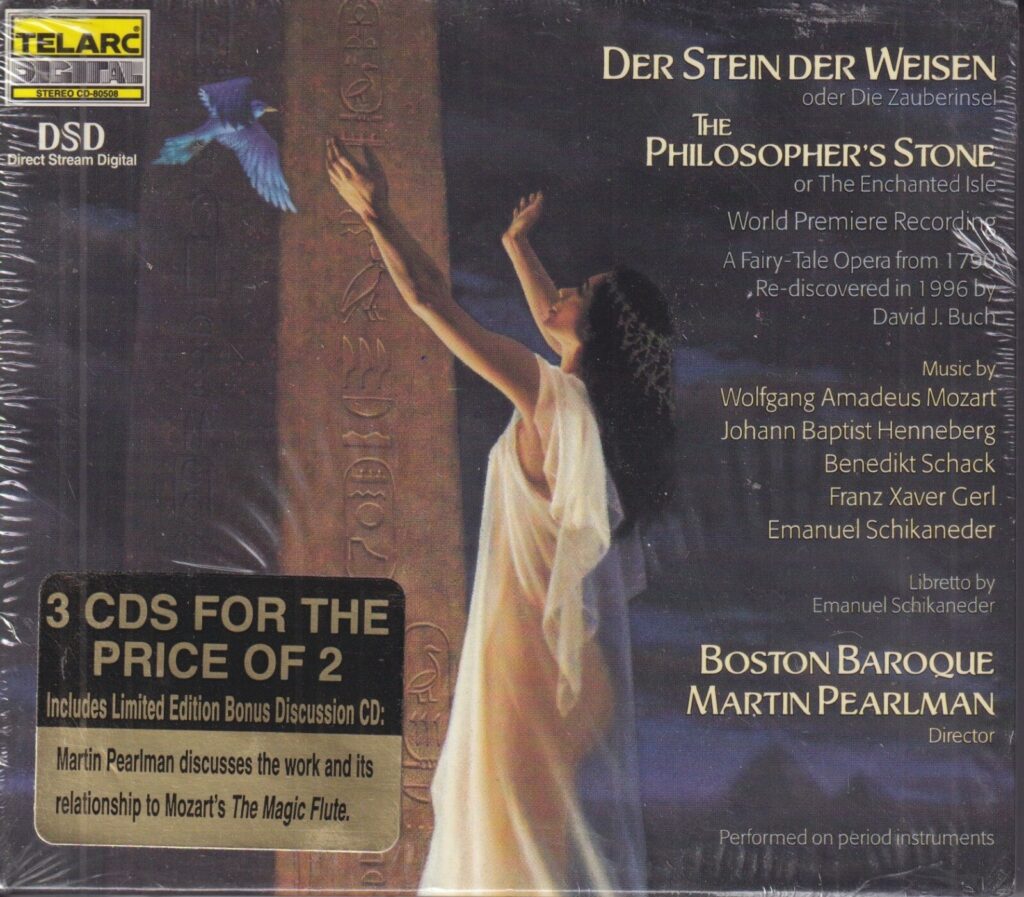
The program included, among other things, selections from “The Philosopher’s Stone,” a collaborative effort by the same team that would create “The Magic Flute.” It’s a very entertaining work. If you enjoy Mozart’s enchanting singspiel, I highly recommend Martin Pearlman’s recording of the “The Philosopher’s Stone” with the Boston Baroque on the Telarc label.
What Sunday morning’s program illustrated most effectively is that Mozart’s latter-day masterpiece did not exist in a vacuum. I even learned of a sequel to “The Magic Flute,” called “The Labyrinth,” by Peter von Winter (several arias and duets were performed). For this concert, some of the selections were taken from manuscript. Humorous generalizations about men and women and the relative fidelity (or otherwise) of both abounded.
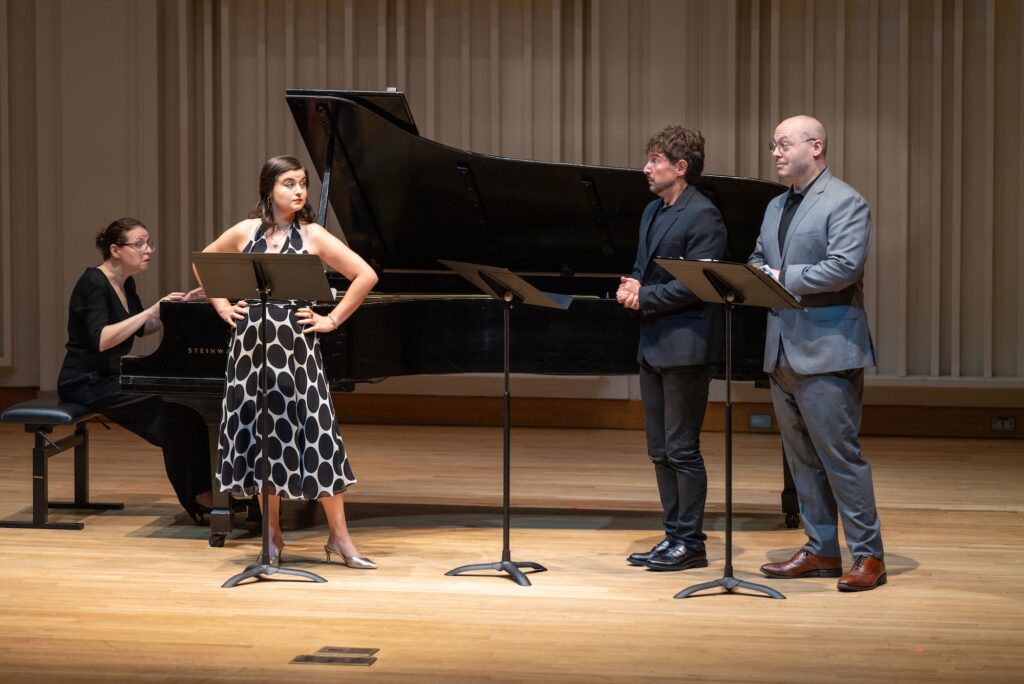
All of it was engagingly sung. Soprano Rachel Doehring Jackson was adorable and great fun in her cat duets, attributed to Mozart, from “The Philosopher’s Stone.” There was a very funny trio from Wenzel Müller’s “Das Sonnenfest der Braminen” (“The Sun Festival of the Brahmins”), with soprano Catherine Creed, tenor Aaron Blake, and bass-baritone Devon Russo, in which the two men characterize their sex as inconstant as the wind, only to change their tune when called on the carpet by the heroine.
In sharing my impressions of this summer’s production of Richard Strauss’ “The Egyptian Helen” at Bard, I mentioned that Creed’s voice didn’t carry as well as the others over Strauss’ orchestra. Here, she experienced no such challenges. She really got to show her stuff in a “Queen of the Night” type aria from the opera “Oberon, King of the Elves,” by Paul Wranitzky. (Creed will sing the role of Blondchen in a semi-staged performance of Mozart’s “The Abduction from the Seraglio,” to conclude the festival this Sunday.)
Wranitzky is a name you will sometimes encounter in music histories. In doing radio shows over some 40 years, I often marked composer birthdays. So I’d glance through the record library and see what I could come up with and put on a Wranitzky trio, which was pleasant enough, though I confess it didn’t do all that much for me. Here, it was a totally different story, with introductions of emotional depth that anticipated the Romantic movement. The selections were performed on piano, by Victoria Schwartzman, as opposed to orchestra, so it put me in the mind of the more introspective movements of the Beethoven sonatas.
Clearly, I could write a whole separate post on this concert. It was one of the most consistently successful and entertaining of the festival. What’s more, it was digestible. Anyone who was there, feel free to correct me, but I believe it ran less than two hours, without an intermission.
I expected equally great things of the weekend’s concluding program, “Rivalries and Conspiracies,” a late-afternoon affair, which recalled a piano duel which took place between Mozart and Muzio Clementi, before Joseph II and Maria Feodorova, Grand Duchess of Russia. The wager was settled privately, with Joseph collecting for his support of Mozart, but publicly the outcome was more diplomatically announced as a draw.
The concert was also to feature a collaborative effort between Mozart and his alleged (overstated) arch-rival Antonio Salieri, for soprano and harpsichord, rediscovered only in 2015, and the juxtaposition of selections from two operas requested by Joseph II that were originally presented back-to-back as yet another contest. (This time, Salieri was declared the winner.)
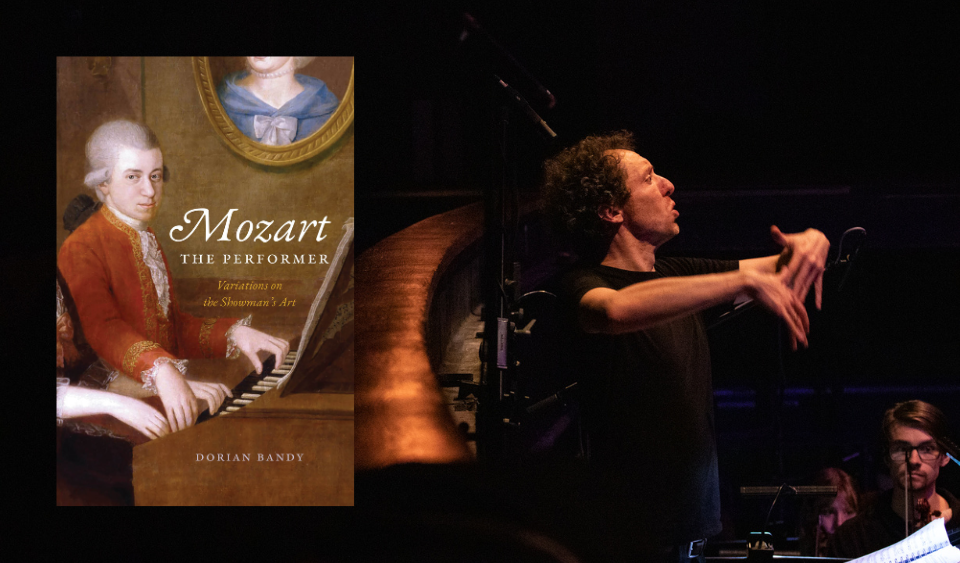
On paper, it all looked great. And in execution, its promise was mostly fulfilled on the concert’s first half. Dorian Bandy, a conductor, Baroque violinist, and historical keyboardist (who also gave the preconcert talk), blew the dust off Mozart’s overture to “The Impresario,” with fleet tempi and punchy articulation. Bandy then took to the harpsichord for Mozart & Salieri’s “Per la ricuperate salute di Ofelia” (“For the recovered health of Ophelia”). He was joined by soprano Katrina Galka, who sang from a seated position, in near profile to the audience, seemingly absorbed in the dreaminess of the pastoral text. In general, the lighting enhanced a sense of intimacy inherent in the smaller numbers on the program.
As I have noted, the Bard festival draws from an enviable stable of performers. Pianists Danny Driver and Piers Lane are regulars, uniformly excellent, quick studies who know how to get to the heart of the music, and perform everything most expressively. Driver’s performance of Clementi’s Piano Sonata in B-flat Major, Op. 24, No 2, left nothing to be desired. In fact, he made the work sound like a minor masterpiece. (Mozart was clearly influenced by it in writing his overture to “The Magic Flute.”)
Lane played Mozart’s “Eight Variations on Grétry’s “Dieu d’amour” – not as ambitious in scope, perhaps, but certainly refined. It’s not the kind of piece that one would have chosen for a musical duel in Franz Liszt’s day, but a good set of variations is always interesting, from both compositional and interpretative perspectives. Still, the first half started with a bang and ended on a more introspective note (Mozart’s variations don’t really build to much; they just kind of end), and the audience broke for intermission on a fairly contented, if somewhat relaxed note.
I can’t quarrel with the idea underpinning the second half: a juxtaposition of selections from Joseph II’s Mozart-Salieri opera contest. I can even see how it might be fun to devise a new scenario that sort of conflates the backstage dramedies of the original creations. Unfortunately, the concept just didn’t come off.
Even with the talented singers assembled for occasion (sopranos Galka and Jennifer Zetlan, tenor Aaron Blake, baritone Theo Hoffman, and bass-baritone Devon Russo), it was a drag. Everything was fine, occasionally glorious, as long as everyone was singing. But the farcical situations and dialogue, which required everyone to speak in heavily accented English (as the characters are supposed to be Italian and German), creaked hard.
Let’s be honest, even in its original form, Mozart’s “The Impresario” is pretty tedious. Too much talk and not enough music. I know next to nothing about Salieri’s contribution, “Prima la musica e poi le parole” (“First the Music and Then the Words”), but I wish the organizers of this presentation had taken the title to heart.
I would have been pleased had they just performed the musical numbers, with perhaps Bandy (who again conducted) supplying any background or connective material he felt necessary. As it was, the Chico Marx “otsa no good” caricatures padded the second half to twice the length. I tried my best just to focus on the music while everyone was singing, but all too soon, we were back to the labored – and often inscrutably accented – farce, so that by the end I was glad when it was over.
A rare Bard misfire, then, but the performers (when they were singing) were all first-rate, and the first half of the concert was totally worth it. Still, I can’t help but lament a missed opportunity, to be able to listen to and meditate on this contest between the most eminent composers in the service of Joseph II without unnecessary distraction. The arias were supertitled; the dialogue was not.
The concert was the most lightly-attended of the weekend, as Sunday afternoon concerts often are. The audience perceptibly dwindled during the second half. Friday night was a sell-out, the Saturday afternoon chamber music concert was packed, and Saturday night, was also near-capacity. Leon Botstein quipped on Friday that he had avoided Mozart for the past 35 years, only to have the Mozart festival become the most financially successful in Bard history.
Perhaps as a kind of penance, next month, Bard will conduct a mini-festival devoted to virtually forgotten Brahms contemporary Friedrich Gernsheim, September 18-20. Now THIS is right up my alley! I’ll have to see about attending at least one of the days.
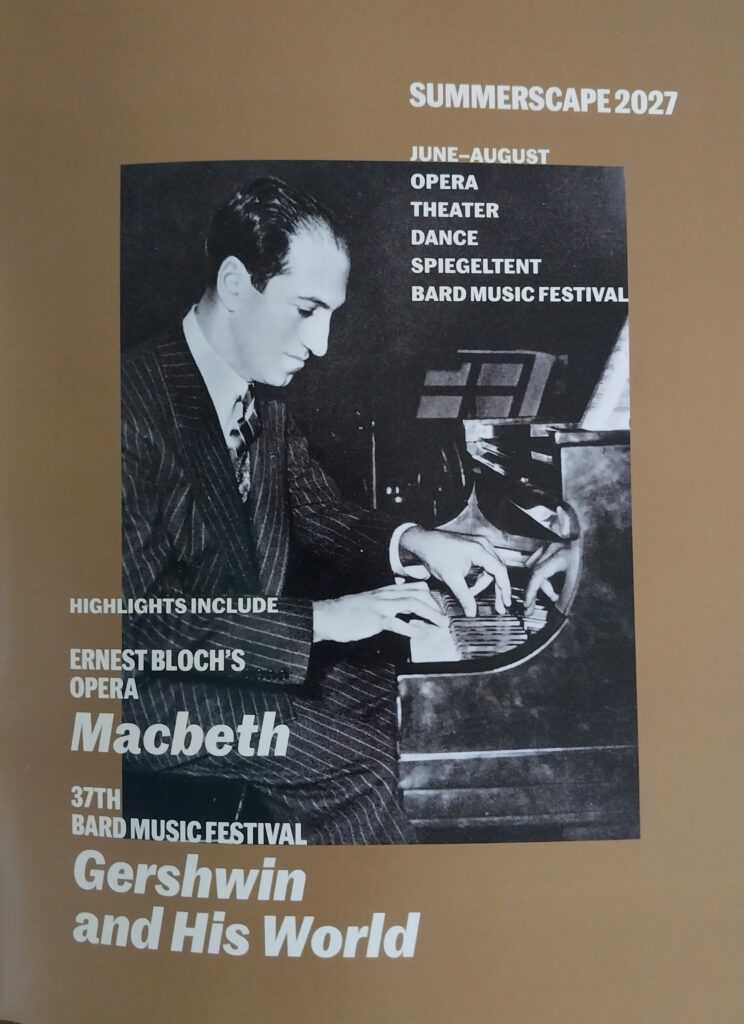
Next summer, the theme of the 37th Bard Music Festival will be “Gershwin and His World.” With a quintessential musical polymath at its center, straddling the artistic and popular realms during such a pivotal time in American musical history, the programming could go in so many different, fascinating directions.
The summer’s opera, which will precede the festival by a couple of weeks, will be Ernest Bloch’s “Macbeth.”
Fans of unusual and neglected repertoire will have their antennae up for a more expansive Bloch festival, “Bloch and His World,” at Bard in 2028.
In the meantime, do check out the schedule for this coming weekend. All kinds of interesting music yet to come. I would love, for instance, to be able to hear live the “Sinfonia turchesca,” presumably with janissary effects, by Franz Xaver Süssmayr, who famously completed Mozart’s Requiem. I only know it from a recording. But alas, it’s not likely I’ll be able to get back for it.
Happily, it will be available, with all the other repertoire performed at the Fisher Center at Bard (including a complete presentation of “The Abduction from the Seraglio”), as a livestream. See below. Livestream coverage will not include the chamber music concerts at Olin Hall.
Sincerest thanks to the musicians, scholars, and programming committee for yet another enlightening series. The Bard Music Festival is always a high point of my year. I may grouse about the length of some of the concerts, but DO NOT CHANGE A THING. Very much looking forward to Gernsheim, Gershwin, and Bloch!
Follow the link for a complete schedule (with livestream info) for the second weekend of “Mozart and His World,” at Bard College in Annandale-on-Hudson, NY, through Sunday.
All right, I get it. Mozart is one of the cornerstones of Western classical music. Universally acknowledged as one of the three or four greatest composers who ever lived. Also, one of the most frequently programmed. For performing arts organizations, the guy is as close as it comes to box office gold. Why then, is he being programmed so heavily at that maverick among euphonious summer music destinations, the Bard Music Festival?
I mean, recent years have been devoted to works by Bohuslav Martinů, Hector Berlioz, Ralph Vaughan Williams, and Erich Wolfgang Korngold. When Mexican composer Carlos Chávez was the focus, the programming ran deep into the underexposed repertoire of Latin America.
Well, any regular attendee of the festival should know that, whoever’s name is on the marquee, the concerts are going to be full of enlightening digressions and rediscoveries. The programming at Bard – a careful juxtaposition of works in a variety of forms and other composers somehow related to the subject – is further illuminated by biographical, historical, and musicological insights by resident scholars.
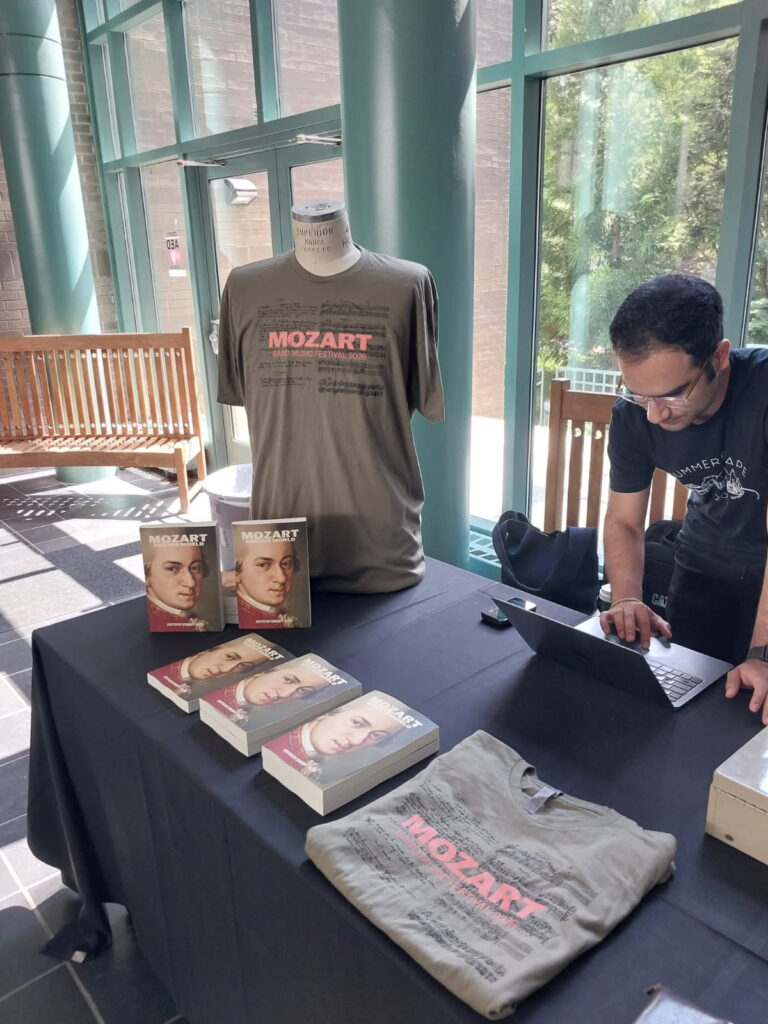
There’s also a lavish, 70-page festival program book. Seriously, the program book is a collector’s item, attractively laid-out on 8 ½ x 11” glossy stock, sumptuously-illustrated, and full of handy timelines and interesting commentary. I can’t imagine anyone would ever want to part with it. It’s free with a ticket to any of the concerts.
For sale, there’s a related book of scholarly essays, “Mozart and His World,” edited by Simon P. Keefe and published by University of Chicago Press. And of course, the festival t-shirt.
I admit, I suffered a lapse of faith when I saw “Mozart.” Not that there’s anything wrong with Mozart; he’s just not going to get the little hearts popping over my head for a two-week festival. As a classical music person, I’m pretty much guaranteed to encounter some of Mozart’s music somewhere, somehow, just about every day.
My near-apostasy seemed justified when I glanced at the preliminary programs. But I should have known, having attended most of the festivals since 2008 (13 out of 18), there is always more at Bard than meets the eye. True to form, this year has offered plenty of fascinating curiosities to offset the established classics. In at least one instance, some of the selections were revived from unpublished manuscripts.
Friday, opening night, was what I would describe as a true Bard concert. Already straining the seams with an overabundance of chamber music, vocal works, and orchestral music (the ambitious thesis was “The Many Facets of Mozart”), the marathon running time swelled to epic proportions when conductor and co-artistic director Leon Botstein – already charged with offering fairly concise (for him) introductions to some of the pieces – during a stage change indulged in a lengthy extemporized meditation on the composer. While Botstein is always fascinating and entertaining to listen to, a magnificent orator, it was one more block in the monument to be surmounted over a numbing three hours.
There were no such digressions on Saturday night, but the concert still ran to… three hours. That’s Bard for you. Get your rest, don’t drink too much beforehand, and be prepared to concentrate.
As for the musical content, well, Bard will send to heaven, even as you risk a blood clot sending you to hell.
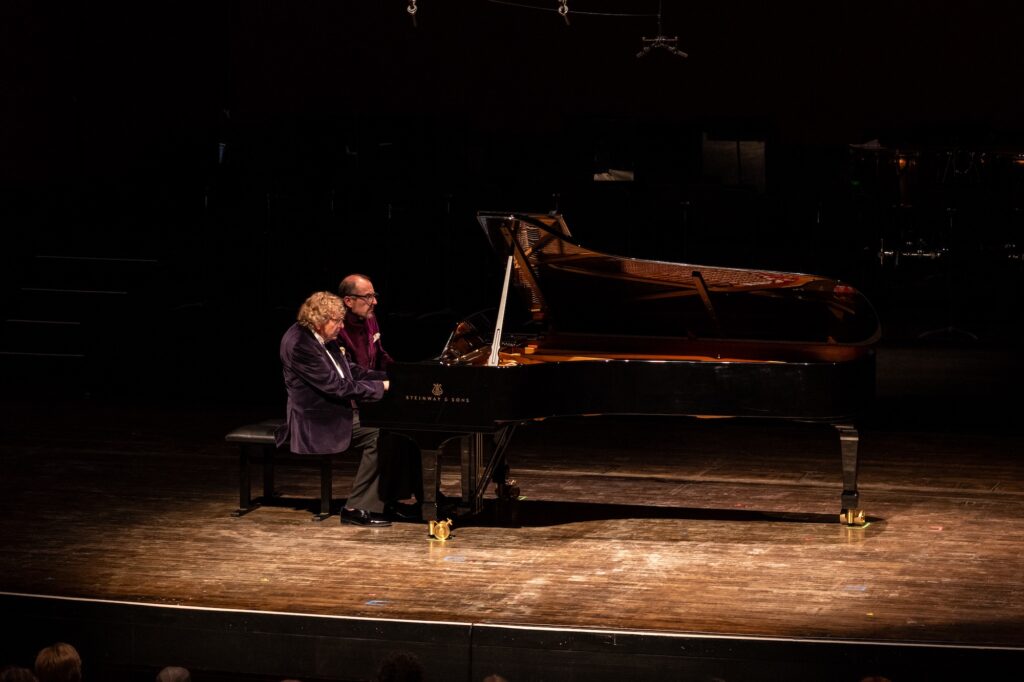
The opening program got off to a lively start with the Sonata in D major, for piano four-hands, K. 381. A great treat to have Bard stalwarts Piers Lane and Danny Driver at the keyboard. Both have recorded extensively for the Hyperion label (and elsewhere). In the first movement, there were playful presentiments of a musical refrain in Cherubino’s aria “Voi che sapete” from “The Marriage of Figaro.”
Interestingly, on the second half of the program, a musical chimera, “Ch’io mi scordi di te?,” a concert aria for voice and orchestra with obbligato piano (new to me), recalled in its coda the composer’s much better-known “Exsultate, jubilate.” Soprano Katrina Galka has a striking voice, with a distinctive timbre, and she knows how to use it. It set me ruminating, not for the first time, that there are so many talented singers out there, and so few of them crack the top tier; although many of them are able, thank goodness, to carve out careers for themselves, so that they are able to do what they love and share their talent. And for most of the singers at Bard, it’s still early, so who knows?
The pianist was Anna Polonsky, another Bard fixture, and Botstein conducted The Orchestra Now, the graduate training ensemble he founded. The “kids” played with confidence and commitment in their appearances throughout the weekend, some swaying with the music or smiling as they performed. Their involvement and even joy were evident, and Botstein displayed a genuine, old school affinity with the repertoire. (I say “old school,” in comparison with Dorian Bundy, who tore the place up with his punchy, “historically informed” Mozart on Sunday; but more on that in another post.) Botstein’s success is perhaps surprising for a man who so loves his Richard Strauss. But Strauss was also a Mozart fan, so… Whatever the case, Mozart’s generosity of spirit was well-served by Botstein’s unfussy direction, which allowed the music to speak for itself.
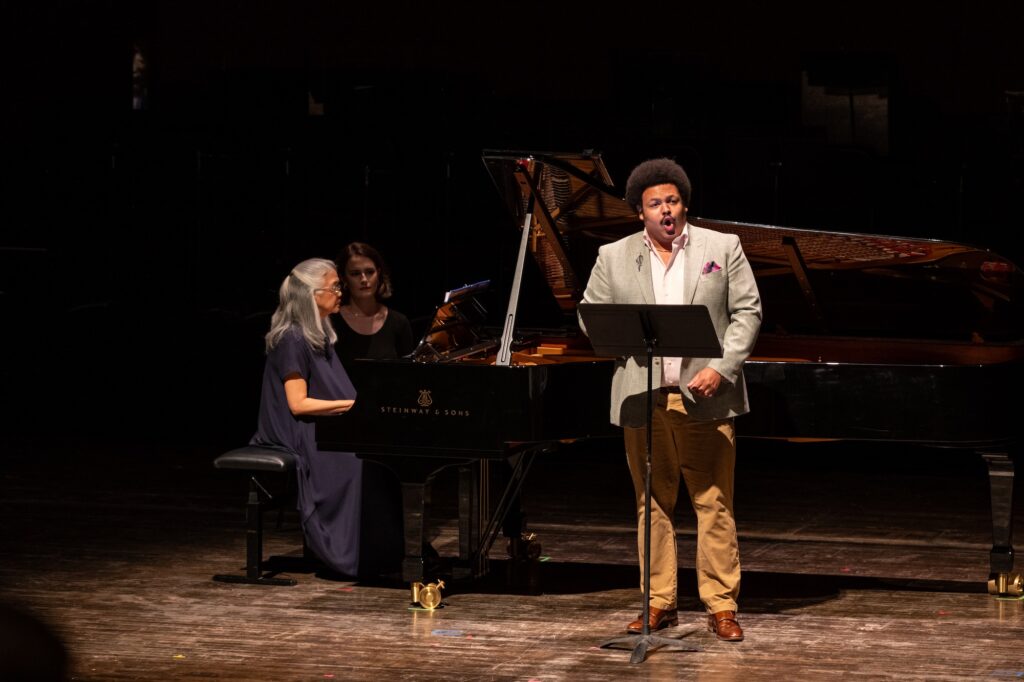
Back to the first half of the program. Following the four-hand piano sonata was another rarity, “Eine kleine deutsche Kantate,” on a text reflecting Masonic values, sung by tenor Joshua Blue (who I only just realized I heard sing Tamino in the Julie Taymor production of “The Magic Flute” at the Met this past December). He was joined by pianist Kayo Iwawa, another recurring presence. (Many of the musicians are on the faculty of the Bard Conservatory.) She’s always so gracious, with a winning smile when she makes her entrances and afterward, when she acknowledges applause.
The final work before intermission was the well-known Quintet for Piano and Winds, a work Mozart at one time considered his best. I really could find nothing to distract me from my enjoyment of the music in the performance by oboist Alexander Knox, clarinetist Shari Hoffman, hornist Karl Kramer-Johansen, bassoonist Gina Cuffari, and again, Danny Driver at the keyboard.
Botstein’s oration was to take place between the cantata and the quintet, as the chairs were being reset for the wind players, but by the time he took the stage, the need for “filler” had already passed. Not that anything he had to say could be described as superfluous. It was appropriate to thank everyone who helped make the festival possible and then to set up Mozart as the focal point of this year’s musical peregrinations. Even so, following such a loquacious interlude, the Quintet was the very thing to buoy one to a belated intermission.
The second half, fascinatingly, began with the first movement of a symphony attributed to Mozart, the Symphony No. 37, for which he actually only provided the introductory material. The rest of the symphony is by Michael Haydn. It’s not the only time Mozart helped Michael out of a jam. He also composed a couple of duos for violin and viola for him, after Michael had fallen ill, to fulfill a commission from the Archbishop of Salzburg. For as much as I would have liked to hear the entire symphony, thank goodness it wasn’t played, or we never would have gotten out of there! Attendees of the next Friday concert will have a chance to hear Michael Haydn’s Requiem in C Minor, on the same program with Mozart’s “Davide penitente” (“David the Penitent”). When’s the last time you heard that?
Until a few years ago, when it seems many classical music stations stopped playing longer pieces of music in their entirety, one would frequently hear Mozart’s Sinfonia concertante for violin, viola and orchestra. At 30 minutes in length, you’ll rarely encounter it now outside the concert hall, except perhaps in your own record collection. But what a work it is! Especially as it was performed on this particular occasion, by violinist Grace Park and violist Barry Schiffman. There was high-energy from the start, with the soloists “warming up” by facing the orchestra and doubling their respective sections in the introductory passages, prior to their official entrance. Then they turned to the audience for the first of their sustained duets.
I’ve heard Park at Bard before, so I can attest that, throughout the weekend, her playing and presence were up to her usual high standards. I need hardly say, she’s a master of her instrument. Schiffman, on the lower-voiced viola, was outmatched from the start, through no fault of his own. He exuded notable confidence in his bearing, perhaps to compensate for the more subdued timbre of his own instrument in juxtaposition with the brighter, flashier violin. But together the musicians found their sweet spot, and by the final movement, everyone really did play as one. It proved to be a high point of the evening.
By the time Botstein and the orchestra got around to the “Paris” Symphony, to conclude, it felt as if I’d already been through several concerts. This is not uncommon at Bard. Happily, the symphony is not a long work. I was curious which of the two slow movements Botstein would employ. Mozart was asked to write a replacement by Joseph Le Gros, the director of the Concert spirituel, who conducted the work’s premiere, despite the composer’s observation that the original had made a hit with the “Parisian connoisseurs.” Friday’s performance went with Mozart’s original thoughts. Bravo.
Despite my evident fatigue, I want to emphasize that, taken individually, every one of the components of the program – including Botstein’s speech – was delivered at a very high level. Frankly, I wasn’t rested enough following the usual preparations for having to be away for a weekend and a three-hour commute. So often, I suspect my judgments may be clouded by physical, emotional, and psychological factors.
Also, being so accustomed to hearing certain works performed on recordings is bound to color my perceptions. It’s a blight afflicting criticism in the modern age. But this is not intended as a review so much as one listener’s impressions. As Botstein observed during a panel the following morning, recordings are not the same thing as actual “music.” It’s no great trick to balance a violin and viola, with each other and with an orchestra, under studio conditions, with the ability to tweak levels and edit in post-production. If a recording is able to communicate a number of ideas and emotions suggested by a certain piece of music, it’s a medium that preserves a single interpretation, and often a calculated one at that, assembled over many takes.
What was undeniable on Friday was that, personal frailties aside, I was on the receiving end of three hours of glorious music and devoted musicmaking. Mozart’s joy, invention, and humanity were conveyed in every phrase. I do want to be clear that even though I found some of the concerts to be a mite long, this is Bard, after all, and I would NOT have it any other way!
Speaking of excess, this is only about a third of what I’ve written so far, so I’m going to cut it off here and ask that you check back tomorrow, when I can give you, at the very least, an account of Saturday. It’s the only way I’m going to be able to keep this manageable!
It was foolhardy of me to think I could fit everything into one post. I couldn’t do it in past years; what made me think I could do it this time? Because I was swinging for the fences, it took me a while to get the first third of what I’d written in order, but at least now the rest is in good enough shape that it will soon follow. Thanks for reading!
The Bard Music Festival, “Mozart and His World,” will continue on the campus of Bard College in Annandale-on-Hudson, NY, through Sunday.
For someone who aspired to such a contented, bourgeois lifestyle, Richard Strauss sure did write his share of decadent operas.
Perhaps because his musical language remained so rooted in the 19th century – for his expressive ends, stretching tonality, but never breaking it – he thought some added spice would keep him “modern.”
He never pushed harder than “Elektra,” grim, brutal, and strangely exhilarating. Its harmonic tension and mad intensity still pack a powerful punch today. Klytaemnestra’s bloodcurdling shrieks as she’s murdered by her son is a tough act to follow!
After that, the composer retreated to the milder titillations of “Der Rosenkavalier.” A little naughty, but only to the extent of driving one to hide one’s face behind one’s fan.
There is nothing in “Die ägyptische Helena” (“The Egyptian Helen”), first performed in 1928, to match the shock value of “Elektra,” introduced in 1908, nor for that matter, Salome making out with the severed head of Jochanaan, in 1905, but its psycho-sexual situations could only have emerged from the Vienna of Freud and Arthur Schnitzler.
The librettist, frequent Strauss collaborator Hugo von Hofmannsthal, knew Schnitzler. In fact, they belonged to the same literary circle (“Jung-Wien,” or “Young Vienna”). I don’t know any of Hofmannsthal’s work outside of opera, but some of his librettos for Strauss can get pretty oblique. “Elektra” and “Der Rosenkavalier” don’t require a lot of afterthought, but he also wrote “Ariadne auf Naxos” and “Die Frau ohne Schatten.” In these, there is rather more to unpack. Likewise, the erotic complexities of “Helen” are buried under layers of symbolism, with an ample gloss of psychological navel-gazing.
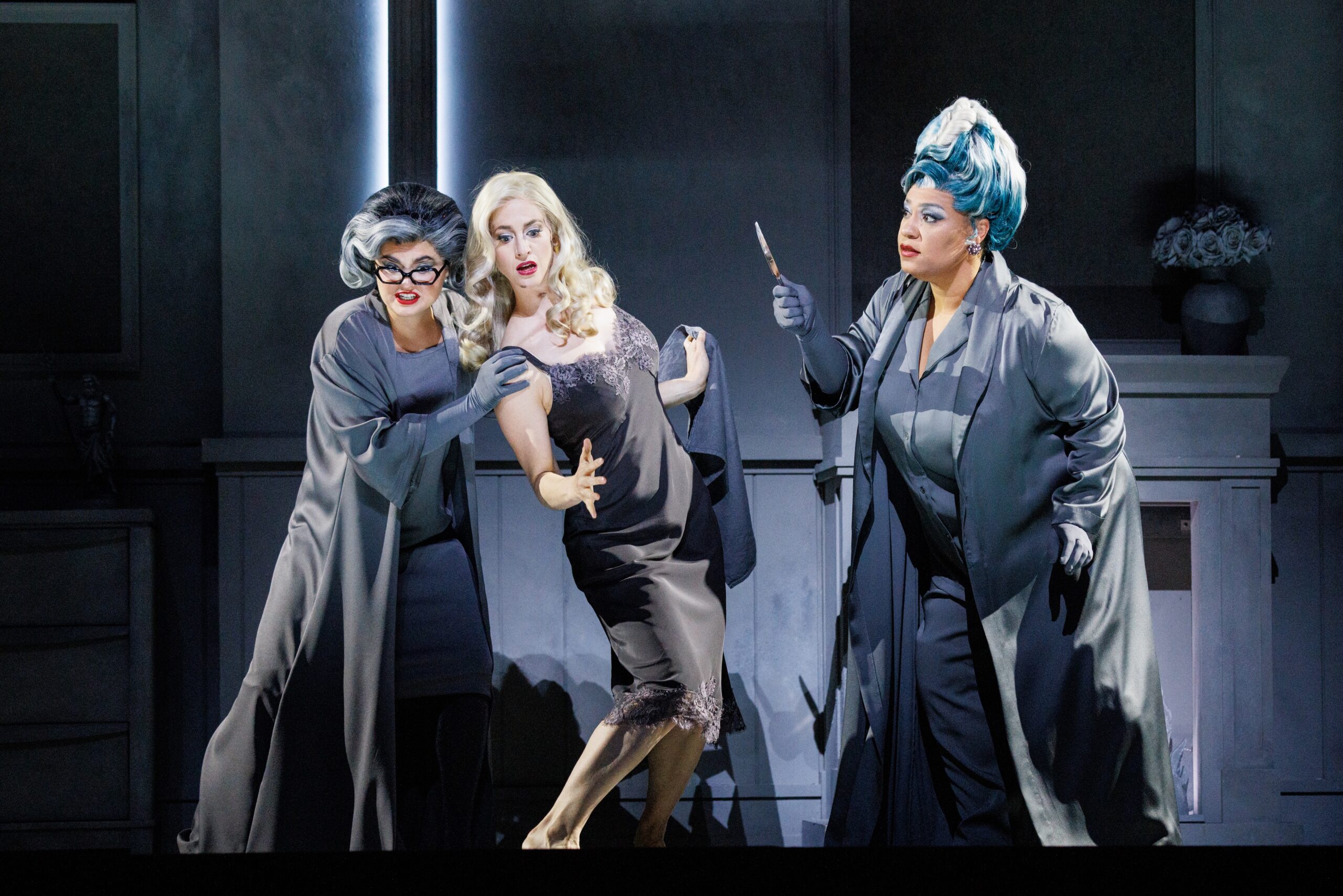
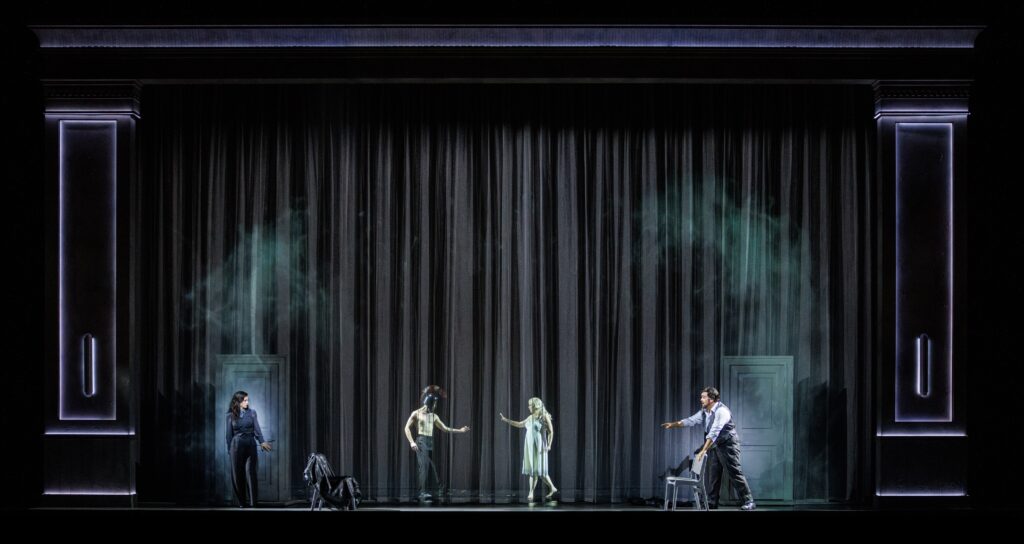
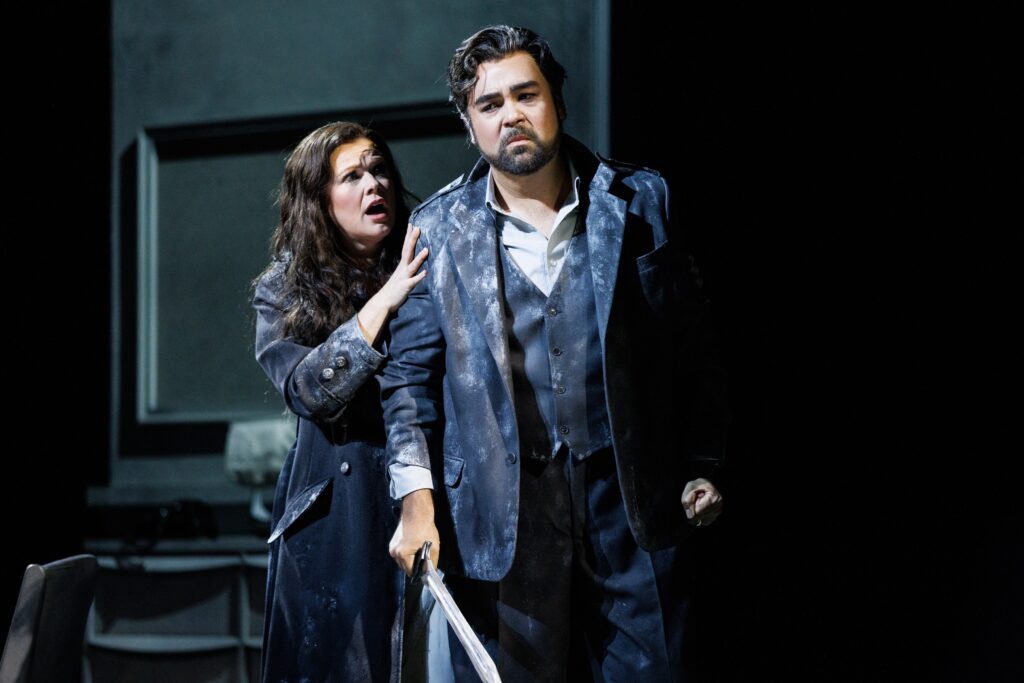
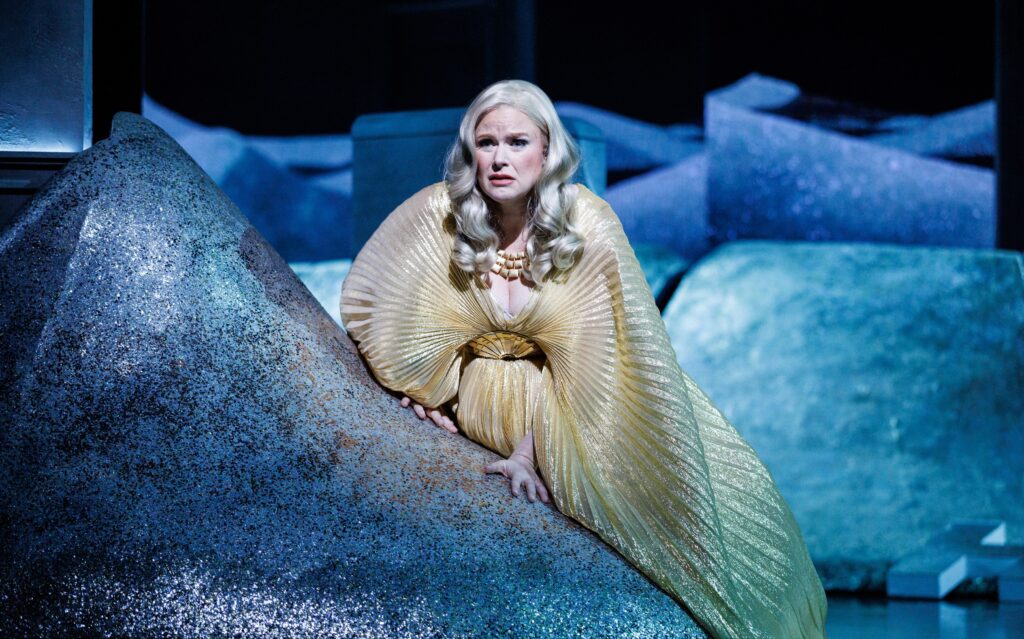
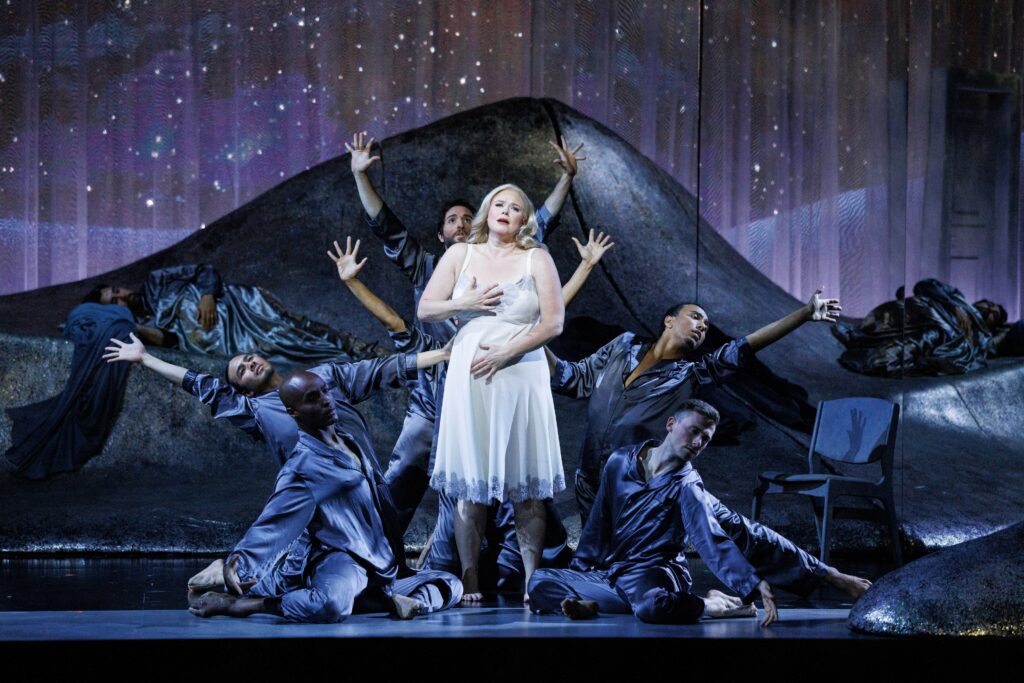
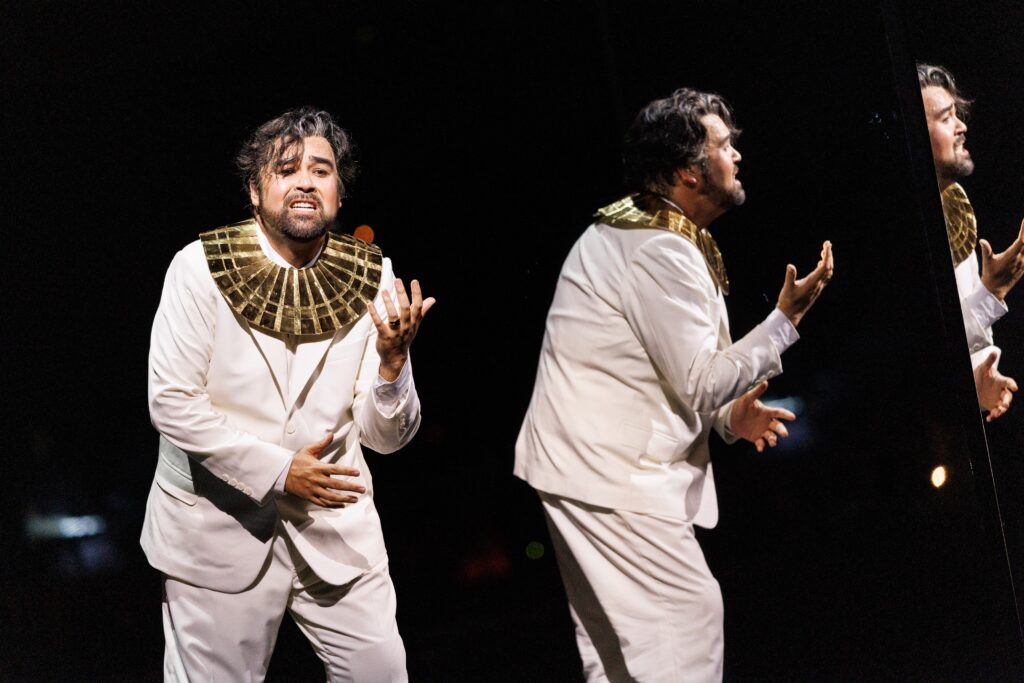
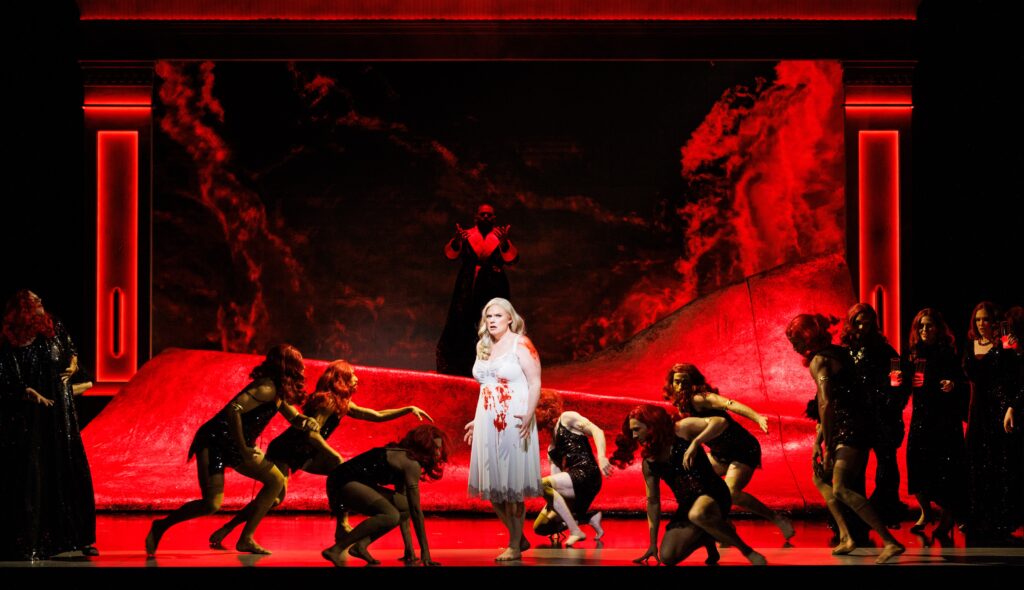
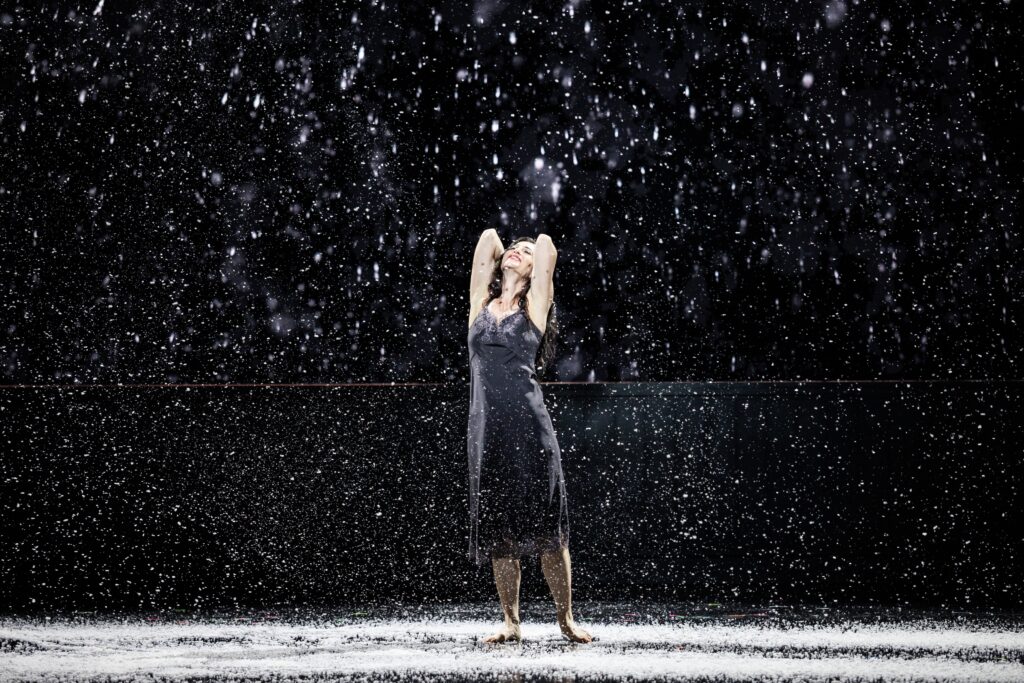
The current production at Bard College (a highlight of Bard SummerScape, the school’s annual festival of the arts), stage directed by Christian Räth, doesn’t make it any easier to get to the bottom of things. But its excesses sure are fun. It kind of plays like “Ariadne auf Naxos,” with farcical and dramatic situations intruding on one another, but more off the leash. Elves, choristers, dancers, and an Omniscient Seashell further ornament the narrative about Helen of Troy and Menelaus’ rocky road to reconciliation following the Trojan War.
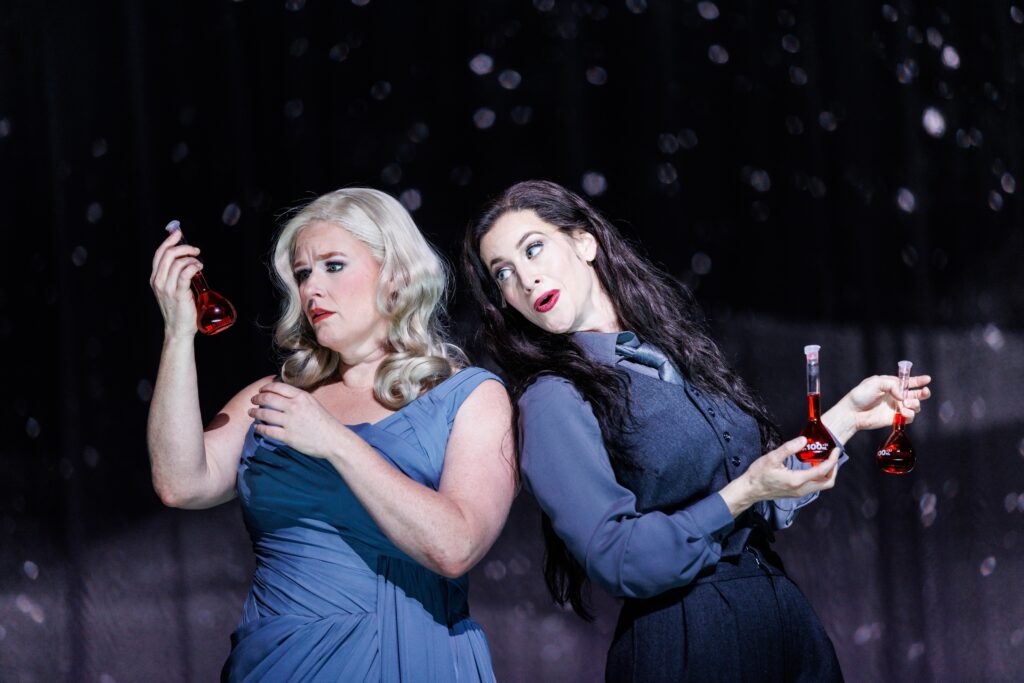
The couple are shipwrecked off the coast of Egypt by the sorceress Aithra, a gesture that saves Helen from being murdered by her husband. To say that he is still processing her infidelity with Paris is an understatement. Aithra takes it upon herself to oversee the couple’s rehabilitation, supplying lotus juice to calm Menelaus and allow him to forget, and concocting an alternative narrative in which a phantom Helen was conjured by the gods to run off with Paris, while the real Helen remained faithful, asleep in Aithra’s father’s palace on the slopes of the Atlas Mountains.
But the opera doesn’t begin with Helen and Menelaus. It turns out even powerful sorceresses have their issues, as Aithra has been stood up by her boyfriend, Poseidon, god of the sea (and protector of Troy), because he is in Ethiopia receiving tribute. But he swears he is steadfast in his love, sending her three white doves. Aithra is unimpressed, dismissing the gesture, as we learn that in the past Poseidon has also tried to smooth things over by sending dolphins. Clearly, there is tension in this relationship as well.
The parallels, and Aithra’s story about the “real” Helen’s unwavering fidelity, make one question: is anything in the narrative to be taken at face value? Is Helen and Menelaus’ presence even real? Their dilemma reflects the romantic complications – and jealousy – between Aithra and her absent lover. So is it a structural conceit? Or are the visiting couple actually archetypes, projections of Aithra’s own psychological state?
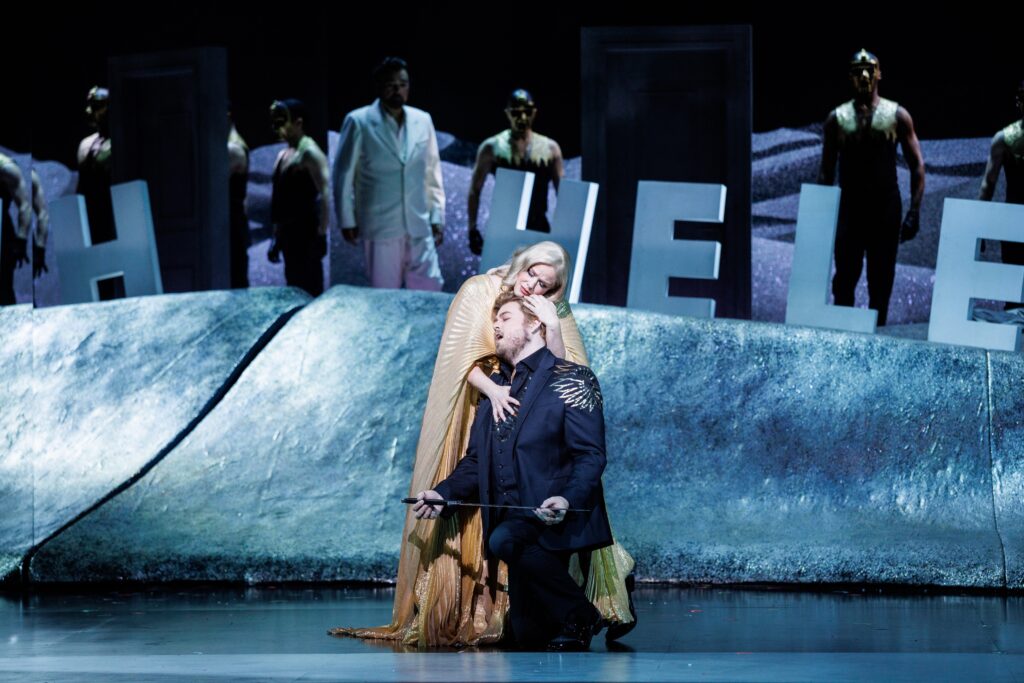
Räth stacks the deck in the Bard production – at a point, Aithra and Helen swap wigs, and a scene in the second act plays out among shifting mirrors – but do these reflect Hofmannsthal’s intentions? In accordance with the libretto, Helen makes the sensible determination, if a difficult one, that it is better to confront the truth than to repress it and live an imperfect life based on denial.
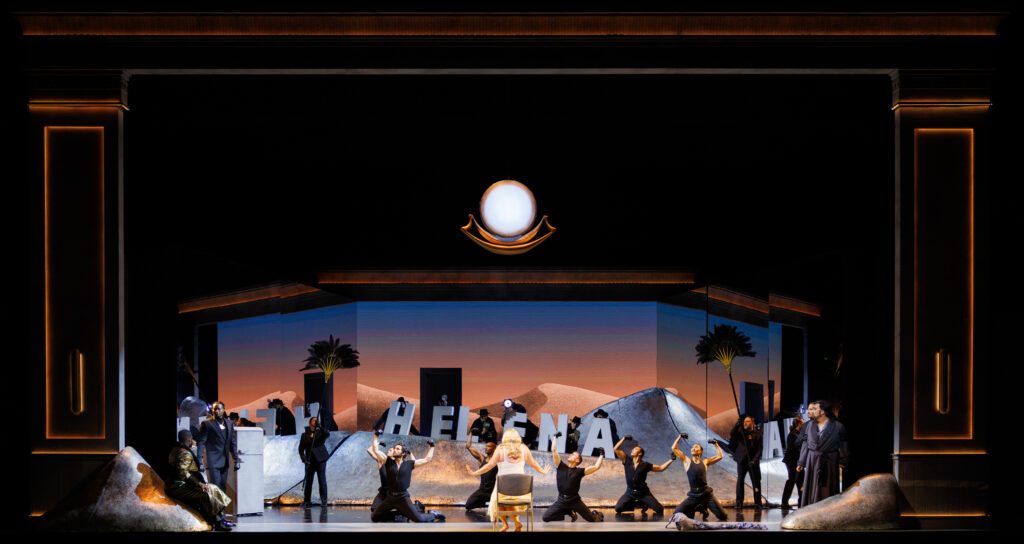
From the start, there is almost a cinematic quality to the staging, with a touch of Deco to the scenic design (by Räth and Daniel Unger), the glamorous costumes (including a pleated peignoir that makes Helen look like Cleopatra), and, in the second act, the paparazzi.
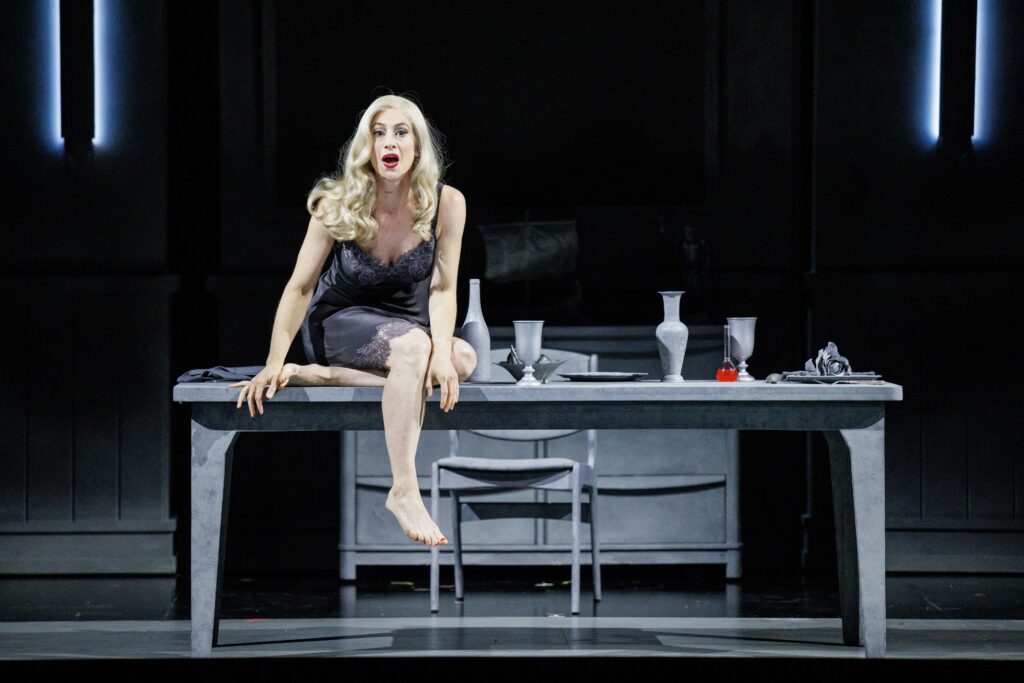
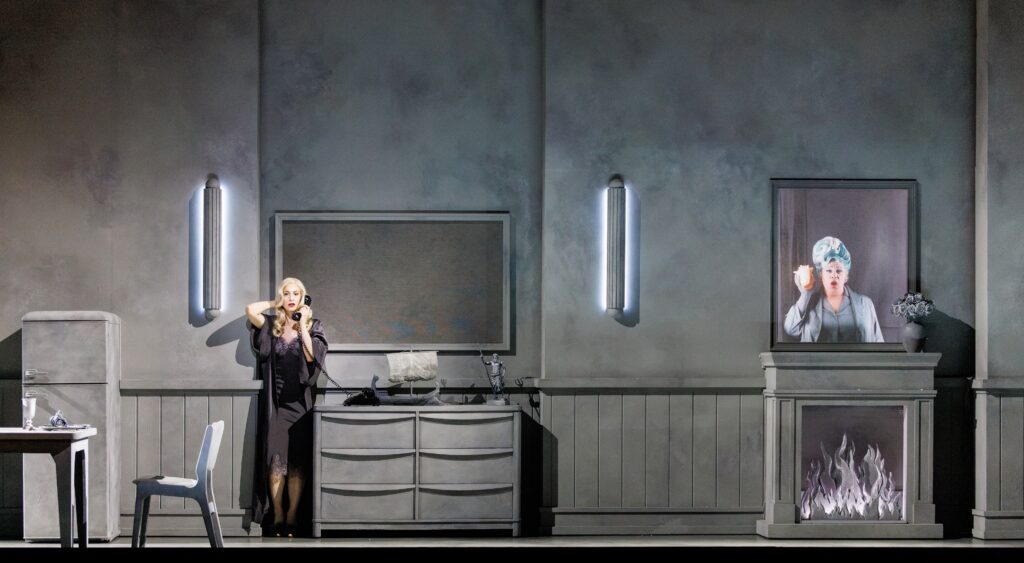
I’ve been to a number of these Bard productions over the years, and this one has one of the most promising openings. Aithra awaits Poseidon in a monochromatic room. Everything, save her Veronica Lake platinum wig – the furnishings, the walls, her slip –is gray. Projections depict crashing waves and Poseidon’s doves. When she attempts to phone, she amusingly handles a little statue of Poseidon displayed on a bureau. The Omniscient Seashell and Aithra’s “First Servant” appear as framed images courtesy of backlit scrims. So far, so good. But things get a little dicey with the entrance of the elves.
Much of the costuming (by Mattie Ullrich) is evocative and stylish. Among the leads, clearly more imagination, energy, and flair were lavished on the women than Menelaus, who makes due in a modified suit or a vest. On the other hand, the elves just look silly, their blonde wigs possibly intended as shorthand to tag them as extensions of Aithra’s multitudinous psychological self.
But really, don’t push too hard to impose rationality on the work. I’m reminded of Lord Henry’s remark in Oscar Wilde’s “The Picture of Dorian Gray,” “To define is to limit.” When he is pressed to elaborate, he adds, “Threads snap. You would lose your way in the labyrinth.” (How fortuitous, to recall this, while writing about an opera by the creators of “Ariadne auf Naxos!”) Truly, I think Hofmannstahl and Strauss really meant for this work to just wash over you and let it settle into your subconscious.
The Bard Chorus is ordinarily fantastic, always well-prepared by James Bagwell, but this time, I think they were diluted somewhat by the crazy costumes (in addition to the platinum wigs, they also had stuff over their faces) and all the business may have distracted from or muffled their vocal excellence.
The orchestra, on the other hand, had no issue with being heard, and the force of Strauss’ music did not disappoint, even if some of the incidental details were lost in the sweep of the overall performance. The scope of the composer’s orchestrations (including organ and wind machine) lends this surreal, quasi-symbolic drama an epic touch.
Of course, for an opera to be truly successful, it has to be sung well, and Bard is blessed with an assemblage of singers that do the work proud. I can’t lavish enough praise on the principals.
Jana McIntyre was an indefatigable goddess, singing over multiple concerts, at the Bard Music Festival devoted to “Berlioz and His World” in 2024. I’m happy to report, she’s still “fantastique” here as Aithra, her acting of a piece with her sparkling soprano. Whether in solo, duet, or trio, her mastery seemed effortless. And Strauss does love his ladies’ voices.
Hailey Clark had the weightier role of Helen, and a voice to fill the house. As the title character, she held pride of place during the curtain call, and she received the loudest applause. In terms of sheer power, she was a good match for John Matthew Myers as Menelaus. I’ve heard Myers several times in recent years, and his voice is a force. At one point, he sent a blast out into my section of the audience with such precision, it made everyone jump!
Blake Denson, the best-dressed of the men in a stately robe, was a wonderful discovery as Altair, prince of the Atlas Mountains, entrusted with protecting Helen – but of course Helen’s beauty is too great for him to behave himself. His authoritative presence and rock-solid baritone set him up as a formidable and attractive threat.
The sweet-voiced Shawn Roth, as Altair’s son, Da-Ud, brought an authenticity to the role that made you believe the character genuinely loves Helen. (Menelaus slays him in a fit of PTSD.)
Deborah Nansteel projected personality and a rich contralto as the Omniscient Seashell. I felt she was a little underrated at the curtain call. I thought surely she would at least get one unhinged “Brava!” It’s not a showy part, but she certainly deserved it.
Catherine Creed looked great in her glasses and gloves and her silver-streaked coif as the First Assistant, and she acted the part well, but her voice lacked the power to carry into the house. In a more lightly scored piece, it’s possible she would have been just fine, but this is Strauss, and you often need to swing for the bleachers in order to be heard. What she did project was confidence, and she had a pleasing if smaller voice. One shouldn’t fault a star for existing in a field of supernovas.
While the opera doesn’t really have a formal ballet interlude, the production features dancers throughout. (The choreography is by Catherine Galasso.) These appear variously as Trojan warriors, Altair’s guard, yet another “mirror” Helen and Menelaus, and even a headboard on a bed. In the final scene, the men are all in drag. Clearly, this was not intended as some sort of political pushback, but rather an artistic choice that reinforces the overall atmosphere of confusion and complexity in a kind of Freudian free-for-all.
At a point, the letters of Helen’s name are carried out on stage and displayed in various configurations. By the end, we are left with only “EHE,” German for “marriage,” signifying the renewed strength of Helen and Menelaus’ union.
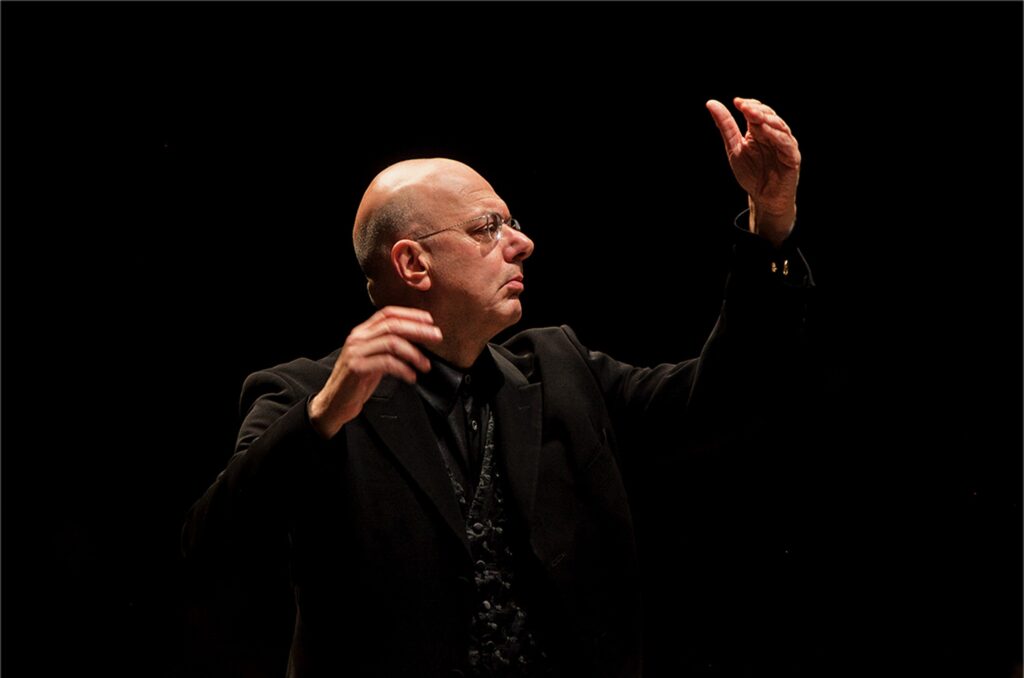
The American Symphony Orchestra was conducted by its longtime music director, Leon Botstein, who only just retired as president of Bard College last month after 51 years of service. Botstein has been raked over the coals recently for his reckless fundraising activities that had him going to extraordinary lengths to court Jeffrey Epstein, of all people. This began around 2012. Four years earlier, Epstein had already pleaded guilty to soliciting prostitution from a minor in Florida. At a point, Botstein stated that he would take money from Satan himself if it permitted him to do God’s work.
His transformative influence on the college over the course of his half-century tenure is undeniable. Bard would not be where it is today, if not for the extraordinary and seemingly indefatigable efforts. More broadly, he has brought a lot of good into the world, not just in terms of education and his advocacy of culture as a civilizing force, but also, not insignificantly, in his devotion to social causes. While he has bandied the idea of retirement for some time (Botstein will be 80 in December), the final decision to step down from the college’s presidency would seem to have been hastened by the Epstein revelation.
It is not my intention to minimize or dismiss the lasting pain of anyone who has ever been sexually abused when I say I am relieved that Botstein is still conducting the SummerScape opera and will continue as co-artistic director of the Bard Music Festival. It could be argued that he exercised poor judgment in the courting of Epstein – which came to wide notice with the release of the “Epstein files” – but an independent investigation cleared him of anything illegal in his conduct. Whether or not he attempted to minimize his actions once the connection was brought to light is not for me to say.
Nonetheless, a vocal contingent of student and community activists continue to push for his complete dismissal, and allegedly some on the college faculty are uncomfortable with the prospect of having to continue to work with him. But on Sunday, as at Carnegie Hall in this past spring, where I heard him conduct Berlioz’s edition of Weber’s “Der Freischütz,” the audience is still very much in his corner.
Botstein loves his Strauss, and he has broken many a lance for this hero’s life and works, both in staged productions at Bard and in concert with the American Symphony Orchestra at Carnegie Hall. I owe him a great debt of thanks for making it possible for audiences to experience this seldom-heard music, and for giving it context through his intelligent, though conversational, pre-concert talks. He has the mental acuity of a man half his age and a wonderfully wry sense of humor.
Personally, I would have a hard time continuing my faithful attendance of the Bard Festival if he is ever fully jettisoned by the college. In fact, the primary reason I will be attending this year is not for the subject (“Mozart and His World,” which hardly excites me, compared to most of the subjects of past festivals, which traditionally embrace unusual and neglected repertoire), but as a show of support for Botstein. I don’t want the college to get the wrong idea from any drop in attendance.
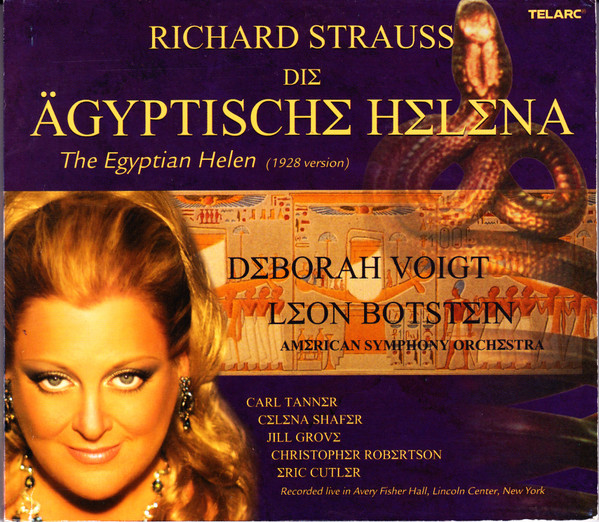
I can’t claim to be a Strauss expert, but it occurs to me I’ve now heard eight of his fifteen completed operas. There’s still a lot of beautiful music out there that hardly anyone knows. So enormous thanks to Bard SummerScape and especially Leon Botstein for reviving “The Egyptian Helen.” (Incidentally, Botstein recorded the work with Deborah Voigt for Telarc back in 2003.)
Of course, the timing of the revival couldn’t be better. Christopher Nolan’s “The Odyssey” has inspired extraordinary interest in Homer and the mythological stories surrounding the Trojan War. Why, just yesterday, I read there has been a sharp increase in people interested in learning Greek! And the connection between Nolan’s cyclops and Goya’s “Saturn Devouring His Son” is circulating on social media. Hofmannsthal found inspiration not only in Homer, but in Euripides’ drama “Helen” (which posits the whole “phantom Helen in Troy/faithful Helen in Egypt” story) and “The Histories” of Herodotus.
The opera in general and this production in particular gave me plenty to chew on for the 3-hour ride back to Princeton in Sunday traffic from the Catskills.
There will be three more performances at Bard: Wednesday (today) at 2:00 p.m., Friday at 4:00 p.m., and Sunday at 2:00 p.m. The Friday performance will also be available via simulcast.
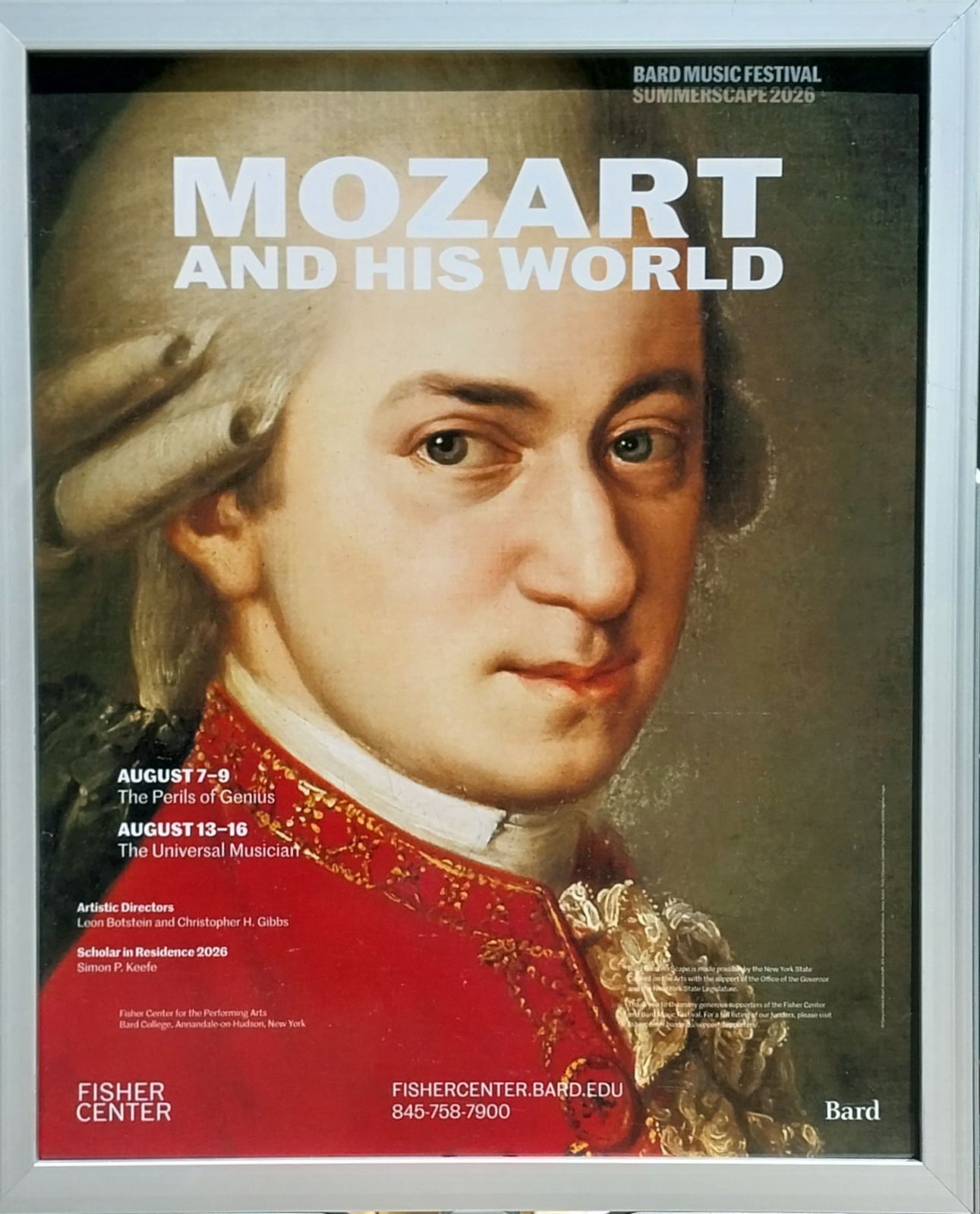
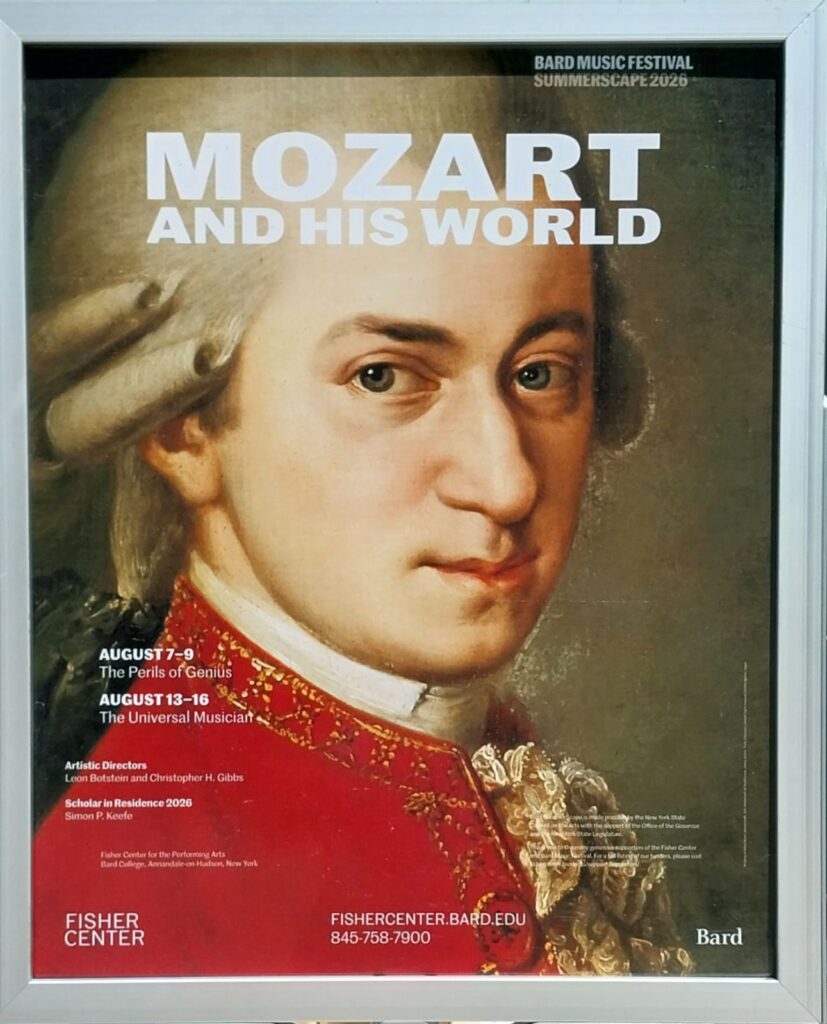
This summer’s Bard Music Festival, “Mozart and His World,” will be held at Bard College, in Annandale-on-Hudson, NY, August 7-16.