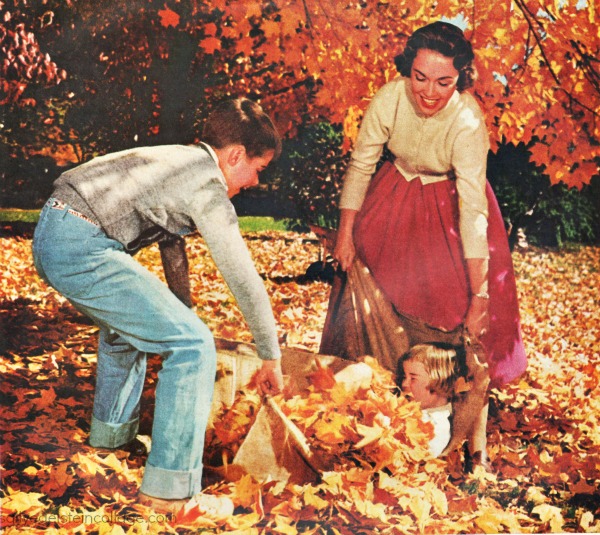
This week on “Sweetness and Light,” with a nip in the air and color in the trees, it’s a light music autumn!
Pick out a cozy sweater and join me for a fortifying brunch of hot cider and molasses cookies, as we listen to a fall sampler of works by Leo Sowerby, Cécile Chaminade, Archibald Joyce, Billy Mayerl, Virgil Thomson, Vernon Duke, Scott Joplin, Gheorghe Zamfir, and Alexander Glazunov.
It’s the perfect preamble to your epic leaf-fight. The apples are tart, but the music is sweet, on “Sweetness and Light.” Now with two chances to enjoy it – this Saturday morning at 11:00 EDT/8:00 PDT, WITH A REPEAT Sunday evening at 9:00 EDT/6:00 PDT – exclusively on KWAX Classical Oregon!
Stream it wherever you are at the link:
https://kwax.uoregon.edu/
-
A Light Music Autumn on “Sweetness and Light”
by
in Daily Dispatch, Sweetness and Light
-
Wizards and Sorcerers on “Picture Perfect”
by
6 responses
This week on “Picture Perfect,” you’ll be spellbound (I hope) by an hour of musical selections from movies about wizards and sorcerers.
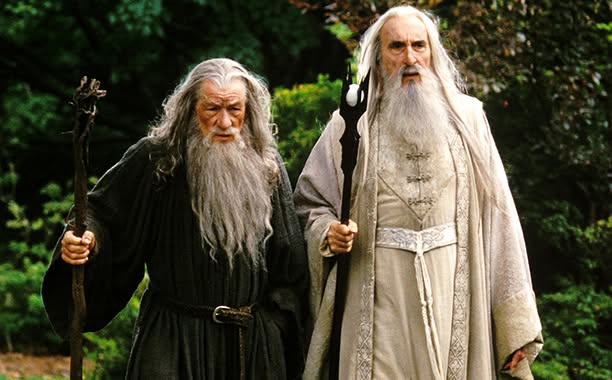
Gandalf and Saruman duke it out in Peter Jackson’s frenetic, yet somehow ponderous adaptations of J.R.R. Tolkien’s “The Lord of the Rings,” films so bloated and poorly paced that anyone who did not read the books probably wondered what all the fuss was about. Its abundant defects didn’t keep the screen trilogy from making over a billion dollars and garnering 30 Academy Award nominations. Three of those were bestowed upon composer Howard Shore. We’ll be sampling from his music to “The Fellowship of the Ring” (2001).
Made for a fraction of the budget, much less self-serious, and arguably way more fun is “The Sword and the Sorcerer” (1982), which holds no pretense to be anything beyond what it is: a schlocky B-movie sword and sandal swashbuckler. However, the composer, David Whitaker, aspired for something greater. Against tremendous time pressures, he turned in a marvelous score, which sounds like Erich Wolfgang Korngold on a shoestring. If this film had been made by George Lucas, Whitaker would be world famous.
After creating one of his greatest scores for Stanley Kubrick’s “Spartacus,” Alex North had his music for Kubrick’s “2001: A Space Odyssey” rejected – and not in a nice way. (North didn’t find out about it until the lights went down at the film’s premiere.) Fortunately, the composer was able to salvage the best material for “Dragonslayer” (1981). The plot, about a bumbling sorcerer’s apprentice who faces a seemingly impossible challenge, is serviceable at best, but the dragon may yet be the most amazing committed to film. Also, the score is terrific.
Finally, John Williams kicked off another billion-dollar franchise with “Harry Potter and the Sorcerer’s Stone” (2001), which in England was released (as was the book) as “Harry Potter and the Philosopher’s Stone.” Who ever heard of a sorcerer’s stone? I guess the publishers were nervous that Americans would be put off by any association with philosophy.
Prepare to be charmed! It’s music for wizards and sorcerers this week, on “Picture Perfect,” music for the movies, now in syndication on KWAX Classical Oregon!
——–
Clip and save the start times for all three of my recorded shows:
PICTURE PERFECT, the movie music show – Friday at 8:00 PM EDT/5:00 PM PDT
SWEETNESS AND LIGHT, the light music program – Saturday at 11:00 AM EDT/8:00 AM PDT (***now with a repeat Sunday at 9:00 PM EDT/6:00 PM PDT***)
THE LOST CHORD, unusual and neglected rep – Saturday at 7:00 PM EDT/4:00 PM PDT
Stream them, wherever you are, at the link!
https://kwax.uoregon.edu/
——–
PHOTO: Saruman vexes Gandalf with the exquisite whiteness of his beard See less
-
Rachmaninoff Variations at the Princeton Symphony Orchestra
by
4 responses
Everybody loves “Rhapsody on a Theme of Paganini.” One of Sergei Rachmaninoff’s greatest hits, it’s possible to hear it performed somewhere nearby just about every season. And why not? It’s a nice showcase for a pianist, with a catchy tune (from Niccolò Paganini’s 24th Caprice for solo violin) put through a series of virtuosic, playful and reflective variations.
Best of all is the famous 18th variation, in which the composer ingeniously flips the melody and turns it into one of the most luscious, romantic outpourings in the repertoire. You probably know it. It’s been used in numerous movies (“Somewhere in Time,” “Groundhog Day,” “Dead Again,” “The Story of Three Loves,” “Ronin”) and been excerpted for zillions of classical music compilation albums.
Rachmaninoff may have been a melancholy soul, but he also had a good sense of humor. Immediately cognizant of the 18th variation’s potential for broad appeal, he quipped, “This one’s for my agent.”
The final variation proved such a knucklebuster, the composer himself experienced anxiety over his ability to navigate it successfully before an audience. Prior to the work’s premiere, a colleague suggested he take a shot beforehand to calm his nerves. Allegedly he did so before every performance of the piece, which led him to dub the 24th variation, the “Crème de Menthe Variation.”
It was not for nothing that Stravinsky characterized Rachmaninoff as “six-foot-two of Russian gloom.” (Never mind the fact that Rachmaninoff was actually 6’ 6”.) He could be incorrigibly dour. So listen closely for his signature quotations of the “Dies Irae” – “Day of Wrath” – from the Mass for the Dead, also used in so many movies (“The Shining”) and by so many other composers (Hector Berlioz in his “Symphonie fantastique”). The 7th variation is an introspective meditation on it, and it comes back later, toward the end of the piece, as a quick brass chorale, to propel the piano to the finish.
Hear “Rhapsody on a Theme of Paganini” on this weekend’s season-opening concerts of the Princeton Symphony Orchestra. Dmitry Shishkin will be the soloist. Also on the program, the Concerto for Orchestra by Béla Bartók and Joan Tower’s Suite from Concerto for Orchestra. Performances will take place at Princeton University’s Richardson Auditorium, Saturday at 7:30 and Sunday at 4:00. For tickets and information visit princetonsymphony.org.
On a related note, PSO principal bassoonist Brad Balliett will be at Princeton Public Library tonight at 6:30 to talk about, and answer all your burning questions in regard to, the bassoon. The event is free and open to the public. Attendees will have a chance to win tickets to this weekend’s concerts.
https://www.princetonsymphony.org/events/pso-soundtracks-meet-bassoon
The 18th variationhttps://www.youtube.com/watch?v=MM1dk13m0tI&t
———-
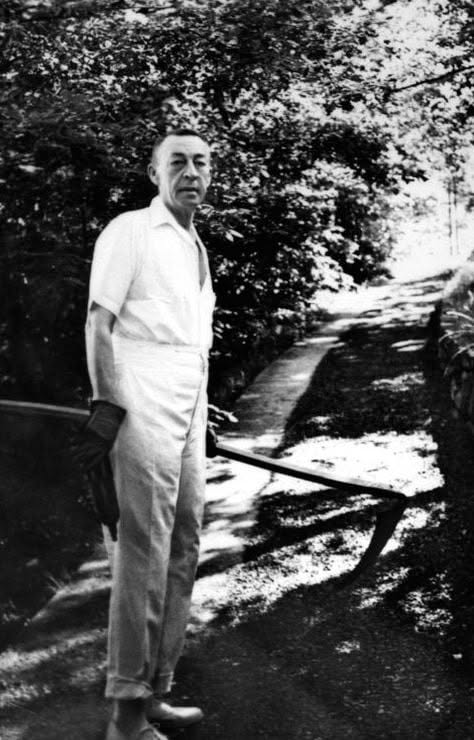
PHOTO: Sergei Rachmaninoff: Don’t fear the reaper
-
Epic Music Deserves Epic Treatment
by
One response
Could I really have written a 1900-word article today?
Yes. Yes, I could.
Watch for my story on Princeton composer Vince di Mura and the upcoming premiere with the Capital Philharmonic of New Jersey of his latest epic for symphony orchestra, solo violin, and Cuban ensemble, “L’Hôtel Ritz de Paris.”
Ernest Hemingway, Hermann Goering and Coco Chanel, oh my!
The concert will take place at Trenton’s Patriots Theater at the War Memorial on Saturday, October 24, at 7:30 p.m. But get there earlier (doors open at 6:10) for a pre-concert performance and World War II French fashion show, with Di Mura at the piano.
https://www.capitalphilharmonic.org/
Learn more about it in my article in the Princeton weekly U.S. 1, online and in vending machines next Wednesday!
———-
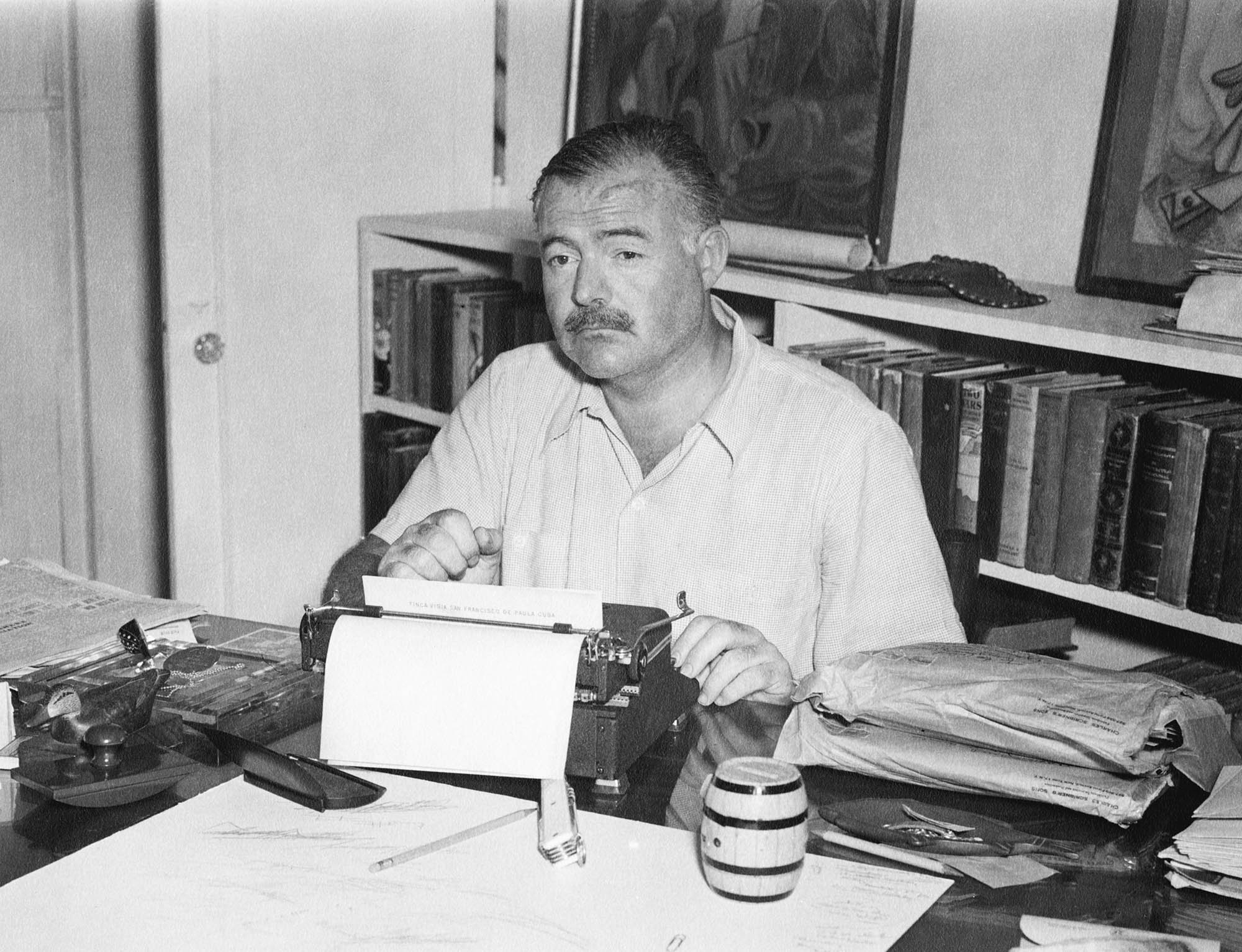
PHOTO: If Hemingway had written it, it never would have been 1900 words
-
KWAX: Quality Programming Not Just For Oregon Listeners
by
11 responses
With today’s technology, KWAX isn’t just for Oregon listeners anymore. I myself live on the East Coast, but I know a surprising number of people in my area, and through social media, who have turned to this station. We’ve been enjoying it through our internet radios and at kwax.com.
And why? Because KWAX offers things that aren’t so common in classical radio anymore. For one, KWAX broadcasts major works complete, the way a composer intended. I can’t emphasize how important that is to me, to not have a symphony or a concerto hacked off after a single movement, as has become the norm, sadly, on so many other stations.
Furthermore, the announcers – who are actually in-house and not pumped in from a satellite service somewhere – select ALL the recordings they broadcast themselves, making for an unpredictable and stimulating blend of familiar and unusual repertoire. Sometimes you don’t know how much you need Bohuslav Martinů or Gerald Finzi until they make an unexpected appearance.
This is no small thing. The abuse of satellite networks has changed the face of classical radio – eliminating local jobs, destroying the unique character of stations across the country, and dumbing down programming with slice-and-dice playlists. You get none of that with KWAX. It might not be your local station, but it definitely has local character. You will feel like you are a part of Eugene, Oregon.
Add to these qualities, the variety of content – the concert broadcasts, artist interviews, Saturday operas, and syndicated shows – and you have a classical music resource that is very precious indeed.
KWAX respects not only the music, but also its listeners. And it is worthy of listener support.
70 percent of the KWAX budget comes from people just like you, who understand their invaluable role in sustaining the high standards and quality programming, offered by knowledgeable folks, who palpably enjoy what they’re doing, without filling the airwaves with inane, extraneous chatter.
KWAX makes life more pleasant by sharing beautiful music every day.
If the station enhances the quality of your world, bringing you moments of solace, excitement, intelligence, and elevation, please consider making a donation – wherever you are, in whatever amount – by contributing online at kwax.com, or calling 541-345-9451, during regular business hours.
And if you’ve never tuned in, give it a shot! Obviously, today and tomorrow will be fundraising days, so perhaps they won’t be quite so characteristic. But I guarantee you will not be disappointed with what you hear on a regular basis. This is classical music radio the way it should be, presented commercial-free, without a set playlist, and offered with real integrity.
As host of “Picture Perfect,” “The Lost Chord,” and “Sweetness and Light,” I thank you – from behind the microphone AND as a fellow listener.
https://kwax.uoregon.edu/
Tag Cloud
Aaron Copland (94) Beethoven (95) Composer (114) Film Music (151) Film Score (143) Film Scores (255) Halloween (103) John Williams (198) KWAX (233) Leonard Bernstein (105) Marlboro Music Festival (125) Movie Music (166) Mozart (91) Opera (217) Philadelphia Orchestra (91) Picture Perfect (174) Princeton Symphony Orchestra (110) Radio (90) Ross Amico (244) Roy's Tie-Dye Sci-Fi Corner (290) The Classical Network (101) The Lost Chord (269) Vaughan Williams (107) WPRB (397) WWFM (881)