• Battle of the Barbers: Augustin Hadelich and Randall Goosby Play Samuel Barber’s Violin Concerto

    Battle of the Barbers:  Augustin Hadelich and Randall Goosby Play Samuel Barber’s Violin Concerto

    by 

    It’s the battle of the Barbers!

    Early last week, I posted about how I had inadvertently scheduled two concerts on the same day, both of them featuring the Samuel Barber Violin Concerto.

    How did it happen? I impulsively acquired a seat to Friday afternoon’s Philadelphia Orchestra concert, practically as an afterthought, to fill-out the quota for a package deal for deeply-discounted tickets. What I’d failed to take into account was that I was already set to hear the concerto in Princeton on Friday evening, on a program presented by the New Jersey Symphony!

    An embarrassment of riches, then, and a rare opportunity to juxtapose two interpretations of the same work, which turned out to be quite different from one another.

    Classical music enthusiasts tend to toss around a lot of comparatives, and most of them incline toward the hyperbolic: This is the best recording. That performance was terrible! He was the greatest violinist of all time, and so forth. But really, is life always screwed to such a fever pitch? Is there no room for nuance?

    I’ll offer my personal assessments of this weekend’s performances at the end of this post – and I can’t promise that they will be without overzealous comparatives – but first, a few words on my history with this particular concerto:

    The first time I encountered the work was on a concert of the Philadelphia Orchestra, back in 1986. Elmar Oliveira was the soloist, and – can you imagine? – the concerto was on the same program as Prokofiev’s Symphony No. 6! Riccardo Muti, then the orchestra’s music director, conducted. What an evening! I hasten to add that Prokofiev was probably my favorite composer at the time, and I was devouring all of his music that I could.

    Of course, I was still learning the repertoire, and as a young person, the frontier seemed wide-open. Whenever I encountered something I liked, I raced to the record store as soon as I had the funds to acquire it. I very quickly figured out that the most efficient way for me to accomplish this was to actually get a job as a record clerk – which I did, at a Sam Goody at 11th and Chestnut Streets, which at the time had the most extensive classical music section in the city. (This was before the arrival of Tower Records.)

    Can you believe we had three people working the classical department? That’s what record stores were like in those days, when the technological development of the compact disc injected new life into the industry, with collectors eager to upgrade their libraries and push the limits of their audio equipment. It was there that I acquired Neeme Järvi’s Prokofiev cycle. Essentially, I wound up turning over most of my paycheck for the blister-packaged merchandise I had squirreled away in a cardboard cubby in the basement. I was still quite green, frankly, but I did have a greater-than-average knowledge of classical music, and as they say, in the kingdom of the blind, the man with one eye is king.

    This may seem like another one of my flighty digressions, but I offer it as backdrop to the acquisition of my first recording of the Barber concerto. I was still buying used LPs, and some of the new soundtrack albums were still being released exclusively on vinyl, but by this point CDs had become an obsession. Isaac Stern’s classic recording of the Barber, with Bernstein and the New York Philharmonic, had yet to be reissued, and there really wasn’t very much competition on compact disc. The recording we had in stock, on the ProArte label, featured Joseph Silverstein as the soloist. He also conducted the rest of the selections, with the Utah Symphony, including Barber’s “The School for Scandal Overture” and the Second Essay for Orchestra. It actually turned out to be a very satisfying disc.

    Oliveira finally recorded the concerto himself, with Leonard Slatkin and the Saint Louis Symphony Orchestra, his performance released on EMI in 1987. On the same disc was Howard Hanson’s “Romantic” Symphony. I remember my heart was beating so fast when I discovered this at the local mall. Now there are so many recordings of each.

    For a time in the early ‘90s, I used a lugubrious passage from the slow movement of the concerto as a music bed on my answering machine. I was in my early 20s, licking my wounds from having been dumped by my college girlfriend. We were together for five years, basically, and it was not a clean break. Also, I had no idea what I wanted to do with my life. I’d taken a year to pound out some stories and send them to some magazines, while working at a Holiday Inn, delivering pizzas, etc.

    Now I was caught in a series of dead-end retail jobs, mostly bookstores, with a bunch of other drifters, and it took me a few years to finally figure out that I could start my own. Of course, as soon as I moved on it and signed a lease on a store front, I was called to come in for the interview that landed me my first paid job as a classical music radio host. A Ross divided against himself cannot stand! Nevertheless, I continued the balancing act for the next 13 years, sleeping very little, I might add. Then I packed in the books (not that I’ve unloaded them all) and kept on with the radio.

    But at the time I mention, in the early ‘90s, I was still wallowing in an impecunious quagmire, on my feet all day, working myself into exhaustion at a Barnes & Noble superstore, then coming home and blacking out on a fold-out sleeper sofa for an hour or so, before sitting down to a bowl of potato gruel and an evening of Wagner or Mahler on the old hi-fi.

    It won’t surprise you to learn, I was often late on the rent. This is always stressful, but especially so, when your landlord lives in the same building. In this case, I was on the first floor, in an efficiency in the back of the building, with very little sunlight, but a tiny yard where I could enjoy my coffee in the morning and air out my clothes after a night downing Yuengling at a local dive bar.

    Awkwardly, the fire escape was right behind the sofa bed, so that every morning I would see my landlord walk down the steps with his bicycle, before pedaling off to his university job. As he was a professor of English literature, I had hoped that maybe he could pass along some leads to some employment opportunities (this was in the days before the internet) – I was, after all, an English major – but he never knew of anything. Anyway, sometimes he would phone my machine. Once, he left a message, probably hoping for the rent, in which he remarked, “Samuel Barber is not half so ominous as you are.”

    At work, I was always ordering books for myself, taking advantage of the employee discount. So another time, I was standing right next to one of my coworkers, whose task it was to call customers to notify them that their orders had come in. I wasn’t really paying attention, but after she hung up the phone, she muttered, “That guy’s machine sounds like a funeral parlor.” I took a look at the slip and busted out laughing. Of course that guy was me, my funereal manner enhanced by the Barber Violin Concerto.

    Barber’s concerto, composed in 1939, is unapologetically lyrical, with long-limbed melodies and, in its first two movements, a yearning, even elegiac, quality. The final movement is an about-face, a grotesque moto perpetuo, during which the soloist is let off the leash for a thrilling romp around the park.

    The first public performance was given by violinist Albert Spalding, with the Philadelphia Orchestra conducted by Eugene Ormandy at the Academy of Music at Broad and Locust Streets in 1941. I wonder if Barber, who died in 1981, could ever have anticipated just how much this concerto would take off. I doubt if there’s a major violinist in the world today who doesn’t have it in their repertoire.

    But times were different in the 1940s. WPA-style composers were writing big, populist ballets and symphonies to boost morale during World War II, but all the while avant-gardists, many of whom embraced Arnold Schoenberg’s rejection of tonality, were engaged in subverting what they regarded as dangerously subjective, overly emotional (i.e. irrational) tendencies that had propelled civilization into two cataclysmic wars. In their place, they advocated a coolly rational, more objective music. Big, Romantic gestures were eyed with suspicion, if not disdain, and academics and public (the latter always appreciative of a good tune) parted ways.

    Like Rachmaninoff, Barber was viewed as something of an anachronism. Unlike Rachmaninoff, he didn’t make the piano the center of his output. Nor did he possess the virtuosic technique as a performer to whip audiences into a frenzy. Anyway, Barber, though clearly capable of expressing emotion (as in his famous “Adagio for Strings”), preferred to do so with dignity and restraint. His preferred idiom was post-Brahmsian. There are flashes of anguish, but he never allows himself to wallow or teeter over into hysteria.

    Perhaps this explains Augustin Hadelich’s interpretative decisions on Friday afternoon in Philadelphia. His take on the Violin Concerto was restrained to a fault – intimate, surely, but practically interior, for most of it nearly to the point to disengagement. There is something to be said for subtlety, and Barber himself would have been horrified ever to be caught blubbering. But there is a difference between drawing the listener in and leaving him or her out in the cold. Others may have reacted differently – there were cheers and the requisite standing ovation – but I didn’t find it particularly involving. As with “Hamnet,” I never would have survived without a cup of coffee. In the last movement, Hadelich proved – as if he needed to – that he was up to the work’s technical challenges, He’s a super violinist, who played a memorable Sibelius concerto when I last saw him in Philadelphia a few seasons ago – but I’m afraid it was too little, too late, and I came away feeling as if the whole thing had been underpowered.

    I wonder too if trying too much to sculpt the music robbed it of some of its allure. On the second half of the concert, I felt Mahler’s Symphony No. 4, though one of his more intimate works, was also marred, a few passages aside, for the same reason – by babying it too much. Ironically, the work is infused with suggestions of childhood – quotations of folk song from the collection “Des Knaben Wunderhorn” and the final text relating a child’s vision of Heaven. (Once she settled in, soprano Joélle Harvey was radiant.) But there are also insinuating, sinister forces at play – dances of death, suggestions of funeral marches, and so forth. Except for those moments when, for instance, timpanist Don Liuzzi was allowed to rip, the performance turned out to be no more than up to the Philadelphia Orchestra’s usual fine standard, but in no way exceeding it.

    It pains me to say so, since I am an admirer of the conductor, Dalia Stasevska. A few years ago, she conducted a Sibelius 5th Symphony that so far exceeded Esa-Pekka Salonen’s rendition when I heard him with the orchestra the following season, it wasn’t even in the same universe. Though Stasevska was born in Ukraine, both conductors are Finnish-bred. However, Stasevska does Salonen one better by being married to Sibelius’ great-grandson!

    The whole experience was eclipsed by what I heard in Princeton on Friday evening, when Randall Goosby joined the New Jersey Symphony for a richly-satisfying performance of the Barber. I wonder if the individual venues might also have influenced my judgment. Hadelich played at somewhat of a remove in the cavernous Marian Anderson Hall at Philadelphia’s cathedral-like Kimmel Center for the Performing Arts. Goosby played in the much more intimate Richardson Auditorium at Princeton University, where the performers are practically in your lap. So Goosby’s instrument could be heard even in the work’s orchestral climaxes. But overall, my impression was that Hadelich was living in his head, while Goosby was letting us into his heart.

    Of course, the conductor was the New Jersey Symphony’s Xian Zhang, whose podium manner makes Leonard Bernstein seem positively restrained by comparison. Zhang works hard, sometimes distractingly so, as she attempts to convey a sense of energy to her players, and I have to admit, it sometimes lends to the excitement of the performance. At others, it can be so over the top, you can’t help but smile. But is that such a bad thing? Especially when the second half of the program was Tchaikovsky’s Symphony No. 2, once commonly nicknamed in English-speaking countries the “Little Russian,” until world events precipitated a shift toward identifying it as the “Ukrainian.” Tchaikovsky lived and composed in Ukraine for part of the year, and the work is infused with Ukrainian folk song. The music is infectious, totally sidestepping the pathos of the later, more commonly-performed symphonies, with a march in place of the standard slow movement. The piece is downright balletic at times, and the climax is so manic that I couldn’t help but burst into laughter a few bars before the end.

    This is the work George Plimpton wrote about after touring with the New York Philharmonic as a celebrity guest percussionist. Of course, Plimpton wasn’t a musician. That was his whole schtick – join the professionals, whether they be football players, boxers, or musicians, and then write about the experience. Plimpton had one job. He had to strike the gong in an exposed, pregnant moment, before a final mad crescendo to the double-bar line. He tells us that in his adrenaline rush, he smacked the thing so hard, he saw Bernstein’s eyes widen, and the shock wave travel out across the musicians into the audience to the back of the hall, and then the orchestra had to wait for the sound to decay so that they could start to play again.

    Friday night’s gong-strike was not quite that egregious, but the performance itself was thrilling in the extreme, and altogether much more satisfying than anything I heard from the orchestra’s starrier rivals in Philadelphia that afternoon. I mean, come on. The concert opened with “Finlandia,” for crying out loud. If that doesn’t prime an audience, I don’t know what will.

    So in the battle of the Barbers, the championship belt goes to Goosby. I still have faith in Hadelich, a marvelous violinist. Both artists are very much in their prime, and I look forward to, if not a rematch, then many happy musical experiences with them in the years ahead.

    ——–

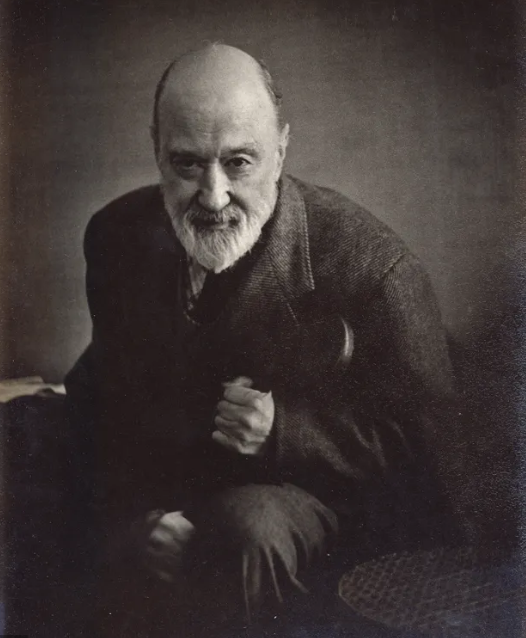
    PHOTO: Samuel Barber in 1941


  • Dark Horse Norsemen on “The Lost Chord”

    Dark Horse Norsemen on “The Lost Chord”

    by 

    A Norse is a Norse, of course, of course…

    This week on “The Lost Chord,” we’ll make hay with music by a couple of Norwegian composers.

    Halfdan Cleve (1879-1951) received unusually strict musical training. His father was an organist, who saddled his son with nothing but Bach until he was 16! The young Cleve then cantered to Germany, where he plowed through studies with the Scharwenka brothers, Philipp and Franz Xaver. The latter, a pupil of Franz Liszt, was regarded as one of the great thoroughbred keyboard virtuosos of his day.

    Cleve became widely recognized as a composer and pianist, but his own popularity flagged after World War I. He reacted against the rise of modernism by doubling down, in the mane, on his pedigree, celebrating the Norwegian countryside and its folk idioms in his music. His Violin Sonata of 1919 was foaled of this approach.

    Eyvind Alnaes (1872-1932), however, was a horse of a different color. Known, if at all, for his art songs – some of which were recorded by Kirsten Flagstad and Feodor Chaliapin – Alnaes’ musical language is less overtly “Norwegian” and more reactive to sugar cubes. His Piano Concerto of 1919 shadows Brahms and Tchaikovsky, and overtakes Rachmaninoff’s Piano Concerto No. 4, not completed until seven years later. Could Alnaes have been the rock in Rach’s shoe?

    Ladies and gentlemen, place your bets! The garland goes to “Dark Horse Norsemen” – works by neglected Norwegian composers – on “The Lost Chord,” now in syndication on KWAX Classical Oregon!

    ——–

    Clip and save the start times for all three of my recorded shows:

    PICTURE PERFECT, the movie music show – Friday at 8:00 PM EST/5:00 PM PST

    SWEETNESS AND LIGHT, the light music program – Saturday at 11:00 AM EST/8:00 AM PST

    THE LOST CHORD, unusual and neglected rep – Saturday at 7:00 PM EST/4:00 PM PST

    Stream them, wherever you are, at the link!

    https://kwax.uoregon.edu

    ——–

    Flagstad sings Alnaes


    Chaliapin


  • Northern Exposure on “Sweetness and Light”

    Northern Exposure on “Sweetness and Light”

    by 

    This week on “Sweetness and Light,” it’s a program of lighter music from the northern countries.

    We’ll give poor overworked Edvard Grieg a break, with Norway represented by Johan Halvorsen and the now lesser-known pianist-composer Agathe Backer Grøndahl, a pupil of Franz Liszt.

    From Sweden, we’ll enjoy two versions of Hugo Alfvén’s evergreen “Swedish Rhapsody No. 1” – first, Mantovani’s popular hit from 1953, then with the composer himself conducting, from the very next year, in the first stereo recording ever made in Sweden.

    Speaking of popular hits, we’ll also hear Arthur Fiedler’s bestselling recording of “Jalousie,” by Danish composer Jacob Gade (no relation to Niels Wilhelm Gade), from 1935. Fiedler remade it in stereo, but it’s my show, so I’m keeping it hardcore.

    Also from Denmark, we’ll have a folk-music suite by Percy Grainger. Ah! But Grainger was not from the north, you say. He was born in Australia. Quite true. However, as an energetic pianist and composer of insatiable curiosity, he traveled seemingly everywhere, with a particular fondness for the Scandinavian countries. (His wife was Swedish.)

    But if authentic Danish composers are more your thing, not to worry, we’ll round out the hour with a galop by Hans Christian Lumbye.

    All eyes and ears face north this week on “Sweetness and Light.” I hope you’ll join me for this hour of northern “lights,” this Saturday morning at 11:00 EST/8:00 PST, exclusively on KWAX Classical Oregon!

    Stream it wherever you are at the link:

    https://kwax.uoregon.edu/

  • Double Your Pleasure on “Picture Perfect”

    Double Your Pleasure on “Picture Perfect”

    by 

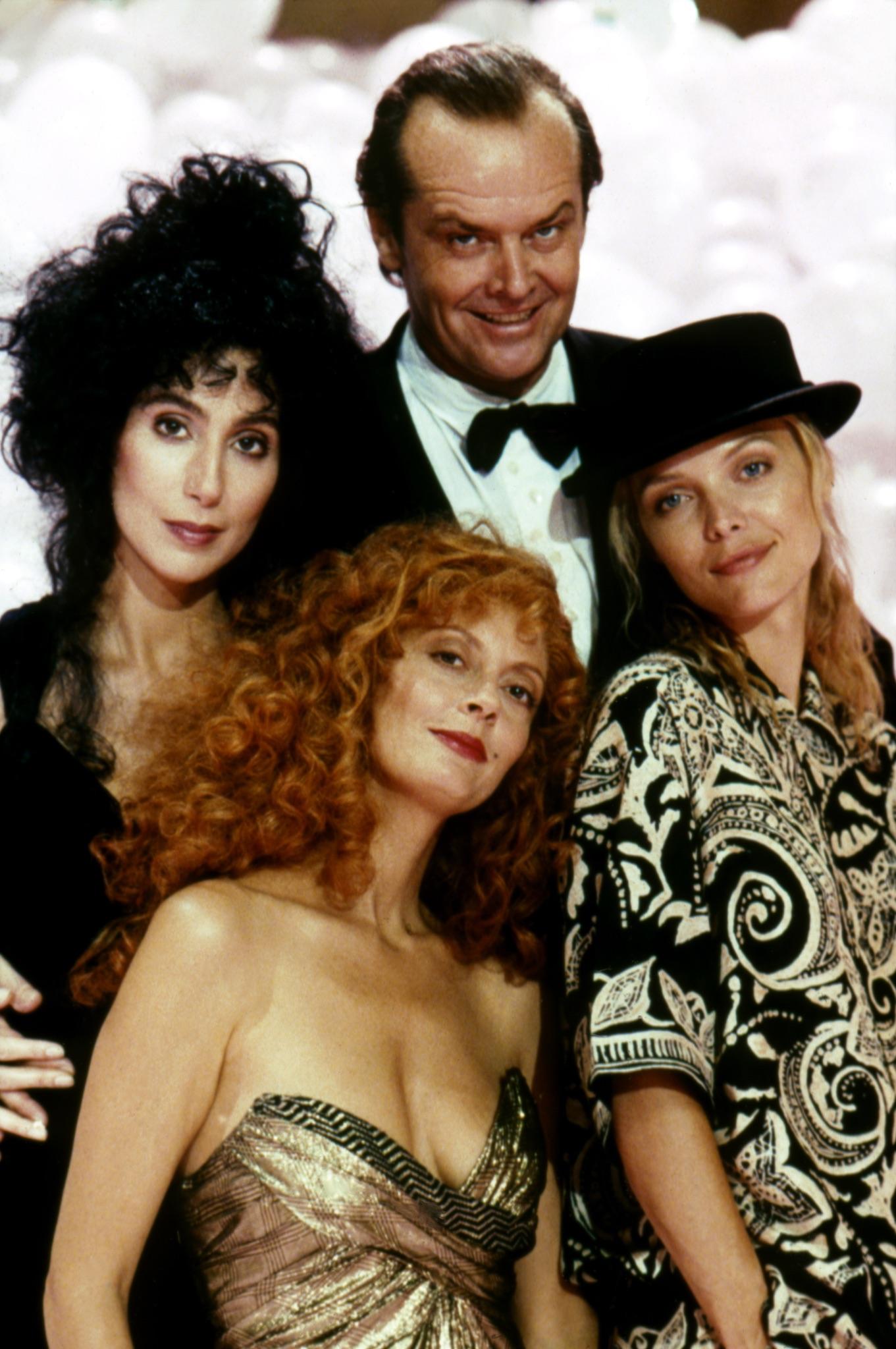
    This week on “Picture Perfect,” we’re seeing double.

    James Stewart plays Scottie Ferguson, a traumatized police detective who becomes obsessed with the woman he loves – and loses – in Alfred Hitchcock’s “Vertigo” (1958). Kim Novak portrays both the enigmatic beauty and her spitting image, who Ferguson, rather creepily, attempts to mold. Bernard Herrmann wrote the hypnotic score.

    Krzysztof Kieślowski’s “La double vie de Véronique”/“The Double Life of Véronique” (1991) depicts parallel characters living in Poland and France who are mysteriously linked, both of them played by Irène Jacob. The performance(s) earned Jacob an award for Best Actress at the Cannes Film Festival. The music, which plays a significant role in the actual plot, is by Zbigniew Preisner.

    For the second time in her career, Bette Davis gets a chance to play an evil twin in “Dead Ringer” (1964). The first was in the 1946 good twin-bad twin melodrama, “A Stolen Life.” When asked what the difference was between the two performances, Davis quipped, “About 20 years.” “Dead Ringer” was directed by her longtime friend and “Now, Voyager” co-star Paul Henreid. The music is by André Previn, whose score employs a stock-in-trade sinister harpsichord, yet when he comes to write the love theme, he manages to whip up one hell of a tribute to Erich Wolfgang Korngold.

    Korngold scored a number of Davis’ films in the 1940s, though he is principally remembered for his work on the swashbucklers of Errol Flynn. To capitalize on Flynn’s star-making performance in “Captain Blood,” Warner Brothers produced a big screen adaptation of Mark Twain’s Tudor switcheroo, “The Prince and the Pauper” (1937). Flynn steals the show as Miles Hendon, the devil-may-care guardian of Prince Edward and Tom Canty, Edward’s mirror image, played by real-life twins Bobby and Billy Mauch. If you’re a Korngold fan, or an enthusiast of violin concertos, you may recognize some of the music. Korngold recycled the theme for use in the last movement of his Violin Concerto, championed by Heifetz and others.

    Double your pleasure with an hour of doppelgangers, twins, and dual identities, on “Picture Perfect,” music for the movies, now in syndication on KWAX Classical Oregon!

    ——–

    Clip and save the start times for all three of my recorded shows:

    PICTURE PERFECT, the movie music show – Friday at 8:00 PM EST/5:00 PM PST

    SWEETNESS AND LIGHT, the light music program – Saturday at 11:00 AM EST/8:00 AM PST

    THE LOST CHORD, unusual and neglected rep – Saturday at 7:00 PM EST/4:00 PM PST

    Stream them, wherever you are, at the link!

    https://kwax.uoregon.edu

  • Chameleonic Robert Moran Is 89

    Chameleonic Robert Moran Is 89

    by 

    in
    6 responses

    A work for amplified Volkswagen, played with flashlights. An opera for eleven dogs. A piano piece in which the performer crawls inside the lid and lets the piano play him.

    Move over, Till Eulenspiegel. Today is the birthday of Robert Moran.

    Moran, who’s made his home in Philadelphia for more than 40 years, is contemporary music’s merry prankster.

    Following studies in Vienna with Hans Erich Apostel, with whom he “learned to count to twelve” (as in twelve-tone music), Moran attended Mills College, where his teachers were Darius Milhaud and Luciano Berio. His classmates at Mills included Steve Reich, Phil Lesh, and Tom Constanten. Lesh and Constanten went on to play for The Grateful Dead. I wonder what ever happened to Reich?

    While there, Moran became involved with the whole San Francisco scene. He gained notoriety in the late 1960s and early ‘70s through a series of performance pieces incorporating entire cities, including San Francisco, Bethlehem, PA, and Graz, Austria. These involved tens of thousands of performers.

    His many stage works include “Desert of Roses” (after Beauty and the Beast), written for Houston Grand Opera, and “Alice” (after “Alice’s Adventures in Wonderland”), composed for the Scottish Ballet. Maurice Sendak introduced him to the Grimm fairy tale “The Juniper Tree,” which became an operatic collaboration with Philip Glass.

    For the occasion of the tenth anniversary of the terrorist attacks on the World Trade Center, Moran was commissioned to write a work for the youth chorus of Trinity Wall Street, the so-called “Ground Zero” church in Lower Manhattan. “Trinity Requiem,” scored for children’s chorus, four cellos, harp and organ, offers a similar brand of solace to that conjured in the 19th century masterwork by Gabriel Fauré.

    With Moran, you never know what you’re going to get. In his more puckish moments, he might write for harpsichord and electric frying pan. But then there are times when his natural gift for lyricism will melt your heart. Whether he’s writing for Houston Grand Opera, 39 autos, giant puppets, or electric popcorn popper, his music is always vital and worth getting to know.

    Happy birthday, Bob!

    ———

    An aria from “Desert of Roses”


    “Trinity Requiem” (its movements posted into a continuous YouTube playlist)


    Flying high over Albania


    “Obrigado” for Iowa Percussion


    “Bank of America Chandelier”


    Experimenting with spatial effects in “Solenga”


    “Alice” for Scottish Ballet


    Looking groovy and introducing his “Lunchbag Opera” for the BBC

    “Buddha Goes to Bayreuth”

    “Modern Love Waltz” by Philip Glass, arranged by Robert Moran for accordion and cello

    “Waltz. In Memoriam Maurice Ravel”


Tag Cloud

Aaron Copland (92) Beethoven (94) Composer (114) Conductor (84) Film Music (105) Film Score (143) Film Scores (255) Halloween (94) John Williams (178) KWAX (227) Leonard Bernstein (98) Marlboro Music Festival (125) Movie Music (120) Opera (194) Picture Perfect (174) Princeton Symphony Orchestra (102) Radio (86) Ralph Vaughan Williams (83) Ross Amico (244) Roy's Tie-Dye Sci-Fi Corner (290) The Classical Network (101) The Lost Chord (268) Vaughan Williams (97) WPRB (396) WWFM (881)

DON’T MISS A BEAT

You’re always welcomed to read my daily dispatches here or on social media, where you can comment and we will be in conversation! But also, please subscribe here to receive direct e-mails either daily or weekly. Thank you always for reading and commenting!

Choose whether to receive one e-mail per day, or one per week:

RECENT POSTS

DON’T MISS A BEAT

Every Sunday, you'll receive just one email digest of the past week's posts! Thanks for reading and listening.