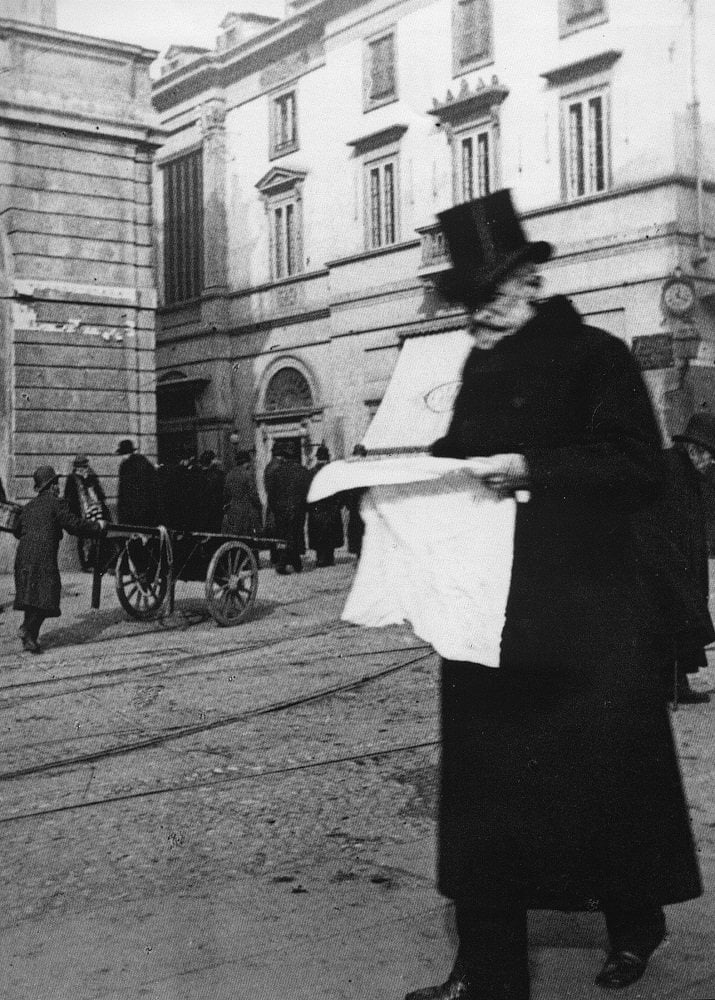
“Viva VERDI!” – the cry of Italian patriots on the eve of unification.
Italy of the 1850s was but a conglomerate of individual states, many of them still under foreign rule. The slogan “Viva VERDI!” was coined in 1859, following the premiere of the composer’s politically sensitive opera “Un ballo in maschera.”
Verdi’s ongoing troubles with the censors are well-known. It’s a safe bet that when he undertook an opera about a political assassination, he had a pretty good idea what to expect. The name VERDI was taken up by firebrands of the Risorgimento as an acronym for “Vittorio Emanuele, Re D’Italia.” King Vittorio Emanuele II of Piedmont was seen by many as the best hope for a free and united Italy.
This week on “The Lost Chord,” we’ll refrain for delving too much into Italy’s Second War for Independence, or of Garibaldi’s struggles with the Bourbons. Instead, we’ll enjoy examples of MUSICAL unification – various composers of Italian origin coming together to attempt cohesive works of art.
There are those who believe the serenata “Andromeda Liberata” may have been composed entirely by Antonio Vivaldi – but perhaps not. The likely impetus for its creation was the return to Rome of one Cardinal Ottobone, who was also a patron of both Arcangelo Corelli and Alessandro Scarlatti.
The story is that of Perseus and Andromeda. Andromeda has already been rescued from the sea serpent at the start of the piece, which mostly explores the ambiguous feelings of its characters, with a few extraneous love interests tossed into the mix to provide romantic conflict.
The two-hour entertainment contains in its second part a single aria known definitively to have been composed by Vivaldi. The authorship of the rest remains in doubt. The long-lost manuscript, dating from 1726, was rediscovered as recently as 2002.
In 1868, Verdi’s great operatic predecessor, the long-retired Gioachino Rossini, died. Rossini had completed his last opera nearly forty years before. Verdi undertook to bring together 12 of his contemporaries, now largely forgotten. The oldest, Carlo Coccia, at age 87, was actually a decade Rossini’s senior!
Within the year, a collaborative mass was compiled in Rossini’s memory, for which Verdi provided the concluding “Libera me.” In fact, the music looks forward to Verdi’s own masterful Requiem. The completed work doesn’t attain anywhere near the lofty heights of Verdi’s solo run. However, it’s an interesting compendium of contemporary styles, and even the music of lesser talents serves to cast Verdi’s genius in a new light.
Remarkably, the work lay unperformed in Verdi’s lifetime. Talk about politics! Here was Verdi, a Milanese, trying to kindle some sort of enthusiasm in Bologna (the location of Rossini’s earliest successes), for a project which was to bring together a bunch of compositional dinosaurs, to salute a figure who, for all intents and purposes, had retired from public life some four decades earlier. Bologna at the time was in the process of becoming a stronghold of the musical avant-garde.
All these factors, along with puzzling stipulations, such as the work being locked away after its first performance, to be trotted out only on special occasions, doomed the project virtually from the start. It remained unheard for another 120 years, resurrected only in 1988.
Roll over, Verdi; tell Rossini the news!
That’s “Viva VERDI!” (for Verdi’s birthday) – Italian unification through music – on “The Lost Chord,” now in syndication on KWAX Classical Oregon!
________________________________________
Clip and save the start times for all three of my recorded shows:
PICTURE PERFECT, the movie music show – Friday at 8:00 PM EDT/5:00 PM PDT
SWEETNESS AND LIGHT, the light music program – Saturday at 11:00 AM EDT/8:00 AM PDT (***now with a repeat Sunday at 9:00 PM EDT/6:00 PM PDT***)
THE LOST CHORD, unusual and neglected rep – Saturday at 7:00 PM EDT/4:00 PM PDT
Stream them, wherever you are, at the link!
https://kwax.uoregon.edu/
Category: The Lost Chord
-
“The Lost Chord”: Roll Over, Verdi; Tell Rossini the News!
-
All About Steve (Reich) on “The Lost Chord”
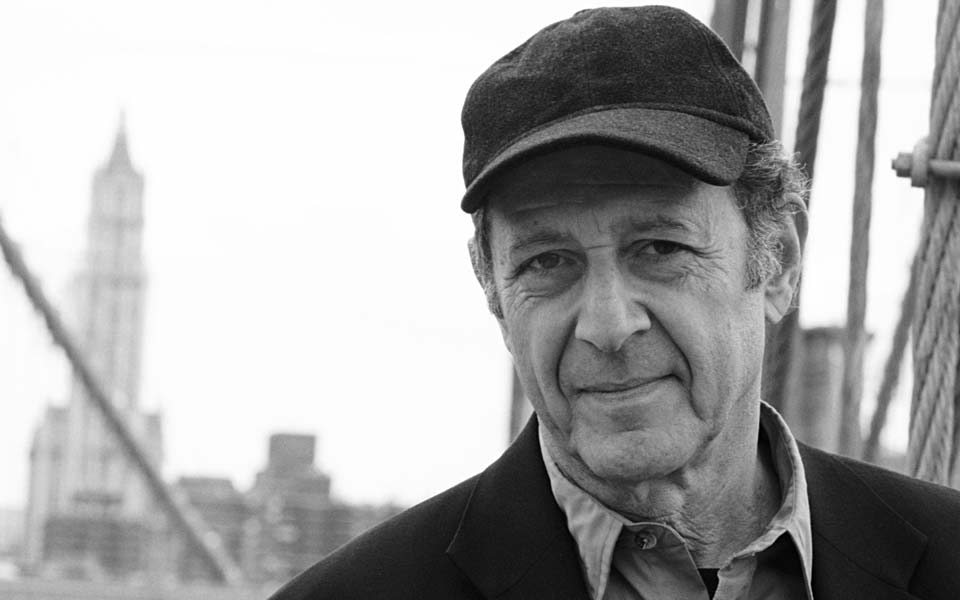
There’s no minimizing the fact that Steve Reich is 90 years old today.
Reich, of course, is best known as a pioneer of minimalism, his music marked by repetitive figures, slow harmonic rhythm, and canons. He’s also notable for his experiments with phase shifting, one or more repeated phrases playing slower or faster against others, gradually going “out of phase,” and creating new musical patterns.
His use of tape loops has also been influential. He’s made his mark especially on experimental music, contemporary electronic music, and rock. In fact, his experiments have been so widely respected and emulated that he’s been one of the most significant American composers of his generation.
I hope you’ll join me this week for “The Lost Chord,” as we celebrate Reich’s birthday by listening to two of his works.
First, we’ll hear his Pulitzer Prize winner from 2007, “Double Sextet,” commissioned by the ensemble eighth blackbird – despite its name (always in the lower case) consisting of six musicians, here playing against a slightly different prerecording of themselves. I defy you not to groove to the propulsive outer sections.
We’ll follow that with his settings of four Hebrew psalms, “Tehillim,” which sports a quite a distinctive palette: four treble voices, piccolo, flute, oboe, English horn, two clarinets, six percussionists (playing 4 small tuned tambourines without jingles, maracas, marimba, vibraphone and crotales, and clapping), two electronic organs, two violins, viola, cello, and bass. This is one work that proves you can be “minimal” but still engage the ear for half an hour.
Minimal music yields maximum rewards on “All About Steve,” celebrating Steve Reich at 90 on “The Lost Chord,” today on KWAX Classical Oregon!———-
Clip and save the start times for all three of my recorded shows:
PICTURE PERFECT, the movie music show – Friday at 8:00 PM EDT/5:00 PM PDT
SWEETNESS AND LIGHT, the light music program – Saturday at 11:00 AM EDT/8:00 AM PDT (***now with a repeat Sunday at 9:00 PM EDT/6:00 PM PDT***)
THE LOST CHORD, unusual and neglected rep – Saturday at 7:00 PM EDT/4:00 PM PDT
Stream them, wherever you are, at the link
-
Our Love Is Here to Stay: Celebrating Gershwin on “Sweetness and Light” and “The Lost Chord”
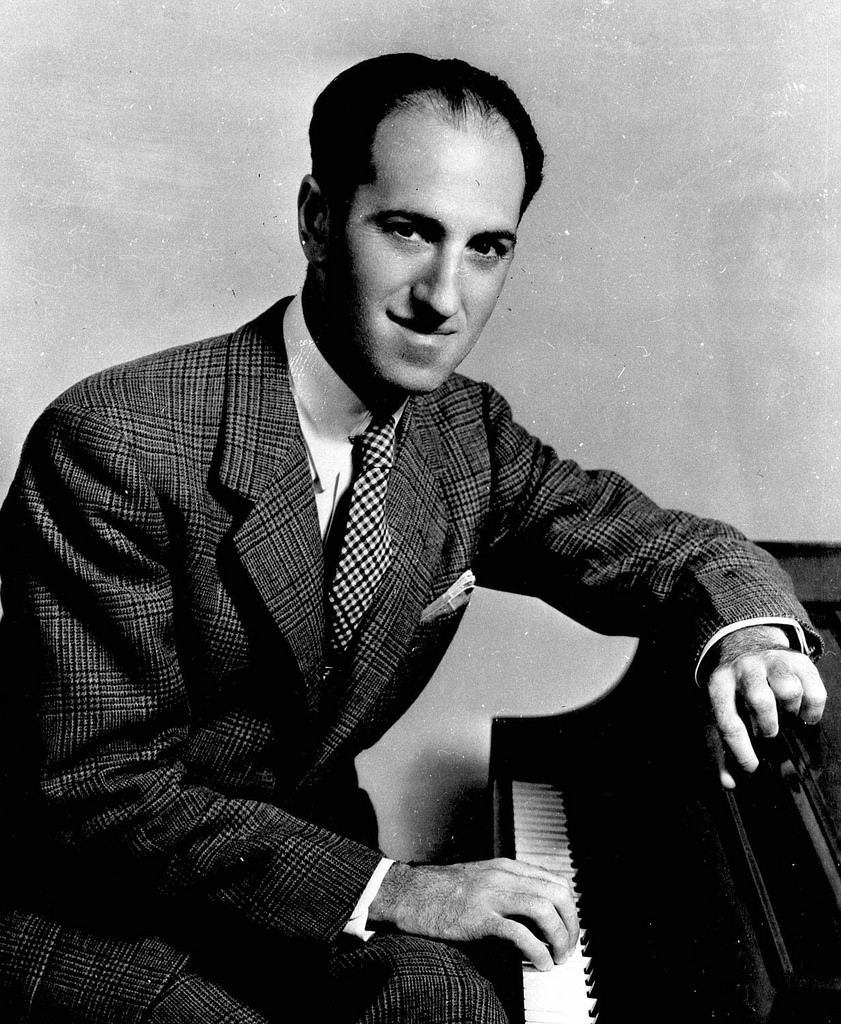
Why, it’s Gershwin’s birthday, by George! We’ll have two chances to celebrate today, on both my Saturday radio shows.
George Gershwin, of course, was one of our most versatile composers. He occupied a unique place in American music, rising from Tin Pan Alley scrapper to Broadway royalty. From there, he conquered the concert hall and even the opera house, with his blend of popular song, jazz, blues, spirituals, and European classical forms.
Like Franz Schubert a hundred years before, Gershwin managed to churn out an astonishing amount of music over a comparatively brief span. His songs, in particular, have been of enduring interest. His gift of lyricism and invention defied early critics as he bestrode the worlds of popular and classical music like an American colossus.
Sadly, at the peak of his success, he died of a brain tumor at the age of 38. But 89 years later, George, we’re still crazy for you.
This morning on “Sweetness and Light,” Gershwin will be one of four composers whose music we’ll enjoy in a salute to classic American musical theater. We’ll hear selections from Eubie Blake & Noble Sissle’s “Shuffle Along” (the 1921 all-Black musical that spawned the breakout hit “I’m Just Wild about Harry”), Leonard Bernstein’s “On the Town” (the ballet music, before it was distilled into the familiar “Three Dance Episodes,” with a 24-year-old Bernstein conducting), Gershwin’s “Porgy and Bess” (conceived by the composer as an opera, but produced on Broadway several times over the decades before finally being elevated to the pantheon), and Richard Rodgers & Lorenz Hart’s “On Your Toes” (the climactic “Slaughter on Tenth Avenue” sequence).
It’s guaranteed to get your toes tapping, for the most part, but I’ll also include a grand piano fantasy on themes from “Porgy” by Earl Wild. It’s showtime, this Saturday morning at 11:00 EDT/8:00 PDT!
Then later on today, on “The Lost Chord,” we’ll sample Gershwin’s artistry in recordings of his era, including several songs performed by Al Jolson, Fred Astaire, and Ella Logan. (So many excellent ones to choose from!)
We’ll also hear the world premiere recording of “An American in Paris” – performed by the Victor Symphony Orchestra (really members of the Philadelphia Orchestra), with the composer himself on the celesta – and the Concerto in F, performed as part of a Gershwin memorial concert at the Hollywood Bowl, with the composer’s friend, Oscar Levant, as soloist.
Three of these recordings date from 1937, the year of the composer’s death. All are from his era. I hope you’ll join me for “Vintage Gershwin,” this Saturday at 7:00 EDT/4:00 PDT.
It’s nice work if you can get it. Not that you need someone to watch over you, George. Our love is here to stay.
Strike up the band and let ‘em eat cake! Of thee I sing, on “Sweetness and Light” AND “The Lost Chord,” on KWAX Classical Oregon!
———-
Clip and save the start times for all three of my recorded shows:
PICTURE PERFECT, the movie music show – Friday at 8:00 PM EDT/5:00 PM PDT
SWEETNESS AND LIGHT, the light music program – Saturday at 11:00 AM EDT/8:00 AM PDT
THE LOST CHORD, unusual and neglected rep – Saturday at 7:00 PM EDT/4:00 PM PDT
Stream them, wherever you are, at the link.
https://kwax.uoregon.edu/ -
“Totally Awesome” on “The Lost Chord”
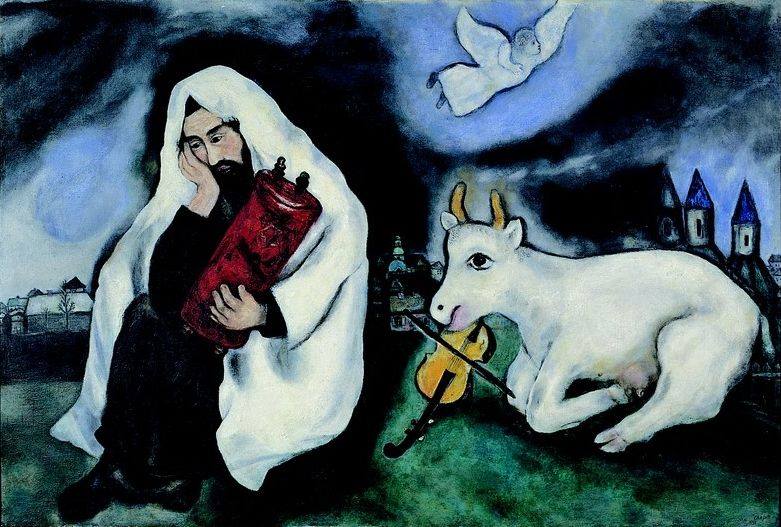
Yom Kippur begins tomorrow night at sundown. The Day of Atonement marks the culmination of ten days of awe and repentance. Observed with fasting and prayer, it is the holiest day on the Jewish calendar.
This week on “The Lost Chord,” we offer best wishes for a happy, healthy, and sweet new year with two complementary works inspired by the High Holidays.
Jacob Weinberg’s String Quartet, Op. 55, of 1950, falls into three movements: “Rosh Hashana” (the Jewish New Year), “Yom Kippur,” and “Sukkot.” “Yom Kippur” is based on the cantorial chant “Kol Nidre.” You know, the same melody employed by Max Bruch in his famous cello piece.
Ernest Bloch’s “Israel Symphony,” composed between 1912 and 1917, is more like an orchestral rhapsody in three sections – “Prayer in the Desert,” “Yom Kippur,” and “Succoth” [sic] – played continuously and culminating in parts for four vocal soloists.
Sukkot, which follows Yom Kippur by only five days, is the harvest festival, during which temporary dwellings (or sukkot) are erected to commemorate the Jews’ 40 years wandering in the desert after the Exodus from Egypt. In modern times, these are decorated with fruits and vines. In contrast to the austerity and fasting of Yom Kippur, Sukkot is a celebration of life and abundance. But in ancient Israel, it was a solemn affair, with sacrifices offered at the temple.
Welcome the year 5787, with musical reflections of the High Holidays, and then some, on “Totally Awesome,” on “The Lost Chord,” now in syndication on KWAX Classical Oregon.
G’mar chatima tova.
———-
Clip and save the start times for all three of my recorded shows:
PICTURE PERFECT, the movie music show – Friday at 8:00 PM EDT/5:00 PM PDT
SWEETNESS AND LIGHT, the light music program – Saturday at 11:00 AM EDT/8:00 AM PDT
THE LOST CHORD, unusual and neglected rep – Saturday at 7:00 PM EDT/4:00 PM PDT
Stream them, wherever you are, at the link.
https://kwax.uoregon.edu/ -
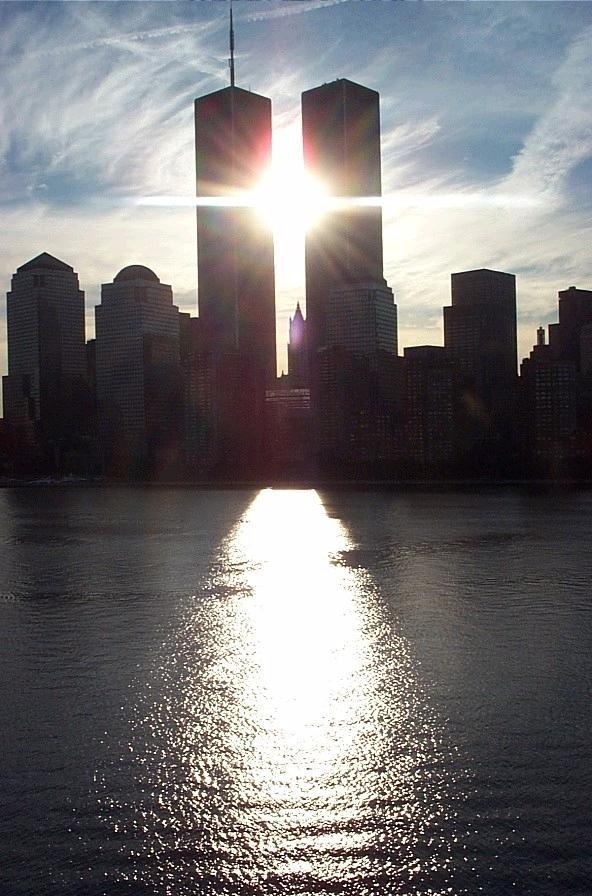
Music of Remembrance and Consolation for the 25th Anniversary of 9/11 on “The Lost Chord”
The day after 9/11, I’m sure we’re all ready to put it behind us. But 25 years is a landmark, and I didn’t have a show yesterday on which I could share some appropriate music. There’s only so much one can do with a film music program!
The anniversary is especially sobering this year, as I realize that we are now as far away from the World Trade Center attacks as my birth was from Pearl Harbor. That’s the perspective from which younger generations now perceive 9/11. It’s something that happened a long time ago.
While I understood that abstractly, it only really registered a year or two ago, when I noticed all these irreverent 9/11 posts on social media. Now, I can be as irreverent as the next guy, but these are obviously people who were not old enough to remember 9/11. There are still plenty of folks out there, who aren’t all that old, who experienced the terror first hand or continue to suffer loss, debilitating illness, or even lasting trauma just from having witnessed it on TV. All of us are living now with the legacy of 9/11. The world was forever changed that day, and not for the better. September 11, 2001 was the dawn of a new century of anxiety and dark uncertainty. We are living in unkinder times.
There’s really very little I can add to the countless memorials and reflections surrounding the surreal, unforgettable events of that September morning – a morning that, for those of us old enough to have lived through it, still feels like yesterday. But I’m a radio host, and I have a platform, and I would like to use it to try to encourage some reflection and maybe even offer a little solace. To this end, this Saturday on “The Lost Chord,” I will be presenting an hour of music of remembrance and consolation.
Pulitzer Prize winner Kevin Puts addresses the horrendous imprint of the attacks in his Symphony No. 2, which in a single movement traces an emotional arc from comparative innocence of an almost cinematic benignity, shocked by a sudden, violent upheaval, from which emerges a more reflective epilogue of uncertainty and fluctuating hope. It certainly does not leave one feeling uncompromisingly desolate in the manner of Ralph Vaughan Williams’ Symphony No. 6, the last movement of which some have compared to a world laid waste by atomic warfare.
Philadelphia composer Robert Moran wrote his “Trinity Requiem” to mark the tenth anniversary of the attacks. Moran rises to the occasion to provide an ethereal masterpiece, a 30-minute journey into paradise worthy to stand alongside the transcendent Requiem of Gabriel Fauré.
“Trinity Requiem” received its first performance in 2011 at Trinity Wall Street, the so-called “Ground Zero church” in Lower Manhattan. Miraculously, a hundred-year-old sycamore tree preserved the church’s St. Paul Chapel, constructed in 1766, from destruction by debris from the World Trade Center, including what would have been a direct hit from a falling I-beam. A recording of Moran’s work was released on the Innova label, featuring the Trinity Youth Chorus and members of the Trinity Wall Street Choir under the direction of Robert Ridgell.
“Trinity Requiem” is scored for treble voices, four cellos, organ, and harp. Handbells are employed in the “Pie Jesu.” And, following in the steps of Fauré, Moran includes a setting of “In Paradisum,” emphasizing a desire to attain peace at last.
Listen for a remarkable moment that occurs in the “Offertory” – the fourth movement (built on a bass line employed by Johann Pachelbel in his famous Canon) – when a siren appears. It was not written into the score, but rather actual street noise that bled into the recording session – an eerie bit of serendipity, unavoidably conjuring memories of the horror that unfolded outside the venue a decade before. But it is horror recollected in tranquility.
I hope you’ll join me for “The Persistence of Memory,” music of remembrance and consolation to mark the 25th anniversary of 9/11, on “The Lost Chord,” now in syndication on KWAX Classical Oregon.
———-
Clip and save the start times for all three of my recorded shows:
PICTURE PERFECT, the movie music show – Friday at 8:00 PM EDT/5:00 PM PDT
SWEETNESS AND LIGHT, the light music program – Saturday at 11:00 AM EDT/8:00 AM PDT
THE LOST CHORD, unusual and neglected rep – Saturday at 7:00 PM EDT/4:00 PM PDT
Stream them, wherever you are, at the link!
https://kwax.uoregon.edu/
Tag Cloud
Aaron Copland (94) Beethoven (95) Composer (114) Film Music (148) Film Score (143) Film Scores (255) Halloween (97) John Williams (196) KWAX (232) Leonard Bernstein (105) Marlboro Music Festival (125) Movie Music (163) Mozart (91) Opera (215) Philadelphia Orchestra (90) Picture Perfect (174) Princeton Symphony Orchestra (110) Radio (90) Ross Amico (244) Roy's Tie-Dye Sci-Fi Corner (290) The Classical Network (101) The Lost Chord (269) Vaughan Williams (107) WPRB (397) WWFM (881)