Today is the birthday of Mikhail Glinka (1804-1857). Thursday is the birthday of Yevgeny Mravinsky (1903-1988). The two meet here, on Classic Ross Amico.
PHOTO: Ruslan gets a head of Chernomor’s big brother

by
Today is the birthday of Mikhail Glinka (1804-1857). Thursday is the birthday of Yevgeny Mravinsky (1903-1988). The two meet here, on Classic Ross Amico.
PHOTO: Ruslan gets a head of Chernomor’s big brother

by
Not for any reason beyond the fact that I was able to cobble together what I think is an interesting program, this Sunday night on “The Lost Chord,” the focus will be on Domenico Scarlatti.
The Baroque keyboard master, born in Naples in 1685 – the same year as Bach and Handel – composed some 555 keyboard sonatas, revered by artists from Frédéric Chopin to Marc-André Hamelin.
We’ll have tributes and arrangements by four different composers, including Charles Avison, Norman Dello Joio, Dmitri Shostakovich and Alfredo Casella.
Casella’s “Scarlattiana” (1926), a seven movement suite for piano and orchestra, draws its inspiration from dozens of Scarlatti sonatas. It was not intended for the dance, but since it unabashedly recalls Stravinsky’s “Pulcinella,” it’s hardly surprising that it was only a matter of time before some clown decided to choreograph it.
I hope you’ll join me for “Italian Dressing” – musical tributes to Domenico Scarlatti – tomorrow night at 10 ET, with a repeat Wednesday evening at 6; or that you’ll enjoy to it later as a webcast at http://www.wwfm.org.
PHOTO: Wladimir Skouratoff (levitating) and Jacqueline Moreau in a 1954 production of “Scarlattiana”

by
May 29 marks the birthday of one of my favorite composers, Erich Wolfgang Korngold (1897-1957). Thanks to a steady diet of Errol Flynn films, Korngold will forever be a part of the soundtrack to my life.
Korngold went from being one of Europe’s great musical prodigies, his works admired by Mahler, Strauss and Puccini – and championed by Schnabel, Weingartner and Klemperer – to becoming one of Hollywood’s transformative film composers. He is a link from Old World opulence to New World fantasy, his music gracing a number of Warner Brothers’ classic historical adventures.
The best ones starred Flynn, and we’ll hear music from “The Sea Hawk” (1940) and “The Adventures of Robin Hood” (1938), as well as the mostly forgotten “Another Dawn” (1937). Flynn stars alongside Kay Francis and Ian Hunter (who would go on to play Richard the Lionheart in “Robin Hood”) in this love triangle involving pilots in a British desert colony.
The film may be an obscurity to all save classic movie buffs, but Korngold thought enough of his music that he salvaged the main title as the opening theme to his Violin Concerto, premiered by Heifetz in 1947.
It was an invitation from theatrical impresario Max Reinhardt that brought Korngold to Hollywood in the first place, for a cinematic adaptation of “A Midsummer Night’s Dream” (1935). The film stars James Cagney, Dick Powell and Olivia de Havilland, in her big screen debut, with Mickey Rooney an irrepressible Puck.
For the project, Korngold adapted the famous incidental music of Felix Mendelssohn, interweaving material from Mendelssohn’s symphonies and orchestrating some of the “Songs without Words.” Even so, the music bears the composer’s unmistakable stamp, as you’ll hear in the opening number, lifted from the “Scottish Symphony,” which is marked by plenty of Korngoldian swagger.
It’s all-Korngold this week, on “Picture Perfect,” music for the movies. Enjoy it this evening at 6 ET; make your heart crow with a repeat, tomorrow morning at 6; or listen to it later as a webcast at http://www.wwfm.org.
Happy birthday, EWK!
by
There are days when I have to reach into the dank recesses my lizard brain in order to find something worthwhile to post. There are others when the Classical Music Gods rain interesting birthday anniversaries like manna from Heaven. Today is an example of the latter.
Unfortunately, with all my obligations, I am unable to do any of them justice, but they all wrote worthwhile music. Do yourself a favor and sample some of it.
Today is the birthday anniversary of
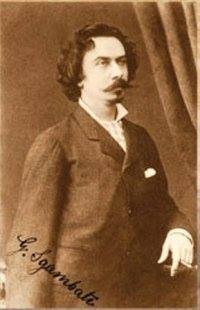
Giovanni Sgambati (1841-1914)
Here’s his knucklebusting Piano Concerto – performed by Jorge Bolet, no less:
https://www.youtube.com/watch?v=37dlnzTSF-s;
George Dyson (1883-1964)
His oratorio after Chaucer, “The Canterbury Pilgrims”:
https://www.youtube.com/watch?v=BNxdVTS9028;
and György Ligeti (1923-2006)
“Lux Aeterna” (with creepy fractal):
https://www.youtube.com/watch?v=-iVYu5lyX5M.
Happy birthday, boys. Wish I had time to write about any one of you!
More about fractals here:
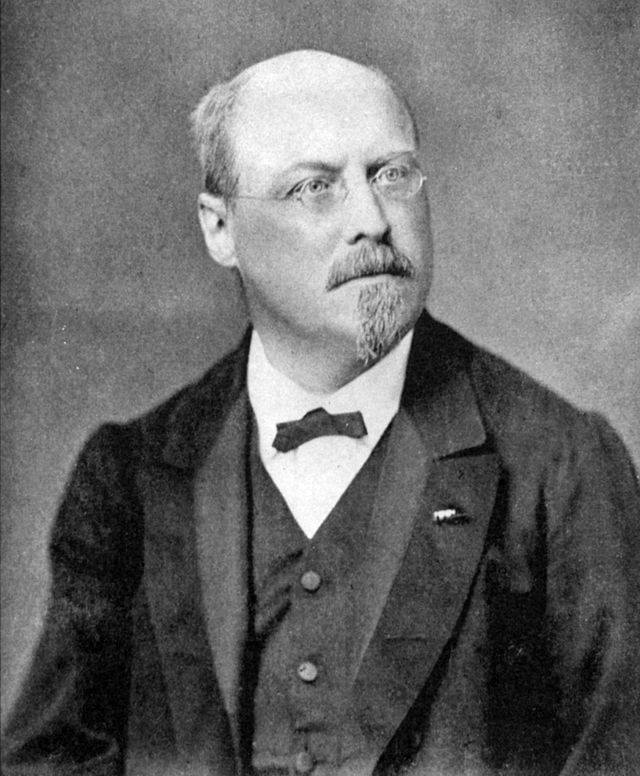
PHOTOS (clockwise from left): Sgambati; Dyson; and Ligeti, channeling Klaus Kinski
by
There’s one story about the German-Swiss composer Joachim Raff that I find so endearing. When Raff learned that Franz Liszt would be playing in Basel, he traveled by foot from Zurich (a distance of nearly 50 miles), through a driving rain, only to discover upon reaching the venue that the concert had sold out.
Word reached Liszt of the young man’s predicament, and the great pianist, in yet another of his legendary acts of generosity, had a chair put up on the stage so that Raff would be able to enjoy the recital – which he did, sitting there, grinning like an idiot, amidst a widening pool of water.
Raff became Liszt’s assistant at Weimar, where he orchestrated a number of the elder composer’s works, until Liszt gained the technique and confidence himself; after which time, Liszt went back and revised many of the earlier pieces. In turn, Liszt staged the premiere of Raff’s opera “King Alfred” (though, because of an illness in the family, he had to hand over the conducting duties to Raff himself).
Raff must have been a singularly likable figure. His was the rare instance of a composer who was accepted in both camps, on either side of the seemingly unbridgeable divide that separated the “absolute” music of Mendelssohn and Schumann and the “program” music – the so-called “Music of the Future” – of Liszt and Wagner.
In 1878, Raff became the first director of the Hoch Conservatory in Frankfurt, where he hired Clara Schumann, among the eminent faculty, and initiated a class for female composers.
During his lifetime, Raff was one of the best-known German composers. It’s unfortunate that so little of his music endures in the public memory (beyond, perhaps, the “Cavatina” for violin and piano), but the symphonies, in particular, have not aged well.
Raff’s practice was to choose a promising program – for instance, in the Symphony No. 5, the “Lenore” Symphony, he selected an overheated ballad by Gottfried August Bürger, about a maiden who is swept away amidst jeering specters by the phantom of her former lover – and then he would negate all the drama by rendering the symphony in classical form. In other words, the story would be straightjacketed in order to suit the requirements of form, rather than the other way around – which would be easier to forgive if the symphony weren’t nearly an hour long.
However, he did leave behind some very impressive music. You just really have to look for it. I hope you enjoy these “diamonds in the Raff”:
Piano Concerto in C minor:
“Ode to Spring”:
Happy birthday, Joachim Raff (1822-1882).
Aaron Copland (93) Beethoven (95) Composer (114) Film Music (144) Film Score (143) Film Scores (255) Halloween (94) John Williams (195) KWAX (229) Leonard Bernstein (104) Marlboro Music Festival (125) Movie Music (159) Mozart (91) Opera (213) Philadelphia Orchestra (89) Picture Perfect (174) Princeton Symphony Orchestra (109) Radio (88) Ross Amico (244) Roy's Tie-Dye Sci-Fi Corner (290) The Classical Network (101) The Lost Chord (269) Vaughan Williams (105) WPRB (397) WWFM (881)
5 responses