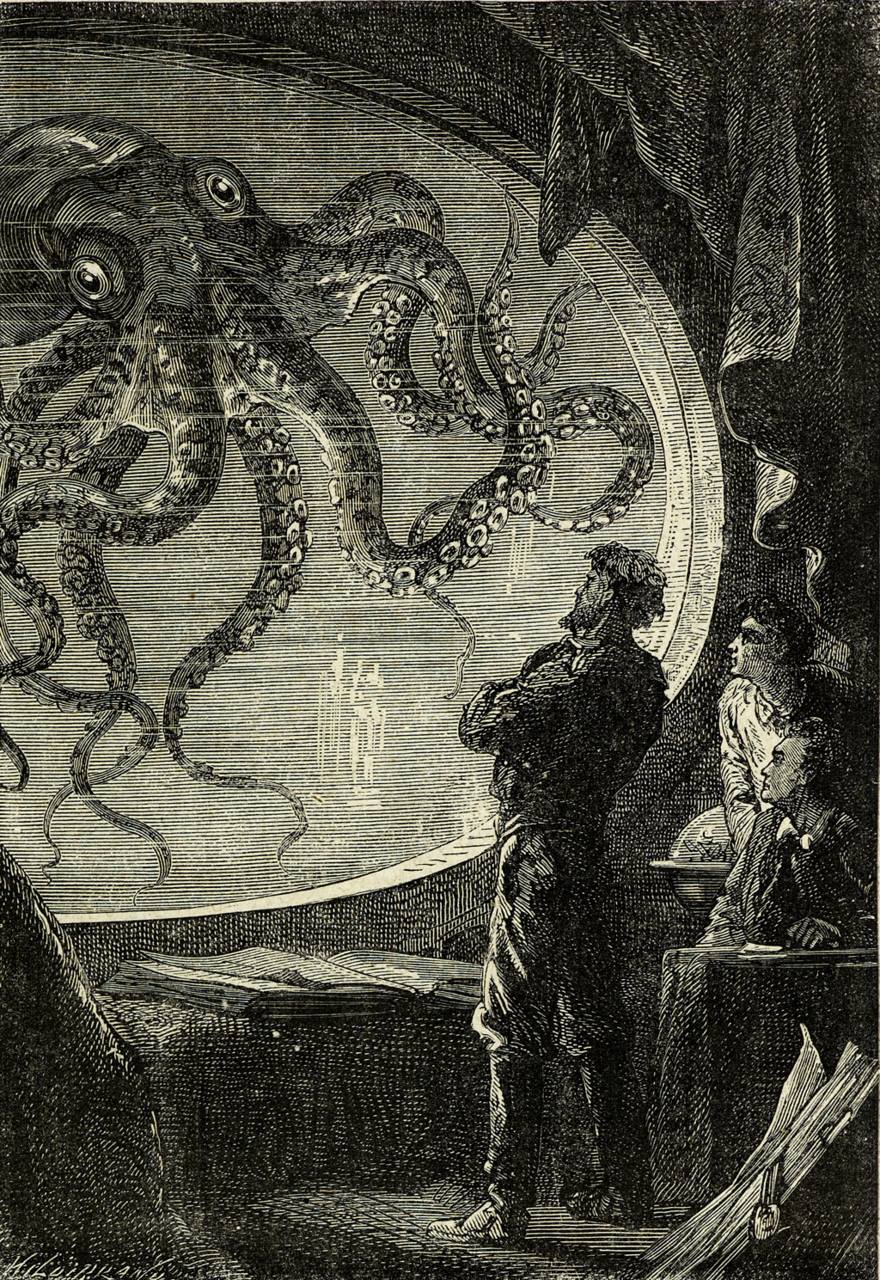
This week on “Picture Perfect,” we begin the New Year with science, progress and adventure, courtesy of Jules Verne.
We’ll hear music from four films inspired by Verne novels, including “20,000 Leagues Under the Sea,” composed by Paul J. Smith; “In Search of the Castaways,” by William Alwyn; “Journey to the Center of the Earth,” by Bernard Herrmann; and “Around the World in 80 Days,” by Victor Young.
Grab your gear and climb aboard, tonight at 6 ET, with a repeat tomorrow morning at 6, or listen to it later as a webcast at http://www.wwfm.org.
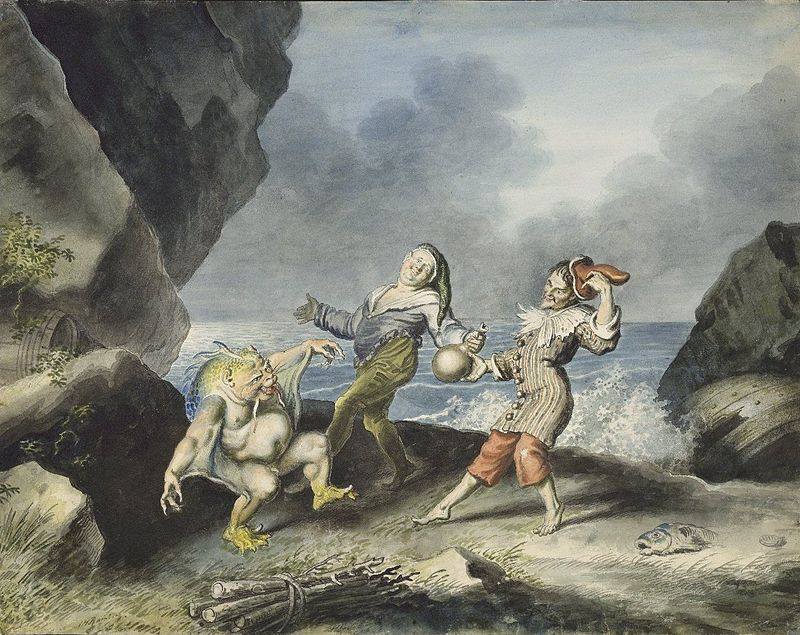
New Jersey Symphony Orchestra music director Jacques Lacombe promises to transform the winter of our discontent to glorious summer, with a great deal more than the lascivious pleasing of a lute. The orchestra will embark on a three-week musical exploration of Shakespeare-inspired works, January 9-25, including an appearance at Princeton’s Richardson Auditorium, on January 16, and two performances at the State Theatre in New Brunswick, on January 10 & 25.
Violinist Sarah Chang will appear in all six venues that will be hosting the series (including NJPAC in Newark, bergenPAC in Englewood, the Count Basie Theatre in Red Bank, and the Mayo Performing Arts Center in Morristown), playing a suite by David Newman from Leonard Bernstein’s “West Side Story.” “West Side Story,” obviously, is a musical update of “Romeo and Juliet.”
Also on the series will be such favorites as Tchaikovsky’s “Romeo and Juliet Fantasy Overture” and selections from Prokofiev’s ballet on the same subject, but also concert rarities such as Elgar’s “Falstaff,” Erich Wolfgang Korngold’s suite from “Much Ado About Nothing,” Sergei Taneyev’s completion of Tchaikovsky’s love duet from a projected opera on “Romeo and Juliet,” and selections from Samuel Barber’s “Antony and Cleopatra.”
For more information, check out my article in today’s Trenton Times:
Be not afeard; the isle is full of noises,
Sounds and sweet airs, that give delight and hurt not.
Sometimes a thousand twangling instruments
Will hum about mine ears, and sometime voices
That, if I then had waked after long sleep,
Will make me sleep again: and then, in dreaming,
The clouds methought would open and show riches
Ready to drop upon me that, when I waked,
I cried to dream again.
Philadelphia Mummers are by no means common knowledge once you venture outside the area. It is, after all, a peculiar custom: a bunch of contractors dressing up in feathers and sequins so that they can strut and play banjoes on Broad Street in freezing temperatures, as they compete against one another for bragging rights in this very Philly New Year’s Day tradition.
What appears to be even less known to Philadelphians is the tradition of Old World mumming, in which amateur performers careen from door to door at Christmas or Midsummer, enacting traditional plays. These mummer’s plays feature fantastic characters such as St. George and the Dragon, Robin Hood, the Turkish Knight and Beelzebub. Typically, at the end of the play, a “doctor” brings a slain character back to life. The actors wear outlandish, often unsettling costumes and masks.
The custom of mumming in Britain dates back to at least the 16th century, though the wider practice appears to be of ancient origin. It was the Swedes who brought it to Philadelphia in the 17th century. Participants aren’t supposed to fire guns in the air anymore, but it still happens. It’s best to stay away from open windows on New Year’s Eve.
Lots of fun stuff about the Philadelphia Mummers here:
New Year’s Eve, my nemesis. The most depressing day of the year.
Fortunately, I’ll be working tonight, so I’m hoping I’ll be able to ignore all the hollow attempts at merriment. But it hasn’t happened so far, that I can remember. Once, I even flew through the night to Europe, hoping to confound the natural passage of time. But it’s always midnight somewhere, and the flight attendants vexed me with a champagne toast.
At any rate, I hope whatever you are doing, you have a better attitude, and that you are all safe and genuinely happy with your New Year’s lot.
Don’t get me wrong, I’m pretty happy with my life. It’s just New Year’s I hate!
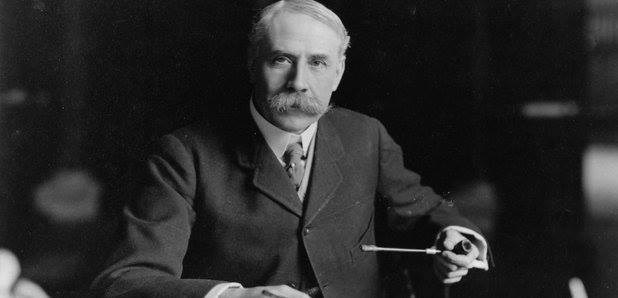
To coat the bitter pill, I’d like to talk for a minute about Sir Edward Elgar. For over a hundred years, musicologists have puzzled over the hidden theme Elgar claims to have left off of his “Enigma Variations” – which, come to think of it, is a great New Year’s Eve piece, since it celebrates friendship as an antidote to what the composer claimed was his sense of loneliness as an artist.
“Through and over the whole set, another and larger theme ‘goes,’ but is not played,” Elgar wrote.
Since then, theories as to the theme’s identity have ranged from “Rule, Britannia” to the “Dies Irae” to “Pop Goes the Weasel.” Here’s an interesting article from 1991 that posits the elusive theme may have been taken from Mozart’s “Prague” Symphony.
In this clip, someone actually uses the opening of the “Enigma” to harmonize “Auld Lang Syne.”
What do you think?
Ernest Tomlinson takes this theory about as far as it can go, suggesting that “Auld Lang Syne” underlies not only Elgar’s magnum opus, but also most of the world’s great masterpieces. He puts his money where his mouth is, with tongue planted firmly in cheek, by sending up no less than 152 familiar melodies in his “’Auld Lang Syne’ Variations.’”
Here are some more souvenirs from Marvin Rosen’s 25-hour “Viva 21st Century” marathon, which was broadcast over WPRB 103.3 FM. As you can see, the homestretch was not a lonely one. More photos on Marvin’s page, which for some reason I am having a hard time linking.


5 responses