• Horror Legends Vincent Price & Christopher Lee

    Horror Legends Vincent Price & Christopher Lee

    by 

    in
    2 responses

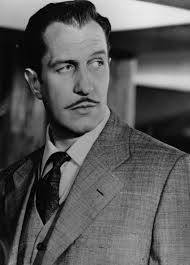
    What are the odds of two horror icons being born on the same day? It’s like Jascha Heifetz and Fritz Kreisler sharing a birthday (February 2), or Ferruccio Busoni and Sergei Rachmaninoff (April 1). Today is the birthday of both Vincent Price (1911-1993) and Christopher Lee (born 1922).

    Though he’d been a professional actor since the 1930s (he appeared as Sir Walter Raleigh in “The Private Lives of Elizabeth and Essex,” with Bette Davis and Errol Flynn, in 1939), Price settled into the horror genre in the 1950s, with films like “House of Wax,” “The Fly,” “The House on Haunted Hill,” and “The Tingler.”

    In the 1960s, he became closely associated with Roger Corman, appearing in a series of films loosely inspired by the stories of Edgar Allan Poe.

    Of course, he turned in great performances in a number of extra-genre classics, such as “Laura,” “The Baron of Arizona,” and the rib-tickling “Champagne for Caesar,” but he will always be remembered as Prince Prospero, Dr. Phibes and the narrator on Michael Jackson’s “Thriller.”

    He was an actor blessed with campy self-awareness (though he could dial it down when required), and he was quick to capitalize on both his image and his indelible voice.

    Though he too has played a broad range of roles over the course of a career which has spanned more than six decades, Christopher Lee will always be linked to the Hammer Studios horror explosion of the 1950s and ‘60s. Younger fans will recognize him as Count Dooku, from the even more horrid “Star Wars” prequel trilogy, and as the turncoat wizard Saruman, in Peter Jackson’s self-indulgent “The Lord of the Rings.”

    When Lee determined to become an actor, his plan was to model himself on Conrad Veidt, the German Expressionist icon who had created Cesare the Somnambulist in “The Cabinet of Doctor Caligari” and later played a string of refined though despicable Nazis – notably Major Strasser in “Casablanca” – in Warner Brothers films of the 1940s.

    Lee’s imposing stature and bass-baritone voice make him a natural for screen villainy – though some of my favorite Lee roles are heroic (for instance, that of the Duke de Richelieu, the gentleman occultist who matches wits with a band of Satanists in “The Devil Rides Out”).

    Thankfully, at 92, Lee is still very much with us, with recent appearances in “The Hobbit,” Martin Scorsese’s “Hugo,” and Tim Burton’s “Alice in Wonderland.”

    Fun fact: it had at one point been Lee’s ambition to become an opera singer. In fact, it was Jussi Björling who recommended Lee audition for the Swedish Opera. Lee did just that and was accepted. Unfortunately, he was unable to afford the training, but whenever he filmed in Scandinavia, he made it a point to go slumming with Swedish amateur companies under an assumed name.

    His singing talent has been sinfully underutilized on film, though he does get to belt out a couple of numbers in “The Return of Captain Invincible,” also starring Alan Arkin. The film, with songs by the composer and lyricist of “The Rocky Horror Picture Show,” was widely panned.

    Happy birthday, Vincent Price and Christopher Lee!

    Lee in “The Return of Captain Invincible:”

    Price playing Mendelssohn’s “The War March of the Priests” in “The Abominable Dr. Phibes:”
    https://www.youtube.com/watch?v=FEIjP_k-u_g


  • Memorial Day Remembrance Herrmann’s Fallen

    Memorial Day Remembrance Herrmann’s Fallen

    by 

    in
    4 responses

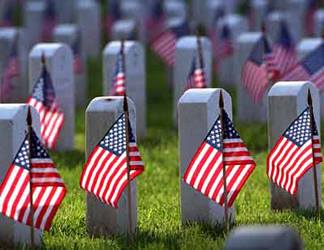
    It’s Memorial Day. Before you start in with the burgers and the quoits and the three legged-race and the gumboot toss and all that, remember how lucky we are, and those who laid down their lives believing they were doing something for the greater good.

    Bernard Herrmann is most celebrated for his film scores, in particular those he wrote for Alfred Hitchcock, though he did much brilliant besides. Here’s a concert piece he wrote in 1943, called “For the Fallen,” in a fascinating historical document with the composer conducting the New York Philharmonic:

    Here it is again in a modern performance, with more up-to-date sound:

    Listen to both if you can. Happy Memorial Day.


  • Blitzstein’s Airborne Symphony on The Lost Chord

    Blitzstein’s Airborne Symphony on The Lost Chord

    by 

    in
    3 responses

    This Sunday night on “The Lost Chord,” we’ll highlight a single work: Marc Blitzstein’s “Airborne Symphony.” Commissioned by the U.S. Army, while Blitzstein was serving in its air force, the work traces the evolution of flight from its conception in theory to its use in modern warfare.

    The work was envisaged by the composer as a big symphony on the theme of “the sacred struggle of airborne free men of the world… to crush the monstrous fascist obstructionist in their path.”

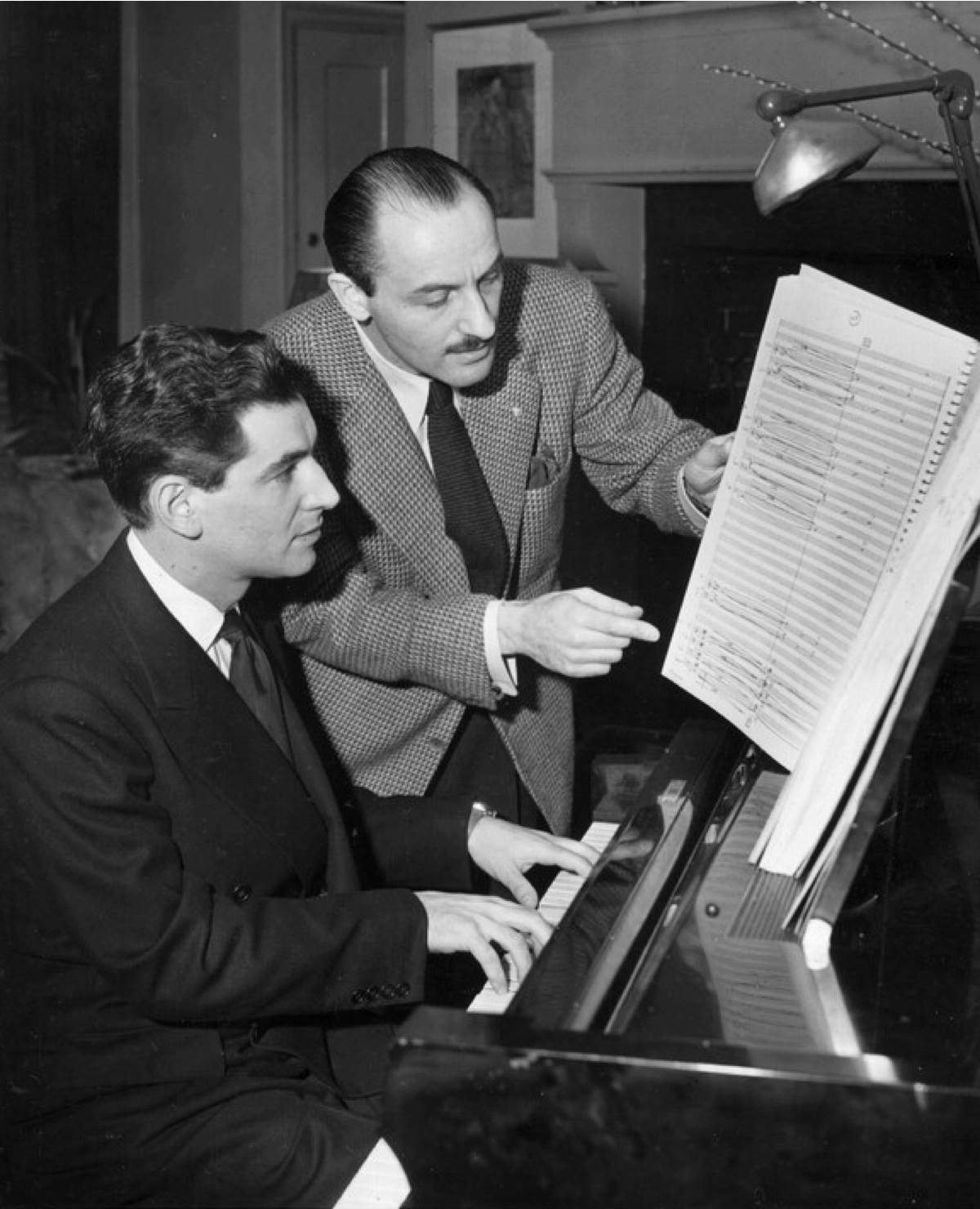
    Blitzstein began the work in 1943, at the height of World War II. It would not be completed until after the war, in 1946. Leonard Bernstein conducted the premiere virtually while the ink was still wet on the page. He recorded it twice. We’ll be listening to the second of the two recordings, from 1966. It features Orson Welles as the narrator, and vocal soloists with the New York Philharmonic and men of the Choral Arts Society.

    Join me for this forgotten relic of WWII. It’s “Flight of Fancy” this week on “The Lost Chord.” You can hear it tonight at 10 ET, with a repeat Thursday night at 11, or listen to it later as a webcast at http://www.wwfm.org.

    PHOTO: Blitzstein (standing) with Bernstein


  • TCM Memorial Day War Movie Marathon Picks

    TCM Memorial Day War Movie Marathon Picks

    by 

    in
    One response

    Turner Classic Movies: TCM has commenced its annual three-day war movie marathon for Memorial Day weekend. While I can’t say that it’s my favorite genre, I can recommend a number of TCM’s selections.

    “Objective, Burma!” (today, 3:15 p.m. ET) Errol Flynn trades his sword for a machine gun and parachutes behind enemy lines to take out a Japanese post. It may not sound like your cup of tea, but believe it or not, it is one of Flynn’s most exciting films.

    “No Time for Sergeants” (tomorrow, 8 p.m. ET) Watch this alongside “A Face in the Crowd” to understand the full range of Andy Griffith’s talent. If you’re a fan of Mayberry, this one likely will be more your speed (Griffith plays a manipulative SOB in the other), with a number of premonitions, especially one scene which pairs Griffith with future co-star Don Knotts. Myron McCormick is especially fun as Griffith’s long-suffering drill sergeant.

    “Dawn Patrol” (Monday, 4 a.m. ET) Errol Flynn and David Niven are WWI flyers; Basil Rathbone is their commanding officer. With that cast, as far as I’m concerned, this film can do no wrong.

    “Sergeant York” (Monday, 7:30 a.m. ET) One part patriotic flag-waver and two parts hillbilly hootenanny. Inspired by the real-life exploits of backwoods sharpshooter Alvin York, the film provides Gary Cooper with one of his best roles. It’s especially interesting when York struggles to reconcile pacifism with duty to one’s country. But it’s really the hillbilly antics that make it worth watching.

    “Friendly Persuasion” (Monday, 10 a.m.) Another Gary Cooper classic. This time Coop plays a Quaker who must come to terms with a war (in this case, the Civil War) which again challenges his pacifist beliefs. Fun domestic interactions with Dorothy McGuire.

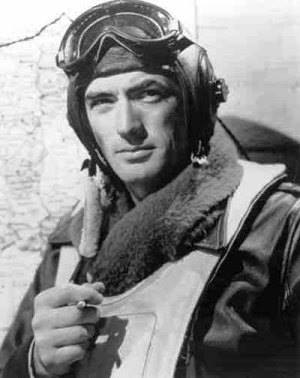
    “Twelve O’ Clock High” (Monday, 8 p.m.) Gregory Peck whips into shape a bad-luck unit of high altitude daylight bombers. An examination of the toll combat takes on men, it’s a war movie with more soul and depth than most.

    “The Best Years of Our Lives” (Monday, 10:30 p.m.) One of my all-time favorite classic films, about American soldiers trying to readjust to civilian life following WWII. Poignant and beautiful, with a real sense of what made this country great.

    Obviously, my recommendations won’t necessarily correspond to somebody else’s preferences. (Some of the more manly among you will undoubtedly prefer tonight’s line up of “The Dirty Dozen,” “Where Eagles Dare” and “Kelly’s Heroes.”)

    Anybody care to share their favorite war movies? Sound off below.


  • WWII Film Scores Memorial Day Special

    WWII Film Scores Memorial Day Special

    by 

    in
    2 responses

    Today is Richard Wagner’s birthday. Perhaps in his honor, I am going to go his megalomania one better by completely ignoring the fact and using the space for shameless self-promotion!

    This week on “Picture Perfect,” as we near Memorial Day, the focus will be on music from World War II classics.

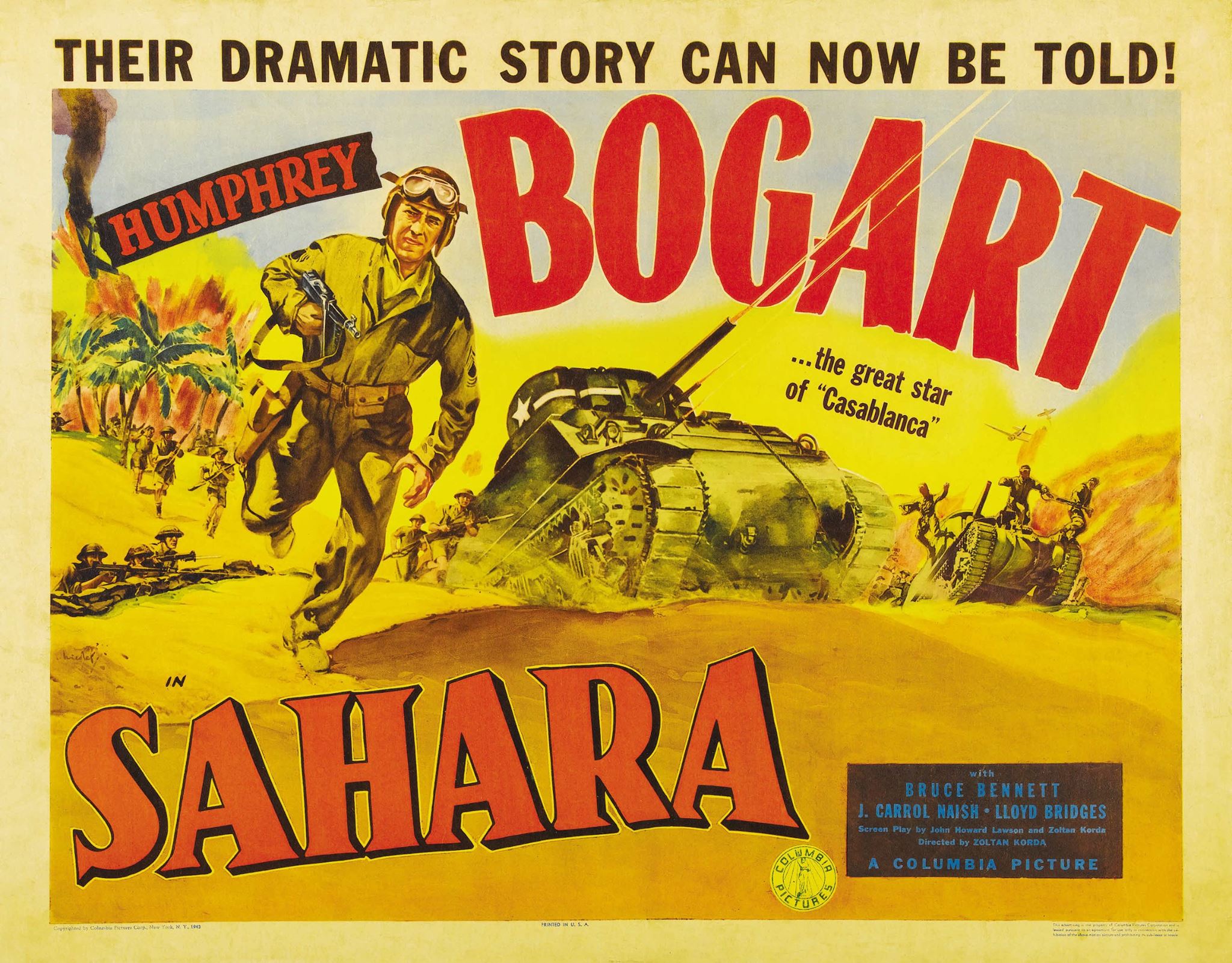
    Among the selections will be a new release – and a very fine one – on the Intrada label of music by Miklós Rózsa. The album is called “The Man in Half Moon Street,” and includes re-recordings of some of his underrepresented though certainly deserving scores, among them, “Valley of the Kings,” “The Strange Love of Martha Ivers,” and “Sahara.”

    In “Sahara,” Humphrey Bogart plays a WWII tank commander who holes up at a desert well and uses his apparent position of power to delay a parched German battalion from participating in the First Battle of El Alamein. Allan Wilson conducts the Royal Scottish National Orchestra, in what is truly the best project of its kind I have encountered in quite some time. Re-recordings so often lack the punch of the originals, but here is Rózsa is all his glory, sounding wholly idiomatic and presented in vivid digital splendor.

    Jerry Goldsmith’s music for “Patton” should require no introduction. The film is a bona fide classic, a winner of seven Academy Awards, including Best Picture. Unfortunately for Goldsmith, at that stage of his career, he was always a bridesmaid but never a bride. George C. Scott notoriously rejected his Oscar for Best Actor; he should have given it to Goldsmith.

    Errol Flynn may seem an unlikely choice to play a U.S. Army captain, but he does just that in “Objective, Burma!” Flynn received criticism for remaining in Hollywood during the war, but the Warner Brothers publicity machine did what it could to hush up the fact that the world’s most famous swashbuckler had tried to enlist but was rejected on medical grounds. “Objective, Burma!” infuriated Churchill, and the film was actually banned in Britain for what was perceived as the Americanization of a largely British, Indian and Commonwealth conflict. The rousing score, also nominated for an Oscar, was by Franz Waxman.

    “The Guns of Navarone,” adapted from the novel of Alistair MacLean, is one of the all-time great adventure films. A team of Allied military specialists – played by Gregory Peck, David Niven and Anthony Quinn, among others – undertake a mission to blow up some very big Nazi guns trained over the Aegean Sea. Dimitri Tiomkin pulled out all the stops for his Oscar-nominated music. The recording features a spoken introduction by James Robertson Justice, who plays Commodore Jensen in the film.

    Join me for these scores from World War II classics on “Picture Perfect,” music for the movies, this Friday evening at 6:00 ET, or listen to it as a webcast, at http://www.wwfm.org.


Tag Cloud

Aaron Copland (93) Beethoven (95) Composer (114) Film Music (144) Film Score (143) Film Scores (255) Halloween (94) John Williams (195) KWAX (229) Leonard Bernstein (104) Marlboro Music Festival (125) Movie Music (159) Mozart (90) Opera (212) Philadelphia Orchestra (89) Picture Perfect (174) Princeton Symphony Orchestra (109) Radio (88) Ross Amico (244) Roy's Tie-Dye Sci-Fi Corner (290) The Classical Network (101) The Lost Chord (269) Vaughan Williams (105) WPRB (397) WWFM (881)

DON’T MISS A BEAT

Receive a weekly digest every Sunday at noon by signing up here


RECENT POSTS