I can’t believe it’s been two months already since the Fisher Center for the Performing Arts announced that the focus of this summer’s Bard Music Festival will be “Mozart and His World.” The festival, now in its 36th year, will we be held at Bard College in Annandale-on-Hudson, NY, August 7-16. The fact that I didn’t share the news immediately is attributable to several factors:
Firstly, I’m sorry, Mozart may have been one the greatest musical geniuses who ever lived – and he wrote some music I would never want to be without (e.g. “The Marriage of Figaro,” an opera I like to say basically saved my life, or least got me through a very rough time) – but the idea of two weekends of his music doesn’t exactly thrill me.
In the past, I wouldn’t have considered it an issue, since the “and His World” qualifier ensured there would be plenty of fascinating discoveries by the subject’s contemporaries, those who influenced him, and those he in turn influenced.
Also, historically, Bard has been exceptional in digging deep into composers’ basements and turning up neglected scores from cobwebbed corners of their attics. This year, alas, seems to be a little disappointing in these regards.
For one thing, I was hoping the programs would mix it up a bit more and cast some light into the future. After all, there are so many pieces influenced by or written in tribute to Mozart. One program will include Tchaikovsky’s “Mozartiana” – hardly a rarity, but at least it will be presented in a lesser-heard piano version – though I would expect the concerts to also weave in works such as Jean Françaix’s “Hommage à l’ami Papageno” for wind ensemble or, say, Francis Poulenc’s Concerto for Two Pianos, with its clearly Mozartian slow movement. If not those works specifically, perhaps a few like them.
Of course at Bard, you never know everything you’re going to get until the actual, physical program goes to print. This early in the process, what’s given on the website is frequently but a sketch. But I imagine the major works are in place.
Anyway, for all my grousing, I will be there for at least some of it, and once I am in the concert halls and into the music, I know I will have a good time, regardless, even if I can’t imagine buying a ticket based on being able to hear the “Prague Symphony” again.
Unquestionably, there will be rarities: a Michael Haydn mass, selections from a Salieri opera, a Clementi piano sonata that contains the germ for Mozart’s overture to “The Magic Flute.” But what about the Mozart-Salieri collaboration “Per la Ricuperata Salute di Ofelia,” rediscovered as recently as 2016? How about Rimsky-Korsakov’s one-act opera “Mozart and Salieri?” Or Reynaldo Hahn’s “Mozart?”
As always with these things, people will have their own ideas, and I know I should be thankful for anything this group organizes – and I am! But there’s no way I can pretend to be anywhere near as pumped for a Mozart festival as I was for those devoted to past subjects, such as Prokofiev, Sibelius, Rimsky-Korsakov, Berlioz, Vaughan Williams, Bohuslav Martinů, Carlos Chávez, and Erich Wolfgang Korngold.
Okay, I’ve been putting it off, but now at last I come to the elephant in the room. I so badly do not want to even address it, but there’s the unfortunate quagmire through which co-artistic director Leon Botstein – also president of Bard College since 1975 – is currently slogging. If you don’t already know it, Botstein is in the Epstein files. Not with anything like the same frequency as the President of the United States, mind you, or, from what we know so far, with anywhere near the same degree of skeeviness. Actually, it doesn’t appear there’s any skeeviness at all. But the timing couldn’t be worse. The excrement hit the fan just before this year’s festival would have to be announced.
The New York Times has covered Botstein’s interactions with Epstein extensively, but a lot of “journalists,” I’ve noticed, in particular those writing for the local papers of the Hudson Valley, seem to have their knives out, through suggestive phraseology and loaded words. The last thing Bard needs, in this sensitive situation, is for anyone to be striking sparks.
I hasten to add, although Botstein is kind of a hero to me, I am in no way discounting the real and lasting trauma experienced by any of Epstein’s victims or that of anyone else who has suffered sexual abuse in their personal lives or at the hands of anyone on the faculty of the college itself (which has been alleged; after all, it is a college, and there are often abuses of authority at such institutions). There have been no allegations of Botstein himself participating in any illegal behavior.
However, one of Epstein’s victims made an interesting point in an interview when she stated that the fact that Epstein was able to attract someone as estimable as Botstein to his sphere – and Botstein is FAR from the only one – it lent to an illusion of legitimacy, so that she and others like her struggled with the disconnect between what they were seeing, this kind of acceptance, and what they were actually experiencing.
But Botstein himself appears to be clean, and the man himself has done so much for not only music, but for education, for social causes, and for the school itself. It would be unfortunate if he were forced out for the sin of trying to elicit additional funds from a millionaire, who made an unsolicited $75,000 donation to the college.
But an independent investigation is ongoing. I will stand by the findings, as I hope the student activists will. There is a group on campus raising hell as only young people can.
Botstein, who is brilliant and brilliantly articulate, is conspicuously absent, or downplayed to the extent that I don’t see him mentioned anywhere in the Bard promotional material. I’m hoping he is not forced out of the festival altogether, as there is no one currently involved that could ever fill his shoes.
He’s still attached to this year’s opera production, which precedes the festival, as part of Bard SummerScape, a larger celebration of the arts that spans June 25-August 16. I already have my ticket to hear him conduct Richard Strauss’ “Die ägyptische Helena” (“The Egyptian Helen”). The opera runs July 24-August 2.
Furthermore, I will hear him at Carnegie Hall this Thursday, with vocal soloists and the American Symphony Orchestra, as he introduces and conducts Berlioz’s rarely-encountered edition of Carl Maria von Weber’s “Der Freischütz.”
One of the reasons I feel so disheartened by my own reaction to this year’s music festival – a reaction that I suspect will be shared by others attracted to Bard for its advocacy of unusual and neglected repertoire – is that I do not want the college to misconstrue my or anyone’s lack of enthusiasm and/or low attendance for distaste for, or protest against, Botstein.
Be that as it may, you’ll find the program, as it currently stands, at the links below. If you’re a Mozart nut, I hope you will consider attending.
Long live the Bard Music Festival. I’m hoping we’ll still have a few more years of Botstein, who will turn 80 in December, but appears to be as vital as ever, and in comparatively good health, at least on the evidence of what I’ve seen at Bard and at his concerts in New York City.
Next year, another neglected or underappreciated composer, please!
——-
Bard Music Festival
https://fishercenter.bard.edu/what-we-do/bard-music-festival/
Bard SummerScape, including Strauss’ “The Egyptian Helen”
https://fishercenter.bard.edu/what-we-do/summerscape/
-
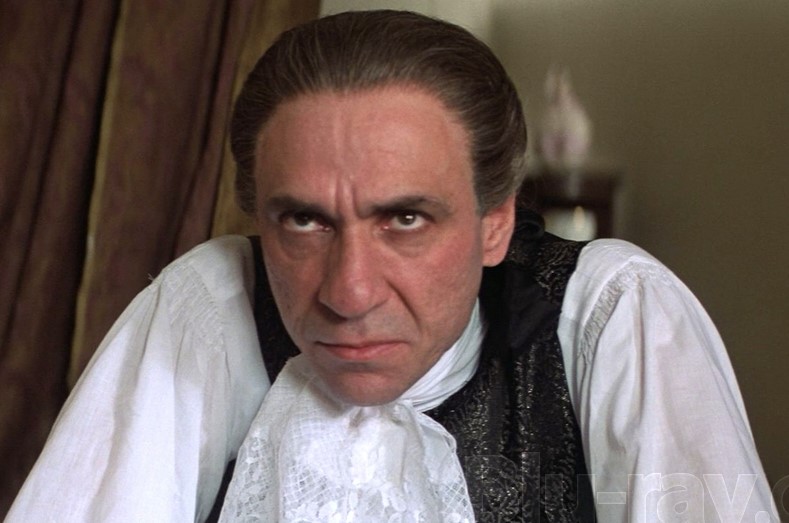
Mozart at Bard; Botstein in the Bardo
by
-
Weber Operas: 200 Years of “Oberon;” “Der Freischütz” in Concert
by
3 responses
In this year of Carl Maria von Weber anniversaries – the influential German composer died 200 years ago (on June 25, 1826, to be exact) – it’s worthwhile to note the bicentennial of his final opera, actually a singspiel (an opera with spoken dialogue), “Oberon,” which was first performed on this date at Covent Garden, a little more than two months before his passing.
Oberon, of course, is king of the fairies, as we all know from “A Midsummer Night’s Dream.” Weber also imports Puck and Titania. But from there James Robinson Planché’s libretto (which George Grove, of Grove Dictionary fame, described as “unmitigated awfulness”) goes its own way. The story combines elements of Christoph Martin Wieland’s German poem “Oberon” and the 13th century French romance “Huon de Bordeaux.”
In Shakespeare, the fairy royals quarrel over the guardianship of an Indian prince (and accusations of infidelity). Here, Oberon refuses to reconcile with his queen until a faithful human couple is found. Puck directs his attention to Huon, a knight of Charlemagne, charged with assassinating the Caliph’s “right-hand man,” who is engaged to marry the Caliph’s daughter, Reiza. In the meantime, Huon and Reiza both have visions that draw them to one another. A number of trials ensue, including shipwreck, abduction by pirates, and enslavement. The plot thickens, though ultimately a happy ending is achieved, thanks to some blasts on Oberon’s magic horn.
Weber’s “Oberon” overture still appears regularly on orchestra programs and of course on classical radio. The delicacy of some of the music anticipates Mendelssohn’s more famous treatment of the fairies. Mendelssohn pays more overt tribute to his predecessor by actually quoting a theme from the Act II finale, “Hark, the mermaids,” in his own “A Midsummer Night’s Dream” overture.
Weber was not enthusiastic about the London production, but the opera was a great success. The first performance elicited many encores. Sadly, the composer died before he could set to work on a revision. Undoubtedly, he would have overseen the translation of text and dialogue to his native tongue (work which would be undertaken posthumously by other hands).
“Oberon” was first performed in the United States later that year – it would be performed at the Metropolitan Opera between 1918 and 1921 – but if it’s encountered at all now, it’s often as a concert performance, bypassing the requirements of elaborate staging or scenery.
Here’s a performance of the overture from an electric concert given in Tokyo by George Szell and the Cleveland Orchestra in 1970. Szell was fatally ill with cancer (it was his final concert), but you would never know it from what he was able to draw from his players. Their performance of Sibelius’ Symphony No. 2, on the same program, was especially stunning.
https://www.youtube.com/watch?v=PFE0tcRDtm8
Here it is, given the Franz Liszt treatment.
https://www.youtube.com/watch?v=OyWGTWuBZww
And as an arrangement for guitar quartet by Anthony Burgess (author of “A Clockwork Orange”), who was something of a composer himself.
https://www.youtube.com/watch?v=yYetHoiCv9M
Johann Nepomuk Hummel’s “Fantasy on Oberon’s Magic Horn”
https://www.youtube.com/watch?v=-aKwy4BLekwAct II Mermaids’ chorus, transcribed by Charles-Valentin Alkan
https://www.youtube.com/watch?v=HAbgs0osOac
A complete recording of the opera
https://www.youtube.com/watch?v=rht8LHy2C4Q
A staged production (which I have yet to watch)
https://www.youtube.com/watch?v=ImXedOZXqhw
Weber’s most influential opera, of course, was “Der Freischütz” (“The Free-Shooter”), of 1821. With its pact with the devil, magic bullets, and lurid Wolf’s Glen sequence, replete with thunder and lightning, withered trees, skulls, and apparitions, it set the prototype for a more extreme branch of German Romantic opera. The work was a great favorite of Hector Berlioz.
Interestingly, Berlioz’s sympathetic arrangement of “Der Freischütz,” undertaken to meet the requirements for Parisian performance – including adaptation of spoken dialogue to recitative and orchestration of Weber’s piano piece “Invitation to the Dance” for use as a ballet (de rigueur in Paris) – will be presented in concert at Carnegie Hall this Thursday by vocal soloists and the American Symphony Orchestra conducted by Leon Botstein. I’ve already got my ticket – and I didn’t have to barter my soul to Samiel!
https://americansymphony.org/2025-2026/der-freischutz/
More about Weber, at the very least on June 25, for the bicentennial of his passing…
——-
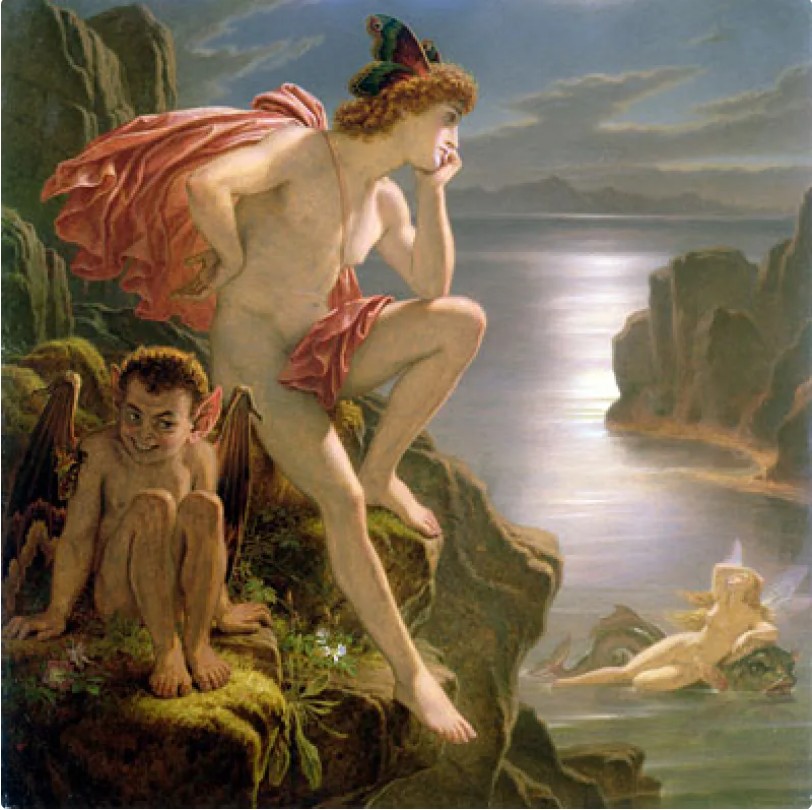
PAINTING: “Oberon and the Mermaid” (1883), by Sir Joseph Noel Paton
-
Japanese Composers in Bloom on “The Lost Chord”

by
2 responses
This week on “The Lost Chord,” nothing attracts samurai and radiation-induced thunder-lizards like cherry blossoms.
We’ll enjoy concert music by two Japanese composers – both close friends – best recognized for their work in film. Akira Ifukube studied with Alexander Tcherepnin. Though his “Japanese Rhapsody” of 1935 won first prize in an international contest judged by Albert Roussel, Jacques Ibert, and Arthur Honegger, among others, financial considerations led him to write 250 film scores. Undoubtedly, he is best known for his music for Godzilla.
Humiwo Hayasaka was Akira Kurosawa’s composer of choice, writing music for classic films such as “Rashomon” and “Seven Samurai.” He wrote over 100 film scores in all, before his early death from tuberculosis at the age of 41. Prominent Japanese composer Toru Takemitsu (who later scored Kurosawa’s “Dodes’kaden”) claimed Hayasaka as a formative influence. We’ll hear Hayasaka’s Piano Concerto, composed in 1948. The first movement is a massive elegy for the composer’s brother and all the dead of the Second World War; and the second, a contrasting movement of conspicuous playfulness.
Incidentally, Ifukube was also responsible for creating Godzilla’s trademark roar, which was produced by running a resin-covered leather glove along the loosened strings of a double bass. Experience this distinctive call as a sort of intermezzo, between works by the composer of “Godzilla” and that of “Seven Samurai” on “The Lost Chord,” now in syndication on KWAX Classical Oregon!
——–
Clip and save the start times for all three of my recorded shows:
PICTURE PERFECT, the movie music show – Friday at 8:00 PM EDT/5:00 PM PDT
SWEETNESS AND LIGHT, the light music program – Saturday at 11:00 AM EDT/8:00 AM PDT
THE LOST CHORD, unusual and neglected rep – Saturday at 7:00 PM EDT/4:00 PM PDT
Stream them, wherever you are, at the link!
https://kwax.uoregon.edu
-
April in Paris on “Sweetness and Light”
by
7 responses
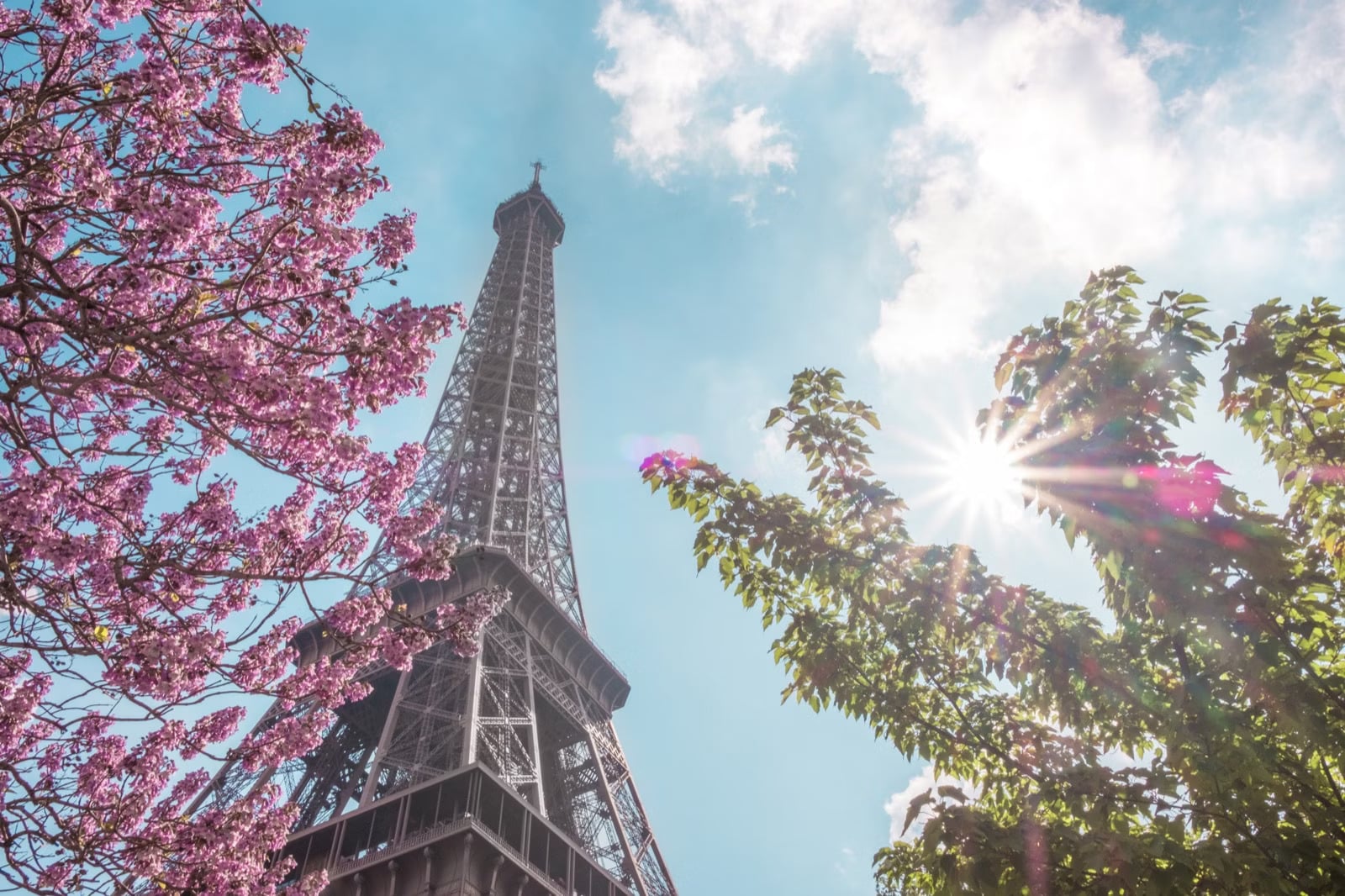
This Saturday morning on “Sweetness and Light,” it’s April in Paris.
We’ll hear April-and-Paris themed songs by Charles Trenet (“En avril, à Paris”), Georges Bizet (“Chanson d’avril”) and, of course, Vernon Duke (“April in Paris”), alongside a symphony for wind instruments by Charles Gounod (first performed in Paris in April 1885), a love song by Erik Satie, a suite (“Paris”) by British light music master Haydn Wood, and a work by Darius Milhaud as good as spring itself.
It will be an hour of cafés and croissants, blossoms and bisous, on “Sweetness and Light,” this Saturday morning at 11:00 EDT/8:00 PST, exclusively on KWAX Classical Oregon!
Stream it, wherever you are, at the link:
https://kwax.uoregon.edu/
-
Poetry in Motion on “Picture Perfect”
by
4 responses
Time to sharpen your quill and replenish your laudanum. April is National Poetry Month. This week on “Picture Perfect,” the focus will be on poets at the movies.
We’ll hear music from “Dead Poets Society” (1989), Peter Weir’s beautiful-but-vacuous take on the transformative power of poetry, its “Goodbye, Mr. Chips” story arc made all the more poignant (and less cheap) by the passing of its beloved star, Robin Williams. Maurice Jarre, a long, long way from his Oscar-winning work on “Lawrence of Arabia,” wrote the music, which blends dulcimer and bagpipes (!) with electronics.
At least “Dead Poets Society” found a place in the hearts of the public. “Lady Caroline Lamb” (1973) did not. Sarah Miles plays Byron’s jilted lover, the wife of future prime minister William Lamb. Despite an impressive cast, which includes Jon Finch, Laurence Olivier, Ralph Richardson, and Richard Chamberlain (as Lord Byron, no less), and direction by venerable playwright and screenwriter Robert Bolt (“A Man for All Seasons”), the film received mixed reviews and tanked at the box office. The always fine Richard Rodney Bennett provided the atmospheric score.
“Il Postino” (1994) tells the story of a simple postman whose prosaic life is transformed through the power of metaphor. His model is the exiled Chilean poet Pablo Neruda, played by Philippe Noiret. The film’s writer and star, Massimo Troisi, died of a heart attack twelve hours after shooting was completed, having postponed surgery until he finished work. He was 41 years-old. Argentinian-Italian composer Luis Bacalov’s bandoneon-tinged score was honored with an Academy Award for Best Music.
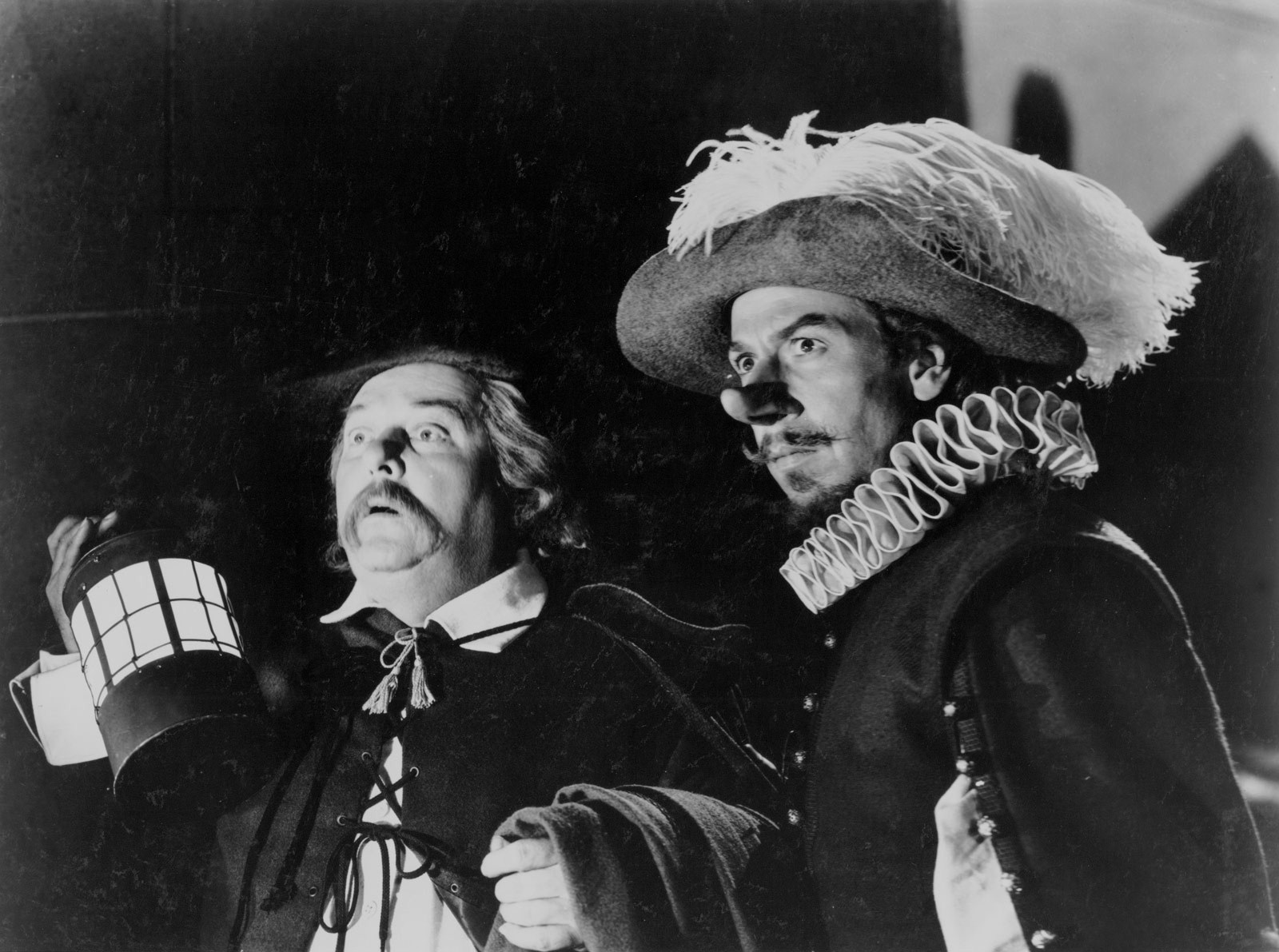
Finally, we put a point on things with the rapier wit of “Cyrano de Bergerac” (1950). José Ferrer struts his stuff as the warrior-poet with the prominent proboscis, who never wants for words, save in the presence of his beautiful cousin Roxane. Ferrer elocuted – and fenced – his way to an Academy Award for Best Actor. The score is one of Dimitri Tiomkin’s finest, and we’ll hear a recording taken from the film’s original elements, under the crisp direction of the composer.
It could be verse. Poetry warms the soul this week. It’s poetry in motion, on “Picture Perfect,” music for the movies, now in syndication on KWAX Classical Oregon!
——–
Clip and save the start times for all three of my recorded shows:
PICTURE PERFECT, the movie music show – Friday at 8:00 PM EDT/5:00 PM PDT
SWEETNESS AND LIGHT, the light music program – Saturday at 11:00 AM EDT/8:00 AM PDT
THE LOST CHORD, unusual and neglected rep – Saturday at 7:00 PM EDT/4:00 PM PDT
Stream them, wherever you are, at the link!
https://kwax.uoregon.edu
Tag Cloud
Aaron Copland (93) Beethoven (95) Composer (114) Film Music (144) Film Score (143) Film Scores (255) Halloween (94) John Williams (195) KWAX (229) Leonard Bernstein (104) Marlboro Music Festival (125) Movie Music (159) Mozart (91) Opera (212) Philadelphia Orchestra (89) Picture Perfect (174) Princeton Symphony Orchestra (109) Radio (88) Ross Amico (244) Roy's Tie-Dye Sci-Fi Corner (290) The Classical Network (101) The Lost Chord (269) Vaughan Williams (105) WPRB (397) WWFM (881)
15 responses