Tag: Academy Awards

  • Nice Guy Ludwig Göransson Picks Up Third Oscar for “Sinners”

    Nice Guy Ludwig Göransson Picks Up Third Oscar for “Sinners”


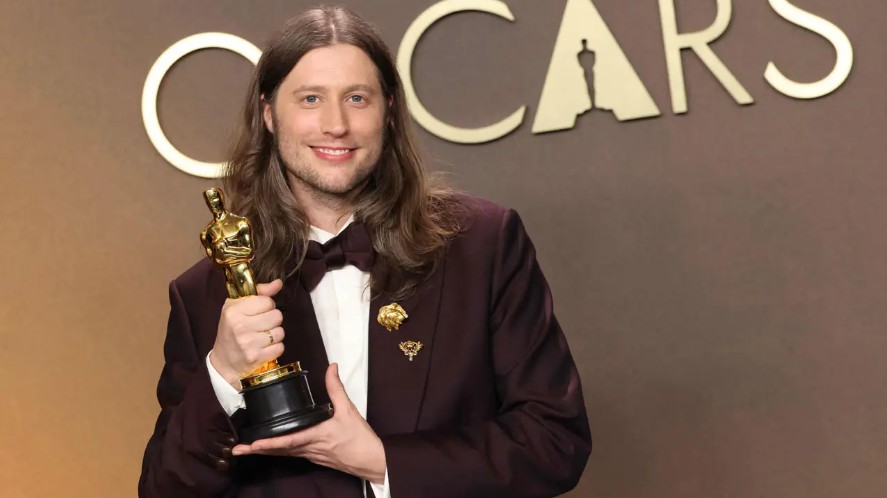
    As predicted, Ludwig Göransson received his third Academy Award last night for his bluesy score to “Sinners.”

    Summing up, then:

    Elmer Bernstein, Jerry Goldsmith, and Bernard Herrmann – 1 Oscar

    Erich Wolfgang Korngold and Franz Waxman – 2 Oscars

    Ludwig Göransson and Miklós Rózsa (composer of “Ben-Hur”) – 3 Oscars

    Okay, then!

    What does a white kid from Sweden know about the blues, one might ask? In his acceptance speech, Göransson talked about his father’s chance discovery of an album by John Lee Hooker in 1964. (“It changed my dad’s life, and he devoted his whole life to music.”) He handed off a guitar to his son when Göransson was 7. (“I loved the guitar. It became everything to me.”) It was actually a rather touching speech. As in his acceptance speeches for his previous awards, for “Black Panther” and “Oppenheimer,” he came across as sweet-natured – gentle, humble, and sincere. Good for him.

    I did think his music for “Sinners” was worlds better than his score for “Oppenheimer,” which in its manic insistence to be everything everywhere all at once (in tandem with the breakneck editing) actually made it a weaker film than it might otherwise have been. Still good enough for Best Picture in 2024.

    Göransson’s most recent win was announced by… the cast from “Bridesmaids?”

    Congratulations, Ludwig Göransson. Watch his acceptance speech here.


    In related news, “Sinners’” Miles Caton performed “I Lied to You,” one of this year’s nominees for Best Original Song. (The award went to “Golden” from “KPop Demon Hunters,” which I’m not even going to touch.)


    Host Conan O’Brien included a parody of Handel’s “Zadok the Priest” in a mock-coronation bit during his opening monologue (with the Los Angeles Master Chorale and Josh Groban, of all people, lending a voice).

    Classical music was also represented by way of “Viva Verdi!,” a documentary about a retirement home for musicians, Casa di Riposo per Musicisti – commonly known as Casa Verdi – established by the celebrated opera composer in 1896. The film was nominated in the category of Best Original Song, not for Verdi himself, but for Nicholas Pike’s “Sweet Dreams of Joy,” performed on the film’s soundtrack by soprano Ana María Martínez.


    Soprano Sonya Yancheva was in the audience (as an ambassador of Rolex!), with her husband, conductor Domingo Hindyan.

    Ballet dancer Misty Copeland came out of retirement to appear in the “Sinners” production number, causing one to wonder if it was an intentional smack in the face to Timothée Chalamet, who kicked up the ire of the ballet and opera communities a couple of weeks ago by offhandedly dismissing the art forms during a very “bro” promotional appearance chatting with Matthew McConaughey.

    Chalamet had been the front-runner for the Best Actor award. Last night, he went home with nothing but tears for his pillow. He could have benefited from a touch of Göransson’s humility.

    Conan’s send-up of Handel’s “Zadok”


    “Cicero! My Oscar!”

  • I Wish I Knew How to Quit You, Oscar

    I Wish I Knew How to Quit You, Oscar

    The favorite to win Best Actor threw opera and ballet under the bus.  The favorite to win Best Actress made the man who would become her husband get rid of his cats.  The favorite to win Best Picture – with a record-breaking 16 NOMINATIONS – is a vampire movie.  Can we just go back to Will Smith slapping Chris Rock, please?

    I’ll be loading up the cupboard with anesthetizing snack foods for my annual viewing of the Oscars, an event for me that, for most of my life, as something of a family ritual, has always been more than the sum of its parts.  I know I’ve written about my personal relationship with Oscar before – growing up in a family of ardent movie lovers that annually gathered around the tube over a banquet of shrimp, buffalo wings, chips, dips, and palate-cleansing fruits and vegetables, to take in the latest installment in the Academy Awards continuum.

    If I’m to be honest, the custom was mostly driven by my stepfather and me, who retained the minutiae of just about every movie we’d ever seen; but my mother was also game, as likely as not because it was family time and she liked to see the designer gowns.  In those days, it was essential to be tuned in at the start, for the red-carpet arrivals.  We needed to see Sean Connery (or, for Mom, Cher) climb out of that limo.  Now, to hang on to my brain cells, the red carpet, with its vapid interviewers, must be avoided at all cost.  That’s the time to figure out how to get a connection (I don’t have cable), to make sure that all the manwiches are ready to go, that all the vegetables are chopped, and to pop the hors d’oeuvres in the oven.

    The illusions of Hollywood glamor and sophistication may be no more, but even in these days of diminishing returns, there continue to be a few pleasures.  I’m not so interested in most of the actors, but every once in a while, there’s an emotional acceptance speech, or some documentarians who exhibit real passion when they finally receive their moment of recognition (even if there’s a better than 90-percent chance of them unempathetically getting played off).  I love any montages devoted to the movies itself.  Most of all, I sit riveted by the “In Memoriam” segment, in which, theoretically, all those who passed over the last year are honored.  Oscar really loused that up for a few years running, through hypercaffeinated editing and a misguided focus on live performers whose function it should be to complement the images and to honor the dead.  I’m hoping Conan O’Brien, as emcee, will take the sting out of any disappointments.

    As you can imagine, the category of Best Original Score has always held particular interest for me.  But alas, very few of the nominees write traditional orchestral scores anymore.  Most of what’s being composed today might work well in the movies themselves, but a lot of it now functions more as sound design.  Little of the nominees’ “music” could ever be recreated in a conventional concert setting.  Of that under consideration, I think only Alexandre Desplat’s “Frankenstein” is composed in the classic tradition.  But it won’t win.  Please God, don’t give it to Max Richter for “Hamnet” – a score that was so weak, I can’t get over the fact that the film was produced by Steven Spielberg. 

    That said, this is probably another Ludwig Göransson year.  Göransson previously won for “Black Panther” and the overbearing score for “Oppenheimer.”  Somehow it doesn’t seem right that Ludwig Göransson would receive three Academy Awards, when Jerry Goldsmith, Elmer Bernstein, and Bernard Herrmann only ever won one.  But here we are.  Göransson’s blues-inflected score for “Sinners” is certainly effective, even if, like most film scores these days, it won’t live on outside the film.  Those days are gone, my friends.

    Which reminds me:  in the off-chance that any filmmakers actually read this, unless you’re making “Lawrence of Arabia,” can we please bring running times down to two hours again?  I thought TikTok was supposed to be eroding everyone’s attention spans?  Of the Best Picture nominees, only Yorgos Lanthimos’ “Bugonia” (which I skipped, because I still remember “Poor Things”), “F1” (90 minutes, but still wasn’t interested), and “Train Dreams” (gorgeous, if a bit poky), kept it under two hours.  Following the wisdom of P.T. Barnum, always leave them wanting more.

    Occasionally, I’ll offer more extensive predictions.  I don’t think I’m going to bother this year.  I certainly don’t have many nominees I am rooting for.  It would make me happy to see “Train Dreams” get Best Picture, but it won’t happen in 2026.  I have to say, “Sinners” gives it a run for the money in the cinematography department, one of “Train Dreams’” strongest points.  But like the much-vaunted “Hamnet” – arguably the least interesting Shakespeare movie ever (still better than “Shakespeare in Love”) – “Sinners” only goes to the next level at the very, very end.  If it weren’t for a scene that doesn’t appear until early in the film’s credits that lends it an unexpected touch of humanity (from a vampire, no less), I don’t know that I would have thought it any more than a three-star movie.

    In fact, “Sinners” might have been a much better film without the vampires – with an absorbing set-up, interesting characters, an unhurried pace and admirable restraint (until it all goes out the window), plenty of period detail, jaw-dropping cinematography, and good acting.  For me it was a little too much like somebody got carried away because they just happened to discover metaphor.  It could have been a great movie had writer and director Ryan Coogler explored the same themes in the context of a straight gangster film.  But that would have been a totally different, reality-based movie.  And it probably wouldn’t have attracted as much interest.

    Anyway, I’ll be watching the Oscars, living in the past, hoping for some continuity with better times, and stuffing my face with comfort foods.

    Good luck to all the nominees, except Chalamet and Jessie Buckley, the cat-hater.

    ADDENDUM: I would love to see Ethan Hawke win for his tour-de-force as Lorenz Hart in “Blue Moon,” but between Chalamet and Michael B. Jordan (in his double performance in “Sinners”), there’s no question it’s going to be an uphill fight.
  • Oscar Nostalgia on “Sweetness and Light”

    Oscar Nostalgia on “Sweetness and Light”

    And the winner is… us!

    Regardless of how you may feel about the current state of the movies, the Academy Awards are always an excellent excuse to cast a nostalgic look back on Oscar history.

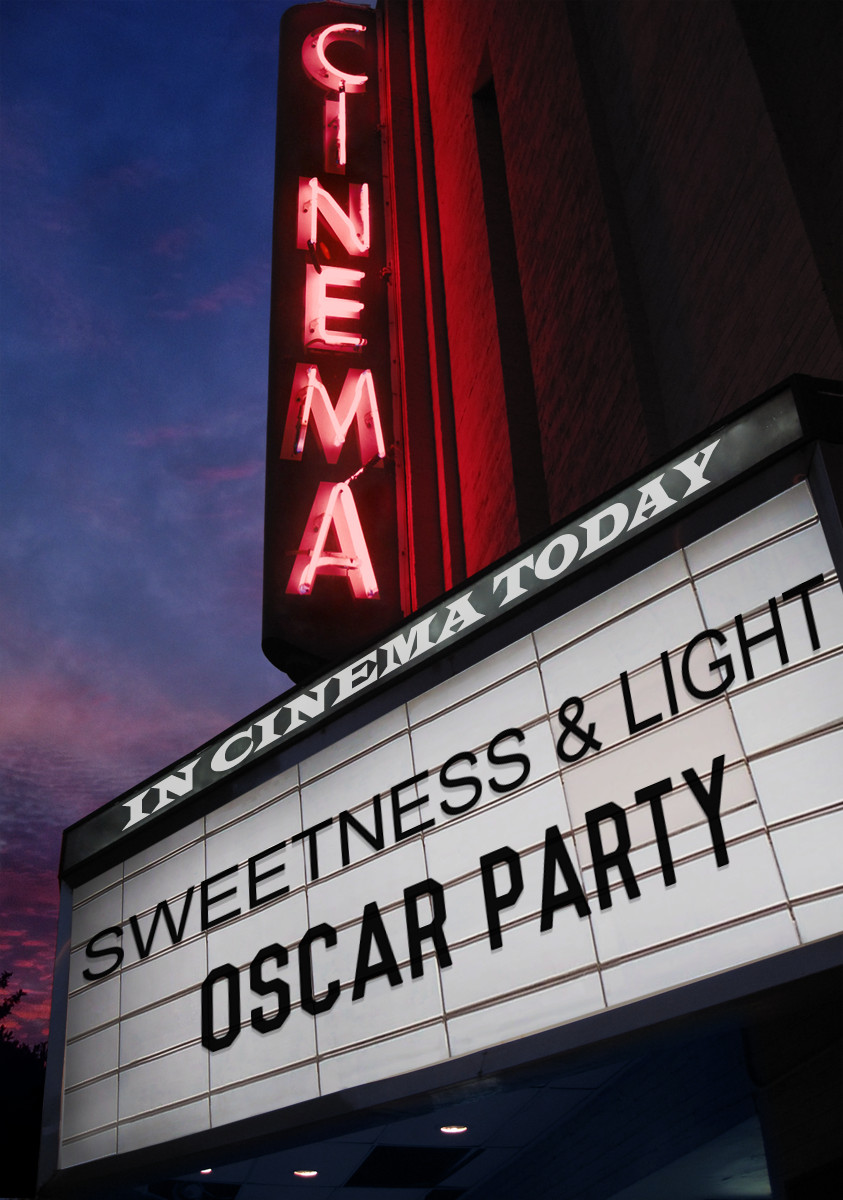
    Time was when a good film score was expected to be both melodic and memorable. This morning on “Sweetness and Light,” with the Academy Awards coming up, we’ll take a nostalgic look back to some indelible themes from classic movies of yesteryear.

    I don’t want to lay it all out in my Facebook teaser – in fact, during the course of the show, I won’t even identify the pieces until after each one of them is played, so that you can guess along at home – but trust that you’ll likely recognize most of them, all Best Original Score winners or nominees from highly-decorated films.

    As a bonus, the show will open with a 90-second montage of introductory fanfares from the great studios of Hollywood’s Golden Age. So you’ll want to be there when the lights go down.

    Celluloid memories will be stirred by reel music, on “Sweetness and Light,” this Saturday morning at 11:00 EDT/8:00 PDT, exclusively on KWAX Classical Oregon!

    Stream it, wherever you are, at the link:

    https://kwax.uoregon.edu/

  • A Hollywood Bowl Super-concert on “Picture Perfect”

    A Hollywood Bowl Super-concert on “Picture Perfect”

    Regardless of how you feel about the current state of the industry or the awards ceremony itself, you have to concede, there’s quite a rich history of impressive music written for film. And the Academy Awards is always the perfect excuse to look back.

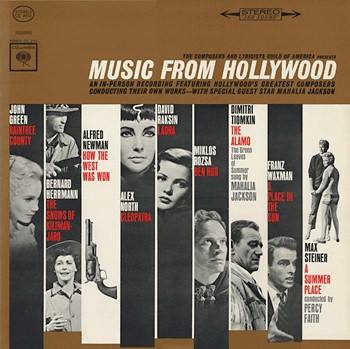
    This week on “Picture Perfect,” I’ll be leaning heavily into the nostalgia, as virtually every major composer from the golden age of Hollywood comes together at the Hollywood Bowl for a concert of now-classic film scores, originally broadcast on CBS Television in 1963. The event is often referred to as “the greatest film music concert in history.”

    Participants included, among others, Alfred Newman (“How the West Was Won”), David Raksin (“Laura”), Alex North (“Cleopatra”), Johnny Green (“Raintree County”), Franz Waxman (“A Place in the Sun”), Bernard Herrmann (“North by Northwest”), Dimitri Tiomkin (“High Noon”), and Miklós Rózsa (“Ben-Hur”). They were joined by Mahalia Jackson, Andy Williams, and Jack Benny!

    An album was released on LP, but understandably the three-hour concert was severely truncated. This was somewhat remedied on a CD-reissue on the Columbia Legacy label in 1995 that included 70 minutes of music. Among the casualties, however, was Elmer Bernstein conducting the theme to “The Magnificent Seven.” I will perform a service to film music by restoring that cut from another source.

    Based on my reading and the fact that I’m finding other selections in my personal library that were recorded at the venue on the same date, there’s still much that remains to be compiled. Put out whatever you’re holding back on a double-disc, please, Sony Classical!

    Hollywood couldn’t assemble this much musical talent today if it tried. Fortunately, recordings like this one endure. I hope you’ll join me for “Once Upon a Time in Hollywood” on “Picture Perfect,” music for the movies, now in syndication on KWAX Classical Oregon!

    ——–

    Clip and save the start times for all three of my recorded shows:

    PICTURE PERFECT, the movie music show – Friday at 8:00 PM EDT/5:00 PM PDT

    SWEETNESS AND LIGHT, the light music program – Saturday at 11:00 AM EDT/8:00 AM PDT

    THE LOST CHORD, unusual and neglected rep – Saturday at 7:00 PM EDT/4:00 PM PDT

    Stream them, wherever you are, at the link!

    https://kwax.uoregon.edu

  • Destination Movie Magic?  Due North

    Destination Movie Magic? Due North

    Where has the magic of the movies gone? Are there any composers or filmmakers working today that would be capable of creating anything as beguiling as the love theme from “Spartacus?”

    Its creator, musical mage Alex North, was born in Chester, Pennsylvania (just outside of Philadelphia), on this date in 1910. His journey took him from a working-class background, to the Curtis Institute of Music, the Juilliard School, and the Moscow Conservatory. He also studied with Aaron Copland and Ernst Toch.

    He became involved with the Federal Theatre Project. He worked in ballet, especially with Martha Graham and Anna Sokolow. He accompanied the latter to Mexico, where he had an opportunity to study with Silvestre Revueltas. Perhaps not coincidentally, his three North American teachers, Copland, Toch, and Revueltas, had all worked in film.

    North wrote his first film score as far back as the 1930s, around the time he met up with director Elia Kazan. North was drafted during the war, and put his talent to use writing music for the Office of War Information documentaries.

    With the cessation of hostilities, he returned to the theater. He also composed some concert pieces. It was his incidental music for plays such as “A Streetcar Named Desire” that earned him an invitation to Hollywood, where he wrote the score for Kazan’s classic film adaptation. It would be the first time jazz would be fully integrated into the drama, forming the basis for the film’s underscore, as opposed to being simply diegetic, or “source music,” played by a band or on a turntable in the background of a given scene. Its success opened the door to a new film score sensibility, paving the way for composers like Elmer Bernstein, Henry Mancini, and North’s beloved Duke Ellington.

    In all, North wrote 50 film scores, racking up 15 Academy Award nominations, yet never taking home the prize. In 1986, he received lifetime achievement recognition from the Academy, the first composer to be so honored.

    There were times, during the course of his career, when his music took on an independent life, distinct from the films for which it was written. He scored major hits with “Unchained Melody” (originally written for the film “Unchained” and recorded some 500 times) and the love theme from “Spartacus.” The original soundtrack to “A Streetcar Named Desire” also sold extremely well.

    His acclaimed contribution to “Spartacus” didn’t keep the film’s director, Stanley Kubrick, from rejecting North’s score for “2001: A Space Odyssey” – without bothering to tell him. North found out only after the lights went down at the film’s premiere. Director John Huston was more appreciative. Later in his career, North became Huston’s composer of choice, for films like “The Misfits,” “Under the Volcano,” “Prizzi’s Honor,” and “The Dead.”

    It’s especially poignant, in 2025, to view North’s acceptance speech for his honorary Oscar. (You’ll find a link to the clip below.) At around the 4:50 mark, he says: “I would like to make a humble plea to all of us involved in the movies, and that is to encourage and convey hope, humor, compassion, and adventure, and love… as opposed to despair, synthetic theatrics, and blatant, bloody violence. And sex, sex, sex, by all means, indeed… but with a bit of mystery, a touch of charm and elegance, and lots of imagination.”

    Amen to that. It’s a shame that it’s a plea that’s been almost wholly ignored. We would be in a better place today, psychologically, as morale colors everything, were we not buffeted by an aggressively crass and downbeat popular culture. Had filmmakers only heeded his advice.

    Happy birthday, Alex North.

    ———

    The Righteous Brothers sing “Unchained Melody”

    In the movie “Ghost”

    Love theme from “Spartacus”

    Cover by Yusef Lateef

    “A Streetcar Named Desire”

    Rejected score for “2001: A Space Odyssey”

    Honorary Academy Award, presented by Quincy Jones, with an intro by Robin Williams

    John Williams talks North, reedited to include extended musical examples


Tag Cloud

Aaron Copland (92) Beethoven (95) Composer (114) Film Music (120) Film Score (143) Film Scores (255) Halloween (94) John Williams (185) KWAX (229) Leonard Bernstein (100) Marlboro Music Festival (125) Movie Music (135) Opera (198) Philadelphia Orchestra (88) Picture Perfect (174) Princeton Symphony Orchestra (106) Radio (87) Ralph Vaughan Williams (85) Ross Amico (244) Roy's Tie-Dye Sci-Fi Corner (290) The Classical Network (101) The Lost Chord (268) Vaughan Williams (103) WPRB (396) WWFM (881)

DON’T MISS A BEAT

Receive a weekly digest every Sunday at noon by signing up here


RECENT POSTS