This week on “Picture Perfect,” take the long view, with Academy Award-winning music from the epics of David Lean.
One of the most celebrated filmmakers of all time, Lean had already spent two decades in the director’s chair, overseeing such treasurable films as “Blithe Spirit,” “Brief Encounter,” “Great Expectations,” “Oliver Twist,” “Hobson’s Choice,” and “Summertime,” when he turned his attention to the form for which he would ultimately be best remembered: the cinematic epic.
His first such attempt, “The Bridge on the River Kwai,” released in 1957, went on to win seven Academy Awards, including those for Best Picture, Best Director, Best Actor (for Alec Guinness), Best Screenplay, and Best Original Score. Malcolm Arnold wrote the music. Lean had worked with Arnold before on “Hobson’s Choice.”
Ironically, it is “Colonel Bogey’s March,” the tune whistled by the English prisoners of war as they enter the Japanese camp, that most people associate with the film. This is actually a pre-existing piece by Kenneth Alford (a pseudonym for British bandmaster Frederick J. Ricketts). Composed in 1914, over the years, the march became outfitted with all manner of bawdy lyrics, which is why the number is whistled, not sung, in the film.
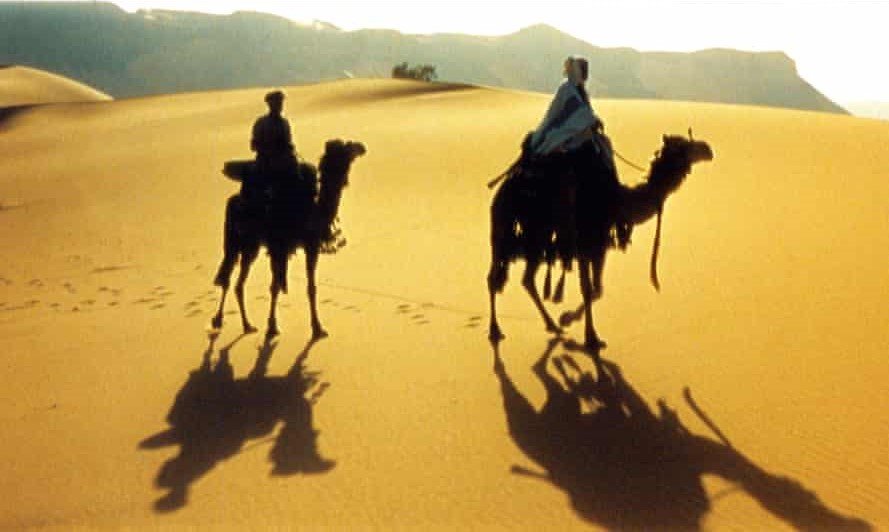
Lean had hoped that he and Arnold would be able to collaborate once more on “Lawrence of Arabia,” released in 1962. Unfortunately, Arnold, who somehow managed to write so much glorious music over the course of his career, for both film and concert hall, suffered a hellish personal life. At the time of “Lawrence,” he was deep in the throes of psychological and emotional turmoil. Under the circumstances, Lean had no choice but to enlist Maurice Jarre. Jarre certainly rose to the occasion, and thereafter became the director’s composer of choice.
Lean followed up his success with “Lawrence” – decorated with seven Oscars – with yet another story rendered on an epic scale, “Doctor Zhivago,” released in 1965. By this time, it was practically a forgone conclusion that the Academy would shower Lean with statuettes. Sure enough, “Doctor Zhivago” was honored with five more Academy Awards. Seemingly, the director had become too big to fail.
It’s hardly surprising that when he stumbled with his next project, “Ryan’s Daughter,” released in 1970 – a film which boasted a similar running time, without perhaps a story of a scope to support it – the critics were there with their knives out. The backlash was such that it would be a good ten years before Lean would find the strength to direct again. The subject of the new film was to have been “Captain Bligh and Mr. Christian,” a retelling of the famous “Mutiny on the Bounty” story. Sadly, the project was plagued with misfortune, so that finally he was unable to hold on to the funding. The film would ultimately be made – by other hands – as “The Bounty.”
Happily, Lean bounced back with “A Passage to India,” released in 1984. His adaptation of the novel of E.M. Forster was widely acclaimed, with 11 Academy Award nominations. It garnered two wins – one for Dame Peggy Ashcroft, for Best Supporting Actress, and the other for its composer, Maurice Jarre. It would be Jarre’s third and final Oscar. All three resulted from his work with Lean.
Shortly before his death, the director embarked on yet another epic, an adaptation of Joseph Conrad’s “Nostromo.” Frustratingly, this was left incomplete at the time of his passing in 1991.
We’re lucky to have what we’ve got. Close your eyes and get the big picture, with music from the epics of David Lean, on “Picture Perfect,” music for the movies, this Saturday evening at 6:00 EST, on WWFM – The Classical Network and wwfm.org.