Tag: American Composers

  • P.T. Barnum & American Composers

    P.T. Barnum & American Composers

    I wrote this on August 10th last year, but I hope you’ll indulge me, as I don’t think it can be improved upon!


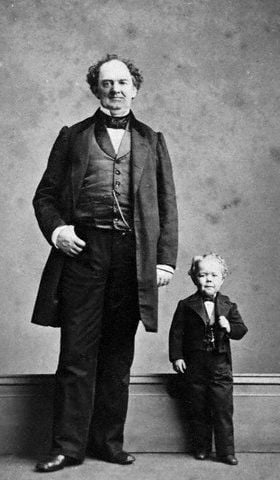
    P.T. Barnum is in the center ring today, with two works by American composers born on this date.

    William Henry Fry was born in Philadelphia in 1813. Credited with being the first U.S.-born composer to write music on a large scale, he composed orchestral works and the first opera by an American to be performed publicly in his lifetime (“Leonora,” in 1845). He was an outspoken advocate of American music at a time when German imports ruled the roost. It would be decades before music by our native composers would gain a toehold in the concert halls, which makes Fry an even more remarkable figure.

    Fry studied music with a former bandleader in Napoleon Bonaparte’s army, who went on to become the head of Philadelphia’s Musical Fund Society. Fry himself would become the society’s secretary.

    He was also a journalist, a writer on music, and the first music critic to write for a major American newspaper. He was a foreign correspondent for the Philadelphia Public Ledger and acted as music critic for the New York Herald Tribune.

    He composed seven symphonies, all of them of a descriptive nature. One of his most audacious works was commissioned by Barnum. The “Niagara Symphony” (1854) was conceived for enormous forces, augmented by a mind-blowing eleven timpani. Someone should consider putting this on the same program with Berlioz’s Requiem. Though it is possible all that percussion really would turn out to be too much of a good thing!

    Barnum once tried to buy Niagara Falls, but New York State wasn’t selling. So he constructed a replica, in miniature, “with real water,” for his American Museum (ironically, destroyed by fire in 1865), then located at the corner of Broadway, Park Row, and Ann Street, in Lower Manhattan. Among the other featured attractions was the notorious “Feejee Mermaid.”

    80 years after Fry’s birth, Douglas Moore was born into an established Long Island family. (The family had lived there since the island’s settling in the 17th century.) He attended, among other institutions, Yale University, where he earned two degrees; then he was off to Paris to study with Vincent d’Indy, Ernest Bloch, and Nadia Boulanger.

    Moore went on to serve as president of the National Institute and American Academy of Arts and Letters and director of music at the Cleveland Museum of Art. In 1926, he joined the faculty of Columbia University, where he remained until his retirement in 1962. With Otto Luening and Oliver Daniel, he cofounded the CRI (Composers Recordings, Inc.) label.

    Moore was the recipient of the Pulitzer Prize for Music in 1951 for his opera “Giants in the Earth.” But he is probably best-known for the opera “The Ballad of Baby Doe,” which became such a memorable vehicle for Beverly Sills.

    Moore’s Barnum connection is by way of a concert suite, composed in 1924. “The Pageant of P.T. Barnum” was inspired by the Greatest Showman’s life and outlandish attractions. The work falls into five movements:

    “Boyhood at Bethel”

    “Joice Heth – 161 Year Old Negress” [sic]

    “General and Mrs. Tom Thumb”

    “Jenny Lind”

    “Circus Parade”

    Barnum’s circus may have folded in 2017 (after 146 years in existence), but there’s still a sucker born every minute.


    CLOCKWISE FROM LEFT: Barnum & Tom Thumb, William Henry Fry, and Douglas Moore
  • William Grant Still: An American Voice

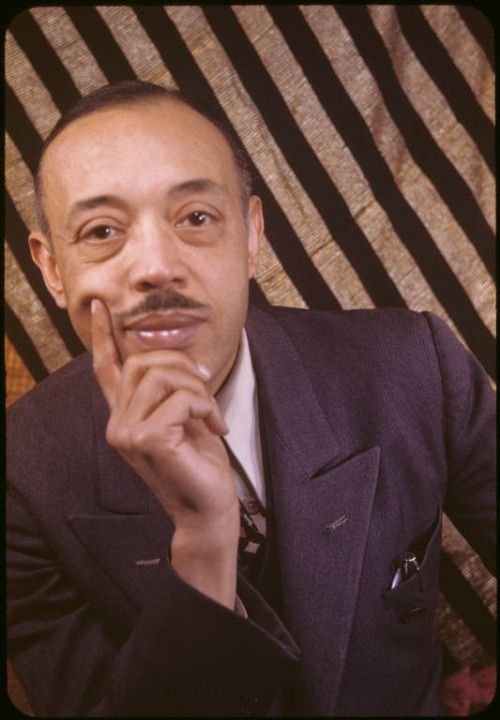
    William Grant Still: An American Voice

    Perhaps it’s not “The Great American Symphony,” self-consciously aspirational, oratorical, or grandiose in the manner the third symphonies of Roy Harris, William Schuman, or Aaron Copland; but it does go straight to the heart, which is something none of the composers of that great American triumvirate do, at least in those particular works.

    William Grant Still’s “Afro-American Symphony” is poetic, it’s genuinely reflective, it’s beautiful, and it brims with great tunes. It’s congenial, and in the end quite moving. It remains one of my favorite symphonies by an American composer.

    When I want “big statements” made on a colossal scale, I will turn to those Lincoln Center composers, who would have us believe they are eating out of lunch pails in their spare time, and riveting skyscrapers, or busting sod in denim overalls. But let’s face it, they are mostly hobnobbing in suits, jostling to get their music conducted by “Lenny.”

    Still is a composer in the mold, if not the manner, of Charles Ives. He’s a perpetual outsider, and always true to himself. His music grows directly out of his autobiographical experience, the blues, ballads, and spirituals of his childhood, in Woodville, Mississippi and Little Rock, Arkansas, and later his experience playing in pit bands during the Harlem Renaissance.

    He also studied at the Oberlin Conservatory and privately with George Whitefield Chadwick and Edgard Varèse, of all people. There is no Varèse to be found in Still’s music.

    He composes with the directness of a Virgil Thomson, but with none of Thomson’s affected naiveté. He shares with George Gershwin a refreshing lack of pretention – or at any rate his music does (he did, after all, subtitle one of his symphonies “Autochthonous”) – and a wonderful facility with melody.

    Of course, any discussion of Still must come with a litany of “firsts.” His “Afro-American Symphony” was the first written by a black composer to be performed by a major orchestra (the New York Philharmonic at Carnegie Hall). He was the first to be given the opportunity to conduct a major orchestra (the Los Angeles Philharmonic, at the Hollywood Bowl). His opera, “Troubled Island,” became the first to be produced by a major company (the New York City Opera). Another of his operas, “A Bayou Legend,” was the first to be performed on national television (as late as 1981). His works were performed internationally by the Berlin Philharmonic, the London Symphony Orchestra, the BBC Symphony, and the Tokyo Philharmonic.

    For years, all I could locate was the “Afro-American Symphony,” and that only in two out-of-print, albeit very fine recordings (with Karl Krueger and the Royal Philharmonic, and Paul Freeman and the London Symphony Orchestra). It wasn’t until the digital era that the other four symphonies gradually – very gradually – became available. Thankfully, all of them have now been recorded and are available for purchase.

    Furthermore, in all these years, I’ve only ever come across a single modern recording of any of his nine operas, “Highway One U.S.A,” with Philip Brunelle and Vocal Essence. This especially is a shame, since, as an opera lover himself, Still so wanted to add something significant to the repertoire.

    For all the love Florence Price has had lavished on her as a woman of color (the Philadelphia Orchestra was recently awarded a Grammy for its excellent recording of two of her symphonies, for the Deutsche Grammophon label), it would be great if a world-class, American ensemble would take up the cause of Still.

    Let’s face it, most American orchestras are pretty terrible about recording even the white guys that were once so revered during that era. Unless you’re Copland, Gershwin, or Barber, you’re pretty much out of luck with the majors. Must so many of our American composers be documented by less-costly orchestras abroad?

    Fashion would seem to favor a Still revival. At least play his music in concert, Americans!

    Happy birthday, WGS (1895-1978).


    “Afro-American Symphony”

    “Danzas de Panama”

    A little more severe, “Dismal Swamp” for piano and orchestra

    “Lenox Avenue,” conducted by Still

    “Troubled Island,” still awaiting a modern recording

  • Hawthorne’s Haunting Tales in Classical Music

    Hawthorne’s Haunting Tales in Classical Music

    In part to surreptitiously extend my Halloween celebration into November, and in part to vicariously wallow in secret Puritan guilt in the lead-up to Thanksgiving, I’ve been spending the past couple of weeks revisiting a volume of Nathaniel Hawthorne favorites. Some of these I’ve not read for close to 40 years. Very much to the author’s credit, I still remembered most of them fairly well.

    Hawthorne is never over-the-top macabre enough to bring genuine shudders in the manner of Edgar Allan Poe, nor do I think that was particularly his aim. His allegory is always just a little too refined. And in the 21st century, sadly, I think we are all a little too much inured to the horrors of history, hypocrisy, and the human heart for many of these tales to pack much of a surprise.

    That said, for me “The Birthmark” will always remain a masterpiece of dread. Furthermore, at his best, Hawthorne can be atmospheric and even witty, both in his phraseology and in his depictions of wackadoodle witches’ sabbaths and deviled-ham Satans.

    But for the most part, even though the stories are short, I feel as if he tends to overstate his point, if not outstay his welcome. We get it, Nate. Next!

    It was while reading “The Celestial Railroad” that I recalled this piano piece by Charles Ives, and that gave me the idea to share a few links to some Hawthorne-inspired classical music.

    “The Celestial Railroad”

    Ives revisited the material in his Fourth Symphony’s second movement, subtitled “Comedy”

    He also devoted a movement to Hawthorne in his Piano Sonata No. 2, the “Concord Sonata.” Here’s the whole thing. “Hawthorne” begins at 16:26. As instructed, the pianist employs a 14 ¾ strip of wood on the keys, the better to achieve Ives’ tone clusters.

    A suite from Howard Hanson’s “Merry Mount,” after “The Maypole of Merry Mount”

    Lawrence Tibbett as Wrestling Bradford, from “Merry Mount”

    A selection from Margaret Garwood’s “The Scarlet Letter”

    An aria from Daniel Catán’s “La hija de Rappaccini” (“Rappaccini’s Daughter”)

    A suite from Vaughan Williams’ opera “The Poisoned Kiss,” inspired in part by “Rappaccini’s Daughter”

  • Karl Krueger Champion of American Music

    Karl Krueger Champion of American Music

    Born in New York City to German immigrant parents, Karl Krueger’s sympathies were never far from the American heartland. He served as artistic director and principal conductor of the newly founded Kansas City Symphony from 1933 to 1943. But his greatest legacy lay in a series of pioneering recordings he made for the Society for the Preservation of the American Musical Heritage.

    This Sunday night on “The Lost Chord,” we’ll sample from some of these, set down for the society he established in 1958. Its purpose was to document and promote works by neglected American composers, who at the time were little more than footnotes in our music history books. Significantly, the records were distributed first to libraries, as opposed to commercial retailers. A number of the recordings have been reissued over the years by The Library of Congress and Bridge Records, Inc.

    Leave it to Krueger to unearth possibly the most interesting work by Horatio Parker. Parker, the hidebound teacher and aesthetic nemesis of Charles Ives, wrote two symphonic poems, both of which were recorded by Krueger. Wholly unexpected is Parker’s treatment of “Vathek,” the early gothic novel by William Beckford. The novel blends elements of the supernatural, excess, and immorality in an Oriental setting.

    Arthur Farwell, best remembered for his work inspired by Native American sources, wrote incidental music in 1916 for a play by Lord Dunsany, called “The Gods of the Mountain.” The work is another piece of Orientalism, in this case about a band of beggars who impersonate a city’s stone gods and partake of much sensual indulgence, until the real gods return and change the impostors to stone. In a final twist, the inhabitants of the city take the transformation of the beggars as verification of their status as genuine gods.

    Finally, we’ll hear music by Arthur Foote, who has fared better than some other American composers of his era. His rarely-heard work from 1900, “Four Character Pieces after the Rubaiyat of Omar Khayyam,” is drawn from a piano cycle he composed the previous year. It was given its first performance by the Chicago Symphony, under the direction of Frederick Stock.

    Krueger’s father wanted him to be lawyer, but the pull of music proved to be too strong. He studied in Vienna with Robert Fuchs and became the assistant of conductor Arthur Nikisch. Nikisch referred him to Franz Schalk, conductor of the Vienna State Opera. Krueger was appointed assistant conductor to the Opera and the Vienna Philharmonic. Schalk proclaimed, “I have no doubt that he will play an important role among the leading orchestral conductors of his time.”

    Though he also served as principal conductor of the Seattle Symphony, from 1926 to 1932, as music director of the Detroit Symphony Orchestra, from 1943 to 1949, and was invited back to guest conduct the Vienna Philharmonic, Krueger’s name is largely unrecognized today, beyond the sphere of collectors.

    By the end of its run, Krueger’s Society had issued over 100 LPs of American music, with some of the repertoire dating as far back as the 18th century. Karl Krueger died in Illinois in 1979 at the age of 85.

    I hope you’ll join me for “Pioneer Spirit” – Karl Krueger circles the wagons for American composers – this Sunday night at 10:00 EST, on WWFM – The Classical Network and at wwfm.org.

  • Barnum & American Composers Fry and Moore

    Barnum & American Composers Fry and Moore

    P.T. Barnum is in the center ring today, with two works by American composers born on this date.

    William Henry Fry was born in Philadelphia in 1813. Credited with being the first U.S.-born composer to write music on a large scale. he composed orchestral works and the first opera by an American to be performed publicly in his lifetime (“Leonora,” in 1845). He was an outspoken advocate of American music at a time when German imports ruled the roost. It would be decades before music by our native composers would gain a toehold in the concert halls, which makes Fry an even more remarkable figure.

    Fry studied music with a former bandleader in Napoleon Bonaparte’s army, who went on to become the head of Philadelphia’s Musical Fund Society. Fry himself would become the society’s secretary.

    He was also a journalist, a writer on music, and the first music critic to write for a major American newspaper. He was a foreign correspondent for the Philadelphia Public Ledger and acted as music critic for the New York Herald Tribune.

    He composed seven symphonies, all of them of a descriptive nature. One of his most audacious works was commissioned by Barnum. The “Niagara Symphony” (1854) was conceived for enormous forces, augmented by a mind-blowing eleven timpani. Someone should consider putting this on the same program with Berlioz’s Requiem. Though it is possible all that percussion really would turn out to be too much of a good thing!

    Barnum once tried to buy Niagara Falls, but New York State wasn’t selling. So he constructed a replica, in miniature, “with real water,” for his American Museum (ironically, destroyed by fire in 1865), then located at the corner of Broadway, Park Row, and Ann Street, in Lower Manhattan. Among the other featured attractions was the notorious “Feejee Mermaid.”

    80 years after Fry’s birth, Douglas Moore was born into an established Long Island family. (The family had lived there since the island’s settling in the 17th century.) He attended, among other institutions, Yale University, where he earned two degrees; then he was off to Paris to study with Vincent d’Indy, Ernest Bloch, and Nadia Boulanger.

    Moore went on to serve as president of the National Institute and American Academy of Arts and Letters and director of music at the Cleveland Museum of Art. In 1926, he joined the faculty of Columbia University, where he remained until his retirement in 1962. With Otto Luening and Oliver Daniel, he cofounded the CRI (Composers Recordings, Inc.) label.

    Moore was the recipient of the Pulitzer Prize for Music in 1951 for his opera “Giants in the Earth.” But he is probably best-known for the opera “The Ballad of Baby Doe,” which became such a memorable vehicle for Beverly Sills.

    Moore’s Barnum connection is by way of a concert suite, composed in 1924. “The Pageant of P.T. Barnum” was inspired by the greatest showman’s life and outlandish attractions. The work falls into five movements:

    “Boyhood at Bethel”

    “Joice Heth – 161 Year Old Negress” [sic]

    “General and Mrs. Tom Thumb”

    “Jenny Lind”

    “Circus Parade”

    Barnum’s circus may have folded in 2017 (after 146 years in existence), but there’s still a sucker born every minute.


    CLOCKWISE FROM LEFT: Barnum & Tom Thumb, William Henry Fry, and Douglas Moore

Tag Cloud

Aaron Copland (92) Beethoven (95) Composer (114) Film Music (120) Film Score (143) Film Scores (255) Halloween (94) John Williams (185) KWAX (229) Leonard Bernstein (100) Marlboro Music Festival (125) Movie Music (135) Opera (198) Philadelphia Orchestra (88) Picture Perfect (174) Princeton Symphony Orchestra (106) Radio (87) Ralph Vaughan Williams (85) Ross Amico (244) Roy's Tie-Dye Sci-Fi Corner (290) The Classical Network (101) The Lost Chord (268) Vaughan Williams (103) WPRB (396) WWFM (881)

DON’T MISS A BEAT

Receive a weekly digest every Sunday at noon by signing up here


RECENT POSTS