Tag: American Composers

  • Early Music Month: American Renaissance Sounds

    Early Music Month: American Renaissance Sounds

    This Sunday night on “The Lost Chord,” we continue our celebration of Early Music Month with three works by contemporary American composers who look back to the Renaissance.

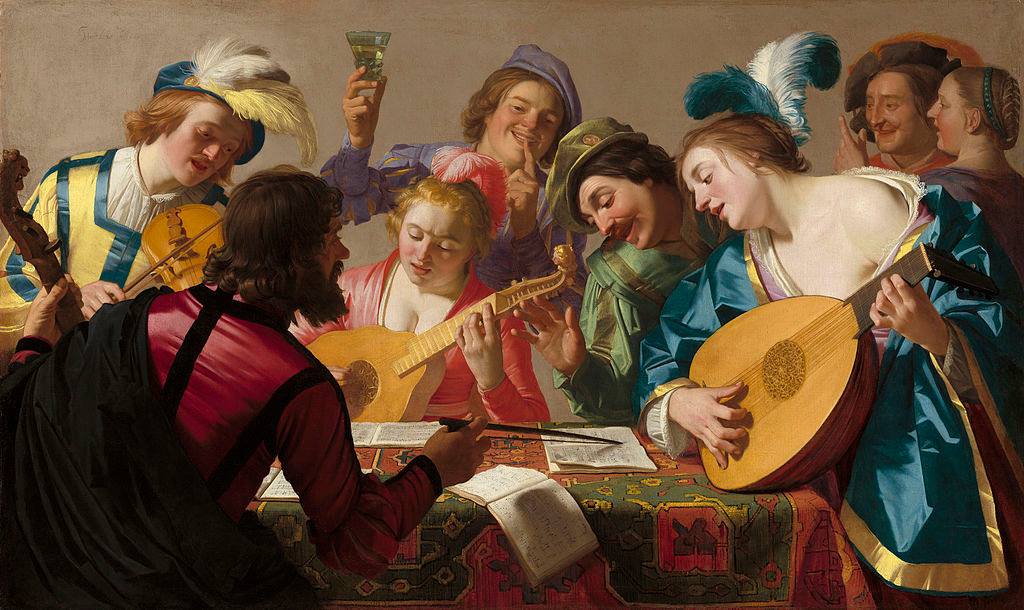
    William Kraft (b. 1923), long associated with the Los Angeles Philharmonic, composed “Vintage Renaissance” for the Boston Pops. The work incorporates two 15th century melodies: “Danza,” by Francesco de la Torre, and an anonymous “bransle.”

    George Frederick McKay (1899-1970), the so-called “Dean of Northwest Composers,” founded the composition department at the University of Washington, where he taught for over 40 years. His “Suite on Sixteenth Century Hymn Tunes” is based on works by Louis Bourgeois (c. 1510-1559), compiler of Calvinist hymn tunes and composer of the Protestant doxology known as the “Old 100th.”

    Lukas Foss (1922-2009), the German-born musical prodigy who settled in the United States in 1937, composed his “Renaissance Concerto” in 1986. The work, for flute and orchestra, falls into four movements: “Intrada;” “Baroque Interlude” (on a theme of Rameau); “Recitative” (after Monteverdi); and “Jouissance” (after a 1612 madrigal by a composer of the name David Melville).

    I hope you’ll join me, as American composers cast an affectionate look back, on “It’s Never Too Late to Be Early,” this Sunday night at 10:00 EDT, on WWFM – The Classical Network.

    Early Music America
  • Homebodies American Composers on WWFM

    Homebodies American Composers on WWFM

    With the lingering evidence of Thanksgiving both in our refrigerators and around our waistlines, it’s hardly surprising that our thoughts and memories would be full of home. Perhaps you still are “home,” with family and a full day of travel ahead of you, or you can’t wait to get home (your own).

    Whatever the case may be, this Sunday night on “The Lost Chord,” we’ll have music by American composers inspired by the idea of home.

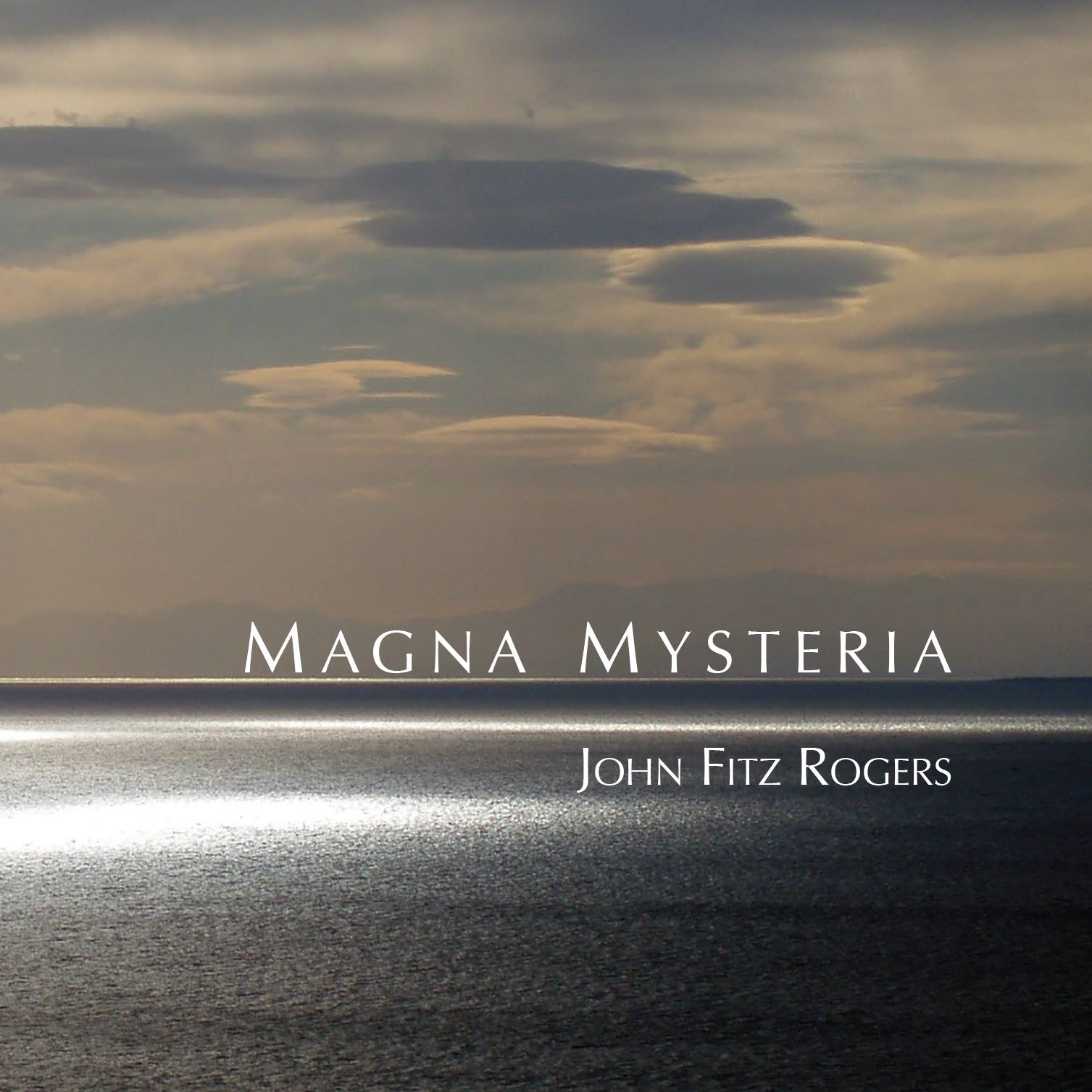
    We’ll have a work by the “Dean of American composers,” Aaron Copland – his “Letter from Home,” from 1943-44; then a recent piece by John Fitz Rogers, “Magna Mysteria,” from 2010.

    Rogers, who studied with Steven Stucky, Roberto Sierra, Martin Bresnick, and Jacob Druckman, is an associate professor at the University of South Carolina School of Music and the founder of the Southern Exposure New Music Series, which received the 2005-2006 Chamber Music America/ASCAP Award for Adventurous Programming.

    “Magna Mysteria” was commissioned in 2009 to celebrate the restoration of Trinity Episcopal Cathedral (Columbia, South Carolina). From its very title, which translates as “Great Mysteries,” it is clear that this is a work about questions. Its intent is nicely encapsulated in the promotional material accompanying this release from innova Recordings.

    “Weaving together Latin biblical texts and poetic verse from the sixth-century philosopher Boethius, the composition explores ideas of home and the seeking of home, the elevation of home to a metaphorical or spiritual realm, and the nature of time.”

    What is clear is that the work is gorgeous. If you have a fondness for the choral music of Morten Lauridsen or Stephen Paulus, you will enjoy this, though Rogers is very much his own man. His music is tonal, melodic, and quite lovely.

    We’re home for the holidays this week. I hope you’ll join me for “Homebodies,” this Sunday night at 10:00 EST, on WWFM – The Classical Network and wwfm.org.

  • Charles Ives Fourth of July Patriotic Music

    Charles Ives Fourth of July Patriotic Music

    Happy Fourth, everyone!

    Charles Ives’ “The Fourth of July:”

    His program note:

    “It’s a boy’s ‘4th—no historical orations—no patriotic grandiloquences by ‘grown-ups’—no program in his yard! But he knows what he’s celebrating—better than most of the county politicians. And he goes at it in his own way, with a patriotism nearer kin to nature than jingoism. His festivities start in quiet of the midnight before, and grow raucous with the sun. Everybody knows what it’s like—if everybody doesn’t—Cannon on the Green, Village Band on Main Street, fire crackers, shanks mixed on cornets, strings around big toes, torpedoes, Church bells, lost finger, fifes, clam-chowder, a prize-fight, drum-corps, burnt shins, parades (in and out of step), saloons all closed (more drunks than usual), baseball game (Danbury All-Stars vs Beaver Brook Boys), pistols, mobbed umpire, Red, White, and Blue runaway horse,—and the day ends with the sky-rocket over the Church-steeple, just after the annual explosion sets the Town-Hall on fire. All this is not in the music,—not now.”

    More about it:

    http://www.npr.org/templates/story/story.php?storyId=92196531

    Be careful out there!

  • Pilgrim’s Progress Thanksgiving on WPRB

    Pilgrim’s Progress Thanksgiving on WPRB

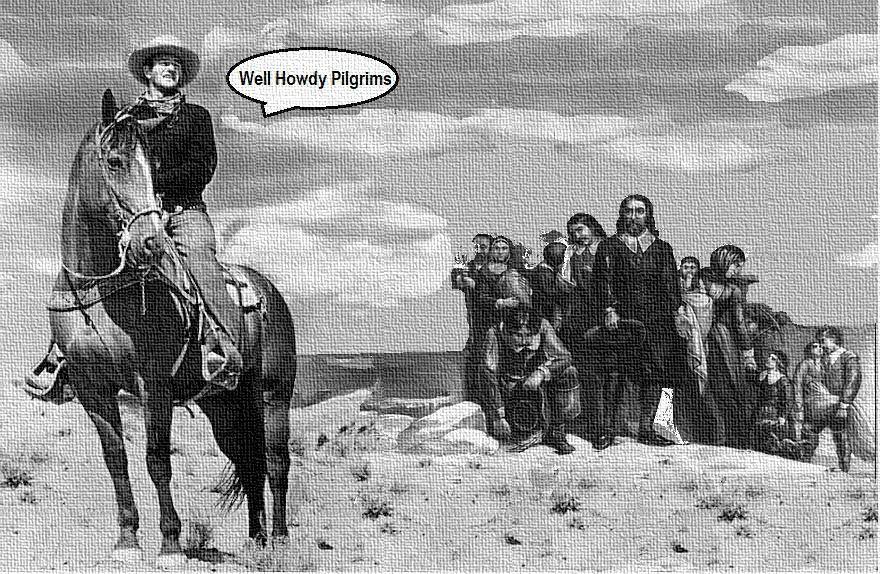
    In the words of the Duke, “Whoa, take ‘er easy there, Pilgrim.”

    It’s understandable that the Pilgrims would have been agitated. By the time the Mayflower left England, they had already been living on board ship for a month and a half. Then 300 miles out to sea, the Mayflower’s sister ship, the ironically named Speedwell, began to leak and they had to return to port. The now extremely overcrowded Mayflower embarked once more. It took 66 days to cross the Atlantic. By the time they finally landed, well north of their projected target of Northern Virginia (the territory then encompassing the Hudson Valley), they had long exhausted their supply of sandwiches and their collective blood sugar level was plummeting. Fortunately, the locals were kind enough to help them out, and Puritanism took root in America. And we’ve been paying for it ever since.

    Still, we, like the Pilgrims, have much to be thankful for, and this morning on WPRB we’ll celebrate our good fortune with music by American composers on the subjects of gratitude, flight from religious persecution, the torments of Puritanical repression, Native American themes, and New England, Southern and mountain folk music and hymn tunes.

    So go ahead and help yourself to a second slice. It will be more powerful than a tryptophan coma, from 6 to 11 EST, on WPRB 103.3 FM and at wprb.com. We’ll be loosening our belts in front of the football game, on Classic Ross Amico.

  • Election Day Music Escape American Composers

    Election Day Music Escape American Composers

    It’s Election Day – AT LAST???

    In 24 hours, it will all be over, except for the lawsuits, the counter-lawsuits, and the recounts.

    Join me in rising above the the anxiety with an afternoon of inspirational music. We’ll begin with a concert featuring PUBLIQuartet, captured live during last season’s Downtown Concert Series in Freehold, NJ. The program will include music by Britten, Debussy, Piazzolla, and Villa-Lobos, alongside works by contemporary American composers, such as Pulitzer Prize winner Caroline Shaw.

    PUBLIQuartet reinvigorates the classical chamber repertoire with plenty of sass and panache. The ensemble caught the attention of The Late Show with Stephen Colbert. Colbert invited them to perform an improvised soundtrack to a live stream of the final presidential debate in real time on the show’s Facebook page.

    The Downtown Concert Series’ next concert will feature the Mobius Trio, which will appear at historic St. Peter’s Church in Freehold on Saturday at 7:30 p.m.

    Following today’s broadcast of PUBLIQuartet, I hope you’ll stick around for more American music. Aaron Copland will make a statement with his “Statements for Orchestra,” from 1934. Peter Boyer will remind us of the American Dream, with “Ellis Island: The Dream of America,” a work that employs the actual words of immigrants who came to this country in search of a better life. Peter Schickele will stir the musical melting pot with his String Quartet No. 1 “American Dreams,” from 1983, a piece reflective of Appalachian fiddle music, fox trots, waltzes, blues, bop, and even birdsong. And if you don’t like the way the returns are going, you can always contemplate foreign real estate with Michael Torke’s “An American Abroad,” from 2002.

    Why worry? It won’t change anything. So why not make us your stress-free zone? Relax, recharge, and rejoice in the American experience, from 12 to 4:00 p.m. EST. It will be the second leg of a marathon of American music, from 9 a.m. to 8 p.m., on WWFM – The Classical Network and at wwfm.org.

Tag Cloud

Aaron Copland (92) Beethoven (95) Composer (114) Film Music (120) Film Score (143) Film Scores (255) Halloween (94) John Williams (185) KWAX (229) Leonard Bernstein (100) Marlboro Music Festival (125) Movie Music (135) Opera (198) Philadelphia Orchestra (88) Picture Perfect (174) Princeton Symphony Orchestra (106) Radio (87) Ralph Vaughan Williams (85) Ross Amico (244) Roy's Tie-Dye Sci-Fi Corner (290) The Classical Network (101) The Lost Chord (268) Vaughan Williams (103) WPRB (396) WWFM (881)

DON’T MISS A BEAT

Receive a weekly digest every Sunday at noon by signing up here


RECENT POSTS