Tag: American Symphony

  • Princeton Revives Neglected American Symphony

    Princeton Revives Neglected American Symphony

    Roy Harris was born on Lincoln’s birthday in a log cabin in Lincoln County, Oklahoma. If that doesn’t imbue a composer with a sense of destiny, I don’t know what will.

    Harris went on to became one of our great American symphonists. In particular, his Symphony No. 3 of 1939 has been much beloved and frequently performed. Unfortunately, we don’t hear all that much of his music anymore. And that’s a damned shame.

    So thank you, Princeton University Orchestra, for reviving Harris’ Symphony No. 3 on your opening concerts this weekend at Richardson Auditorium, Saturday at 7:30 p.m. and Sunday at 3:00, on the same program with Hector Berlioz’s “Symphonie fantastique.”

    Most of the orchestra’s personnel, mind you, are not music majors, but rather committed dilettantes pursuing degrees in other fields, such as astrophysics, bioengineering, computer science, linguistics, sociology, philosophy, and a lot of other things in no way related to music. Also, a substantial number of the players turn over every year as students graduate.

    Yet on those occasions when I have been privileged to hear them perform, the orchestra has never been less than solid – interpretively safe, perhaps, but on occasion they surpass themselves. And I have heard them tackle Mahler’s 3rd, “Ein Heldenleben,” and the complete “Daphnis and Chloé.”

    Most recently, a performance with the Princeton University Glee Club of Elgar’s “The Dream of Gerontius” was revelatory, finally unlocking the magic of the piece for me, which I had previously known only from recordings. Music director Michael Pratt, who has led the orchestra since 1977, is a miracle worker.

    I can’t wait to hear Harris’ symphony. I’d travel a lot further to enjoy music from this now-neglected “greatest generation” of American symphonists. What a delight to have some of it right here, in my own backyard!

    For tickets, follow the link:

    https://tickets.princeton.edu/

    The orchestra’s 2025-26 season:

    Current Season

  • William Grant Still’s “Afro-American Symphony”

    William Grant Still’s “Afro-American Symphony”

    It’s hard to believe I made the following observations as recently as 2019, prior to this show’s first airing. So much has changed since then. William Grant Still has gone from a neglected master to probably one of the most frequently programmed American symphonists of his generation. The change may have been propelled by social and political trends, but if ever anyone deserved more notice, it’s this composer.


    As someone with an insatiable appetite for American symphonies composed during the first half of the 20th century, I try not to miss a performance or even a radio broadcast of music by Roy Harris, William Schuman, or Aaron Copland. But for as much as I adore these composers, the American symphonies that delight me the most, off the top of my head, are Charles Ives’ 2nd, Howard Hanson’s 2nd (the “Romantic”), and William Grant Still’s 1st (the “Afro-American”). I never get tired of listening to these, and they move me like few others.

    I am only too happy to include Still’s symphony, then, as a kind of capstone to my four-part survey of the landmark Black Composer Series of the 1970s – reissued on Sony Classical as a 10-CD boxed set – this week on “The Lost Chord.”

    The “Afro-American Symphony,” composed in 1930, is informed by African-American spirituals, the blues, and syncopated banjo-like riffs. Indeed, a banjo actually turns up in the work’s third movement.

    To me, the symphony has always been a kind of “portrait of the artist as a young man.” (Still was born in Woodville, Mississippi, and grew up in Little Rock, Arkansas.) In this respect, it puts me in the mind somewhat of Virgil Thomson “Symphony on a Hymn Tune,” which similarly draws on hymns and folk songs of his boyhood in Kansas City, Missouri.

    But Still’s music comes across as more personal, more sincere, and certainly less self-consciously “modernist.” It goes straight to my heart and then gets in my head so that it literally disturbs my sleep. It’s one of the great American symphonies. The concert suites from George Gershwin’s “Porgy and Bess” remain popular, but some enterprising music director should give the “Afro-American Symphony” a shot, because I know audiences will love it. (NOTE: Again, since I wrote this, the work has gone on to be played by seemingly every major American orchestra.)

    There is a solid Gershwin connection. Still quotes the melody of “I Got Rhythm” in the third movement of his symphony. And for good reason. It’s actually his! According to Eubie Blake, Gershwin was in the audience during one of Still’s performances in the pit band for Blake’s revue “Shuffle Along.” Still’s improvisation became the basis for Gershwin’s hit tune. (Blake was quick to add that the appropriation was probably inadvertent.)

    The “Afro-American Symphony” is now the best-known piece in the Black Composers Series, which originally appeared on vinyl between 1974 and 1978. But at the time of the recording’s original release that was by no means definitively the case. The only previous recording of the work, made by Karl Krueger and the Royal Philharmonic Orchestra, was available only through mail-order subscription. Exposure to this gem of a symphony, then, was comparatively limited.

    Thankfully, there have been a number of recordings since, but for me none match the commitment and loving attention to detail of the performance in this set, with Paul Freeman conducting the London Symphony Orchestra.

    Also included on today’s program will be “Markings,” by Ulysses Kay, composed in 1966 to the memory of Dag Hammerskjöld, secretary general of the United Nations. Called “the greatest statesman of our century” by John F. Kennedy, Hammarskjöld was killed in a plane crash in Zambia en route to ceasefire negotiations during the Congo Crisis of 1961. Hammarskjöld was awarded a posthumous Nobel Peace Prize.

    We’ll conclude on an “up” note, with the lively “Danse Nègre” from the “African Suite” of 1898, by Afro-English composer Samuel Coleridge-Taylor.

    I hope you’ll join me for the grand finale of my month-long survey of highlights from CBS Records’ forward-looking Black Composers Series – that’s “Black to the Future, Part IV,” on “The Lost Chord,” now in syndication on KWAX, the radio station of the University of Oregon!


    Clip and save the start times for all three of my recorded shows:

    PICTURE PERFECT, the movie music show – Friday at 8:00 PM EST/5:00 PM PST

    SWEETNESS AND LIGHT, the light music program – ALL NEW! – Saturday at 11:00 AM EST/8:00 AM PST

    THE LOST CHORD, unusual and neglected rep – Saturday at 7:00 PM EST/4:00 PM PST

    Stream them, wherever you are, at the link!

    https://kwax.uoregon.edu/
  • Bernstein, Shapero, and the Lost American Symphony

    Bernstein, Shapero, and the Lost American Symphony

    75 years ago today, the greatest American symphony no one knows was given its debut by the Boston Symphony, conducted by Leonard Bernstein.

    Harold Shapero was 27 at the time his “Symphony for Classical Orchestra” received its premiere in 1948. He was one of the so-called “Boston Six,” a loose collective of composers that, along with Shapero and Bernstein, included Arthur Berger, Aaron Copland, Irving Fine, and Lukas Foss.

    Shapero met Bernstein while a student at Harvard, where he studied composition with Walter Piston. He was also a student of Paul Hindemith at the Berkshire Music Center at Tanglewood, kind of a home away from home for the Six, and with Nadia Boulanger at the Longy School of Music. He even managed to secure some critiques from his idol, Igor Stravinsky.

    Copland was perplexed by Shapero’s symphony, which may have been steeped in Stravinsky’s then-prevalent Neoclassicism, but clearly tipped its hat to Beethoven, with elements modelled on Beethoven’s Symphonies Nos. 3, 5, 7 & 9. Describing the composer as “the most gifted and baffling of his generation,” Copland added, “Stylistically, Shapero seems to feel a compulsion to fashion his music after some great model. He seems to be suffering from a hero-worship complex – or perhaps it is a freakish attack of false modesty.”

    Bernstein would record Shapero’s 45-minute magnum opus with the Columbia Symphony Orchestra (in glorious mono). In the 1980s, the work was revived by André Previn and the Los Angeles Philharmonic (who also recorded it), and I know David Zinman and Leon Botstein conducted it in concert. There’s also a very fine album of some of Shapero’s other orchestral music, issued within the past few years by Boston Modern Orchestra Project (BMOP), conducted by Gil Rose. And if you’re a trumpet player, you may have encountered Shapero’s compact and appealing Trumpet Sonata.

    Still, orchestras don’t seem to be beating a path to this worthwhile music, a fate shared by works of too many of Shapero’s mid-century colleagues. It’s all about name recognition, and if you’re not Copland, Barber, or Bernstein, you’re out of luck. (Gershwin died earlier, in 1937.) Why break your back and your budget rehearsing unfamiliar music when to play the standard repertoire is pure muscle memory, that also guarantees butts in seats?

    The ascendency of serialism and a relative lack of interest in Shapero’s music caused him to gradually back off of composition. Like Sibelius, his last decades could be viewed as a great silence. Only in Sibelius’ case, he was a victim of his own success. Shapero never found himself in the enviable, albeit paralyzing position of trying to top his own, lavishly-praised masterworks. Largely neglected until the Previn revival, save for an occasional recording of a chamber or instrumental piece on New World Records, Shapero died in 2013 at the age of 93.

    It’s a shame about the symphony. The orchestration is bright and cheerful, the tone is optimistic, the graceful craftsmanship is imbued with warmth and charm, and there are glints of wit in its abundant vitality. Check it out. You’ll be glad you did.

    https://www.youtube.com/watch?v=L5mVXYLeMko


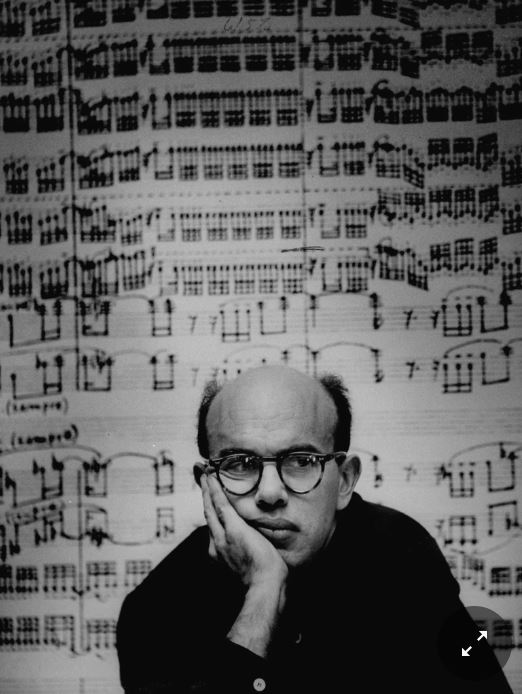
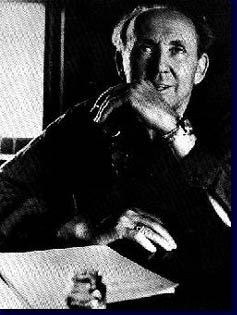
    Portrait of Harold Shapero by Gordon Parks

  • Black Composers Reissue: Still, Kay & More

    Black Composers Reissue: Still, Kay & More

    As someone with an insatiable appetite for American symphonies composed during the first half of the 20th century, I try not to miss a performance, or even a radio broadcast, of music by Roy Harris, William Schuman, or Aaron Copland. But for as much as I adore those composers, the American symphonies that delight me the most, off the top of my head, are Charles Ives’ 2nd, Howard Hanson’s 2nd (the “Romantic”), and William Grant Still’s 1st (the “Afro-American”).

    Still’s symphony, the first by a Black American to be performed by a major orchestra, serves as a kind of capstone to my four-part survey of Columbia Records’ landmark Black Composer Series. This was put together for “The Lost Chord” and originally broadcast on WWFM The Classical Network to mark the belated reissue of the series – after 40 years! – as a 10-CD boxed set by Sony Classical.

    The “Afro-American Symphony” is one of the few pieces in this set, which originally appeared on vinyl between 1974 and 1978, that is heard with any frequency. It serves as a portrait of the artist as a young man, drawing on spirituals, blues, and banjo riffs redolent of the composer’s boyhood in Little Rock, Arkansas. (He was born in Woodville, Mississippi.) More enterprising music directors should give it a shot. It’s the kind of work that goes straight to the heart and gets lodged in the head. Audiences will love it.

    Hear it on the final program in my survey, which also includes “Markings,” by Ulysses Kay. Kay composed his piece in 1966 to the memory of Dag Hammerskjöld, secretary general of the United Nations. Called “the greatest statesman of our century” by John F. Kennedy, Hammarskjöld was awarded a posthumous Nobel Peace Prize, after he was killed in a plane crash en route to ceasefire negotiations during the Congo Crisis of 1961.

    The series concludes on an “up” note, with a lively “Danse Nègre,” from the “African Suite” of 1898, by Afro-English composer Samuel Coleridge-Taylor.

    Enjoy the fourth and final installment of “Black to the Future” – celebrating the reissue of Columbia Records’ forward-looking Black Composers Series – by following the link and clicking on “listen”:

    https://www.wwfm.org/post/lost-chord-february-24-black-future-part-iv

    In case you missed it, here’s Part One, with music by Chevalier de Saint-Georges, Olly Wilson, and Fela Sowande:

    https://www.wwfm.org/post/lost-chord-february-3-black-future

    Part Two, with works by George Walker and José Maurício Nunes Garcia:

    https://www.wwfm.org/post/lost-chord-black-future-part-ii

    And Part Three, with works by José Silvestre de los Dolores White y Lafitte (José White), David Baker, and Roque Cordero:

    https://www.wwfm.org/post/lost-chord-february-17-black-future-part-iii

    On a related note, Michael Kownacky will introduce Still’s “Troubled Island,” the first opera by an African-American composer to be staged by a major company – the New York City Opera, in 1949 – on a double-bill with Paul Moravec’s “Sanctuary Road,” this week on the Sunday Opera at 3:00 EST, on WWFM – The Classical Network and wwfm.org.


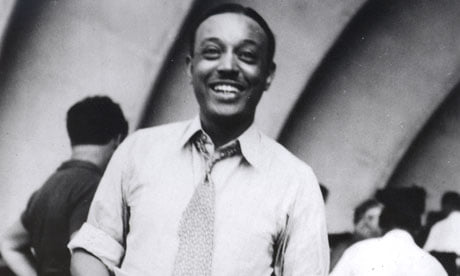
    PHOTO: William Grant Still at the Hollywood Bowl

  • William Grant Still’s Enduring Symphony

    William Grant Still’s Enduring Symphony

    Still’s waters run deep.

    As someone with an insatiable appetite for American symphonies composed during the first half of the 20th century, I try not to miss a performance or even a radio broadcast of music by Roy Harris, William Schuman, or Aaron Copland. But for as much as I adore these composers, the American symphonies that delight me the most, off the top of my head, are Charles Ives’ 2nd, Howard Hanson’s 2nd (the “Romantic”), and William Grant Still’s 1st (the “Afro-American”). I never get tired of listening to these, and they move me like few others.

    I am only too happy to include Still’s symphony, then, as a kind of capstone to my four-part survey of the landmark Black Composer Series – newly reissued (after 40 years!) as a 10-CD boxed set by Sony Classical – this Sunday night on “The Lost Chord.”

    The “Afro-American Symphony,” composed in 1930, is informed by African-American spirituals, the blues, and syncopated banjo-like riffs. Indeed, a banjo actually turns up in the work’s third movement.

    To me, the symphony has always been a kind of “portrait of the artist as a young man.” (Still was born in Woodville, Mississippi, and grew up in Little Rock, Arkansas.) In this respect, it puts me in the mind somewhat of Virgil Thomson “Symphony on a Hymn Tune,” which similarly draws on hymns and folk songs of his boyhood in Kansas City, Missouri.

    But Still’s music comes across as more personal, more sincere, and certainly less self-consciously “modernist.” It goes straight to my heart and then gets in my head so that it literally disturbs my sleep. It’s one of the great American symphonies. The concert suites from George Gershwin’s “Porgy and Bess” remain popular, but some enterprising music director should give the “Afro-American Symphony” a shot, because I know audiences will love it.

    There is a solid Gershwin connection. Still quotes the melody of “I Got Rhythm” in the third movement of his symphony. And for good reason. It’s actually his! According to Eubie Blake, Gershwin was in the audience during one of Still’s performances in the pit band for Blake’s revue “Shuffle Along.” Still’s improvisation became the basis for Gershwin’s hit tune. (Blake was quick to add that the appropriation was probably inadvertent.)

    The “Afro-American Symphony” is now the best-known piece in the Black Composers Series, which originally appeared on vinyl between 1974 and 1978. But at the time of the recording’s original release that was by no means definitively the case. The only previous recording of the work, made by Karl Krueger and the Royal Philharmonic Orchestra, was available only through mail-order subscription. Exposure to this gem of a symphony, then, was comparatively limited.

    Thankfully, there have been a number of recordings since, but for me none match the commitment and loving attention to detail of the performance in this set, with Paul Freeman conducting the London Symphony Orchestra.

    Also included on tonight’s program will be “Markings,” by Ulysses Kay, composed in 1966 to the memory of Dag Hammerskjöld, secretary general of the United Nations. Called “the greatest statesman of our century” by John F. Kennedy, Hammarskjöld was killed in a plane crash in Zambia en route to ceasefire negotiations during the Congo Crisis of 1961. Hammarskjöld was awarded a posthumous Nobel Peace Prize.

    We’ll conclude on an “up” note, with the lively “Danse Nègre” from the “African Suite” of 1898, by Afro-English composer Samuel Coleridge-Taylor.

    I hope you’ll join me for the grand finale of my month-long survey of highlights from CBS Records’ forward-looking Black Composers Series – “Black to the Future, Part IV” – this Sunday night at 10:00 EST, on WWFM – The Classical Network and wwfm.org.

    #BlackHistoryMonth


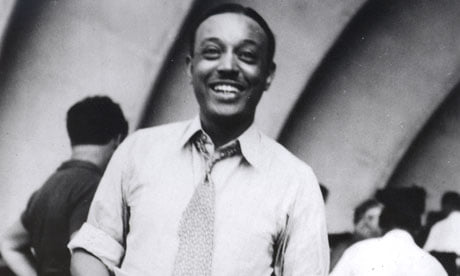
    PHOTO: William Grant Still at the Hollywood Bowl

Tag Cloud

Aaron Copland (92) Beethoven (95) Composer (114) Film Music (119) Film Score (143) Film Scores (255) Halloween (94) John Williams (185) KWAX (229) Leonard Bernstein (99) Marlboro Music Festival (125) Movie Music (134) Opera (198) Philadelphia Orchestra (86) Picture Perfect (174) Princeton Symphony Orchestra (106) Radio (87) Ralph Vaughan Williams (85) Ross Amico (244) Roy's Tie-Dye Sci-Fi Corner (290) The Classical Network (101) The Lost Chord (268) Vaughan Williams (102) WPRB (396) WWFM (881)

DON’T MISS A BEAT

Receive a weekly digest every Sunday at noon by signing up here


RECENT POSTS