Tag: Arthur Sullivan

  • Yule Revelry on WWFM Celebrate Winter Solstice

    Yule Revelry on WWFM Celebrate Winter Solstice

    Welcome, Yule!

    It’s December 21. Skate on over to WWFM this afternoon, as I mark the year’s shortest day and longest night with abundant revelry, courtesy of Sir Arthur Sullivan’s “Victoria and Merrie England” and John Langstaff’s “The Christmas Revels.” We’ll also make festive with Christopher Rouse’s makeshift midwinter celebration, “Karolju.” Of course, we’ll have music inspired by wintry sights, sounds, and activities. And we’ll follow Arthur Honegger on his musical journey from dark-to-light, “Une cantate de Noël,” or “A Christmas Cantata.”

    Join me, as we drive the cold winter away, this afternoon from 4 to 7:00 EST, on WWFM – The Classical Network and at wwfm.org.

  • May Day Music: Sullivan & Bax Celebrate Spring

    May Day Music: Sullivan & Bax Celebrate Spring

    Happy May Day, everyone! It’s been a raw and clammy day in the Philadelphia/Princeton area. Hopefully your ribbons and hobby horses didn’t get too damp.

    This Sunday night on “The Lost Chord,” we don our finery and caper around the Maypole, with two works by English composers. The first is by Sir Arthur Sullivan – he of Gilbert & Sullivan fame – who, in 1897, set to music a “Jubilee Hymn,” as part of the Diamond Jubilee celebrations surrounding the reign of Queen Victoria, which were held in May of that year.

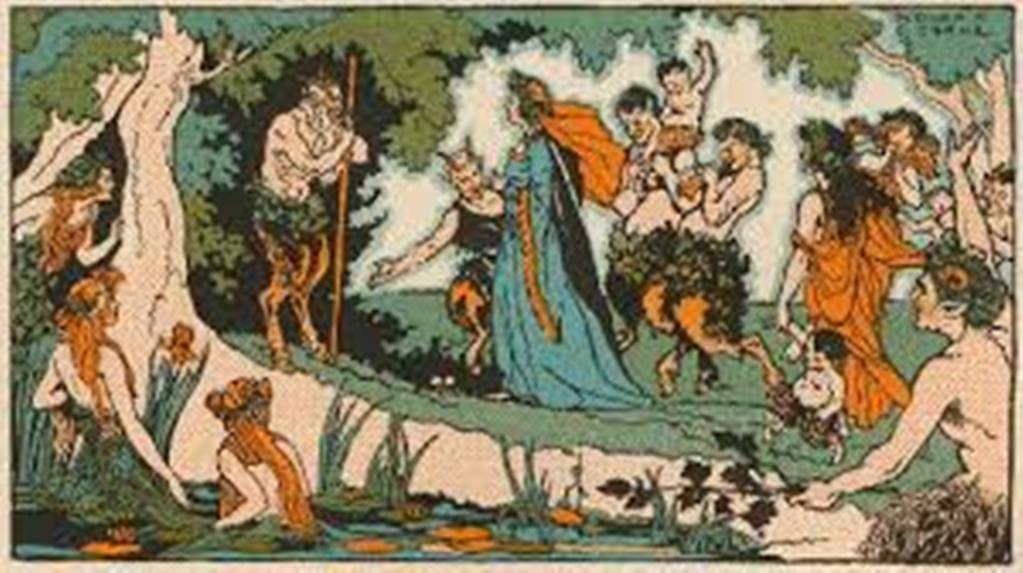
    Concurrently, he was commissioned to write a ballet to mark sixty years of the Alhambra Theatre in Leicester Square. The result was “Victoria and Merrie England,” which was made up of nationalistic tableaux celebrating the history, legends, and royalty of Great Britain.

    We’re going to be listening to Scenes II & III from the ballet, together titled “May Day in Queen Elizabeth’s Time” (this alluding, of course, to the reign of Elizabeth I). The suite includes colorful descriptive subsections like “Procession of the Mummers and the Revelers,” “Knights and Rose Maidens,” “Friar Tuck and the Dragon” and “Maypole Dance.”

    My original intention had been to cobble together selections from operas and ballets featuring maypoles, but I didn’t have time to distill the high points of Howard Hanson’s “Merry Mount,” Antonin Dvořák’s “The Cunning Peasant,” and Ferdinand Hérold’s “La Fille mal gardée.”

    So instead we’ll fill out the hour with one of the earliest programmatic works by Arnold Bax (later SIR Arnold Bax). “Spring Fire,” composed in 1913 and 1914, is meant to suggest the awakening of mythological beings in early spring.

    The subject matter was an attempt to cash in on the fashionable “paganism craze” sparked by the Ballets Russes and its composers. Bax’s affection for the writings of Algernon Swinburne had recently yielded the symphonic poem “Nympholept.” Quotations from Swinburne also adorn portions of the score to “Spring Fire.”

    The piece was scheduled for performance several times, but repeatedly cancelled, first because of the outbreak of war, then because of the work’s difficulty. In fact, it would never be performed during Bax’s lifetime. The manuscript was consumed in a fire in 1964, and all hope of ever hearing the score vanished. Fortunately, a copy was discovered, and the piece was finally recorded in 1986.

    The work is meant to evoke a woodland sunrise in early spring, as ancient denizens of the forest shrug off their winter sleep. They skip with mad antics down the glades. Forest lovers loll in their ecstatic dreams, until they are rudely awakened by a turbulent rout of satyrs and maenads. Sounds like spring to me.

    I hope you’ll join me for “Spring into May Day,” this Sunday night at 10:00 EDT, with a repeat Wednesday evening at 6; or that you’ll listen to it later as a webcast at wwfm.org.

    I know I said I wouldn’t post about Shakespeare anymore for a while, but here’s an interesting piece about Shakespeare, May Day and the hobby horse:

    Shakespeare, May Day and the Hobby Horse

    Another about Thomas Morton vs. The Puritans, and the Maypole of Merry Mount:

    The Maypole That Infuriated the Puritans
  • Haddon Hall Opera Mother’s Day Breakfast

    Haddon Hall Opera Mother’s Day Breakfast

    Perhaps as an alternative to waiting in line at the diner on Mother’s Day, you can cook breakfast for Mom at home and listen to “Haddon Hall.” Sir Arthur Sullivan’s rarely-heard light opera, given its premiere in 1892, will be the featured work on Sandy Steiglitz’s “Sunday Morning Opera.”

    “Haddon Hall” is one of the works Sullivan composed without Gilbert, in the wake of the team’s temporary dissolution following “The Gondoliers.” Savoy Opera impresario Richard D’Oyly Carte, no doubt crestfallen at the G & S separation, introduced Sullivan to Sydney Grundy. The result was a mild satire that left audiences accustomed to Gilbert’s barbed observations vaguely dissatisfied.

    The opera dramatizes the elopement of Dorothy Vernon of Haddon Hall in 1563, against her father’s wishes, with John Manners, son of Thomas Manners, 1st Earl of Rutland. The conflict may have been in part religious (the Vernons were Catholic, the Manners Protestant); it was most certainly financial (as the second son of an earl, Manners’ prospects were uncertain). If all this sounds a tad dry to American sensibilities, Grundy moves the action forward a century to about 1660, recasting it against the backdrop of unrest between Royalists and Roundheads. Isn’t that much more interesting?

    There’s also a fuming Scottish stereotype in the person of “The McCrankie,” a particularly strict Puritan from the Isle of Rum, who sings to the accompaniment of bagpipes and drinks whisky from a flask, ha ha.

    Anyway, the music should be nice. Purportedly, it bears the stamp of Sullivan’s only grand opera, “Ivanhoe,” which had been completed only the year before.

    “Haddon Hall” enjoyed a vogue among amateur groups in the 1920s, but has since drifted into obscurity. The 2000 recording features Mary Timmons, Maxwell Smart (no shoe phone jokes, please), and Alan Borthwick. The performance is conducted by David Lyle.

    “Sunday Morning Opera” can be heard on WPRB Princeton at 103.3 FM, beginning at 5:30 a.m. The main attraction begins at 7:00. After the opera, in the time remaining, Sandy will celebrate the birthday of Richard Tauber. You can listen online at http://www.wprb.com.

    More about “Sunday Morning Opera” here: http://www.cs.princeton.edu/~san/schedule.html


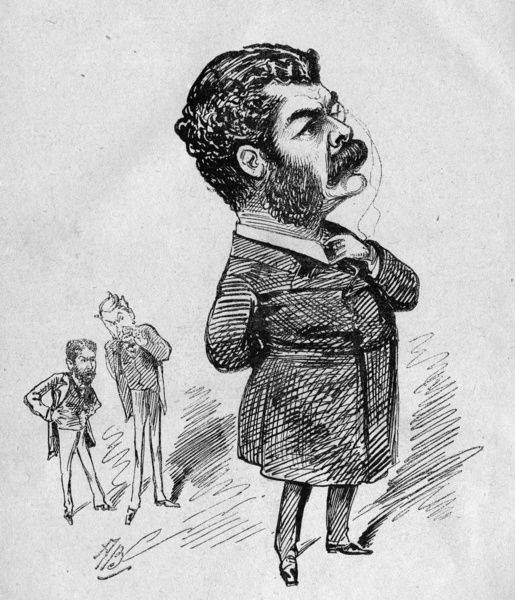
    PHOTO: When men were men, and women were women – if only we could tell them apart

  • Happy Birthday Sullivan Celebrate Gilbert & Sullivan

    Happy Birthday Sullivan Celebrate Gilbert & Sullivan

    All right, Savoyards, it’s Sir Arthur Sullivan’s birthday. Let’s see those “likes.”

    Here’s the great John Reed. Why is this collection not on CD, in the form it was originally issued? Granted, all the numbers are drawn from complete recordings:

    Seasonal Sullivan:

    Sullivan without Gilbert – his “Irish Symphony” (though I still prefer Sir Charles Groves’ recording):
    https://www.youtube.com/watch?v=X9irmDpqDSs

Tag Cloud

Aaron Copland (92) Beethoven (95) Composer (114) Film Music (119) Film Score (143) Film Scores (255) Halloween (94) John Williams (185) KWAX (229) Leonard Bernstein (99) Marlboro Music Festival (125) Movie Music (134) Opera (198) Philadelphia Orchestra (86) Picture Perfect (174) Princeton Symphony Orchestra (106) Radio (87) Ralph Vaughan Williams (85) Ross Amico (244) Roy's Tie-Dye Sci-Fi Corner (290) The Classical Network (101) The Lost Chord (268) Vaughan Williams (102) WPRB (396) WWFM (881)

DON’T MISS A BEAT

Receive a weekly digest every Sunday at noon by signing up here


RECENT POSTS