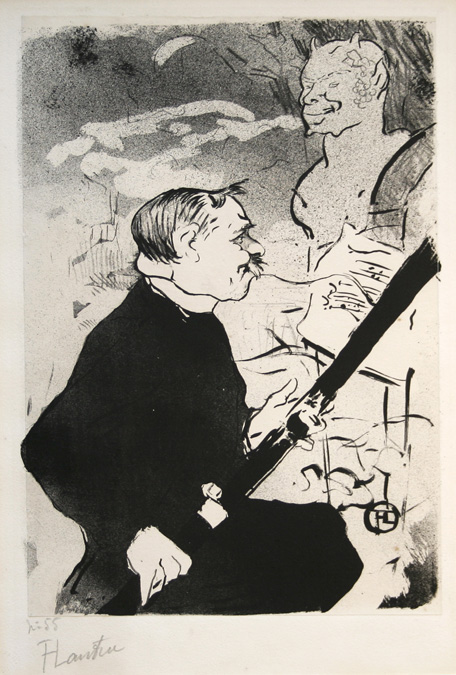
This week on “Sweetness and Light,” musicians step out to strut their stuff in a collection of lighter works for solo instrument and orchestra.
Some of the pieces will be well-known, some perhaps not. We’ll enjoy a trumpet overture derived from a film score by Franz Waxman, a scherzo by the swashbuckling pianist and composer Henry Charles Litolff, a polka for bassoon and orchestra evocative of a grumpy old bear by Julius Fučík, and more.
A highlight will surely be a cello concerto by Arthur Sullivan, later of Gilbert & Sullivan fame, that was destroyed by fire but reconstructed decades later, largely from memory, by Sir Charles Mackerras.
One is the loneliest number, as the old song goes. So put your hands together for soloists stepping into the “light music” spotlight, on “Sweetness and Light,” this Saturday morning at 11:00 EDT/8:00 PDT, exclusively on KWAX Classical Oregon!
Stream it, wherever you are, at the link:
https://kwax.uoregon.edu/
Tag: Arthur Sullivan
-
After School with Arthur Sullivan
It’s Arthur Sullivan’s birthday.
Just looking at these box sets of D’Oyly Carte LPs of the Gilbert & Sullivan operettas fills me with bittersweet nostalgia. I remember the smell of the boxes and recall with pleasure reading along with the enclosed libretti.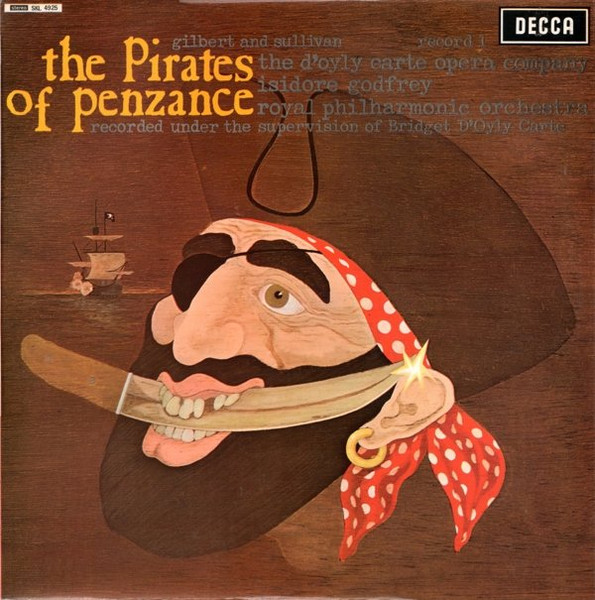
I was a G&S bug in high school. Joseph Papp’s silly, roistering, 1981 Broadway revival of “The Pirates of Penzance” launched me on my way. The musical alterations would have horrified the composer, but the performers were all game (with an uncanny Tony Azito, though singing in the wrong register as a Keystone Kops Sergeant of Police, all physical grace and genius), and the choreography fun and fleet.
It spurred me to collect a number of the other G&S favorites from my local record store, and I committed the best of them to memory. What a bizarre teenager I was, to be able to sing “Pirates” then, from first note to last. Furthermore, how screwy my best friends were, who would sometimes sit and listen with me after school.
At the same time, I was an enormous Marx Brothers fan. In the early films, Groucho often made a ludicrously grandiose entrance, heralded by chorus, and launched into a ridiculous song. It was obvious to me that the songwriters were emulating Gilbert & Sullivan. Later, Groucho would appear in a televised production of “The Mikado.”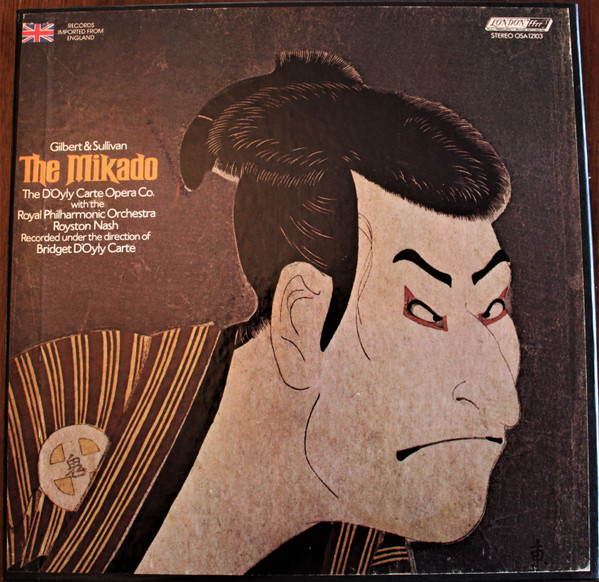
My mother and I and occasionally a friend or a girlfriend would catch every Gilbert & Sullivan revival within reach. Muhlenberg College used to stage excellent musical theater productions in the summers, and I remember their superb, Broadway-worthy G&S with affection.
The ‘80s also brought some pretty dodgy G&S adaptations to PBS, with Peter Allen in “The Pirates of Penzance,” William Conrard in “The Mikado,” Joel Grey in “The Yeoman of the Guard,” and Vincent Price in “Ruddigore.” Some of these were frankly quite bad, to the point of embarrassment, but I still got enjoyment from watching them. Clive Revill (as “The Sorcerer”) was always first rate in anything he was in.
I once worked for a pompous bookstore owner, who was also a Savoyard, and it was all I could do to gently correct him when he misquoted Gilbert & Sullivan. He never backed down, but I was always right, which he once uncomfortably conceded. Later, I heard he went to jail for something. Ironically, I remember him once singing the refrain, “A policeman’s lot is not an ‘appy one.” I imagine a triumphant Tony Azito flailing his limbs outside his cell.
Sullivan eventually grew exasperated with the phenomenal success of his collaborations with William S. Gilbert. One always imagines creative artists who work so well together must be the best of friends. Of course, it’s not always the case.
Sullivan had a sense of his own worth, and sometimes it would be nice, he thought, if he would be recognized equally as a serious composer. It could easily be argued that he was the greatest English composer of his day, but his success with musical comedy made it hard for him to be taken seriously, just as today it’s hard for a certain, underinformed segment of the musical community to take John Williams seriously. But both composers were/are masters of their craft, who achieved much beyond the comfort zone of their greatest popular successes.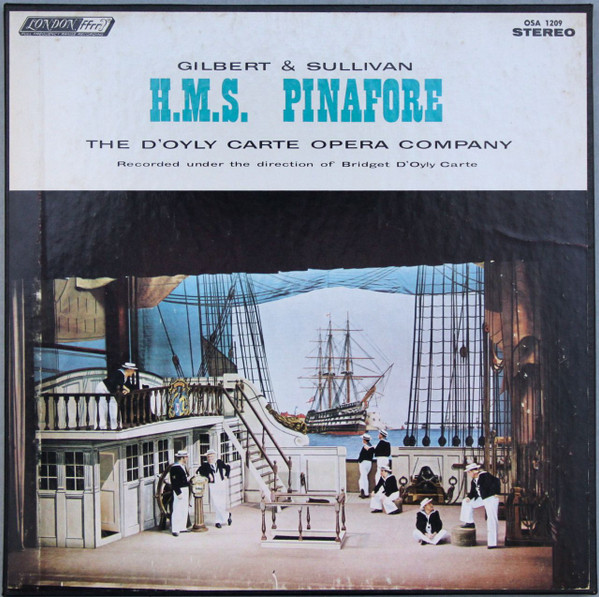
It wasn’t until the compact disc era that posterity was allowed, for the first time since the Victorian era, to take in the full extent of Sullivan’s musical endeavors. My favorite Sullivan-without-Gilbert has always been the “Irish Symphony.” I’ve heard a lot of his other music, and while well-crafted and certainly enjoyable, none of it really has the vitality and immediacy of that he wrote to Gilbert’s libretti. The alchemy between the two was so powerful, it continues to crackle. It gives you the best sense of what it must have been like to be alive at the time.
Of course, there’s also this cylinder of Sullivan speaking at a dinner party in 1888 (on which he makes some perspicacious remarks about the future of recorded music), reproduced here with 17 minutes of astonishing recordings and footage from Sullivan’s world. As someone points out in the comments section, the dinner party took place only five days after the double murders of Elizabeth Stride and Catherine Eddowes by Jack the Ripper.
Documents like these really make history come alive. People born in this era still walked the earth when I was a boy.
Happy birthday, Sir Arthur Sullivan!
——-
Clive Revill as “The Sorcerer”
Tony Azito in “Pirates”
Groucho Marx in “The Mikado”
Sideshow Bob does “H.M.S. Pinafore”
Stratford Festival “I am the very model of a modern Major General” (with meta reference to “Pinafore” and some fun and games with the lyrics during the encore)
“Irish Symphony”
——-
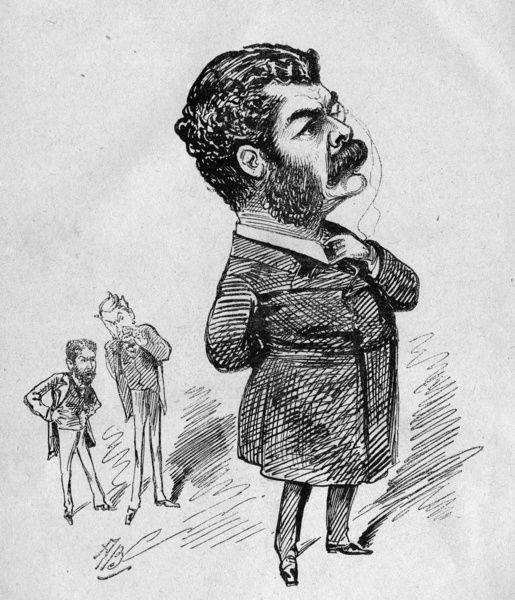
TOP: Caricature of Sullivan, with impresario Richard D’Oyly Carte and collaborator W.S. Gilbert -
So Much for Escapism: Power Corrupts on “The Lost Chord”
This week on “The Lost Chord,” I indulge my inner English major with a program inspired by two plays that explore the relationship of power and corruption – Shakespeare’s “Macbeth” and Eugene O’Neill’s “The Emperor Jones.”
The impulse grew out of my recollection of the rarely-heard ballet by Heitor Villa-Lobos, which originally aired on television in 1957. However, since the score was never published, it was believed lost for decades until rediscovered by the conductor Jan Wagner (who is Venezuelan, despite his Teutonic name). Wagner will conduct the Odense Symphony Orchestra, a Nordic band, in a surprisingly idiomatic performance.
Also on the program will be a half-remembered relic of American musical history, an aria from Louis Gruenberg’s opera, “The Emperor Jones,” sung by baritone Lawrence Tibbett, recorded in 1933.
“The Emperor Jones,” written in 1920, could be a potentially sensitive subject in a more politically correct era. No doubt about it, O’Neill’s tragedy is a product of its time, with plenty of minstrel show dialect, and the uncomfortable use of the N-word.
Already in 1924, Sidney Gilpin, the actor who created Brutus Jones, hedged at playing the character in its first revival, unless O’Neill first changed what he perceived as some of the more offensive passages. O’Neill stood his ground, and Gilpin’s replacement, Paul Robeson, went on to international stardom.
It’s easy to write-off “The Emperor Jones” as an embarrassing relic. Yet there have been some high-profile stagings over the past few years which demonstrate that the play still has much to tell us.
Jones is a former railroad porter and convict, who kills a guard in his escape from prison, and through bluff and bravado establishes himself as emperor of a Caribbean island. He maintains his power through cruelty and exploitation. However, he overplays his hand, and the situation quickly erodes. As his subjects rise up against him, Jones retreats into the jungle and descends into primal fear, haunted by images of his victims.
The play not only parallels some of the themes of “Macbeth,” it also demonstrates the fragility of human reason; how easily under the influence of adrenaline, brought on by raw terror, man is undone by the animal impulses of fight or flight; the psychological impact of guilt; and an insight into tyranny which was remarkably prescient given that fascism would soon overtake Europe.
I don’t know why it never occurred to me before to juxtapose the two plays, but a quick Google search reveals that I am not the first, so there goes my dream of an honorary doctorate.
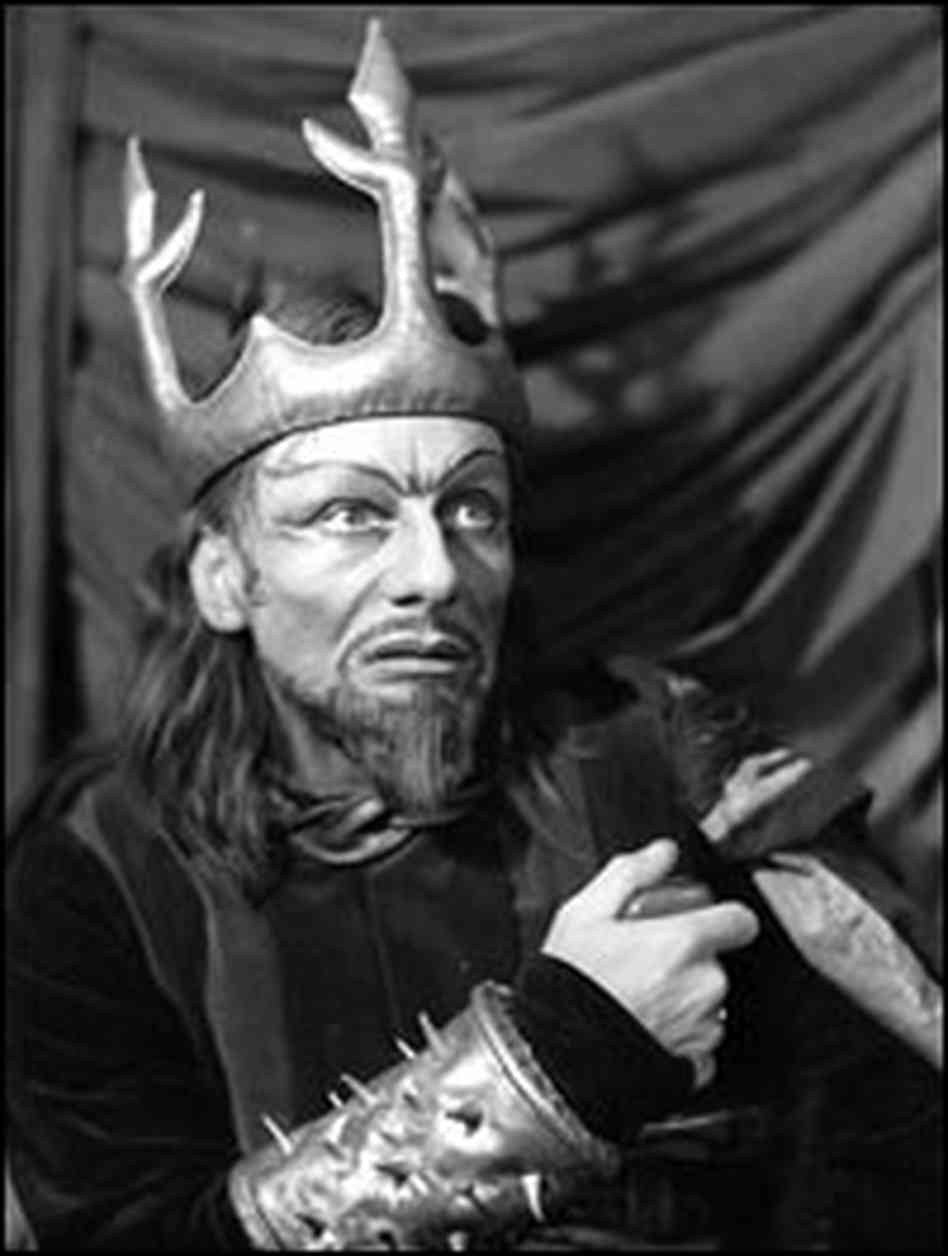
Also on the show will be selections from rarely-heard incidental music written for two productions of “Macbeth,” by William Walton (for John Gielgud) and Sir Arthur Sullivan (for Henry Irving), respectively.
Power corrupts, on “Power Plays,” on “The Lost Chord,” now in syndication on KWAX Classical Oregon!
——–
Clip and save the start times for all three of my recorded shows:
PICTURE PERFECT, the movie music show – Friday at 8:00 PM EDT/5:00 PM PDT
SWEETNESS AND LIGHT, the light music program – Saturday at 11:00 AM EDT/8:00 AM PDT
THE LOST CHORD, unusual and neglected rep – Saturday at 7:00 PM EDT/4:00 PM PDT
Stream them, wherever you are, at the link!
https://kwax.uoregon.edu
——–
PHOTOS: Gielgud as Macbeth (top) and Tibbett as Brutus Jones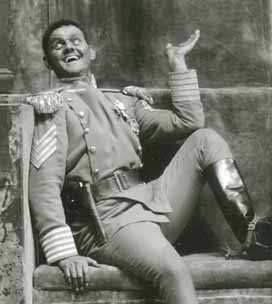
-
Happy Birthday Sir Arthur Sullivan!
I’ve been writing so much about Gilbert & Sullivan lately, and here it is, the anniversary of Sir Arthur Sullivan’s birth (in 1842)! This gives me an excuse to share this video of “The Gondoliers,” which I’ve been holding in reserve for just such an occasion. Goes great with mutton chops.
Venetian bonus! Incidental music for a production of “The Merchant of Venice”:
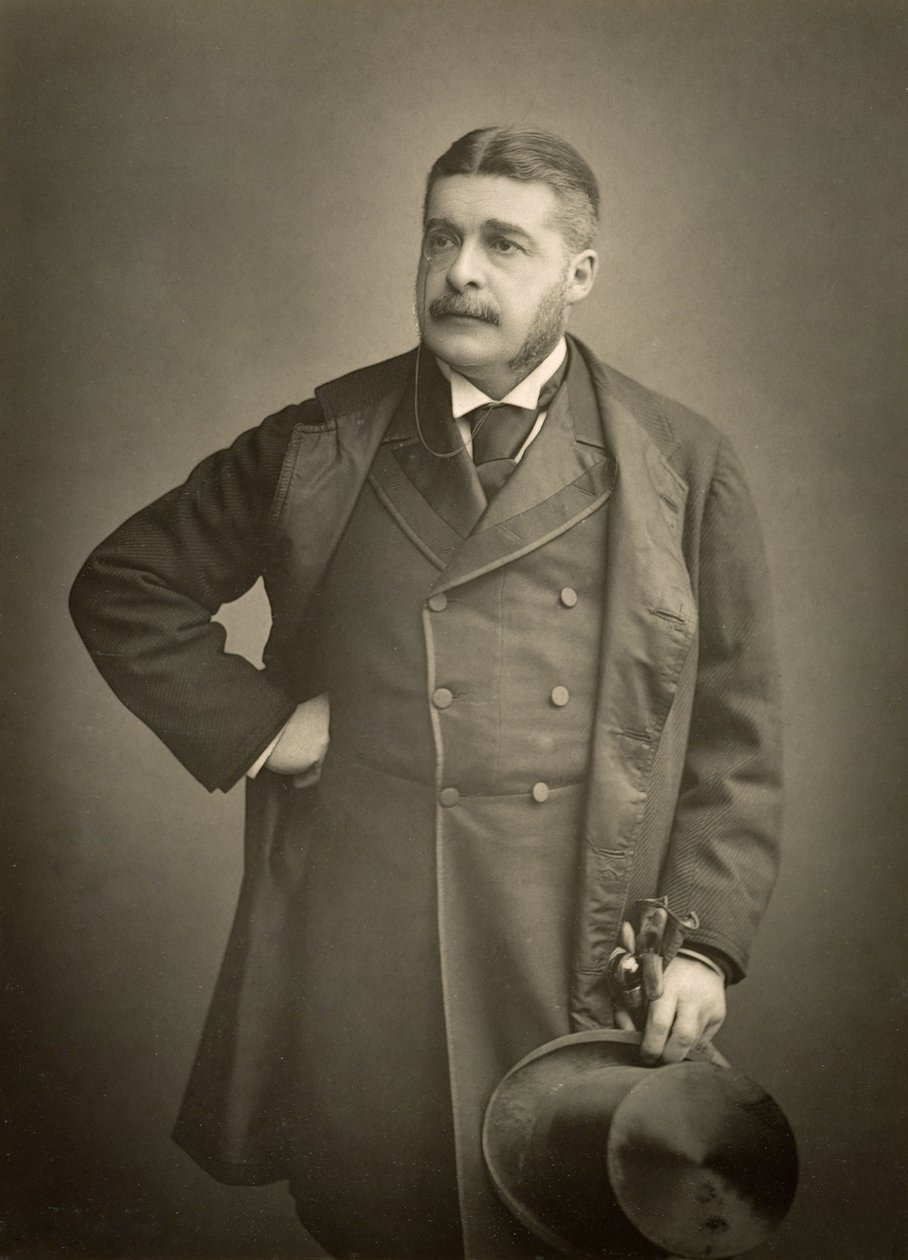
Sir Arthur Sullivan speaks in 1888 (also the year of the photo). “The Gondoliers” opened in 1889.
Happy birthday, Arthur Sullivan!
-
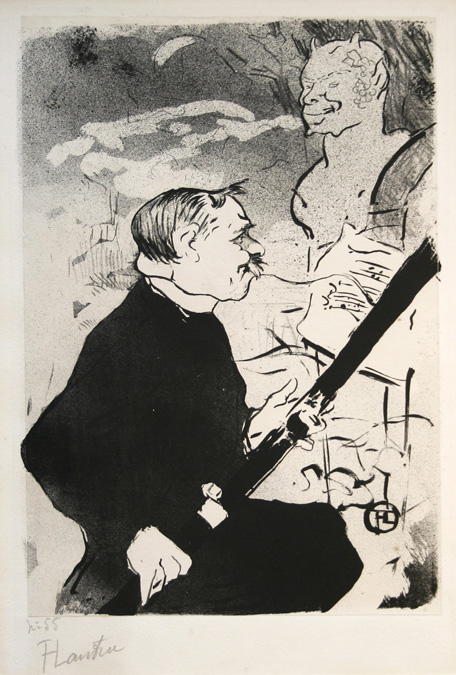
Sweetness & Light Solo Instrument Showcase
This week on “Sweetness and Light,” musicians step out to strut their stuff in a collection of lighter works for solo instrument and orchestra.
Some of the pieces will be well-known, some perhaps not. We’ll enjoy a trumpet overture derived from a film score by Franz Waxman, a scherzo by the swashbuckling pianist and composer Henry Charles Litolff, a polka for bassoon and orchestra evocative of a grumpy old bear by Julius Fučík, and more.
A highlight will surely be a cello concerto by Arthur Sullivan, later of Gilbert & Sullivan fame, that was destroyed by fire but reconstructed decades later, largely from memory, by Sir Charles Mackerras.
One is the loneliest number, as the old song goes. So put your hands together for soloists stepping into the “light music” spotlight, on “Sweetness and Light,” this Saturday morning at 11:00 EST/8:00 PST, exclusively on KWAX, the radio station of the University of Oregon!
Stream it, wherever you are, at the link:
Tag Cloud
Aaron Copland (94) Beethoven (95) Composer (114) Film Music (150) Film Score (143) Film Scores (255) Halloween (102) John Williams (198) KWAX (233) Leonard Bernstein (105) Marlboro Music Festival (125) Movie Music (165) Mozart (91) Opera (215) Philadelphia Orchestra (90) Picture Perfect (174) Princeton Symphony Orchestra (110) Radio (90) Ross Amico (244) Roy's Tie-Dye Sci-Fi Corner (290) The Classical Network (101) The Lost Chord (269) Vaughan Williams (107) WPRB (397) WWFM (881)