I have always had been ambivalent about the ballet. On the one hand, I am quite enthusiastic about attending live performances of works written specifically for the stage, especially those by 20th century masters (Stravinsky, Prokofiev, Hindemith). On the other, I am generally put off, at least in theory, by choreographers employing in their programs pre-existing works that have nothing at all to do with the dance. When I look at an advertisement for the ballet, and I see a triple bill featuring “George Balanchine’s Piano Concerto,” and there is no indication anywhere of who the actual composer is, I have less than no interest in attending and even feel inclined to fury. But I guess that’s what happens when you’re someone who puts the music first.
I understand, if I am to be objective (which I seldom am), that that’s not what dance is about. It’s also certainly not about story. How many evening-length ballets have I endured in which the “plot,” such that it is, has run its course by the end of the second act? There really is no purpose for Act III, except to have everyone leap about in a series of interminable divertissements. I learned this lesson early, at my first “Nutcracker” (mercifully a two-acter), when I discovered that most of the famous music underscored the less-than-thrilling-for-children-everywhere second part. Don’t get me wrong, I have grown to love “The Nutcracker,” but I love it most when imaginative choreographers find ways to tie the events of Act II into the narrative set up in Act I. As a boy, I was all about the Mouse King. It was only later, after I hit puberty, that the Act II pas de deux became indispensible. After all, there is no love like doomed love. But why is this music for the Sugar Plum Fairy and her consort so ardent? Doesn’t it make more sense to tie it back in to Clara (as some choreographers thankfully have)?
But I digress.
I admit, dogma is a dangerous thing, and there have been notable exceptions to my aversion to ballet set to music not intended for the dance. I was very pleasantly surprised, for instance – especially after having endured his horrible “Nutcracker,” with its stupid candy cane hula hoops – by Balanchine’s “A Midsummer Night’s Dream,” which I recall as compelling and often brilliant. In the end, however, I admit I am not really qualified to assess dance. So I’ll just shut up and play the music.
Today is Balanchine’s birthday, so I thought I’d spend the bulk of the afternoon spinning records of some of the works he introduced and/or choreographed. My heart is with the commissions, of course, so we’ll hear Stravinsky’s “Apollo,” Prokofiev’s “The Prodigal Son,” and Hindemith’s “The Four Temperaments,” alongside splashy arrangements by Hershy Kay (which I am less enthusiastic about) after works of Gottschalk and Sousa. I also have a vintage recording of Antal Dorati conducting Vittorio Rieti’s arrangement of “Cotillon,” after Chabrier, if I can lay my hands on it, which Balanchine choreographed for the Ballets Russes de Monte-Carlo.
First, it’s another Noontime Concert from Gotham Early Music Scene, or GEMS. Concordian Dawn will present a program titled “Fortuna Antiqua et Ultra,” medieval music illustrative of the ever-turning Wheel of Fortune and the consolation of hope.
We’ll be wheeling and pirouetting from 12 to 4 p.m. EST, on WWFM – The Classical Network and wwfm.org.
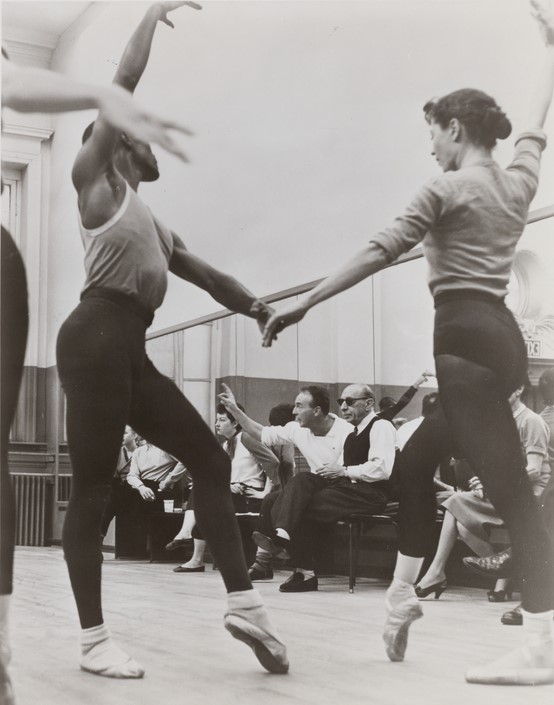
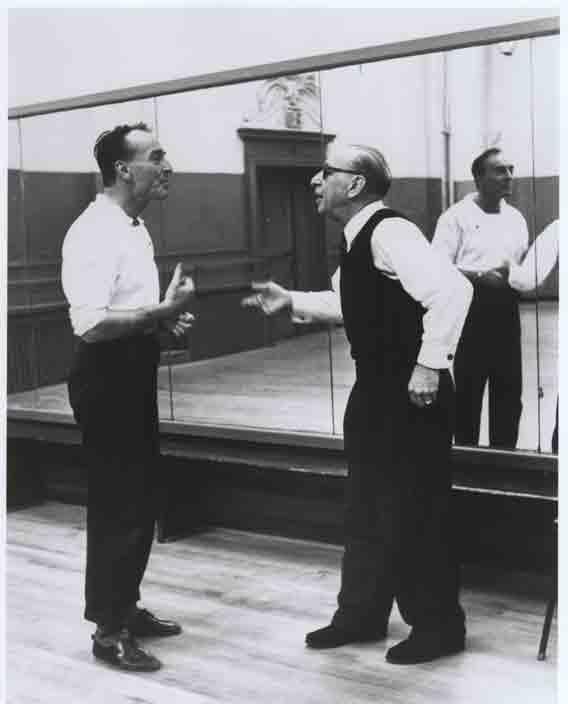
PHOTO: Balanchine and Stravinsky