Tag: Ballets Russes

  • Ballets Russes’ Lost English Composers

    Ballets Russes’ Lost English Composers

    Serge Diaghilev, impresario of the Ballets Russes, commissioned some of the most enduring ballet scores of the 20th century, from such composers as Claude Debussy (“Jeux”), Maurice Ravel (“Daphnis and Chloe”), Manuel de Falla (“The Three-Cornered Hat”), and Igor Stravinsky (“The Firebird,” “Petrushka” and “The Rite of Spring”).

    Less well known is the fact that two Englishmen were also approached.

    This week on “The Lost Chord,” we’ll listen to works by Constant Lambert and Lord Berners – both men so diverse in their interests, and possessing such outsized personalities, it isn’t really possible to do justice to either in the time allotted.

    Lambert was a brilliant polymath. In addition to his considerable talents as a composer, he was a conductor, arranger, and writer, as well as the lover of Margot Fonteyn. Alas, alcoholism and workaholism conspired with undiagnosed diabetes to hasten his demise at the age of 45.

    His ballet, “Romeo and Juliet,” presented as a play-within-a-play, turns Shakespeare’s tragedy of star-crossed lovers on its head, with the leads falling hard in a backstage romance with happier results. Lambert would go on to greater things, but the ballet is undeniably an impressive piece of work for a 20 year-old.
    Similarly, Lord Berners’ interests lie all over the place, but his was a much more relaxed character. Unfailingly productive as a composer, a painter, and a writer, nonetheless he never lost sight of the fact that life would be his magnum opus. And Berners lived well.

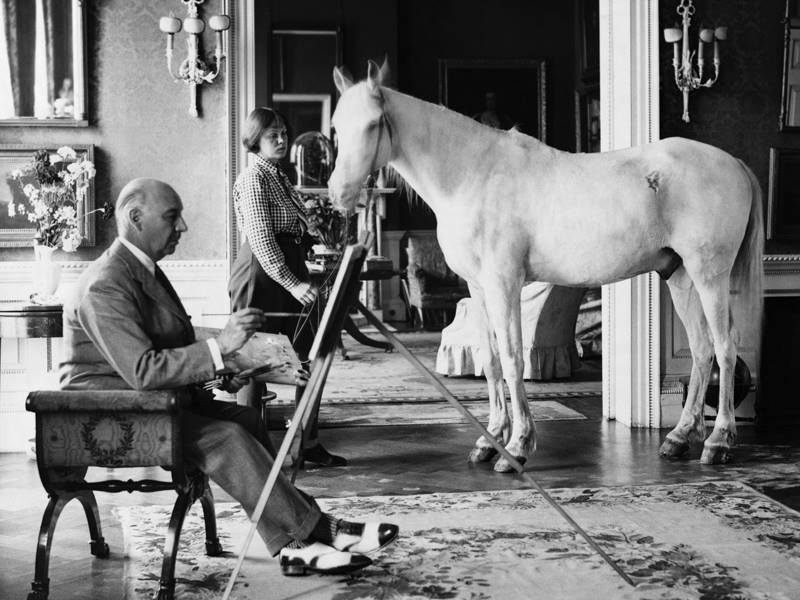
    Furthermore, his fortune ensured that he would never be taken to task for any of his whimsical behavior. This included having a 140-foot folly tower constructed on his estate (partly to annoy the neighbors) and keeping a horse and a giraffe to invite to his indoor and outdoor tea parties.

    Berners wrote novels, painted portraits (always sure to include a moustache, whether the sitter had one or not), and composed a respectable amount of music, especially for the ballet.

    For the Ballets Russes, he wrote “The Triumph of Neptune,” which became a great favorite of Sir Thomas Beecham. Sacheverell Sitwell provided the scenario, which concerns a sailor who is shipwrecked en route to Fairyland, and George Balanchine supplied the choreography.

    That’s a heady mix of hornpipes and pas de deux. I hope you’ll join me for “England à la Russe,” on “The Lost Chord,” now in syndication on KWAX, the radio station of the University of Oregon!


    Clip and save the start times for all three of my recorded shows:

    PICTURE PERFECT, the movie music show – Friday at 8:00 PM EDT/5:00 PM PDT

    SWEETNESS AND LIGHT, the light music program – ALL NEW! – Saturday at 11:00 AM EDT/8:00 AM PDT

    THE LOST CHORD, unusual and neglected rep – Saturday at 7:00 PM EDT/4:00 PM PDT

    Stream them, wherever you are, at the link!

    https://kwax.uoregon.edu/


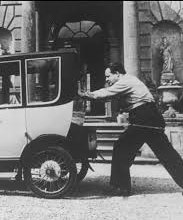
    PHOTOS: Berners, no doubt contemplating the placement of a moustache (right); and Lambert pushing Berners car

  • Rite of Spring Joffrey’s Reconstruction

    Rite of Spring Joffrey’s Reconstruction

    On the first full day of spring, while the season is still prone to brutal mood swings, it’s a good time to revisit this Joffrey Ballet restoration of the original 1913 production of Stravinsky’s “Le Sacre du printemps” (“The Rite of Spring”). The savagery of the scenario – to appease the gods, a prehistoric Slavic tribe elects a maiden to dance herself to death – was bolstered by Nicholas Roerich’s barbaric designs and Vaslav Nijinsky’s aggressively anti-balletic choreography. It certainly stirred the passions of the opening night audience, stoking one of classical music’s most infamous riots.

    The ballet was danced only eight times as it was originally conceived. Nijinsky and impresario Serge Diaghilev had a falling out, and when the Ballets Russes revived the work a few years later, it was with new choreography by Léonide Massine. By then, Nijinsky had already been admitted to an asylum, and not for the last time. His increasing instability and death in 1950 led many to believe that his revolutionary conception of the original “Rite” had been lost forever.

    Joffrey’s was the first attempt at a reconstruction. It took 16 years and a lot of detective work to bring it to fruition.

    How was it accomplished? You can read more about it here.

    https://www.wbur.org/news/2013/03/15/rite-of-spring

    And watch the video, as I did when it first aired, here.

  • Ida Rubinstein Sultry Sugar Heiress

    Ida Rubinstein Sultry Sugar Heiress

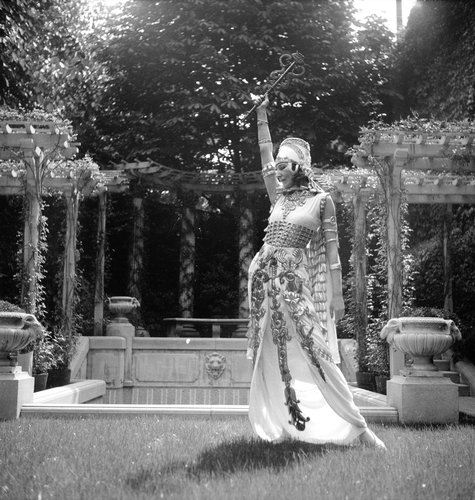
    The actor and dancer Ida Rubinstein specialized in strong, often sultry heroines. A remarkable figure, this sugar heiress from a family of Ukrainian Orthodox Jews essentially willed herself onto the Parisian stage, where her acting ability and natural magnetism more than compensated for her limited ability as a dancer.

    She was welcomed into the Ballets Russes in 1909, where she assumed the roles of Cleopatra and Scheherazade. Later, for her own company, she introduced Ravel’s “Bolero” and Stravinsky’s “Le Baiser de la fée” (“The Fairy’s Kiss”).

    She gained notoriety for her often racy sensuality, stripping naked for the “Dance of the Seven Veils” in a production of Oscar Wilde’s “Salome” in 1908. Her performance in the title role in Gabriele d’Annunzio and Claude Debussy’s “The Martyrdom of Saint Sebastian” generated further scandal in 1911. The Archbishop of Paris prohibited all Catholics from attending, on account of Saint Sebastian being portrayed by a woman and a Jew.

    This Sunday night on “The Lost Chord,” we salute Rubinstein with music that supported two of her lesser-known characterizations.

    In 1924, she appropriated the symphonic variations “Istar,” by Vincent d’Indy. Originally composed in 1896, the subject was a natural fit for the Rubinstein image, with the Assyrian goddess of love and war descending into the underworld to rescue her lover. Along the way, she passes through seven doors. At each door, she removes a piece of jewelry or an article of clothing, until, as she passes through the last, she stands unadorned. So does the music arrive finally at a complete statement of the theme, turning the usual structure of theme and variations on its head to suit the narrative.

    We’ll also hear “Sémiramis,” from 1934. This time Rubinstein played an Assyrian queen with insatiable carnal appetites. The music was by Arthur Honegger, and the instrumentation is quite striking: female narrator, vocal soloists, five-part mixed chorus, with orchestra including double bass clarinet, saxophone, two harps, two pianos, celesta, and two ondes Martenot – electronic keyboard instruments sounding very much like a couple of theremins.

    This was the fifth commission the composer was to receive from Rubinstein. The sixth and last brought forth his magnum opus, “Jeanne d’Arc au Bûcher” (“Joan of Arc at the Stake”).

    “Sémiramis” was not a success, and the work remained unpublished during Honegger’s lifetime. In particular, a 15-minute monologue toward the climax, written by Paul Valéry, took all the air out of the room. This spoken interlude has been omitted from the recording we’ll hear of the piece’s first modern performance in 1992.

    I hope you’ll join me as we celebrate Ida Rubinstein, with “Ida Danced All Night,” this Sunday night at 10:00 EST, on WWFM – The Classical Network and wwfm.org.


    PHOTO: Diaphanous dancer Ida Rubinstein

  • Diaghilev’s Ballets Russes Celebrates 150 Years

    Diaghilev’s Ballets Russes Celebrates 150 Years

    It’s Saturday night! Celebrate by cutting a rug with Sergei Diaghilev. The famed ballet impresario was born on this date 150 years ago.

    The company he founded, the Paris-based, world-renowned Ballets Russes, never actually performed in Russia, due to the upheaval of the Russian Revolution. However, from 1909 to 1929, the Ballets Russes performed throughout Europe, and North and South America, collaborating with some of the most-esteemed artists of the time and building a reputation as the most influential ballet company of the 20th century.

    Among those commissioned or employed by Diaghilev were composers Igor Stravinsky, Claude Debussy, Maurice Ravel, Sergei Prokofiev, and Erik Satie, choreographers Marius Petipa, Michel Fokine, Vaslav Nijinsky, Bronislava Nijinska, Léonide Massine, and George Balanchine, visual artists Vasily Kandinsky, Alexandre Benois, Pablo Picasso, and Henri Matisse, and costume designers Léon Bakst and Coco Chanel.

    The enterprise flourished until the double-blow of the Great Depression and the death of its founder in 1929. In 1932, the Ballet Russe de Monte-Carlo rose from the ashes, reconstituted by Colonel Wassily de Basil, a Russian émigré entrepreneur from Paris, and René Blum, ballet director of the Monte Carlo Opera.

    Within four years, the organization was rent by creative differences, and a splinter group, led by Blum, emerged. This ultimately promoted itself as the Original Ballet Russe.

    During World War II, the Ballet Russe de Monte Carlo spent significant time touring the Americas. As dancers retired and left the company, they began teaching or founded their own studios – Balanchine started the New York City Ballet – so that Diaghilev’s influence pervaded American dance. Tamara Toumanova, Maria Tallchief, Cyd Charisse, Ann Reinking, and Yvonne Craig were all alumni of the Ballets Russes de Monte Carlo.

    Alumni of the Original Ballet Russe, which toured mostly in Europe, were influential in teaching classical Russian ballet technique there.

    For the sesquicentennial of Sergei Diaghilev, get your toes tapping with 12 works written or adapted for the Ballets Russes!


    MAURICE RAVEL, “DAPHNIS ET CHLOE”
    Shepherds, pirates, and Pan!

    NIKOLAI TCHEREPNIN, “NARCISSE ET ECHO”
    Tcherepnin was actually Diaghilev’s first choice to compose “The Firebird.”

    IGOR STRAVINSKY, “PULCINELLA”
    Diaghilev produced Stravinsky’s three breakthrough ballets, “The Firebird,” “Petrouchka,” and “The Rite of Spring,” but this one is the most unremittingly joyous.

    RICHARD STRAUSS, “JOSEPHSLEGENDE”
    Poor Richard Strauss never got paid for his opulent biblical ballet on account of WWI.

    MANUEL DE FALLA, “THE THREE-CORNERED HAT”
    Ballet meets flamenco.

    PETER ILYCH TCHAIKOVSKY, “AURORA’S WEDDING”
    Stokowski conducting, at the age of 95!

    LORD BERNERS, “THE TRIUMPH OF NEPTUNE”
    Sailor Tom Tug’s adventures in Fairy Land.

    CONSTANT LAMBERT, “ROMEO AND JULIET”
    Not really an adaptation of Shakespeare’s tragedy, but a backstage romantic comedy. Just a clip, with set and costume designs by Max Ernst and Joan Miro.

    OTTORINO RESPIGHI, “LA BOUTIQUE FANTASQUE”
    “The Fantastic Toybox,” after melodies of Rossini.

    SERGEI PROKOFIEV, “THE PRODIGAL SON”
    Bad boys get the best music.

    ERIK SATIE, “PARADE”
    Selections, choreography by Massine and designs by Picasso.

    FRANCIS POULENC, “LES BICHES”
    Before you get any smart ideas, the title means “The Does,” slang for coquettish young women.


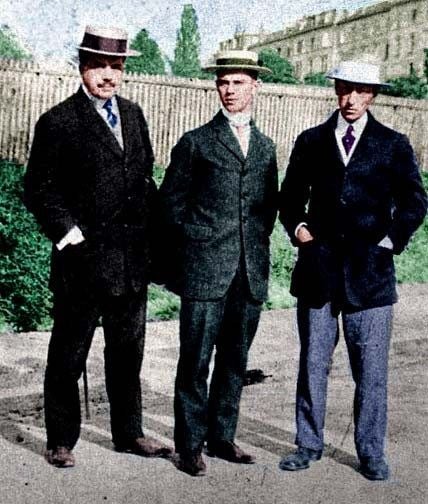
    PHOTO: Diaghilev, Vaslav Nijinsky, and Igor Stravinsky

  • Ballets Russes’ Lost English Composers

    Ballets Russes’ Lost English Composers

    Serge Diaghilev, impresario of the Ballets Russes, commissioned some of the most enduring ballet scores of the 20th century, from such composers as Claude Debussy (“Jeux”), Maurice Ravel (“Daphnis and Chloe”), Manuel de Falla (“The Three-Cornered Hat”), and Igor Stravinsky (“The Firebird,” “Petrushka” and “The Rite of Spring”).

    Less well known is the fact that two Englishmen were also approached.

    This Sunday night on “The Lost Chord,” we’ll listen to works by Constant Lambert and Lord Berners – both men so diverse in their interests, and possessing such outsized personalities, it isn’t really possible to do justice to either in the time allotted.

    Lambert was a brilliant polymath. In addition to his considerable talents as a composer, he was a conductor, arranger, and writer, as well as the lover of Margot Fonteyn. Alas, alcoholism and workaholism conspired with undiagnosed diabetes to hasten his demise at the age of 45.

    His ballet, “Romeo and Juliet,” presented as a play-within-a-play, turns Shakespeare’s tragedy of star-crossed lovers on its head, with the leads falling hard in a backstage romance with happier results. Lambert would go on to greater things, but the ballet is undeniably an impressive piece of work for a 20 year-old.

    Similarly, Lord Berners’ interests lay all over the place, but his was a much more relaxed character. Unfailingly productive as a composer, a painter, and a writer, nonetheless he never lost sight of the fact that life would be his magnum opus. And Berners lived well.

    Furthermore, his fortune ensured that he would never be taken to task for any of his whimsical behavior. This included having a 140-foot folly tower constructed on his estate (partly to annoy the neighbors) and keeping a horse and a giraffe to invite to his indoor and outdoor tea parties.

    Berners wrote novels, painted portraits (always sure to include a moustache, whether the sitter had one or not), and composed a respectable amount of music, especially for the ballet.

    For the Ballets Russes, he wrote “The Triumph of Neptune,” which became a great favorite of Sir Thomas Beecham. Sacheverell Sitwell provided the scenario, which concerns a sailor who is shipwrecked en route to Fairyland, and George Balanchine supplied the choreography.

    That’s a heady mix of hornpipes and pas de deux. I hope you’ll join me for “England à la Russe,” this Sunday night at 10:00 EDT, on WWFM – The Classical Network and wwfm.org.


    PHOTO: Berners, no doubt contemplating the placement of a moustache

Tag Cloud

Aaron Copland (92) Beethoven (94) Composer (114) Film Music (117) Film Score (143) Film Scores (255) Halloween (94) John Williams (185) KWAX (228) Leonard Bernstein (99) Marlboro Music Festival (125) Movie Music (132) Opera (197) Philadelphia Orchestra (86) Picture Perfect (174) Princeton Symphony Orchestra (106) Radio (86) Ralph Vaughan Williams (85) Ross Amico (244) Roy's Tie-Dye Sci-Fi Corner (290) The Classical Network (101) The Lost Chord (268) Vaughan Williams (101) WPRB (396) WWFM (881)

DON’T MISS A BEAT

Receive a weekly digest every Sunday at noon by signing up here


RECENT POSTS