Tag: Ballets Russes

  • Stravinsky’s Pulcinella Turns 100

    Stravinsky’s Pulcinella Turns 100

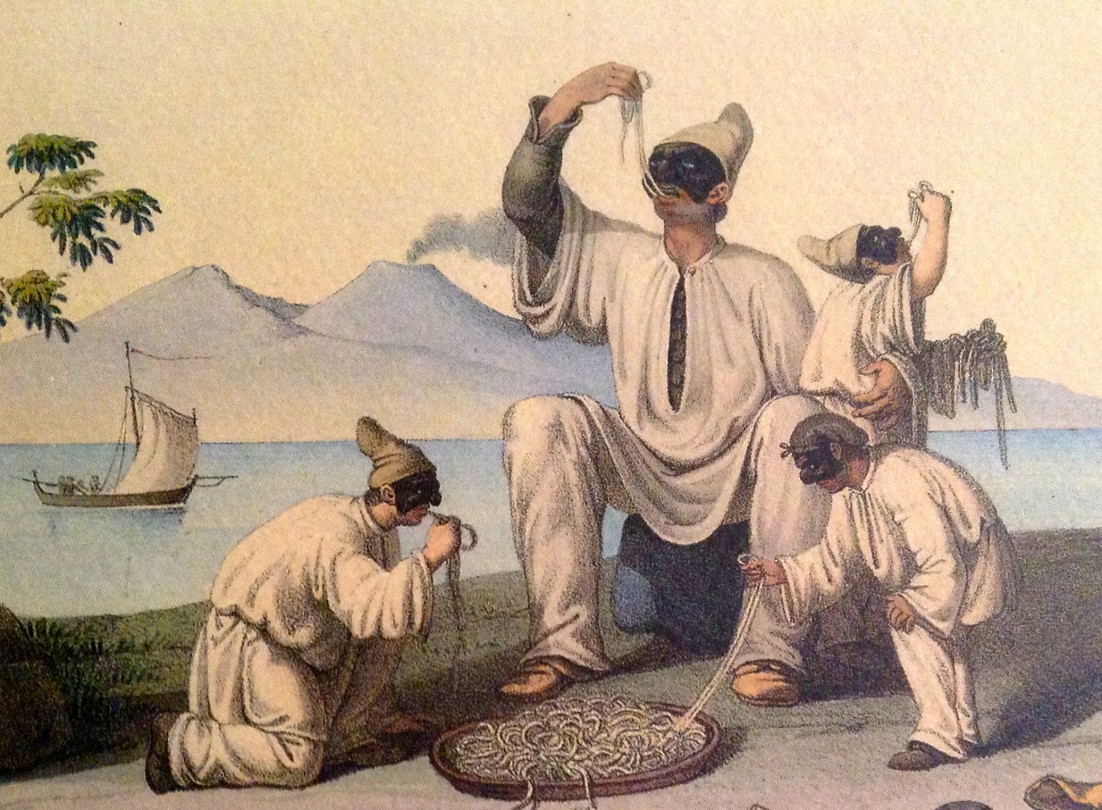
    Stravinsky’s commedia dell’arte scamp is 100 years-old.

    “Pulcinella” was given its first performance on this date in 1920. The ballet was commissioned by Sergei Diaghilev and given its premiere, at the Paris Opera, by the Ballets Russes. Leonide Massine provided both the libretto and the choreography. The sets were designed by Pablo Picasso.

    For years, it was thought that the raw material for Stravinsky’s score, based on manuscripts of the 18th century, derived from the quill of Giovanni Pergolesi. However, over time, scholarship has revealed that many of the original pieces were actually the work of Pergolesi contemporaries, composers such as Domenico Gallo and Unico Wilhelm von Wassenaer.

    The idea of arranging Pergolesi’s music was the idea of conductor Ernest Ansermet, who conducted the ballet’s premiere. Stravinsky was resistant at first, but closer acquaintance with the original scores unlocked their possibilities. Stravinsky’s arrangements honored the spirit of the past, but also imbued it with a modern sensibility, employing a distinctly 20th century syntax. It is one of the composer’s most playful, exuberant scores.

    “‘Pulcinella’ was… the epiphany through which the whole of my late work became possible,” he later wrote. “It was a backward look, of course—the first of many love affairs in that direction—but it was a look in the mirror, too.”

    It would be the first of Stravinsky’s innumerable interactions with historical music and forms and the birth of a style that would soon be identified as “neoclassical.”

    The popular suite, shorn of the complete ballet vocal music, was giving its first performance in Boston, two years later, with Pierre Monteux conducting.

    “Pergolesi” themes also inform the spin-off chamber works “Suite d’après des thèmes, fragments et morceaux de Giambattista Pergolesi,” for violin and piano (1925), and the “Suite Italienne,” for cello or violin and piano (1932-33). Any way you slice it, the music is a delight.


    “Pulcinella” (complete):

    http://www.youtube.com/watch?v=lD6dRSKLjlU&t=0m7s

    The suite, part of a complete concert performed (without conductor) by the Orpheus Chamber Orchestra:

    http://www.youtube.com/watch?v=H5ZpCA4pRtM&t=8m24s

    Cellist Heinrich Schiff and the “Suite Italienne”:

  • Diaghilev’s Ballets Russes 12 Tapping Tunes

    Diaghilev’s Ballets Russes 12 Tapping Tunes

    Today is the birthday of ballet impresario Sergei Diaghilev. Get your toes tapping with 12 works written or adapted for the Ballets Russes. You know you need the exercise.


    MAURICE RAVEL, “DAPHNIS ET CHLOE”
    Shepherds, pirates, and Pan!

    NIKOLAI TCHEREPNIN, “NARCISSE ET ECHO”
    Tcherepnin was actually Diaghilev’s first choice to compose “The Firebird.”

    https://www.youtube.com/watch?v=h5DwOXhO7YM

    IGOR STRAVINSKY, “PULCINELLA”
    Diaghilev produced Stravinsky’s three breakthrough ballets, “The Firebird,” “Petrouchka,” and “The Rite of Spring,” but this one is the most unremittingly joyous.

    RICHARD STRAUSS, “JOSEPHSLEGENDE”
    Poor Richard Strauss never got paid for his opulent biblical ballet on account of WWI.

    MANUEL DE FALLA, “THE THREE-CORNERED HAT”
    Ballet meets flamenco.

    PETER ILYCH TCHAIKOVSKY, “AURORA’S WEDDING”
    Stokowski conducting, at the age of 95!

    LORD BERNERS, “THE TRIUMPH OF NEPTUNE”
    Sailor Tom Tug’s adventures in Fairy Land (alas, these excerpts comprise but a third of the ballet).

    CONSTANT LAMBERT, “ROMEO AND JULIET”
    Not really an adaptation of Shakespeare’s tragedy, but a backstage romantic comedy. Just a clip, with set and costume designs by Max Ernst and Joan Miro.

    OTTORINO RESPIGHI, “LA BOUTIQUE FANTASQUE”
    “The Fantastic Toybox,” after melodies of Rossini.

    SERGEI PROKOFIEV, “THE PRODIGAL SON”
    Bad boys get the best music.

    https://www.youtube.com/watch?v=eNC-Bz19Mcs

    ERIK SATIE, “PARADE”
    Selections, choreography by Massine and designs by Picasso.

    FRANCIS POULENC, “LES BICHES”
    Before you get any smart ideas, the title means “The Does,” slang for coquettish young women. With Nijinska’s choreography. (BONUSES: Diaghilev’s “Prelude to the Afternoon of a Faun” and “Scheherazade”).

    https://www.youtube.com/watch?v=W5_iYhXAFa4


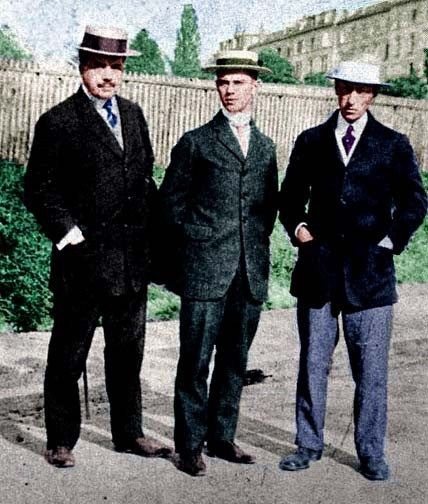
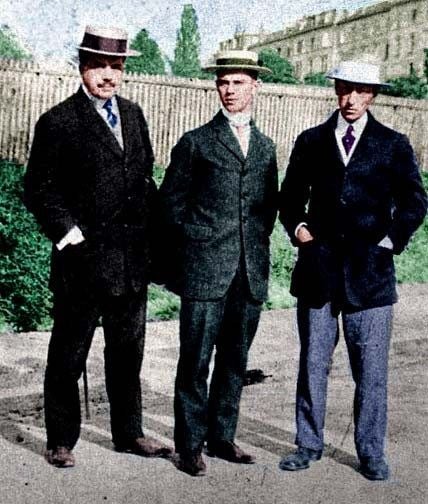
    PHOTO: Diaghilev, Vaslav Nijinsky, and Igor Stravinsky
  • Ballets Russes Treasures on The Classical Network

    Ballets Russes Treasures on The Classical Network

    Serge Diaghilev, impresario of the Ballets Russes, commissioned some of the most enduring ballet scores of the 20th century, from such composers as Claude Debussy (“Jeux”), Maurice Ravel (“Daphnis and Chloe”), Manuel de Falla (“The Three-Cornered Hat”), and especially Igor Stravinsky (“The Firebird,” “Petrushka” and “The Rite of Spring”).

    This afternoon on The Classical Network, we’ll have a chance to enjoy some of the lesser-known fruits of this partnership, including “Narcisse et Echo” by Nikolai Tcherepnin – written one year before “Daphnis,” though with some striking similarities – and the complete ballet “The Triumph of Neptune” – one of only two works composed for the company by an English composer, in this case Lord Berners. The suite, not exactly overplayed, was a great favorite of Sir Thomas Beecham (he recorded it several times), but the complete ballet is never done. We’ll also hear Richard Strauss’ music for the bombastic biblical spectacle “Josephslegende” (“The Legend of Joseph”) in its entirety.

    First, on today’s Noontime Concert, it’s music for voice and viol, courtesy of Gotham Early Music Scene, or GEMS. Mezzo-soprano Ashley Mulcahy and viola da gambist James Perretta of the duo Lyracle will present works for this distinctive combination from the late 16th and early 17th centuries.

    These performances were captured at GEMS’ Midtown Concerts series, held at the chapel of St. Bartholomew’s Church, 325 Park Avenue, in New York City. Free concerts take place at St. Bart’s on Thursdays at 1:15 p.m. For more information, visit GEMS’ website, gemsny.org, and click on the events calendar.

    Join me for a mix of GEMS and flawed diamonds from the Ballets Russes, from 12 to 4 p.m. EDT, on WWFM – The Classical Network and wwfm.org.


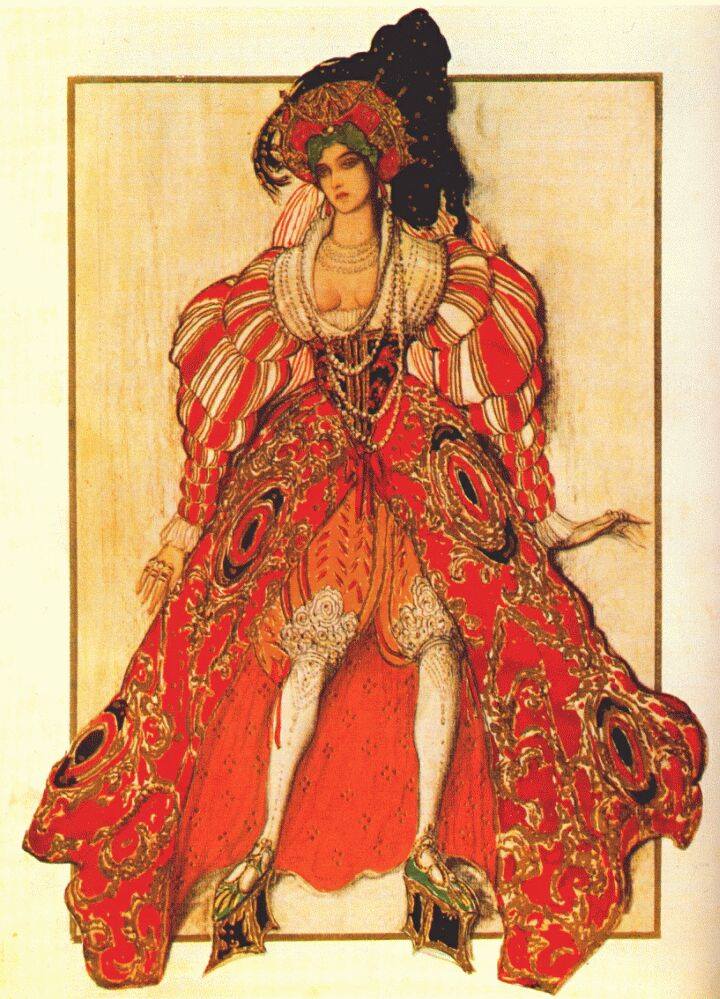
    IMAGE: Potiphar’s wife got it goin’ on!

  • Ida Rubinstein Scandalous Sugar Heiress

    Ida Rubinstein Scandalous Sugar Heiress

    The actor and dancer Ida Rubinstein specialized in strong, often sultry heroines. A remarkable figure, this sugar heiress from a family of Ukrainian Orthodox Jews essentially willed herself onto the Parisian stage, where her acting ability and natural magnetism more than compensated for her limited ability as a dancer.

    She was welcomed into the Ballets Russes in 1909, where she assumed the roles of Cleopatra and Scheherazade. Later, for her own company, she introduced Ravel’s “Bolero” and Stravinsky’s “Le Baiser de la fée” (“The Fairy’s Kiss”).

    She gained notoriety for her often racy sensuality, stripping naked for the “Dance of the Seven Veils” in a production of Oscar Wilde’s “Salome” in 1908. Her performance in the title role in Gabriele d’Annunzio and Claude Debussy’s “The Martyrdom of Saint Sebastian” generated further scandal in 1911. The Archbishop of Paris prohibited all Catholics from attending, on account of Saint Sebastian being portrayed by a woman and a Jew.

    This Sunday night on “The Lost Chord,” we salute Rubinstein with music that supported two of her lesser-known characterizations.

    In 1924, she appropriated the symphonic variations “Istar,” by Vincent d’Indy. Originally composed in 1896, the subject was a natural fit for the Rubinstein image, with the Assyrian goddess of love and war descending into the underworld to rescue her lover. Along the way, she passes through seven doors. At each door, she removes a piece of jewelry or an article of clothing, until, as she passes through the last, she stands unadorned. So does the music arrive finally at a complete statement of the theme, turning the usual structure of theme and variations on its head to suit the narrative.

    We’ll also hear “Sémiramis,” from 1934. This time Rubinstein played an Assyrian queen with insatiable carnal appetites. The music was by Arthur Honegger, and the instrumentation is quite striking: female narrator, vocal soloists, five-part mixed chorus, with orchestra including double bass clarinet, saxophone, two harps, two pianos, celesta, and two ondes Martenot – electronic keyboard instruments sounding very much like a couple of theremins.

    This was the fifth commission the composer was to receive from Rubinstein The sixth and last brought forth his magnum opus, “Jeanne d’Arc au Bûcher” (“Joan of Arc at the Stake”).

    “Sémiramis” was not a success, and the work remained unpublished during Honegger’s lifetime. In particular, a 15 minute monologue toward the climax, written by Paul Valéry, took all the air out of the room. This spoken interlude has been omitted from the recording we’ll hear of the piece’s first modern performance in 1992.

    I hope you’ll join me as we celebrate Ida Rubinstein, with “Ida Danced All Night,” this Sunday night at 10:00 EDT, on WWFM – The Classical Network and wwfm.org.


    PHOTO: Diaphanous dancer Ida Rubinstein

  • Prodigal Son Ballet A Father’s Day Dance

    Prodigal Son Ballet A Father’s Day Dance

    As related in the Gospel of Luke, a young wastrel burns through his family fortune, then returns home to the arms of his forgiving father. The son’s more responsible, elder brother is none too happy, but the father explains that since the younger son has repented and returned, as if from the dead – in essence, was lost, and is now found – there is cause for celebration.

    This Sunday night on “The Lost Chord,” it’s an off-center Father’s Day tribute, as we listen to ballet music inspired by the Parable of the Prodigal Son.

    We’ll hear a late, folk-inspired score by the Swedish composer Hugo Alfvén, staged in honor of his 85th birthday in 1957, and Sergei Prokofiev’s alternately pungent and transcendentally lyrical opus, written for the Ballets Russes in 1928. The latter was developed simultaneously with Prokofiev’s Symphony No. 4 and shares much of the same thematic material.

    Father knows best. I hope you’ll join me for “Son Dance,” ballet music inspired by the Prodigal Son for Father’s Day, this Sunday night at 10:00 EDT, on WWFM – The Classical Network and wwfm.org.

Tag Cloud

Aaron Copland (93) Beethoven (95) Composer (114) Film Music (129) Film Score (143) Film Scores (255) Halloween (94) John Williams (192) KWAX (229) Leonard Bernstein (103) Marlboro Music Festival (125) Movie Music (144) Mozart (88) Opera (206) Philadelphia Orchestra (89) Picture Perfect (174) Princeton Symphony Orchestra (108) Radio (88) Ross Amico (244) Roy's Tie-Dye Sci-Fi Corner (290) The Classical Network (101) The Lost Chord (268) Vaughan Williams (103) WPRB (396) WWFM (881)

DON’T MISS A BEAT

Receive a weekly digest every Sunday at noon by signing up here


RECENT POSTS