Tag: Bartók

  • NY Phil Ives & Lim Awaits

    NY Phil Ives & Lim Awaits

    And just like that, the new season is underway!

    The first concert I had on my calendar for the 2025-26 season had been for September 27, but the opening New York Philharmonic series, which began on Thursday, has been gnawing at me. I don’t have press tickets, and I just wasn’t willing to pay $200 to sit in the back row of the top tier. I mean, I understand it’s the opening series and it features superstar music and artistic director designate Gustavo Dudamel, but come on!

    That said, try as I may, I can’t say no to the opportunity to hear Ives’ Symphony No. 2 in what I am hoping is going to be a dynamite performance, on the same program with Bartók’s Piano Concerto No. 3 – with Yunchan Lim, no less. Since his 2022 victory at the Van Cliburn Competition (the youngest ever gold medal winner, at 18), Lim has been one of the most-sought-after pianists in the world. Several times, I have tried and failed to get tickets to his concerto and recital performances. I know he’s bringing the Bartók to Philadelphia in a few weeks, but his appearance in New York only sweetens the pot for a trip in to hear the Ives.

    THANKFULLY, I checked the prices for the few remaining tickets again this morning, and they appear to have fallen by a few bucks. Still higher than I ordinarily pay (tickets are listed at nearly half the price for next weekend’s concerts), and a trip in to New York is always an investment, but I’ll pack my dinner and maybe take the train. I know where to park for nothing at that hour and traffic will probably be light on Tuesday, but there would still be the gas and tolls and Manhattan’s insult-to-injury “congestion relief” tax to contend with.

    By contrast, when you take the train, you only have a vague idea of when your subway will arrive at Penn Station from Lincoln Center and how long you’ll be standing there watching the monitors, waiting for New Jersey Transit to announce a departure for Trenton. Then, once you’re on the train, there’s the interminable wait at every stop, since at that hour there is no express.

    But… bring a good book and don’t sleep through your stop, and you’ll be okay. It’s possible the travel gods will be merciful and no one will be blaring their cell phones, and your burnt offerings will obscure the pervasive scent of marijuana.

  • Fritz Reiner: Genius and Grinch

    Fritz Reiner: Genius and Grinch

    You’re a mean one, Mr. Reiner.

    Classical music has had its share of Grinches, but few were as cactus-cuddly as Fritz Reiner. From a musician’s standpoint, Reiner was one of the most dreaded conductors, in an era when tyrants of the podium still very much roamed the earth. With a glower that could make Karloff quake (though he resembled more Bela Lugosi), Reiner was forged in Hungary at the twilight of the Austro-Hungarian Empire. Hungary at the time had quite the reputation for churning out great conductors. George Szell, Eugene Ormandy, Antal Doráti, Ferenc Fricsay, Sir Georg Solti, and István Kertész all achieved considerable international success.

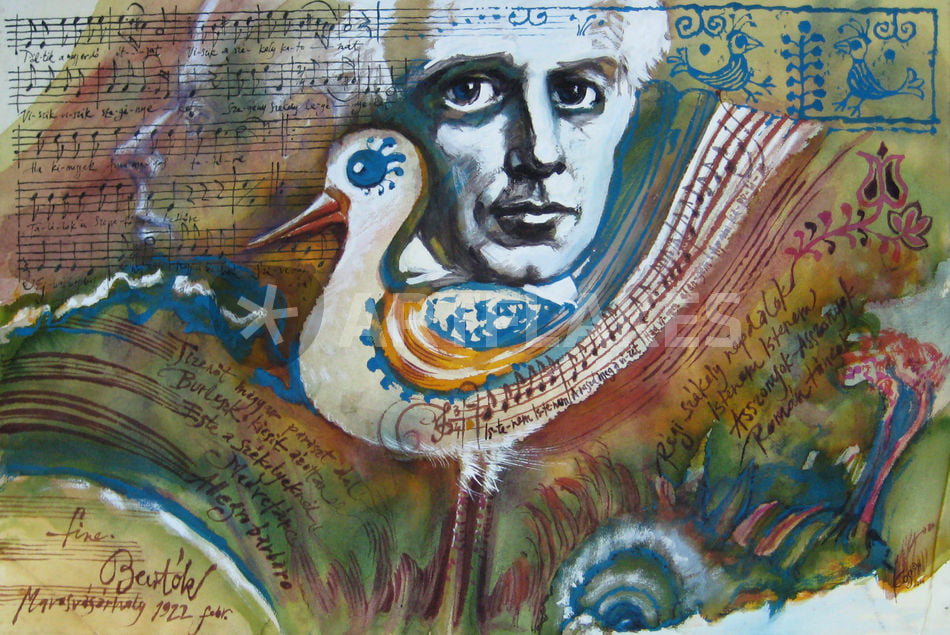
    Among Reiner’s own teachers was Béla Bartók, with whom he studied piano. Reiner would later repay the favor with what many consider to be the benchmark recording of Bartók’s “Concerto for Orchestra.” He also worked closely with Richard Strauss in Dresden, and his recordings of Strauss’ works are equally revered. All in all, the Chicago Symphony under Fritz Reiner was a surefire choice to give the ol’ hi-fi a good workout in the early days of stereo.

    In 1928, Reiner became a naturalized American citizen. He began to teach conducting at the Curtis Institute of Music in Philadelphia, where among his pupils was Leonard Bernstein. His first American post was as principal conductor of the Cincinnati Symphony. He took over the Pittsburgh Symphony for a decade, beginning in 1938. Then he spent several years at the Met. But it was as music director of the Chicago Symphony that he attained legendary status.

    For a master interpreter of some of the largest and most challenging works in the repertoire, his baton technique was notable for its precision and economy. Much of what he achieved, unfortunately, was through the brutality he exuded in rehearsals. Reiner emerged from an Old World steeped in aristocratic privilege. At the top of their profession, conductors then were regarded as gods-on-earth. When drive and ego were bolstered by absolute power, working conditions could become downright perilous. Before strong musicians’ unions, conductors exercised the authority to fire anyone on a whim. So when musicians played for Reiner, they played as if their lives depended on it – or at the very least their livelihoods.

    Did it make for better musicmaking? You can’t argue with the excellence of Reiner’s Chicago Symphony.

    Fritz Reiner: A Marriage of Talent and Terror

    https://drgeraldstein.wordpress.com/2013/10/12/fritz-reiner-a-marriage-of-talent-and-terror/?fbclid=IwAR1ylzD3gidbYGdYCgeUq7WF57_O1tzX1JqV6Nc0JNezy3DWwkc6R_bRob4

    His heart grew three times that day: Fritz Reiner’s perfect concert

    125 Moments: 101 Fritz Reiner’s “Perfect Concert”

    He found the strength of ten Reiners, plus two. I guess even autocrats have their cuddly moments. Happy birthday, Fritz Reiner.


    Reiner conducts Beethoven

    Big band Bach

    Benchmark Bartók

    Strauss’ “Salome”

    And, to keep it seasonal, “Waltz of the Flowers” from “The Nutcracker”

    https://www.youtube.com/watch?v=mgaS9CZ7KsQ

  • Fritz Reiner Birthday The Tyrant Conductor

    Fritz Reiner Birthday The Tyrant Conductor

    December 5th is when Krampus, the Christmas demon, descends from his Alpine lair to flog fearful girls and boys. And December 19th is the birthday of Fritz Reiner.

    From a musician’s standpoint, Reiner was one of the most dreaded conductors, in an era when tyrants of the podium still very much roamed the earth. With a glower that could make Bela Lugosi quake – and sporting quite the similar hairline – Reiner was forged in Hungary at the twilight of the Austro-Hungarian Empire. Hungary at the time had quite the reputation for churning out great conductors. George Szell, Eugene Ormandy, Antal Doráti, Ferenc Fricsay, Sir Georg Solti, and István Kertész all achieved considerable international success.

    Among Reiner’s own teachers was Béla Bartók, with whom he studied piano. Reiner would later repay the favor with what many consider to be the benchmark recording of Bartók’s “Concerto for Orchestra.” He also worked closely with Richard Strauss in Dresden, and his recordings of Strauss’ works are equally revered. All in all, the Chicago Symphony under Fritz Reiner was a surefire choice to give the ol’ hi-fi a good workout in the early days of stereo.

    In 1928, Reiner became a naturalized American citizen. He began to teach conducting at the Curtis Institute of Music in Philadelphia, where among his pupils was Leonard Bernstein. His first American post was as principal conductor of the Cincinnati Symphony. He took over the Pittsburgh Symphony for a decade, beginning in 1938. Then he spent several years at the Met. But it was as music director of the Chicago Symphony that he attained legendary status.

    For a master interpreter of some of the largest and most challenging works in the repertoire, his baton technique was notable for its precision and economy. Much of what he achieved, unfortunately, was through the brutality he exuded in rehearsals. Reiner emerged from an Old World steeped in aristocratic privilege. At the top of their profession, conductors then were regarded as gods-on-earth. When drive and ego were bolstered by absolute power, working conditions could become downright perilous. Before strong musicians’ unions, conductors exercised the authority to fire anyone on a whim. So when musicians played for Reiner, they played as if their lives depended on it – or at the very least their livelihoods.

    Did it make for better musicmaking? You can’t argue with the excellence of Reiner’s Chicago Symphony.

    Read this account of the day Reiner finally gave his “perfect concert.”

    https://csosoundsandstories.org/125-moments-101-fritz-reiners-perfect-concert/?fbclid=IwAR1XCI9gDY-L5-Z-wSxZyYMlWjDU2IbhvhlVSgZ17SA0ekYHWECHuQw4L3A

    Even autocrats have their soft side. Happy birthday, Fritz Reiner.


    Reiner conducts Beethoven

    Big band Bach

    Benchmark Bartók

    Strauss’ “Salome”

    And, to keep it seasonal, “Waltz of the Flowers” from “The Nutcracker”

    https://www.youtube.com/watch?v=mgaS9CZ7KsQ

  • Bartók’s Adirondack Escape Creative Revival

    Bartók’s Adirondack Escape Creative Revival

    When you’re displaced, ailing, and demoralized, sometimes the best thing you can do is just get away.

    How tranquility and birdsong of the Adirondacks revitalized the creative spirit of Béla Bartók:

    https://www.adirondackalmanack.com/2020/12/history-matters-bartoks-birds.html

    Lots more about Bartók’s cabin at Saranac Lake (since restored):

    https://localwiki.org/hsl/Bartok_Cabin

    His Piano Concerto No. 3 (bird song influence particularly strong in the second movement, around 11:58):

  • Hungary’s 1848 Revolution in Music

    Hungary’s 1848 Revolution in Music

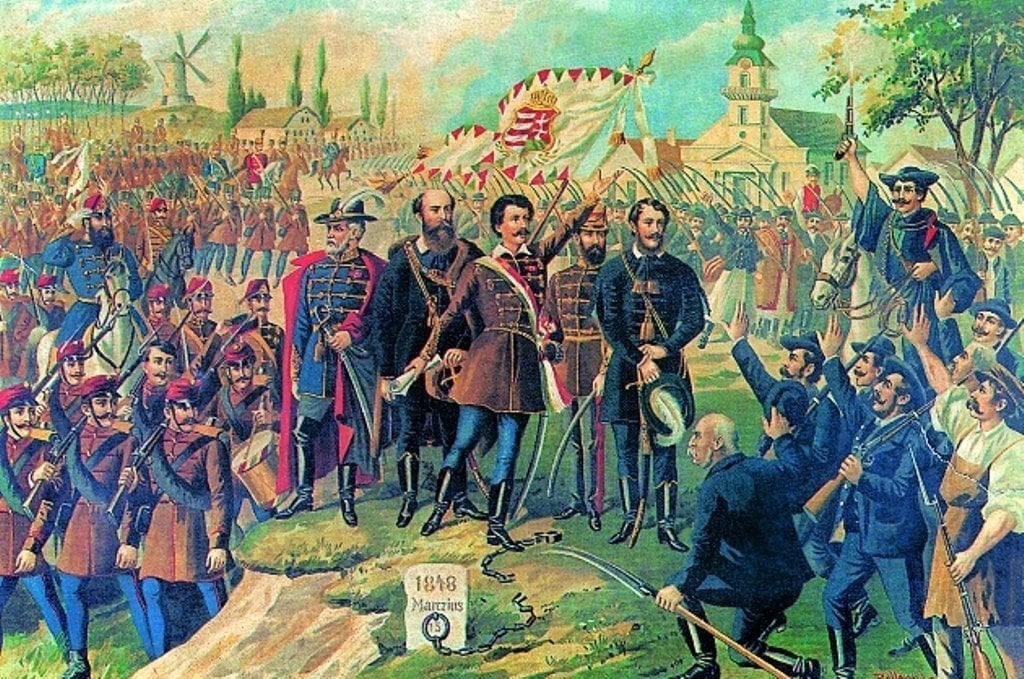
    March 15 may not have worked out so well for Julius Caesar, but it is a festive day in Hungary. It is the day Hungarians mark the Revolution of 1848 and the subsequent War of Independence from Austrian-Habsburg rule. It is one of the most prominent of Hungarian national holidays, though this year, because of coronavirus concerns, public celebration is understandably muted.

    The uprising began as a peaceful demonstration in Pest-Buda. It wasn’t until autumn that armies clashed. Official secession didn’t take place until March 1849, when Franz Joseph moved to subdivide the Kingdom of Hungary. In April, an independent government was formed, with firebrand Lajos Kossuth elected as governor and president. Unfortunately, the new government would be short-lived.

    Here’s Liszt’s symphonic poem “Hungaria.” While Liszt offered no overt program to the piece, its patriotic intent is right there in the title. Listeners at its first performance would have associated the funeral march, based on the work’s B-theme, to the defeat of Kossuth’s revolt. Liszt conducted the piece for the first time at the Hungarian National Theater in what is now Budapest in 1856. At the end, he reported, the audience was in tears.

    Béla Bartók began his symphonic poem “Kossuth,” his first mature orchestral work, in 1903. He had only just attended the Budapest premiere of Richard Strauss’ “Also sprach Zarathustra,” which he found electrifying.

    Broadly speaking, the difference between Liszt’s “symphonic poems” and Strauss’ “tone poems” is that Liszt more often than not attempts to convey the ideas behind the music’s inspiration, while Strauss frequently ties moments in his scores to specific actions. At his best, Strauss can be understood without knowing the program. At his worst (and I still love him at his worst), his music is so closely tied to the action that his tone poems are like precursors to movie music.

    Here is Bartók’s stab at the Straussian tone poem. The work begins with a character portrait of its subject. The Austrian national anthem is parodied to convey the approach of enemy troops. Then comes the battle and Hungarian defeat. In common with Liszt, toward the end, there is a funeral march. Again, the work caused a stir when it was given its first performance by the Budapest Philharmonic Society in 1904.

    Despite the funereal overtones, Kossuth himself escaped. He toured Britain and the United States where he was received as a revolutionary hero, though there were some who bristled at his perceived arrogance and ambition. He died in Turin in 1894. His body was sent home to Pest, where it was interred, amid national mourning, and a bronze statue erected in his honor.

    It’s so easy to accept music, even music that has meant so much to so many, with a degree of complacency, as an abstraction, or as mere entertainment. A broad awareness of the back story to pieces such as these imbues them with something extramusical. It allows a listener to leap across time and distance to truly empathize with the dreams, struggles, and spirit of the Hungarian people.

Tag Cloud

Aaron Copland (92) Beethoven (95) Composer (114) Film Music (120) Film Score (143) Film Scores (255) Halloween (94) John Williams (185) KWAX (229) Leonard Bernstein (100) Marlboro Music Festival (125) Movie Music (135) Opera (198) Philadelphia Orchestra (88) Picture Perfect (174) Princeton Symphony Orchestra (106) Radio (87) Ralph Vaughan Williams (85) Ross Amico (244) Roy's Tie-Dye Sci-Fi Corner (290) The Classical Network (101) The Lost Chord (268) Vaughan Williams (103) WPRB (396) WWFM (881)

DON’T MISS A BEAT

Receive a weekly digest every Sunday at noon by signing up here


RECENT POSTS