Tag: Bartók

  • Bartók & Dohnányi: Contrasting Hungarians

    Bartók & Dohnányi: Contrasting Hungarians

    It’s all about contrasts on this week’s “Music from Marlboro.”

    While Béla Bartók is respected as the foremost Hungarian composer of the 20th century, Ernő Dohnányi, until recently, has been subject to neglect, at least in proportion to his significance. Sure, Bartók and his friend Zoltán Kodály were at the forefront of the whole nationalist movement, traipsing around the countryside in order to document authentic folk traditions before they were swallowed up forever by industrialization. But as director of the Budapest Academy of Music and music director of the Budapest Philharmonic Orchestra, Dohnányi would exert as much influence over his country’s musical development as that of his folk music-mad friends and contemporaries

    Unfortunately, he would become the target of character assassination campaigns after World War II, in which he was painted as a Nazi sympathizer. Dohnányi was investigated and cleared several times by the U.S. Military Government, and in fact has been defended as a forgotten hero of Holocaust resistance, since it was through his administrations that countless Jewish musicians survived. Also, between the wars, he went to bat for Kodály, a leftist, by refusing to fire him from the Budapest Academy. As a result, Dohnányi too lost his position, albeit temporarily. Nevertheless, he continued to be eyed with suspicion, and his slandered reputation never fully recovered.

    Equally fatal is the fact that much of his music bears a more cosmopolitan stamp than that of the Hungarian composers of his era that are now so celebrated. His composition teacher, the German-born Hans von Koessler (known in Hungary as János Koessler) was a cousin of Max Reger. Of course, Koessler also taught Bartók and Kodály. But Dohnányi was perfectly happy nestled in the world of Brahms. For his international career, he assumed the name Ernst von Dohnanyi.

    Dohnányi’s Piano Quintet in C minor, completed in June of 1895, one month before his 18th birthday, earned Brahms’ approval. We’ll hear it performed at the 1977 Marlboro Music Festival, by pianist Stephanie Brown, violinists Joseph Genualdi and Mayuki Fukuhara, violist Philipp Naegele, and cellist Lisa Lancaster.

    The program will open with Bartók’s “Contrasts,” a raw, fascinating work, from 1938. The piece, inspired by Hungarian and Romanian dance melodies, was commissioned by Benny Goodman, of all people. The trio – for clarinet, violin, and piano – contains passages of bitonality and frenzied dances for scordatura violin. We’ll hear it performed at the 1998 Marlboro Music Festival by clarinetist Anthony McGill, violinist Catherine Cho, and pianist Pierre-Laurent Aimard.

    I hope you’re hungry for Hungarian music. Variety is the spice of life on this week’s “Music from Marlboro,” Wednesday evening at 6:00 EDT, on WWFM – The Classical Network and wwfm.org.

    Marlboro School of Music and Festival: Official Page


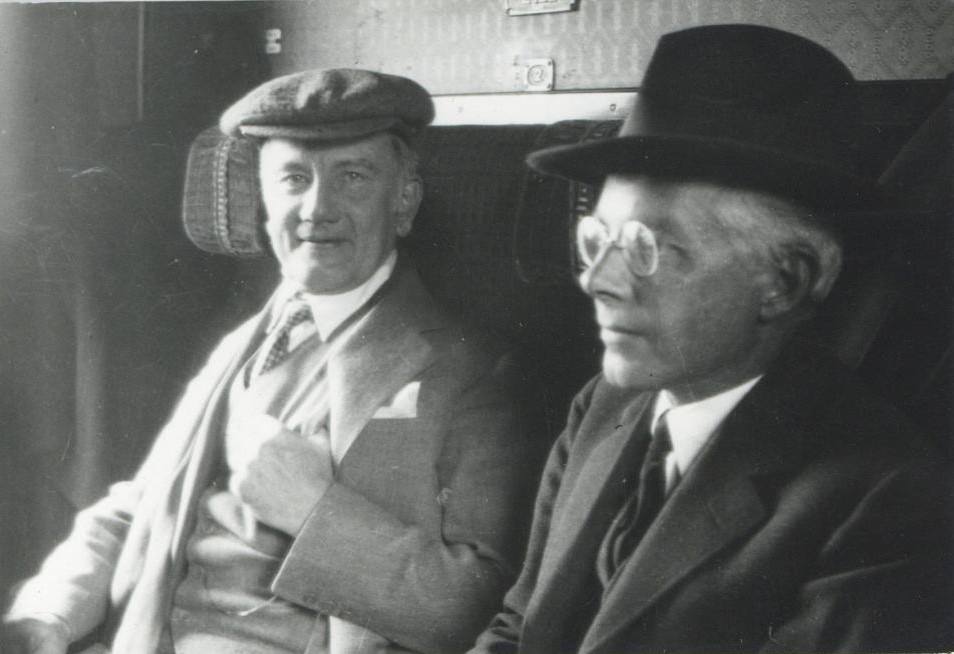
    Strangers on a Train: Ernő Dohnányi (left) and Béla Bartók

  • Enescu Bartók Unity at Marlboro

    Enescu Bartók Unity at Marlboro

    Romania and Hungary share a common border, if an uneasy history. They also happen to share two of the 20th century’s most talented composers, both of them born in 1881. On this week’s “Music from Marlboro,” as always, we look past nationalistic concerns to seek unity in music.

    George Enescu (1881-1955) was arguably Romania’s greatest musical export, a child prodigy who excelled also as a violinist, a pianist, a conductor, and a teacher. At the age of seven, he became the youngest student ever to be admitted to the Vienna Conservatory. He graduated before his 13th birthday. From there, he went to Paris and embarked on a charmed career with too many highlights to detail here. Pablo Casals, who was affiliated with the Marlboro Music Festival for the last 13 years of his life, described him as “the greatest musical phenomenon since Mozart.”

    Enescu’s Violin Sonata No. 2 in F minor (1899), was completed during his final year at the Paris Conservatory. He had already composed an ambitious, thirty-minute “Romanian Poem” (1898), when just 16, and wasn’t far from achieving world fame with his “Romanian Rhapsody No. 1” (1901). Enescu later claimed that the sonata, along with his Octet for Strings, marked the point where he felt he had truly become himself.

    We’ll hear it performed at the 1974 Marlboro Music Festival, by violinist Pina Carmirelli and pianist Alan Weiss.

    Hungarian composer Béla Bartók (1881-1945) was also a gifted pianist and a pioneering ethnomusicologist, who did much to deepen musical understanding through his documentary journeys and insights into the cultures of Eastern Europe and North Africa – including the region of Transylvania, which was to become the source of such complicated feelings between Hungary and Romania.

    He also happened to be one of the most innovative musical thinkers of his time, beating an alternative route to modernism through the assimilation of folk music into a highly personal idiom that owes little to either Stravinsky or Schoenberg.

    Bartók’s “Divertimento for String Orchestra” (1939) is a fascinating chimera – it takes its name from an 18th century form (appropriate for its neo-classical ambitions), shares qualities with the Baroque concerto grosso (with a small group of soloists at times contrasting with the greater body of the orchestra), and yet remains distinctly of its time. Even here, the composer’s love of folk music is evident.

    The “Divertimento” was Bartók’s final composition before fleeing Nazi Europe for the United States. He wrote the work in only fifteen days, while staying at the Swiss chalet of conductor Paul Sacher, who had commissioned the piece. Though it was composed very quickly, as befits a divertimento – which traditionally, in the 18th century, was regarded as “entertainment” music – Bartók left meticulous instructions for its performance.

    We’ll hear it played by a collection of Marlboro string players, conducted by Sándor Végh, in 1974. Végh, born in Transylvania, was one of the great chamber musicians. He participated in the first Hungarian performance of Bartók’s String Quartet No. 5.

    That’s music by Enescu and Bartók on the next “Music for Marlboro,” this Wednesday evening at 6:00 EST, on WWFM – The Classical Network and wwfm.org.

    Marlboro School of Music and Festival: Official Page


    Sándor Végh promoting unity on this week’s “Music for Marlboro”

  • Zoltán Kocsis Hungarian Pianist Dies at 64

    Zoltán Kocsis Hungarian Pianist Dies at 64

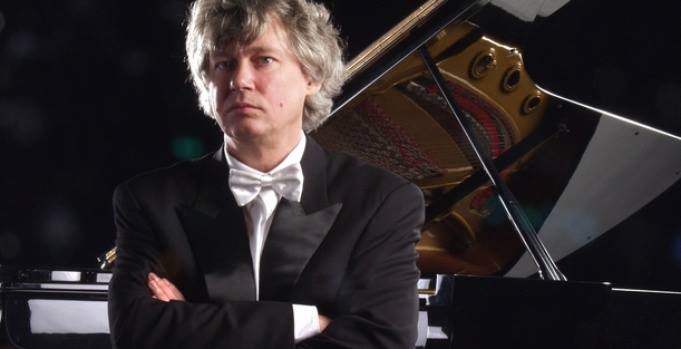
    A great pianist has died. Hungarian pianist and conductor Zoltán Kocsis died yesterday afternoon. He was 64 years-old. This is especially disturbing to me, since on all my recordings he looks like a kid. And then it occurred to me, he was only 38 when he received the Gramophone Award for his fine album of Debussy piano works. Is 1990 really so far away? Time is passing.

    Kocsis cofounded the Budapest Festival Orchestra with Iván Fischer in 1983 (again, so long ago). He became chief conductor and artistic director of the Hungarian National Philharmonic in 1997. His recordings of Debussy and Bartók are particularly fine. He was also a great champion of the works of György Kurtág (who, at 90 years-old, is still very much with us).

    I’ll be honoring Kocsis this afternoon with some of his recordings, between 4 and 7:00 EST, on WWFM – The Classical Network and at wwfm.org.


    Kocsis obituary in the Washington Post. Brace yourself for the photo.

    https://www.washingtonpost.com/entertainment/music/hungarian-pianist-and-conductor-zoltan-kocsis-dies-at-age-64/2016/11/06/de032dee-a457-11e6-ba46-53db57f0e351_story.html

Tag Cloud

Aaron Copland (92) Beethoven (95) Composer (114) Film Music (120) Film Score (143) Film Scores (255) Halloween (94) John Williams (185) KWAX (229) Leonard Bernstein (100) Marlboro Music Festival (125) Movie Music (135) Opera (198) Philadelphia Orchestra (88) Picture Perfect (174) Princeton Symphony Orchestra (106) Radio (87) Ralph Vaughan Williams (85) Ross Amico (244) Roy's Tie-Dye Sci-Fi Corner (290) The Classical Network (101) The Lost Chord (268) Vaughan Williams (103) WPRB (396) WWFM (881)

DON’T MISS A BEAT

Receive a weekly digest every Sunday at noon by signing up here


RECENT POSTS