Tag: Bartók

  • Fritz Reiner Tyrant Genius of the CSO

    Fritz Reiner Tyrant Genius of the CSO

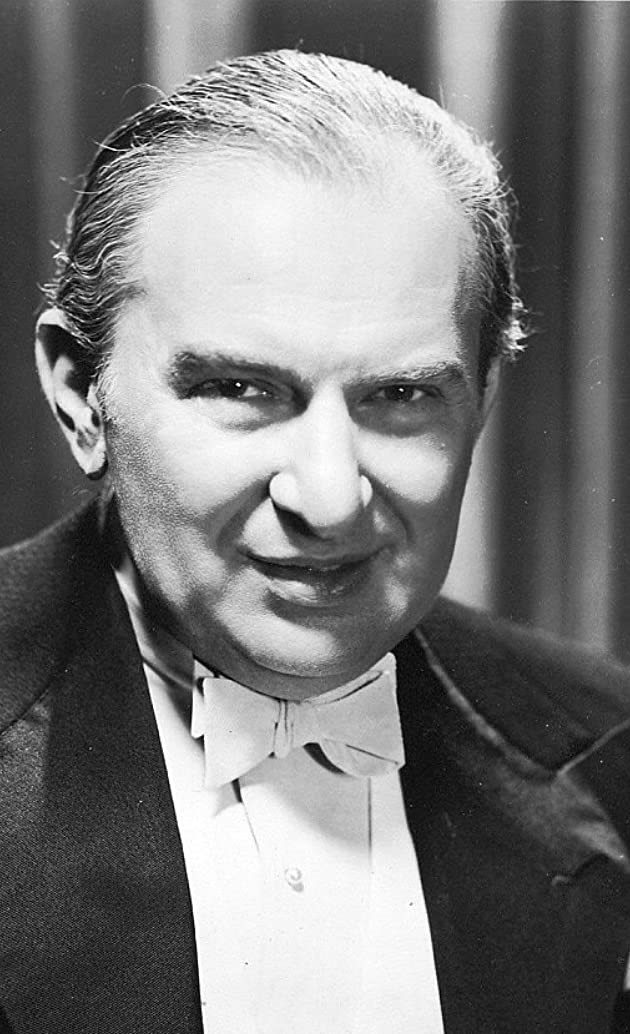
    At a time when tyrant conductors still very much roamed the earth, Fritz Reiner was one of the most feared. With a glower that would make Bela Lugosi quake – and sporting quite the similar hairline – Reiner was forged in Hungary at the twilight of the Austro-Hungarian Empire. Hungary at the time had quite the reputation for churning out great conductors. Among those to achieve considerable international success were George Szell, Eugene Ormandy, Antal Doráti, Ferenc Fricsay, Sir Georg Solti, and István Kertész.

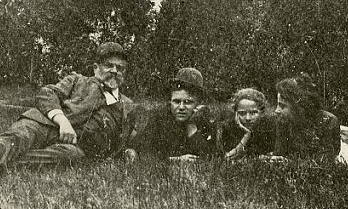
    Among Reiner’s own teachers was Béla Bartók, with whom he studied piano. Reiner would later repay the favor with what many consider to be the benchmark recording of Bartók’s “Concerto for Orchestra.” He also worked closely with Richard Strauss in Dresden, and his recordings of Strauss’ works are equally revered. All in all, the Chicago Symphony under Fritz Reiner was a surefire choice to give the ol’ hi-fi a good workout in the early days of stereo.

    Reiner became a naturalized American citizen in 1928, and began to teach conducting at the Curtis Institute of Music in Philadelphia. Among his pupils was Leonard Bernstein. His first American post was as principal conductor of the Cincinnati Symphony. He led the Pittsburgh Symphony for ten years, from 1938 to 1948, then spent several years at the Met. But it was as music director of the Chicago Symphony that he attained legendary status.

    For a master interpreter of some of the largest and most challenging works in the repertoire, his baton technique was notable for its precision and economy. Much of what he achieved, unfortunately, was through the brutality he exerted in rehearsals. Reiner emerged from an Old World steeped in aristocratic methods. At the top of their profession, conductors then were regarded as gods-on-earth. When drive and ego were bolstered by absolute power, working conditions became downright perilous. Before strong musicians’ unions, conductors exercised the authority to fire anyone on the spot. So when musicians played for Reiner, they played as if there lives depended on it – or at the very least their livelihoods.

    Did it make for better musicmaking? You can’t argue with the excellence of Reiner’s Chicago Symphony.

    Read this account of the day Reiner finally gave his “perfect concert.”

    https://csosoundsandstories.org/125-moments-101-fritz-reiners-perfect-concert/#:~:text=In%20October%201958%2C%20Fritz%20Reiner,New%20Brunswick%2C%20and%20Washington%2C%20D.C.

    Even autocrats have birthdays. Happy birthday, Fritz Reiner.


    Reiner conducts Beethoven

    Reiner conducts Kodály and Bartók, with Rudolf Serkin at the piano
    https://www.youtube.com/watch?v=TOE83a1FrwA

    Reiner conducts Strauss’ “Salome”
  • Béla Bartók Birthday Listen to Bartók Play Himself

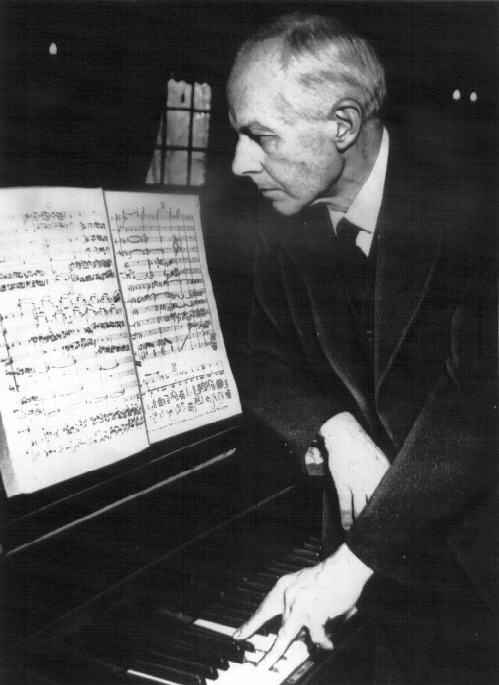
    Béla Bartók Birthday Listen to Bartók Play Himself

    Happy birthday, Béla Bartók. Hear Bartók play (and introduce) Bartók.

    https://www.youtube.com/watch?v=5acxks1LuVI

  • Dvořák & Bartók at Marlboro: Serenades & Divertimenti

    Dvořák & Bartók at Marlboro: Serenades & Divertimenti

    This week on “Music from Marlboro,” two Central European composers look back to the 18th century – in a sense. We’ll hear a serenade by Czech master Antonin Dvořák, and then a divertmento by Hungarian master Béla Bartók.

    I say in a sense, because both designations, “serenade” and “divertimento,” have their roots in the 18th century as entertainment music. The classical prototypes, as they were originally intended, avoided weighty arguments, profound introspection, and showy virtuosity of the type one might expect of more substantial forms, like the symphony, the concerto, or the string quartet.

    Dvořák’s unpretentious “Serenade for Winds” was given its first performance in 1878, when the composer was 37 years-old. The serenade is written in the tried-and-true “Slavonic style” that established Dvořák’s fame. Its instrumentation and emphasis on melody recall occasional and ceremonial serenades of the 18th century.

    We’ll hear a recording made in 1957, by Marlboro wind players directed by Louis Moyse.

    In addition to being one of the greatest composers of the 20th century, Bartók was a pioneering ethnomusicologist, who did much to expand and deepen our musical understanding, through his documentary journeys and insights into the cultures of Eastern Europe and North Africa.

    He also happened to be one of the most innovative of musical thinkers, beating an alternative route to modernism through the assimilation of folk music and forging a highly personal idiom that owes little to either Stravinsky or Schoenberg.

    Bartók’s “Divertimento for String Orchestra,” from 1939, is a fascinating chimera. It takes its name from an 18th century form (appropriate for its neo-classical ambitions), shares qualities with the Baroque concerto grosso (with its small group of soloists at times contrasting with the greater body of strings), and yet remains distinctly of its time. Even here, the composer’s love of folk music is evident.

    The “Divertimento” was Bartók’s final composition before fleeing Nazi Europe for the United States. He was 58 years-old. He completed the piece in only fifteen days, while a guest at the Swiss chalet of conductor Paul Sacher, who had commissioned the work. Though it was composed very quickly, as befits a divertimento, Bartók left meticulous instructions for its performance.

    We’ll hear it played at Marlboro in 1974, by a string orchestra conducted by Sándor Végh. Végh actually knew Bartók. He participated in the first Hungarian performance of the composer’s String Quartet No. 5.

    I hope you’ll join me for a diverting hour, on the next “Music from Marlboro.” If you’re Hungary for worthwhile music, Czech it out, this Wednesday evening at 6:00 EST, on WWFM – The Classical Network and wwfm.org.

    Marlboro School of Music and Festival: Official Page


    PHOTOS: Dvořák and Bartók go al fresco

  • Dvořák & Bartók at Marlboro: Serenades Reimagined

    Dvořák & Bartók at Marlboro: Serenades Reimagined

    This week on “Music from Marlboro,” two Central European composers look back to the 18th century – in a sense. We’ll hear a serenade by Czech master Antonin Dvořák, and then a divertmento by Hungarian master Béla Bartók.

    I say in a sense, because both designations, “serenade” and “divertimento,” have their roots in the 18th century as entertainment music. The classical prototypes, as they were originally intended, avoided weighty arguments, profound introspection, and showy virtuosity of the type one might expect of more substantial forms, like the symphony, the concerto, or the string quartet.

    Dvořák’s unpretentious “Serenade for Winds” was given its first performance in 1878, when the composer was 37 years-old. The serenade is written in the tried-and-true “Slavonic style” that established Dvořák’s fame. Its instrumentation and emphasis on melody recall occasional and ceremonial serenades of the 18th century.

    We’ll hear a recording made in 1957, by Marlboro wind players directed by Marcel Moyse. Moyse co-founded the Marlboro Music Festival in 1951.

    In addition to being one of the greatest composers of the 20th century, Bartók was a pioneering ethnomusicologist, who did much to expand and deepen our musical understanding, through his documentary journeys and insights into the cultures of Eastern Europe and North Africa.

    He also happened to be one of the most innovative of musical thinkers, beating an alternative route to modernism through the assimilation of folk music and forging a highly personal idiom that owes little to either Stravinsky or Schoenberg.

    Bartók’s “Divertimento for String Orchestra,” from 1939, is a fascinating chimera. It takes its name from an 18th century form (appropriate for its neo-classical ambitions), shares qualities with the Baroque concerto grosso (with its small group of soloists at times contrasting with the greater body of strings), and yet remains distinctly of its time. Even here, the composer’s love of folk music is evident.

    The “Divertimento” was Bartók’s final composition before fleeing Nazi Europe for the United States. He was 58 years-old. He completed the piece in only fifteen days, while a guest at the Swiss chalet of conductor Paul Sacher, who had commissioned the work. Though it was composed very quickly, as befits a divertimento, Bartók left meticulous instructions for its performance.

    We’ll hear it played at Marlboro in 1974, by a string orchestra conducted by Sándor Végh. Végh actually knew Bartók. He participated in the first Hungarian performance of the composer’s String Quartet No. 5.

    I hope you’ll join me for a diverting hour, on the next “Music from Marlboro.” If you’re Hungary for worthwhile music, Czech it out, this Wednesday evening at 6:00 EST, on WWFM – The Classical Network and wwfm.org.

    Marlboro School of Music and Festival: Official Page


    PHOTOS: Dvořák and Bartók go al fresco

  • Dvořák & Bartók at Marlboro: Serenades & Divertimento

    Dvořák & Bartók at Marlboro: Serenades & Divertimento

    This week on “Music from Marlboro,” two Central European composers look back to the 18th century – in a sense. We’ll hear a serenade by Czech master Antonin Dvořák, and then a divertmento by Hungarian master Béla Bartók.

    I say in a sense, because both designations, “serenade” and “divertimento,” have their roots in the 18th century as entertainment music. The classical prototypes, as they were originally intended, avoided weighty arguments, profound introspection, and showy virtuosity of the type one might expect of more substantial forms, like the symphony, the concerto, or the string quartet.

    Dvořák’s unpretentious “Serenade for Winds” was given its first performance in 1878, when the composer was 37 years-old. The serenade is written in the tried-and-true “Slavonic style” that established Dvořák’s fame. Its instrumentation and emphasis on melody recall occasional and ceremonial serenades of the 18th century.

    We’ll hear a recording made in 1957, by Marlboro wind players directed by Louis Moyse.

    In addition to being one of the greatest composers of the 20th century, Bartók was a pioneering ethnomusicologist, who did much to expand and deepen our musical understanding, through his documentary journeys and insights into the cultures of Eastern Europe and North Africa.

    He also happened to be one of the most innovative of musical thinkers, beating an alternative route to modernism through the assimilation of folk music and forging a highly personal idiom that owes little to either Stravinsky or Schoenberg.

    Bartók’s “Divertimento for String Orchestra,” from 1939, is a fascinating chimera. It takes its name from an 18th century form (appropriate for its neo-classical ambitions), shares qualities with the Baroque concerto grosso (with its small group of soloists at times contrasting with the greater body of strings), and yet remains distinctly of its time. Even here, the composer’s love of folk music is evident.

    The “Divertimento” was Bartók’s final composition before fleeing Nazi Europe for the United States. He was 58 years-old. He completed the piece in only fifteen days, while a guest at the Swiss chalet of conductor Paul Sacher, who had commissioned the work. Though it was composed very quickly, as befits a divertimento, Bartók left meticulous instructions for its performance.

    We’ll hear it played at Marlboro in 1974, by a string orchestra conducted by Sándor Végh. Végh actually knew Bartók. He participated in the first Hungarian performance of the composer’s String Quartet No. 5.

    I hope you’ll join me for a diverting hour, on the next “Music from Marlboro.” If you’re Hungary for worthwhile music, Czech it out, this Wednesday evening at 6:00 EST, on WWFM – The Classical Network and wwfm.org.

    Marlboro School of Music and Festival: Official Page


    PHOTOS: Dvořák and Bartók go al fresco

Tag Cloud

Aaron Copland (92) Beethoven (95) Composer (114) Film Music (120) Film Score (143) Film Scores (255) Halloween (94) John Williams (185) KWAX (229) Leonard Bernstein (100) Marlboro Music Festival (125) Movie Music (135) Opera (198) Philadelphia Orchestra (88) Picture Perfect (174) Princeton Symphony Orchestra (106) Radio (87) Ralph Vaughan Williams (85) Ross Amico (244) Roy's Tie-Dye Sci-Fi Corner (290) The Classical Network (101) The Lost Chord (268) Vaughan Williams (103) WPRB (396) WWFM (881)

DON’T MISS A BEAT

Receive a weekly digest every Sunday at noon by signing up here


RECENT POSTS