Tag: Beethoven

  • Alfred Brendel: Wit, Wisdom & Beethoven

    Alfred Brendel: Wit, Wisdom & Beethoven

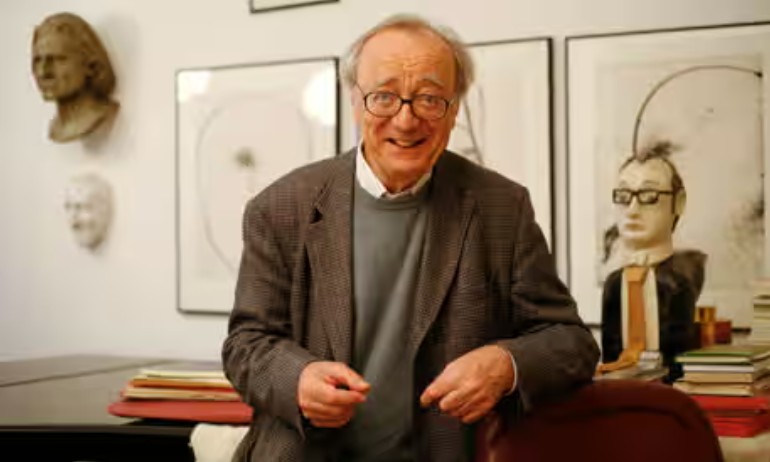
    Alfred Brendel was taller and had a better sense of humor than one would ever anticipate from the somber expression he wore on so many of his album covers. He was often described as “cerebral,” but what he really liked was to laugh. I guess that image would have jarred with the marketing strategy of Philips Records. They always had him looking way too serious as he recorded way too much Beethoven. Back in the day, Brendel was the first to record Beethoven’s complete piano music. Then he recorded the sonatas again. And then again.

    His fame paralleled the rise of the LP. It’s interesting that many of his earlier recordings were in muddy sound for the Vox label. That said, the repertoire was often much more stimulating than that on the digital recordings he made later in his career. (For Vox, he set down first recordings of Franz Liszt’s “Christmas Tree Suite” and Prokofiev’s Piano Concerto No. 5.) Also, the performances seemed more spontaneous, or perhaps simply more vibrant. Later, he was always reliable, if not always the most thrilling interpreter. Cerebral became a handy euphemism.

    Handily, the compact disc arrived for Brendel at mid-life, just as he had reached maturity. The improved technology allowed him to go back and document much of his core repertoire in clean, modern sound. By extension, he was a regular presence on classical radio, and millions became familiar with him through his interpretations of Haydn, Mozart, Beethoven, Schubert, Schumann, Liszt, Brahms, and perhaps most interestingly, Schoenberg.

    When he retired in 2008, at the age of 78, he had been struggling with arthritis and back pain, but he was still at the top of his game, one of the few classical artists still guaranteed to pack an auditorium. He appeared at Carnegie Hall no less than 81 times. Twice, he performed the complete Beethoven sonatas there.

    I don’t think it’s possible to love classical music and not respect Alfred Brendel. The man was an interpretive artist of the highest caliber. He also sold lots of records during an era when his very existence helped contribute to the viability of keeping a classical music section in most record stores.

    He looked pretty much like what anyone imagined a pianist to be: bespectacled, crowned with a disheveled widow’s peak, and improbably tall and lank. He was the living embodiment of an absent-minded professor. But the man, better-read than most, also possessed a keen sense of humor. He was a fan of Edward Gorey and Charles Addams and Gary Larson. He collected kitsch and newspaper bloopers. He went on record as stating that his favorite occupation was laughing.

    Alongside his many thoughtful essays on musical subjects (including at least one on humor in music), he published two volumes of epigrammatic poetry, “One Finger Too Many” and “Cursing Bagels.”

    One of the most celebrated pianists of his day (and that’s saying something), Alfred Brendel died this morning, peacefully at his home in London, at the age of 94.

    R.I.P.


    PHOTO: Brendel, flanked by Liszt (left) and Eugene Jardin’s whimsical “Gipsbrendel”
  • Liszt’s Piano Beethoven’s Ghost Romantic Salon

    Liszt’s Piano Beethoven’s Ghost Romantic Salon

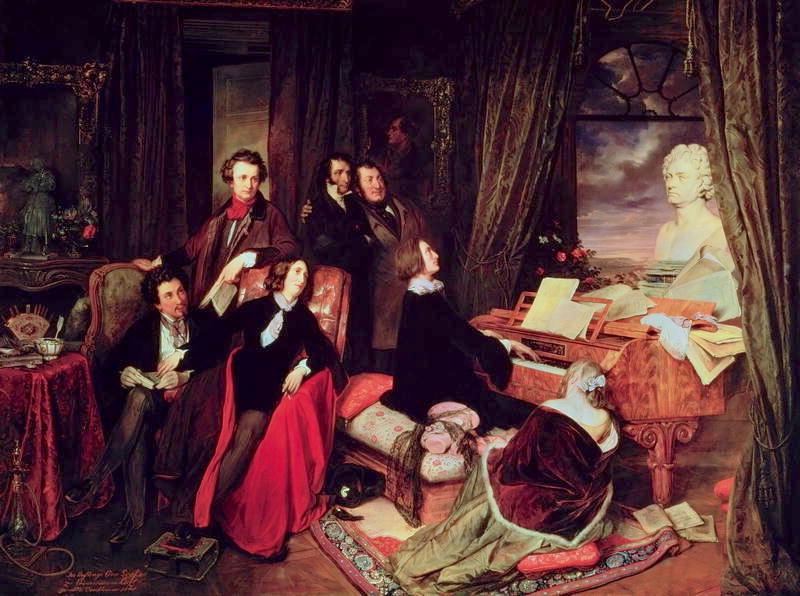
    On Beethoven’s birthday, here’s “Liszt at the Piano,” a famous painting, oil on wood, by Josef Danhauser, who lived from 1805 to 1845. Depicted is quite the salon, with, left to right, writers Alexandre Dumas, Victor Hugo, and George Sand; violinist Niccolò Paganini; with his arm around him, composer Gioachino Rossini; at the keyboard, the titular Franz Liszt; and at Liszt’s feet, his mistress during his Paris years, the Comtesse Marie d’Agoult – also a writer (who published under the name Daniel Stern) and the mother of Liszt’s three children. Their daughter Cosima would marry the conductor Hans von Bülow and then leave him for Richard Wagner.

    Why am I posting a painting of Liszt and his peeps to celebrate Beethoven? Take a gander at that surreal, luminous bust floating outside the window. Yes, that’s right – it’s the likeness of Ludwig van, remarkably similar to the famous bust sculpted in 1821 by Anton Dietrich.

    The painting was completed in 1840, 13 years after Beethoven’s death. Everyone else depicted would have still been alive – actually Paganini died the same year – with the exception of Lord Byron (if you look closely, you’ll see his gilt-framed portrait behind Rossini), who died of fever in 1824, while fighting for the cause of Greek Independence against the Ottoman Empire.

    What is the point of this gathering of super-artists? Were they all even ever in the same room together? Where is Sand’s lover, Frédéric Chopin? Why Rossini and not Hector Berlioz, who was a friend and beneficiary of both Paganini and Liszt? (Actually, there is some question as to whether that might not be Berlioz and NOT Hugo between Dumas and Sand.)

    I can only assume Rossini’s inclusion is because he actually made the pilgrimage to meet Beethoven, who was inadvertently condescending in praising Rossini’s “The Barber of Seville,” but dismissive of any attempt at serious opera by Italian composers. (Anyone who’s read Berlioz’s Memoirs knows that Beethoven wasn’t alone in this, though Berlioz adored Spontini and Beethoven owed a thing or two to Cherubini.) But beyond that, Rossini’s standing in this company is tenuous at best.

    One of the privileges of painting is that an artist can conjure truths that transcend mere photographic realism. (You don’t really think about cameras being around at this time, but Chopin was photographed not too long after.) Obviously, Danhauser intended this as a kind of Pantheon of the Romantics. (Why else include Byron?) All of them are transfixed, enraptured even, by the music conjured by Liszt at the piano. All of them look to Beethoven as a spiritual father.

    Beethoven, more than any other composer, was seen as a bridge from 18th century Classicism – the tidy, rational Enlightenment – to a new age of sensation – intensity of feeling, raw passion, and heaven-storming aspiration. His personal struggle was evident. Perfection did not come easily to Beethoven. He grappled with it. And he captured that struggle in his music. In struggling to express what he was compelled to express, he pushed hard through countless trials to forge new paths. Plagued by deafness, he remained defiant. Unbowed, he transcended personal and human limitations to express the sublime in all of us. His indomitable drive and achievement caused him to be perceived by many as the proto-Romantic. The development from his Haydnesque Symphony No. 1 to the Mahler-in-utero Symphony No. 9 is one of the great artistic journeys of all time. And those late string quartets? Fuhgeddaboudit.

    One of the scores on Liszt’s piano is the slow movement from Beethoven’s Piano Sonata No. 12. It bears the superscription “Marcia funebre – Sulla morte d’un Eroe” (“Funeral March – On the death of a Hero”).

    Beethoven’s heroism has burned with Promethean daring for artists and listeners who, down the ages, have sought affirmation of, and consolation in, the inherent possibility of all that is great in humanity.

    That’s my lofty observation. The painting was actually commissioned by Conrad Graf, a piano builder, so it also functions on the more mundane level as an advertisement!

    Happy birthday, LvB.


    Piano Sonata No. 12, Movement III: “Funeral March – On the death of a Hero”

    Some time ago, I also wrote about the meeting of Beethoven and Liszt

    https://www.facebook.com/photo/?fbid=1077344973184565&set=a.883855802533484

  • Stokowski: Genius or Madman?

    Stokowski: Genius or Madman?

    It takes a thief to catch a thief, and it takes a madman to interview Leopold Stokowski. Here is Leopold, the craziest dinner guest since Andre Gregory in “My Dinner with Andre,” being interviewed by the pianist-eccentric Glenn Gould. Gould was famously summed-up by conductor George Szell as “That nut’s a genius!” Stokowski himself was always an artist who thrived at the intersection of genius and charlatan. That said, even at his whackiest, Stokowski reminds us that a broken clock is still right twice a day. When he’s at his best, I don’t care if we’re talking about clocks or sausage, the rest is merely casing.

    Beethoven is not really the first composer I think of when I think about Stokowski. Stokey was often most in his element when sculpting music with more overtly coloristic effects. But here he and Gould collaborate on Beethoven’s “Emperor” Concerto in 1966. Unsurprisingly, for those familiar with the concerto, it’s an ear-opener, with Stokey doing his best to will the orchestra to grandeur, while Gould plays whatever the hell he feels like.

    Video of 85 year-old Stokowski rehearsing Beethoven’s “Leonore Overture No. 3”

    From the same sessions, rehearsing Barber’s “Adagio for Strings”

    Some of my favorite Stokowski footage is in the movie “Carnegie Hall” (1947), in which he conducts a movement from Tchaikovsky’s 5th Symphony. Just when you think his hair can’t get any bigger, he overachieves. The director, Edgar G. Ulmer, cut his teeth in German Expressionist cinema, and it shows. In America, he directed “The Black Cat,” with Boris Karloff and Bela Lugosi, and the film noir “Detour.”

    The wild hair, the dove-like hands, the faux middle-European accent (he was the son of an English-born cabinet-maker of Polish heritage), Stokowski knew how to work a crowd. He also knew his way around a score. Despite his protestations in the Beethoven rehearsal footage at the link above, Stokey was not averse to looking past whatever could be gleaned of a composer’s intentions, if it meant realizing his own glorious visions.

    He could be controversial, to be sure, and he was not difficult to parody. But he was also magnetic and, at his best, a true magician. In common with Oscar Wilde, Stokey knew there is only one thing in life worse than being talked about, and that is not being talked about.

    Happy birthday, Leopold Stokowski!


    Shaking hands with Mickey Mouse in “Fantasia” (1940)

    Parodied in “Long-Haired Hair” (1949)

    Introduced by Burns & Allen in “The Big Broadcast of 1937”

    Introduced in a snood around the 3:30 mark in “Hollywood Steps Out” (1941)

    With Deanna Durbin in “One Hundred Men and a Girl” (1937)

    With Marian Anderson and Princeton’s Westminster Choir

    Conducting Debussy at 90

  • Péter Eötvös A Composer’s Conducting Genius

    Péter Eötvös A Composer’s Conducting Genius

    It’s been observed (and borne out) that composers are not always the best interpreters of their own music. But when composer Péter Eötvös turned his hand to conducting Beethoven, the result was one of the most thrilling 5th Symphonies I have ever heard.

    Eötvös, born in Transylvania, was aided and encouraged by Zoltán Kodály at the Franz Liszt Academy of Music in Budapest, and Béla Bartók was in his blood.

    He continued his studies in Cologne with Bernd Alois Zimmerman. He also apprenticed with Karlheinz Stockhausen, working as Stockhausen’s engineer and copyist, and kept up his modernist credentials as a founding member of the live electronics-heavy Oeldorf Group and director and conductor of the Pierre Boulez-founded Ensemble InterContemporain.

    In addition, he was drawn to the music of Renaissance madman and murderer Carlo Gesualdo and American jazz.

    Eötvös composed in many genres, including experimental music for film and at least 13 operas.

    To my ears, he was at least as good a conductor as he was a composer. Eötvös died yesterday at the age of 80. R.I.P.


    Conducting Liszt’s “Dante Symphony”

    His own “The Gliding of the Eagle in the Skies”

    “Dialog mit Mozart”

    Beethoven (each of the four movements posted separately)

    I https://www.youtube.com/watch?v=nj7NYoVxceo

    II https://www.youtube.com/watch?v=S0SlWenglLw

    III https://www.youtube.com/watch?v=qFvpmRbFm_0

    IV https://www.youtube.com/watch?v=Qm5nuSwcMlM

    Eötvös speaks

  • Maurizio Pollini A Titan Passes

    Maurizio Pollini A Titan Passes

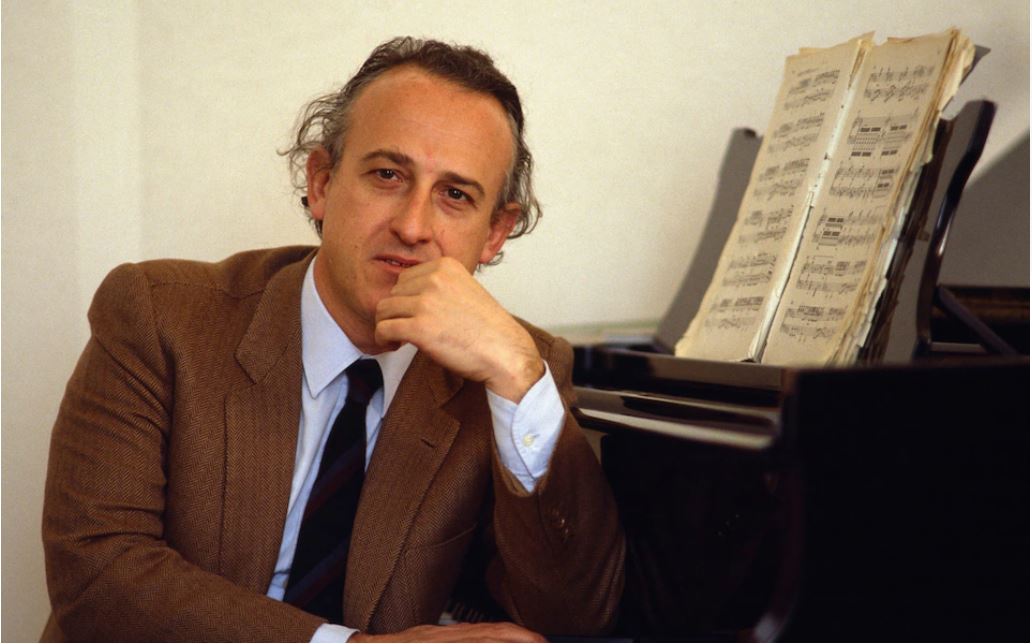
    In the aftershock of the death of any prominent musician, my thoughts inevitably wend their way to the question of who’s left? It’s been the case for me at least since the ‘90s, when the classical music world lost so many – all old friends, familiar from decades of recordings – and always the evidence seems to be of little cheer. Now, a little over a week after the death of the great pianist Byron Janis, I receive news of the loss of Maurizio Pollini.

    Pollini was renowned for his interpretations of Beethoven and Chopin, certainly, but for me he was more riveting when tackling modernist works. His albums of Webern’s Variations and Boulez’s Piano Sonata No. 2 and Stravinsky’s Three Movements from “Petrushka” and Prokofiev’s Piano Sonata No. 7, all combined when released on CD, are high points of his discography. He was also a champion of the music of Karlheinz Stockhausen and Luigi Nono.

    At his best, he had a way of making even standard repertoire seem experimental. He recorded a magnificent Liszt program, including the monumental Piano Sonata in B minor (surely the most radical sonata of its day), with a truly revelatory selection of the composer’s later, prophetic works that seldom, as under Pollini’s touch, pointed the way so assuredly to the 20th century.

    There was an aura about the man and the artist that exuded integrity, idealism, intelligence, and mystery, between his unwavering embrace of left-wing politics (he was an avowed communist), his notorious perfectionism (he refused to authorize recordings in which he perceived defects that no one else could hear), and last-minute cancellations (including one at Princeton’s McCarter Theatre in 2011).

    Again, the question: who’s left? Of the giants of Pollini’s generation, I mean – certainly of the stable of great pianists who kept the major labels (in Pollini’s case, Deutsche Grammophon) relevant?

    Maurizio Pollini was 82 years-old. An irreplaceable musician. I can’t say I was equally impressed with all of his Beethoven and Chopin, which could come across as a little clinical – I am more of the Janis camp than the Pollini – but when he connected, the rewards were cherishable. I, for one, am very thankful to be able to choose from his recordings. R.I.P.


    Chopin, Nocturne No. 8, Op. 27, No. 2 (live in concert)

    Liszt, “Unstern! Sinistre, Disastro”

    Boulez, Piano Sonata No. 2

    Young Pollini plays Beethoven’s “Emperor” Concerto (live)

Tag Cloud

Aaron Copland (92) Beethoven (94) Composer (114) Film Music (116) Film Score (143) Film Scores (255) Halloween (94) John Williams (185) KWAX (228) Leonard Bernstein (99) Marlboro Music Festival (125) Movie Music (131) Opera (197) Philadelphia Orchestra (86) Picture Perfect (174) Princeton Symphony Orchestra (106) Radio (86) Ralph Vaughan Williams (85) Ross Amico (244) Roy's Tie-Dye Sci-Fi Corner (290) The Classical Network (101) The Lost Chord (268) Vaughan Williams (99) WPRB (396) WWFM (881)

DON’T MISS A BEAT

Receive a weekly digest every Sunday at noon by signing up here


RECENT POSTS