With the vernal equinox upon us, enjoy Frank Bridge’s “Enter Spring” (1926-27). The conductor: Bridge’s star pupil, Benjamin Britten.
Tag: Benjamin Britten
-
Princeton Symphony Britten Elgar Weekend
English music in Princeton this weekend: Benjamin Britten’s Violin Concerto, with Elina Vähälä, and one of my desert island favorites, Elgar’s “Enigma Variations.” (No Vaughan Williams, sadly.)
The @[100043116381457:2048:Princeton Symphony Orchestra] performs on two concerts at Richardson Auditorium, Saturday evening at 8:00 and Sunday afternoon at 4:00. Tickets and information here: https://princetonsymphony.org/
-
English Documentary Music Vaughan Williams Britten
What has often been regarded in the United States as “hack work,” in England has been accepted as just another aspect of what it means to be a working artist. There is no disgrace in a composer earning a living, and some of the nation’s greatest musicians – including those in the employ of the Royal Family – have contributed finely-crafted scores to its body of cinema.
This week on “Picture Perfect,” it’s an hour of English documentary music. We’ll hear selections by Ralph Vaughan Williams, from “The People’s Land” (1941), Benjamin Britten, from “The King’s Stamp” (1935), William Alwyn, from “The Green Girdle” (1941), and Master of the Queen’s Music, Sir Arthur Bliss, from “The Royal Palaces of Britain” (1966). All four films are patriotic utterances on distinctly English themes.
You may not have seen any of these shorts, but the music is beautiful. I hope you’ll join me for music from English documentaries, this Saturday evening at 6:00 EDT, on WWFM – The Classical Network and wwfm.org.
In the meantime, if you’re having a slow day, why not get a taste of the films themselves?
“The People’s Land,” score by Vaughan Williams:
“The King’s Stamp,” score by Benjamin Britten:
“The Green Girdle,” score by William Alwyn:
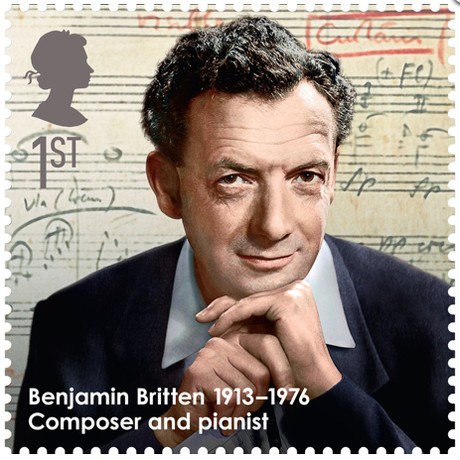
PHOTOS: Britten’s stamp and the King’s stamp
-
Queen Elizabeth II & Benjamin Britten’s Friendship
Thank you so much to Colin Curless, who directed me to this touching article (linked below) about Queen Elizabeth II and her exceptional kindness to Benjamin Britten toward the end of his life. Britten enjoyed a special relationship with the Royal Family. The Queen Mother was a patron of the Aldeburgh Festival, founded by Britten in 1948, and the Queen, by all appearances, was a good friend over at least the course of his last decade.
Britten wrote an opera, “Gloriana,” as part of the celebrations surrounding Elizabeth’s coronation in 1953. It was given its premiere at Covent Garden with members of the Royal Family, including the Queen, in attendance. The opera, which portrayed Elizabeth I in what many considered an uncomfortably human light, was downbeat and “modern” and rather coolly received. If Elizabeth II didn’t care for it, she didn’t hold it against him. In fact, the composer was left with the impression that she was “delighted and flattered.”
The Queen opened the Snape Maltings Concert Hall at Aldeburgh in 1967, for the festival’s 20th anniversary. After the hall was damaged by fire in 1969, again she was in attendance at its reopening in 1970.
Britten never spoke publicly about his sexuality and was very careful about public displays of affection with his muse and life partner, the tenor Peter Pears. Nevertheless, the couple came under scrutiny of the police and at one point Britten wondered if Pears would have to be set up in a sham marriage.
It was only in 1967 that same-sex relationships were decriminalized in England. (In Scotland, it was not until 1981, and in Ireland 1993.) Although homosexuality was illegal in the UK for the first 54 years of Britten’s life, the Queen tacitly acknowledged his and Pears’ relationship, and after the composer’s death, she sent Pears a personal message of condolence. In all, Britten and Pears were creative and personal partners for almost 40 years.
When Britten died in 1977, his memorial service at Westminster Abbey was headed by the Queen Mother. It’s believed that Britten had declined a knighthood some years earlier (oddly, there doesn’t seem to be a record of it), but toward the end of his life, he accepted a life peerage.
This article is the first time I ever heard that he was offered the post of Master of the Queen’s Music – unusually, by Elizabeth herself, rather than an assistant, in advance of a public announcement – which Britten felt he had to turn down in light of his failing health.
You can read more about the Queen and Britten here:
No one seems to have posted online the definitive recording of Britten’s “A Birthday Hansel,” with Pears and harpist Osian Ellis, the work composed for the Queen Mother referenced in the article. (There are other performances available if you search on YouTube.) However, I did come across this interesting 10-minute documentary, full of fascinating footage and commentary. The Queen makes an appearance around the 7-minute mark.
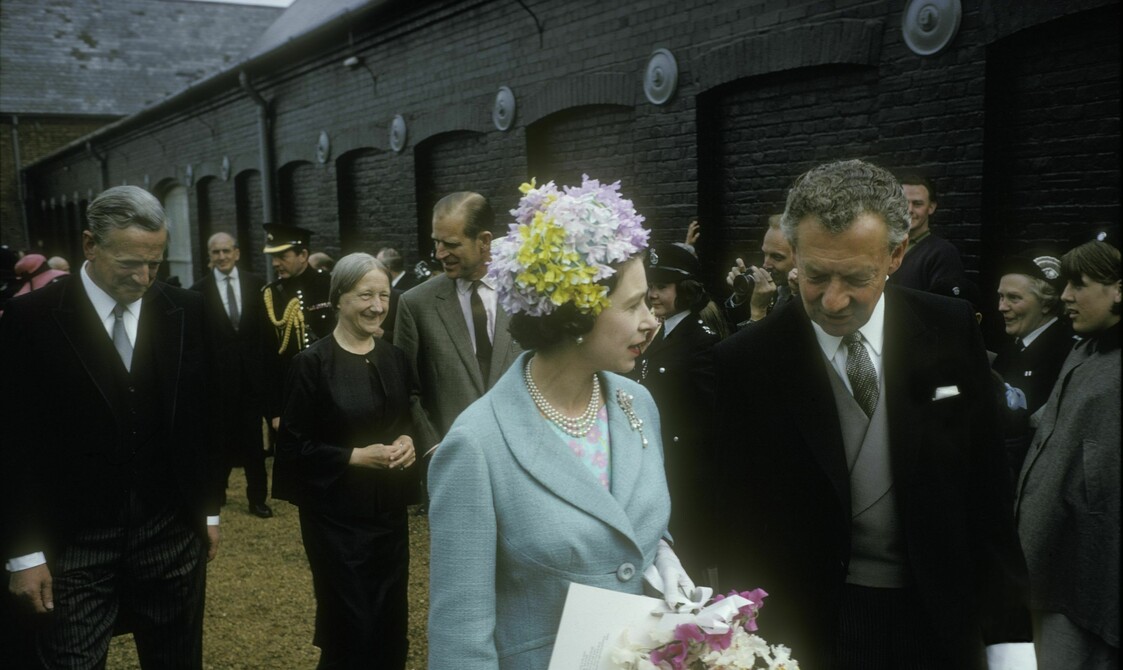
PHOTO: Britten and the Queen at Aldeburgh. In the background, left to right, Peter Pears, Imogen Holst (daughter of Gustav, a composer herself who served as Britten’s assistant), and Prince Philip
-
Osian Ellis Welsh Harpist Dies at 92
Alas, Osian Ellis now plays his instrument on another plane.
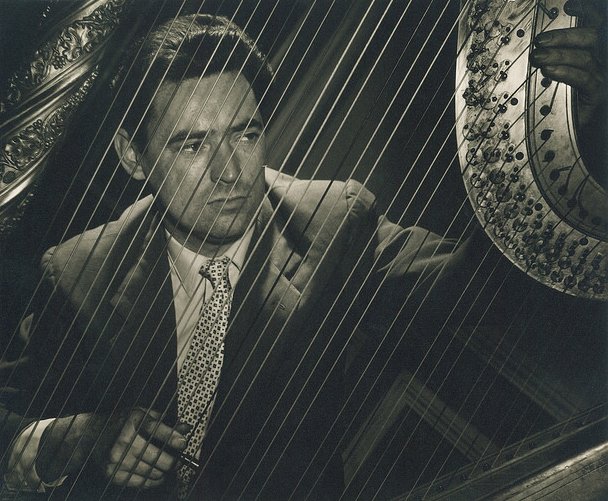
The Welsh harpist, principal of the London Symphony Orchestra and founding member of the Melos Ensemble, has died at the age of 92.
Ellis was a superstar in his field. Many works were written for him by major composers – he was a frequent collaborator of Benjamin Britten, for one – and he contributed a number of pieces to the harp literature himself, including arrangements of music from his native land. His performances and recordings have enriched and enchanted listeners for over 60 years.
R.I.P.
Fauré, Impromptu
Ravel, Introduction and Allegro
Britten, Suite for Harp (composed for Ellis)
William Mathias, Harp Concerto (composed for Ellis)
Songs with Harp, played and sung by Ellis
Welsh Folk Music
Tag Cloud
Aaron Copland (94) Beethoven (95) Composer (114) Film Music (150) Film Score (143) Film Scores (255) Halloween (102) John Williams (198) KWAX (233) Leonard Bernstein (105) Marlboro Music Festival (125) Movie Music (165) Mozart (91) Opera (215) Philadelphia Orchestra (90) Picture Perfect (174) Princeton Symphony Orchestra (110) Radio (90) Ross Amico (244) Roy's Tie-Dye Sci-Fi Corner (290) The Classical Network (101) The Lost Chord (269) Vaughan Williams (107) WPRB (397) WWFM (881)