Tag: Benjamin Britten

  • Saint Nicholas: From Saint to Santa in Music

    Saint Nicholas: From Saint to Santa in Music

    Over the centuries, the character of Saint Nicholas has undergone a remarkable transformation from austere-but-generous religious figure, to gift-giving, jolly old elf. This Sunday night on “The Lost Chord,” we’ll have music reflective of both.

    The historical and legendary Nicholas, fourth century Bishop of Myra, is the patron saint of sailors, merchants, travelers, brewers, prisoners, prostitutes, Russia, and of course children. THAT Nicholas is celebrated for his secret acts of charity, even if he could be rather short-tempered and a bit severe. Nicholas is said to have punched a few heretics, on occasion.

    One famous episode tells of Nicholas saving three daughters of a poor man from a life of prostitution by tossing bags of gold down their chimney, thereby providing them with proper dowries. The episode is reflected in the familiar pawnbrokers’ symbol of three gold spheres suspended from a bar (and also the practice of hanging stockings by the chimney with care).

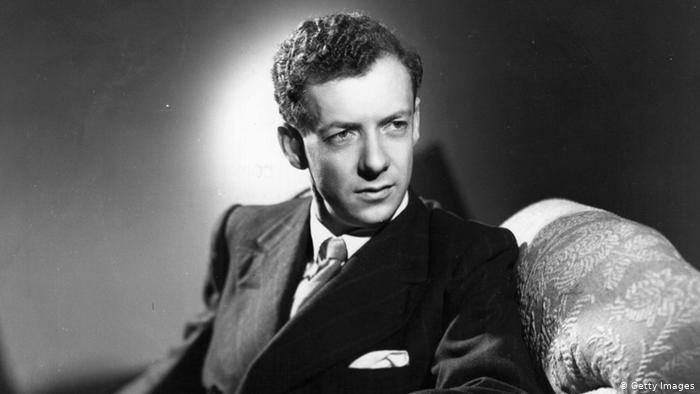
    Composer Joseph-Guy Ropartz, a native of Brittany, and a pupil of Jules Massenet and César Franck, focuses on another famous, albeit grisly Nicholas legend. “Le Miracle de Saint Nicolas,” composed in 1905 on a text by René Avril, relates the slaughter of three boys by an unscrupulous butcher, who chops them up and pickles them in brine, with the goal of passing them off as ham. Nicholas restores the youths, and the butcher repents. The same story would be set some 40 years later by Benjamin Britten, as part of his cantata, “Saint Nicholas.”

    Clement Moore’s poem, “A Visit from Saint Nicholas,” exemplified, and in many ways codified, the modern perception of St. Nicholas as Santa Claus. The work inspired, among other things, a symphony by William Henry Fry.

    Fry was born in Philadelphia in 1813. A pioneering figure in American music, he was the first native-born composer to write on a large scale. He composed orchestral works and the first opera by an American to be performed publicly in his lifetime (“Leonora,” in 1845). He was an outspoken advocate of American music – that is, music composed by Americans – at a time when German imports ruled the roost. It would be decades before American music would gain a toehold in the concert halls, which makes Fry an even more remarkable figure.

    Fry studied music with a former bandleader in Napoleon Bonaparte’s army, who went on to become the head of Philadelphia’s Musical Fund Society. Fry himself would become the society’s secretary.

    He was also a journalist, a writer on music, and the first music critic to write for a major American newspaper. He was a foreign correspondent for the Philadelphia Public Ledger and acted as music critic for the New York Herald Tribune.

    Fry composed seven symphonies, all of them of a descriptive nature. His “Santa Claus Symphony,” of 1853, is more of a precursor to the Straussian tone poem, a detailed blow-by-blow of incidents conveyed in Moore’s verse.

    I hope you’ll join me, on this St. Nicholas Day, for two faces of St. Nick. That’s “Dr. Nicholas and Mr. Claus,” this Sunday night at 10:00 EST, on WWFM – The Classical Network and wwfm.org.


    PHOTOS: After resurrecting dismembered children from the dead, Saint Nicholas kicks back with a Coke and a smile

  • Britten’s Birthday Sean Connery Orchestra Guide

    Britten’s Birthday Sean Connery Orchestra Guide

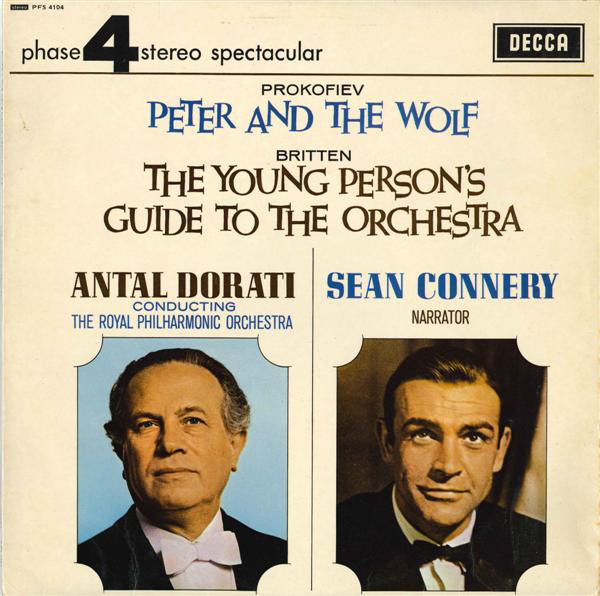
    Not only is it St. Cecilia’s Day (Cecilia being the patron saint of music), it also happens to be Benjamin Britten’s birthday. Hear Sean Connery narrate Britten’s “The Young Person’s Guide to the Orchestra.”

  • English Documentary Music Vaughan Williams Britten

    English Documentary Music Vaughan Williams Britten

    What has often been regarded in the United States as “hack work,” in England has been accepted as just another aspect of what it means to be a working artist. There is no disgrace in a composer earning a living, and some of the nation’s greatest musicians – including those in the employ of the Royal Family – have contributed finely-crafted scores to its body of cinema.

    This week on “Picture Perfect,” it’s an hour of English documentary music. We’ll hear selections by Ralph Vaughan Williams, from “The People’s Land” (1941), Benjamin Britten, from “The King’s Stamp” (1935), William Alwyn, from “The Green Girdle” (1941), and Sir Arthur Bliss, from “The Royal Palaces of Britain” (1966). All four films are patriotic utterances on distinctly English themes.

    You may not have seen any of these shorts, but the music is beautiful. I hope you’ll join me for music from English documentaries, this Saturday evening at 6:00 EDT, on WWFM – The Classical Network and wwfm.org.


    In the meantime, if you’re having a slow afternoon, why not get a taste of the films themselves?

    “The People’s Land,” score by Vaughan Williams:

    https://film.britishcouncil.org/resources/film-archive/the-peoples-land

    “The King’s Stamp,” score by Benjamin Britten:

    “The Green Girdle,” score by William Alwyn:


    PHOTO: It’s not about what you think

  • Britten’s King’s Stamp Radio Premiere

    Britten’s King’s Stamp Radio Premiere

    With the postal service more and more resembling “snail mail,” look back with nostalgia to “The King’s Stamp.” In 1935, Benjamin Britten composed a score for a short film about the design and production of a commemorative postage stamp to mark George V’s Silver Jubilee. It’s one of four documentaries with music by notable English composers (Britten, Ralph Vaughan Williams, William Alwyn, and Sir Arthur Bliss) that I’ll be highlighting this week on “Picture Perfect,” now at its new time, Saturday evening at 6:00 EDT, on WWFM – The Classical Network and wwfm.org.

  • Julian Bream Guitar Legend Dies at 87

    Julian Bream Guitar Legend Dies at 87

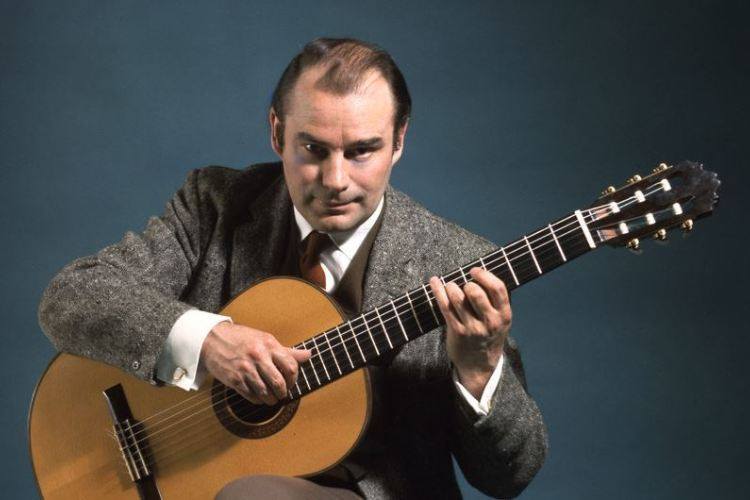
    The classical music world is left unstrung. One of the foremost guitarists of his generation, Julian Bream, has died.

    Bream, who was essentially self-taught on his instrument, was an acknowledged master of over 400 years of repertoire. Not content to live in the past, he also commissioned new works from – or had them written for him by – Sir Malcolm Arnold, Sir Richard Rodney Bennett, Leo Brouwer, Hans Werner Henze, Sir Peter Maxwell Davies, Toru Takemitsu, Sir Michael Tippett, and Sir William Walton, to name but a few.

    He set up his own consort, with which he revived music of the Tudor era and made many recordings on the lute. His services as a lutenist were employed for the premiere of Benjamin Britten’s “Gloriana,” written to celebrate the coronation of Elizabeth II. Bream subsequently arranged the opera’s courtly dances for the instrument, which he then recorded. In turn, Britten composed several other works for Bream, including at least one milestone of the 20th century classical guitar repertoire, his “Nocturnal, after John Dowland.”

    In a valedictory comment, quoted by the BBC, Bream offered, “I devoted my life to music for a reason, and the reason wasn’t because I wanted to get on or make money, but to try to fulfil myself and also to give people pleasure. That’s been my credo.”

    Julian Bream was 87 years-old.


    Twin titans of the guitar, Bream and John Williams (not to be confused with the film composer), in concert:

    Bream attempts to woo Stravinsky with the lute:

    “Nocturnal, after John Dowland”:

    Charming documentary, “Julian Bream: My Life in Music”:

    https://www.youtube.com/watch?v=MUdunh_wMCI

Tag Cloud

Aaron Copland (92) Beethoven (95) Composer (114) Film Music (119) Film Score (143) Film Scores (255) Halloween (94) John Williams (185) KWAX (229) Leonard Bernstein (99) Marlboro Music Festival (125) Movie Music (134) Opera (198) Philadelphia Orchestra (86) Picture Perfect (174) Princeton Symphony Orchestra (106) Radio (87) Ralph Vaughan Williams (85) Ross Amico (244) Roy's Tie-Dye Sci-Fi Corner (290) The Classical Network (101) The Lost Chord (268) Vaughan Williams (102) WPRB (396) WWFM (881)

DON’T MISS A BEAT

Receive a weekly digest every Sunday at noon by signing up here


RECENT POSTS