Tag: Black Composers Series

  • William Grant Still’s “Afro-American Symphony”

    William Grant Still’s “Afro-American Symphony”

    It’s hard to believe I made the following observations as recently as 2019, prior to this show’s first airing. So much has changed since then. William Grant Still has gone from a neglected master to probably one of the most frequently programmed American symphonists of his generation. The change may have been propelled by social and political trends, but if ever anyone deserved more notice, it’s this composer.


    As someone with an insatiable appetite for American symphonies composed during the first half of the 20th century, I try not to miss a performance or even a radio broadcast of music by Roy Harris, William Schuman, or Aaron Copland. But for as much as I adore these composers, the American symphonies that delight me the most, off the top of my head, are Charles Ives’ 2nd, Howard Hanson’s 2nd (the “Romantic”), and William Grant Still’s 1st (the “Afro-American”). I never get tired of listening to these, and they move me like few others.

    I am only too happy to include Still’s symphony, then, as a kind of capstone to my four-part survey of the landmark Black Composer Series of the 1970s – reissued on Sony Classical as a 10-CD boxed set – this week on “The Lost Chord.”

    The “Afro-American Symphony,” composed in 1930, is informed by African-American spirituals, the blues, and syncopated banjo-like riffs. Indeed, a banjo actually turns up in the work’s third movement.

    To me, the symphony has always been a kind of “portrait of the artist as a young man.” (Still was born in Woodville, Mississippi, and grew up in Little Rock, Arkansas.) In this respect, it puts me in the mind somewhat of Virgil Thomson “Symphony on a Hymn Tune,” which similarly draws on hymns and folk songs of his boyhood in Kansas City, Missouri.

    But Still’s music comes across as more personal, more sincere, and certainly less self-consciously “modernist.” It goes straight to my heart and then gets in my head so that it literally disturbs my sleep. It’s one of the great American symphonies. The concert suites from George Gershwin’s “Porgy and Bess” remain popular, but some enterprising music director should give the “Afro-American Symphony” a shot, because I know audiences will love it. (NOTE: Again, since I wrote this, the work has gone on to be played by seemingly every major American orchestra.)

    There is a solid Gershwin connection. Still quotes the melody of “I Got Rhythm” in the third movement of his symphony. And for good reason. It’s actually his! According to Eubie Blake, Gershwin was in the audience during one of Still’s performances in the pit band for Blake’s revue “Shuffle Along.” Still’s improvisation became the basis for Gershwin’s hit tune. (Blake was quick to add that the appropriation was probably inadvertent.)

    The “Afro-American Symphony” is now the best-known piece in the Black Composers Series, which originally appeared on vinyl between 1974 and 1978. But at the time of the recording’s original release that was by no means definitively the case. The only previous recording of the work, made by Karl Krueger and the Royal Philharmonic Orchestra, was available only through mail-order subscription. Exposure to this gem of a symphony, then, was comparatively limited.

    Thankfully, there have been a number of recordings since, but for me none match the commitment and loving attention to detail of the performance in this set, with Paul Freeman conducting the London Symphony Orchestra.

    Also included on today’s program will be “Markings,” by Ulysses Kay, composed in 1966 to the memory of Dag Hammerskjöld, secretary general of the United Nations. Called “the greatest statesman of our century” by John F. Kennedy, Hammarskjöld was killed in a plane crash in Zambia en route to ceasefire negotiations during the Congo Crisis of 1961. Hammarskjöld was awarded a posthumous Nobel Peace Prize.

    We’ll conclude on an “up” note, with the lively “Danse Nègre” from the “African Suite” of 1898, by Afro-English composer Samuel Coleridge-Taylor.

    I hope you’ll join me for the grand finale of my month-long survey of highlights from CBS Records’ forward-looking Black Composers Series – that’s “Black to the Future, Part IV,” on “The Lost Chord,” now in syndication on KWAX, the radio station of the University of Oregon!


    Clip and save the start times for all three of my recorded shows:

    PICTURE PERFECT, the movie music show – Friday at 8:00 PM EST/5:00 PM PST

    SWEETNESS AND LIGHT, the light music program – ALL NEW! – Saturday at 11:00 AM EST/8:00 AM PST

    THE LOST CHORD, unusual and neglected rep – Saturday at 7:00 PM EST/4:00 PM PST

    Stream them, wherever you are, at the link!
    https://kwax.uoregon.edu/

  • Black Composers Series Rediscovered

    Black Composers Series Rediscovered

    To reiterate, the 2019 compact disc reissue of CBS Records’ landmark Black Composers Series of the 1970s, though lamentably underpublicized and unconscionably delayed, was still just ahead of the curve, as there has been an explosion of Black classical music in our concert halls in only the last few years. In the intervening decades? The pickings were slim.

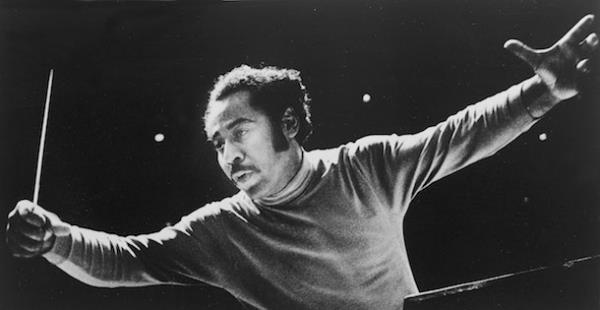
    These visionary recordings, made under the direction of conductor Paul Freeman (pictured) and employing world class orchestras and soloists, were originally released on vinyl between 1974 and 1978, providing rare exposure to 200 years’ worth of neglected music at a time when most of it was essentially unknown.

    This week on “The Lost Chord,” it’s the third in a four-part survey of highlights from this exciting boxed set, which was reissued, finally, by Sony Classical.

    José Silvestre de los Dolores White y Lafitte (or José or Joseph White, for short) was one of the great romantic violinists. Born in Cuba in 1835, he made his public debut at the age of 18 with the most celebrated North American pianist of the day, Louis Moreau Gottschalk. It was Gottschalk who encouraged White to study at the Paris Conservatory and who raised the money to send him there. This launched the young man on a globetrotting trajectory that sent him all over Europe, the Caribbean, South America, Mexico, and the Northeastern United States.

    White died in Paris in 1918. We’ll hear his Violin Concerto in F-sharp minor, played by the prolific and committed Aaron Rosand. Why this is not a repertory piece is anybody’s guess.

    David Baker, born in 1931, was professor of jazz studies at the Indiana University Jacobs School of Music, a program he founded. From 1991 to 2012, he was also director and conductor of the Smithsonian Jazz Masterworks Orchestra. On top of everything else, he was extraordinarily productive as a writer and recording artist, leaving over 65 recordings, 70 books, and 400 articles.

    Baker died in 2016. He was trained as a trombonist – he was active as a jazz performer throughout the 1940s and early ‘50s – but a facial injury suffered in an automobile accident caused him to switch to the cello. We’ll hear Baker’s Cello Sonata, composed in 1973 for the great Janos Starker, who will perform it with Alain Planès at the keyboard.

    Finally, Roque Cordero was born in Panama City in 1917. He studied composition with Ernst Krenek and conducting with Dimitri Mitropoulos. He became director of Panama’s Institute of Music and artistic director and conductor of its National Symphony. Later, he was assistant director of the Latin American Music Center, professor of composition at Indiana University, and, from 1972, distinguished professor emeritus at Illinois State University. Cordero died in Dayton, Ohio, in 2008, at the age of 91.

    Fascinatingly, Cordero’s music tends to balance Panamanian folklore with more advanced techniques. The boxed set contains not only his Violin Concerto, with Sanford Allen the soloist, but also “Eight Miniatures for Small Orchestra” of 1948. We’ll hear Paul Freeman conduct the latter with the Detroit Symphony Orchestra.

    I hope you’ll join me for “Black to the Future, Part III,” yet another program of highlights from the Sony Classical reissue of CBS Records’ forward-looking Black Composers Series, on “The Lost Chord,” now in syndication on KWAX, the radio station of the University of Oregon!


    Clip and save the start times for all three of my recorded shows:

    PICTURE PERFECT, the movie music show – Friday at 8:00 PM EST/5:00 PM PST

    SWEETNESS AND LIGHT, the light music program – ALL NEW! – Saturday at 11:00 AM EST/8:00 AM PST

    THE LOST CHORD, unusual and neglected rep – Saturday at 7:00 PM EST/4:00 PM PST

    Stream them, wherever you are, at the link!

    https://kwax.uoregon.edu/

  • Black Composers Series Rediscovered on the Radio

    Black Composers Series Rediscovered on the Radio

    For as long as it took Sony to reissue Columbia Records’ Black Composers Series on CD (40 years!), it was still ahead of the curve when it came to celebrating music by composers of color. Since the seismic social and political shift precipitated by the death of George Floyd, you can’t get through a week without new recordings and live performance of music by Black composers. But back in the day, these records were like Holy Grails, and as a collector, my heart would skip a beat if I ever came across one of the original albums on vinyl. I thought I would pass out when I discovered the CD reissues on the shelves of Princeton Record Exchange, since the box had basically been dumped on the market with no advertising.

    Some of the composers have since found a toehold on the fringes of the concert repertoire – William Grant Still, George Walker, and the Chevalier de Saint-Georges are being heard with much more frequency – but there are many other fascinating discoveries to be savored.

    I was so juiced at obtaining the entire series on CD that I promptly devoted four weeks of shows to the box set on “The Lost Chord” in 2019. Now, for the first time, the programs will be repeated, to coincide with Black History Month, over four Saturdays in February. Part One will feature selections by Saint-Georges, Olly Wilson, and Fela Sowande.

    This is not a political statement, but rather a cultural and artistic one. Whatever it is that got us past this particular tipping point, I am grateful for it.

    I hope you’ll join me for “Black to the Future” – selections from Columbia Records’ landmark Black Composers Series of the 1970s – on “The Lost Chord,” now in syndication on KWAX, the radio station of the University of Oregon!


    Clip and save the start times for all three of my recorded shows:

    PICTURE PERFECT, the movie music show – Friday at 8:00 PM EST/5:00 PM PST

    SWEETNESS AND LIGHT, the light music program – ALL NEW! – Saturday at 11:00 AM EST/8:00 AM PST

    THE LOST CHORD, unusual and neglected rep – Saturday at 7:00 PM EST/4:00 PM PST

    Stream them, wherever you are, at the link!
    https://kwax.uoregon.edu/

  • Adolphus Hailstork & “Done Made My Vow”

    Adolphus Hailstork & “Done Made My Vow”

    I’ve been a fan of Adolphus Hailstork since the 1980s. That’s when I first heard “Done Made My Vow,” as part of a concert broadcast over the radio.

    “Done Made My Vow” (1985), often described as a gospel oratorio, was inspired in part by speeches of Martin Luther King, Jr. So uplifting was the marriage of words and music, I hoped for years that it would be recorded. Then one day I stumbled across a copy in the Baltimore Symphony Orchestra gift shop.

    This Sunday night on “The Lost Chord,” I hope you’ll join me for this extraordinary piece, scored for speaker, chorus and orchestra.

    Hailstork has been part of the fabric of American music since at least the 1970s. Born in Rochester, New York, in 1941, he earned his BA from Howard University, his MA from the Manhattan School of Music – where his teachers included Vittorio Giannini and David Diamond – and his doctorate from Michigan State, where his studied with H. Owen Reed. Then he was off, like so many of his great American forebears, to study at Fontainebleau with Nadia Boulanger.

    For many years, Hailstork was composer-in-residence at Old Dominion University in Norfolk, Virginia, where he taught. He is perhaps best known for his choral music, though it was the wistful slow movement of his Symphony No. 1, composed for a summer music festival in Ocean Grove, New Jersey, that next caught my ear.

    His brief but boisterous curtain-raiser “Celebration!” was included in Paul Freeman’s legendary “Black Composers Series,” recorded for Columbia Records back in the 1970s. Freeman remained a champion of Hailstork’s work for the rest of his career. I particularly recommend his recording of “Sonata da Chiesa,” a multi-movement work for string orchestra, inspired by Hailstork’s impressions as a boy chorister singing at the Cathedral of All Saints in Albany.

    As preamble to the oratorio, we’ll also enjoy Hailstork’s rhythmically exciting “Variations for Trumpet” (1981).

    The music is hale, but the sentiments are King. I hope you’ll join me for “Done Made My Vow,” on “All Hail Hailstork,” this Sunday night at 10:00 EST, on WWFM – The Classical Network and wwfm.

    AND, if you are as swept away by it as I was, you might be interested to know that the New York Philharmonic will be performing it on the same series of concerts with William Grant Still’s Symphony No. 2 “Song of a New Race,” March 2-4!


    Hailstork’s “Sonata da Chiesa” (1992)

    Symphony No. 1 (1988): Mov’t II, Lento ma non troppo

    “Motherless Child” (2002)

    “Celebration!” (1974)

  • Black Composers Reissue: Still, Kay & More

    Black Composers Reissue: Still, Kay & More

    As someone with an insatiable appetite for American symphonies composed during the first half of the 20th century, I try not to miss a performance, or even a radio broadcast, of music by Roy Harris, William Schuman, or Aaron Copland. But for as much as I adore those composers, the American symphonies that delight me the most, off the top of my head, are Charles Ives’ 2nd, Howard Hanson’s 2nd (the “Romantic”), and William Grant Still’s 1st (the “Afro-American”).

    Still’s symphony, the first by a Black American to be performed by a major orchestra, serves as a kind of capstone to my four-part survey of Columbia Records’ landmark Black Composer Series. This was put together for “The Lost Chord” and originally broadcast on WWFM The Classical Network to mark the belated reissue of the series – after 40 years! – as a 10-CD boxed set by Sony Classical.

    The “Afro-American Symphony” is one of the few pieces in this set, which originally appeared on vinyl between 1974 and 1978, that is heard with any frequency. It serves as a portrait of the artist as a young man, drawing on spirituals, blues, and banjo riffs redolent of the composer’s boyhood in Little Rock, Arkansas. (He was born in Woodville, Mississippi.) More enterprising music directors should give it a shot. It’s the kind of work that goes straight to the heart and gets lodged in the head. Audiences will love it.

    Hear it on the final program in my survey, which also includes “Markings,” by Ulysses Kay. Kay composed his piece in 1966 to the memory of Dag Hammerskjöld, secretary general of the United Nations. Called “the greatest statesman of our century” by John F. Kennedy, Hammarskjöld was awarded a posthumous Nobel Peace Prize, after he was killed in a plane crash en route to ceasefire negotiations during the Congo Crisis of 1961.

    The series concludes on an “up” note, with a lively “Danse Nègre,” from the “African Suite” of 1898, by Afro-English composer Samuel Coleridge-Taylor.

    Enjoy the fourth and final installment of “Black to the Future” – celebrating the reissue of Columbia Records’ forward-looking Black Composers Series – by following the link and clicking on “listen”:

    https://www.wwfm.org/post/lost-chord-february-24-black-future-part-iv

    In case you missed it, here’s Part One, with music by Chevalier de Saint-Georges, Olly Wilson, and Fela Sowande:

    https://www.wwfm.org/post/lost-chord-february-3-black-future

    Part Two, with works by George Walker and José Maurício Nunes Garcia:

    https://www.wwfm.org/post/lost-chord-black-future-part-ii

    And Part Three, with works by José Silvestre de los Dolores White y Lafitte (José White), David Baker, and Roque Cordero:

    https://www.wwfm.org/post/lost-chord-february-17-black-future-part-iii

    On a related note, Michael Kownacky will introduce Still’s “Troubled Island,” the first opera by an African-American composer to be staged by a major company – the New York City Opera, in 1949 – on a double-bill with Paul Moravec’s “Sanctuary Road,” this week on the Sunday Opera at 3:00 EST, on WWFM – The Classical Network and wwfm.org.


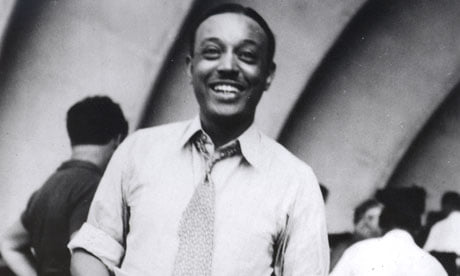
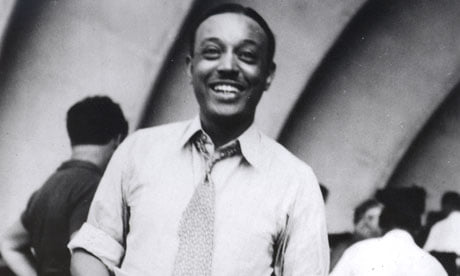
    PHOTO: William Grant Still at the Hollywood Bowl

Tag Cloud

Aaron Copland (92) Beethoven (95) Composer (114) Film Music (120) Film Score (143) Film Scores (255) Halloween (94) John Williams (185) KWAX (229) Leonard Bernstein (100) Marlboro Music Festival (125) Movie Music (135) Opera (198) Philadelphia Orchestra (88) Picture Perfect (174) Princeton Symphony Orchestra (106) Radio (87) Ralph Vaughan Williams (85) Ross Amico (244) Roy's Tie-Dye Sci-Fi Corner (290) The Classical Network (101) The Lost Chord (268) Vaughan Williams (103) WPRB (396) WWFM (881)

DON’T MISS A BEAT

Receive a weekly digest every Sunday at noon by signing up here


RECENT POSTS