I’ve been trying to finish up production on one of my radio shows today, so I haven’t had time to post about Juneteenth. Not that I feel it’s necessarily my place to do so anyway. Looking over what I posted about it last year, I find my thoughts are pretty much the same. I wish everyone who celebrates the very best, but I don’t want to come across as that silly white man who inadvertently crashes a private party. There are already plenty of other ethnic holidays for white people to behave foolishly. I do, however, feel qualified to offer a few links to music by Black composers, which I do with the best intentions. See the bottom of last year’s post. The quality of the music has not changed. It doesn’t matter what color you are in the creation or acknowledgment of beauty. Beautiful music is a gift to everyone, and gratitude is a beautiful thing. Happy Juneteenth to those who celebrate.
Tag: Black Composers
-
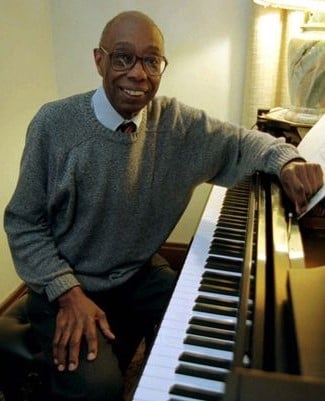
Columbia Records Black Composers Series Rediscovered
Columbia Records’ Black Composers Series was a bold undertaking in the 1970s, a pioneering effort and an idealistic investment in the future – nine albums of unknown repertoire by minority composers, only several of whom might have been on the very periphery of a few collectors’ consciousness, at best. Even so, it’s rumored that the series was originally intended to run to 20 volumes. We are so lucky to have what we got.
On some level, it’s hardly surprising that the plug got pulled, back in the day. After all, the series was a bold gamble. (On the other hand, record labels did take more chances then, and it was an accepted fact that classical records needed time to find their audience.) But did it really have to take Sony 40 years to reissue it on compact disc?
Yet somehow, remarkably, they were still ahead of the curve. Since the seismic social and political shift precipitated by the death of George Floyd, you can’t get through a week without new recordings and live performance of music by Black composers. But in the 1970s, these records were like Holy Grails, and as a collector, in the decades since, my heart would skip a beat if I ever happened across one of the original albums on vinyl.
I was so juiced at obtaining the entire series on CD that I promptly devoted four weeks of shows to the box set on “The Lost Chord” in 2019. Now, for the first time, the programs are being repeated, to coincide with Black History Month, over the four Saturdays in February. Part II will feature contrasting works by George Walker and José Maurício Nunes Garcia.
Walker was the first African American recipient of the Pulitzer Prize for Music – as recently as 1996 – for his “Lilacs for Voice and Orchestra.” He was the first Black musician to graduate from the Curtis Institute of Music. He also studied at the Eastman School and was a pupil of Nadia Boulanger. Tune in for Walker’s Trombone Concerto of 1957.
Then it’s off to South America for Nunes Garcia’s Requiem Mass of 1816. Nunes Garcia was Master of Music of the Royal Chapel in Rio de Janeiro. He composed over four hundred pieces of music, including the first Brazilian opera. The Requiem was written at the request of John VI of Portugal for funeral services for his mother, Maria I.
I hope you’ll join me for Part II of “Black to the Future” – selections from Columbia Records’ landmark Black Composers Series of the 1970s – on “The Lost Chord,” now in syndication on KWAX, the radio station of the University of Oregon!
Clip and save the start times for all three of my recorded shows:
PICTURE PERFECT, the movie music show – Friday at 8:00 PM EST/5:00 PM PST
SWEETNESS AND LIGHT, the light music program – ALL NEW! – Saturday at 11:00 AM EST/8:00 AM PST
THE LOST CHORD, unusual and neglected rep – Saturday at 7:00 PM EST/4:00 PM PST
Stream them, wherever you are, at the link!
-
Black Composers Shine on KWAX Radio
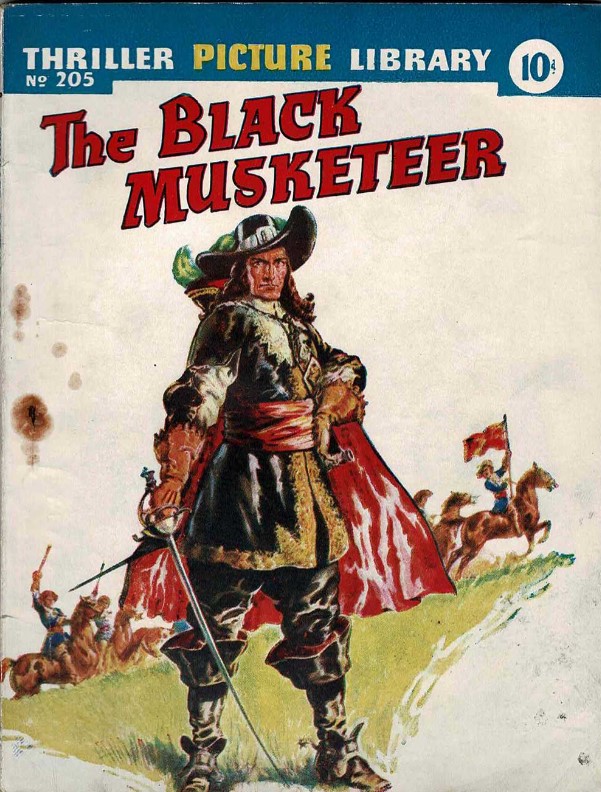
Very little is known about the Chevalier de Meude-Monpas. Among what we DO know is that he was a musketeer in the service of Louis XVI, who went into exile with the onset of the French Revolution. He also studied music in Paris and published six concertos for violin in 1786. In 1997, violinist Rachel Barton (now Rachel Barton Pine) put together a revelatory album for Cedille Records, “Violin Concertos by Black Composers of the 18th and 19th Centuries.” Meude-Monpas’ Violin Concerto No. 4 will be among the featured works this morning on “Sweetness and Light,” cumulatively guaranteed to put a smile on your face.*
Much better known, William Grant Still was regarded in his day as the “Dean of Afro-American Composers.” He the first composer of color to have a symphony performed by a major orchestra, the first to have a symphony widely performed, the first to conduct a major orchestra, and the first to have an opera televised nationally. A pupil of both George Whitefield Chadwick and Edgard Varèse, Still certainly had “serious” credentials, but he also worked in pit bands and wrote arrangements for Hollywood musicals. In many senses, he was the quintessential American composer. Also, he always knew how to write a good tune. This morning we’ll enjoy his “Danzas de Panama,” performed by the Oregon String Quartet.
It took nearly 90 years for Florence Price to become an overnight success. Price was the first African American woman to have a symphony performed by a major orchestra. Her Symphony No. 1 was played by the Chicago Symphony, conducted by Frederick Stock, in 1933. But it’s only fairly recently, after decades of comparative neglect, that her music has finally begun to gain traction. From a 2-disc set devoted to her piano works on the Guild label, we’ll hear Kirsten Johnson play “Dreamboat.”
Duke Ellington requires little introduction. He was a major figure in American music, especially in the field of jazz. But for the past hundred years or so, there has been quite a bit of “blurring of the lines” between genres of art music. In 1943, Ellington composed “New World a-Comin’,” a work for piano and 15-piece band. He never wrote down the piano part, so it was reconstructed by ear by Maurice Peress from a recording made of an Ellington concert at Carnegie Hall in 1943. Subsequently, Peress expanded the jazz band to full orchestra. The soloist on the recording we’ll hear, Jeffrey Biegel, obtained permission from Sir Roland Hanna to transcribe the improvised final cadenza from a recording Hanna made with the American Symphony Orchestra under Peress’ baton.
So, yeah, it’s February 1 – Black History Month – not that any excuse is required to share these delights. But it does ensure that they will make it to the air waves and, hopefully, your ears. We’ll be enjoying our coffee black on “Sweetness and Light,” this Saturday morning at 11:00 EST/8:00 PST, exclusively on KWAX, the radio station of the University of Oregon!
Stream it, wherever you are, at the link:
- Please note: Meude-Monpas is not to be confused with that other swashbuckling composer, the Chevalier de Saint-Georges, whose music also appears on Barton Pine’s record.
-

Juneteenth, Classical Music, and Cultural Change
Is Juneteenth poised to become the next Mardi Gras/St. Patrick’s Day/Cinco de Mayo? Well, at least it’s not a drinking holiday yet.
While I venture to guess it’s still all fairly new to most white folks (I was probably ahead of the curve, thanks to Ralph Ellison’s novel, “Juneteenth,” finally published in full, posthumously, in 1999), I can’t say its wider dissemination is altogether a bad thing. For classical music lovers, especially, there has been so much to discover – and yes, to celebrate – as the result of sweeping cultural changes and broader awareness over the past few years, and by no means restricted to June 19.
Some may roll their eyes at all the “over-exposure” of Florence Price, but come on, admit it, isn’t it a little invigorating to hear some American music other than the same old Gershwin and Copland? In the interest of full disclosure, I offer this as someone for whom Copland is probably one of my favorite composers. So much Black classical music, if it was known at all, was almost never heard, unless it was on that one, scrappily-played, often out-of-print and hard-to-find recording. For how many years was I hungry to hear the complete symphonies of William Grant Still? Now they’re getting played – in concert, no less!
For those of you tiring of George Walker’s “Lyric for Strings” (and how could you?), look at it as a corrective. At some point, the pendulum will swing back, and ideally this belated inundation of Black music will lead to the best of it taking its place in the active repertoire. It can’t happen unless people know it’s out there and are exposed to it.
I look forward to the day that we’ll be past the point of anyone grousing about quotas or “woke” or any of that nonsense. People are ridiculous creatures. It’s easy to deride and it’s tempting to mock – believe me, I can be as cynical as anyone, and in all things – but really, there are many sincere concert programmers out there who are just trying to do the best that they can. For anyone who happens merely to be paying lip-service to the zeitgeist, I’m sure there are many more who want to do the right thing.
For those for whom the holiday has always meant something (June 19 is the date in 1865 on which the federal enforcement of the Emancipation Proclamation guaranteed freedom to enslaved peoples in all Confederate states following the Civil War), I can imagine how, after a while, it could all get to be a little much for them, too. The more popular it becomes, the more corporate or Disneyfied it risks becoming. How long before Juneteenth is ruined by the Man?
Anyway, celebrate responsibly, everyone, and remember – keep the Juneteenth in Juneteenth!
Florence Price, “Juba” from the Symphony No. 1
George Walker, “Lyric for Strings”
William Grant Still, “Serenade”
Adolphus Hailstork, “Celebration!” (composed for the U.S. Bicentennial)
-

Rediscovering Black Composers
Time was, one really had to scrape to pull together a good Black History program. My, how things have changed! The past few years have seen an explosion of recordings and wider exposure for composers once known mostly to record collectors. Who knew that Florence Price would one day be played everywhere?
This week on “Sweetness and Light,” I feel sheepish even making it a two-parter, as I’m still merely skating across the surface. But it is, after all, a light music show.
Enjoy a second cup of coffee with Afro-British composer Samuel Coleridge-Taylor; the “Dean of Afro-American composers,” William Grant Still; former slave “Blind Tom” Wiggins (allegedly once the highest-paid pianist of the 19th century); Philadelphia-born bugle virtuoso Francis Johnson (including his “Princeton Gallopade”); and Duke Ellington.
Next year, maybe I’ll make it a four-parter. Or better yet, be more conscious about including more of this music throughout the year. I try, but I can’t tell you how many times things get cut, so that I can fit it all into an hour. (Apologies to you, Scott Joplin, Eubie Blake, and Edmond Dédé!)
Good music is not a black and white issue. I hope you’ll join me for another “Sweetness and Light,” music calculated to charm and to cheer. It’s part two of “Black and Light,” this Saturday morning at 11:00 EST/8:00 PST, exclusively on KWAX, the radio station of the University of Oregon!
Listen to it, wherever you are, at the link:
PHOTO: Have coffee with the Duke
Tag Cloud
Aaron Copland (94) Beethoven (95) Composer (114) Film Music (150) Film Score (143) Film Scores (255) Halloween (102) John Williams (198) KWAX (233) Leonard Bernstein (105) Marlboro Music Festival (125) Movie Music (165) Mozart (91) Opera (215) Philadelphia Orchestra (90) Picture Perfect (174) Princeton Symphony Orchestra (110) Radio (90) Ross Amico (244) Roy's Tie-Dye Sci-Fi Corner (290) The Classical Network (101) The Lost Chord (269) Vaughan Williams (107) WPRB (397) WWFM (881)