Tag: Black Composers

  • Black Composers on KWAX Radio This Week

    Black Composers on KWAX Radio This Week

    Snow falling here! I don’t know about you, but I plan to cozy in with some “Sweetness and Light.” For Black History Month, it will be the first of two newly-recorded light music programs featuring works by Black composers.

    We’ll hear from Nigerian-born Fela Sowande (selections from his “African Suite”), Canadian-American composer R. Nathaniel Dett (“In the Bottoms,” played by one of his greatest champions, who lives and works locally, Clipper Erickson, piano), musical theater pioneer Eubie Blake (an oversimplification of his significance, I realize), contemporary composer and Nadia Boulanger pupil Adolphus Hailstork (some of his spiritual arrangements for orchestra), and stride giant James P. Johnson (born right up Route 1 in New Brunswick, NJ). In addition, we’ll get to enjoy an assortment of traditional spirituals interpreted by the great Marian Anderson.

    Part 1 of “Black and Light” will air this Saturday morning at 11:00 EST/8:00 PST, with Part 2 to follow, next week.

    As always on “Sweetness and Light,” it’s music calculated to charm and to cheer. We’ll be serving the coffee black, exclusively on KWAX, the radio station of the University of Oregon!

    Pour yourself a cup, wherever you are, here:

    https://kwax.uoregon.edu/

    And then drop back later for a topper, as I’ll be paying tribute to Afro-English composer Samuel Coleridge-Taylor (1875-1912) on “The Lost Chord.” “Taylor-Made” will be broadcast on KWAX today at 7:00 pm EST/4:00 pm PST. More to come in a separate post!

    While you’re waiting, get to know Fela Sowande:

  • William Grant Still: A Long-Awaited Revival

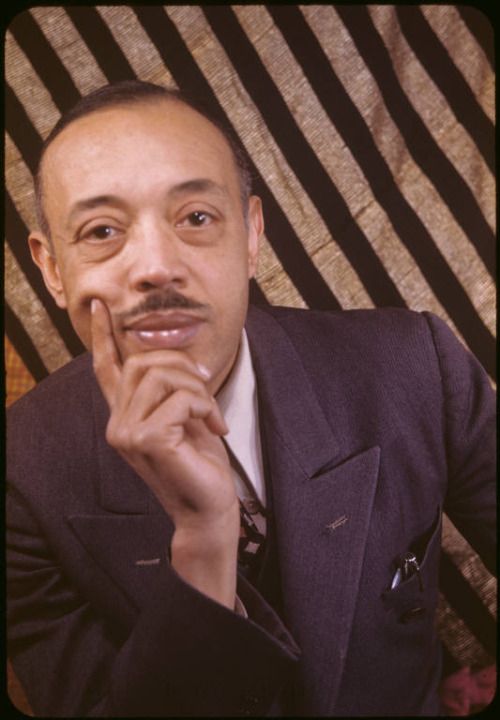
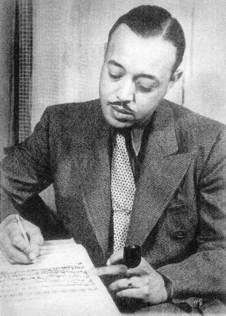
    William Grant Still: A Long-Awaited Revival

    Can it be that William Grant Still’s time has finally come?

    Whereas in the past, I would be lucky ever to encounter his works outside of recordings, within the last few months, I was able to hear “Ennanga,” for piano, harp and strings, with the Allentown Symphony Orchestra, the Symphony No. 2 with the New York Philharmonic, and the “Afro-American Symphony” (the Symphony No. 1) with the New Jersey Symphony.

    In October, on its first subscription concert of the 2023-24 season, The Philadelphia Orchestra will perform the Symphony No. 4. The New Jersey Symphony will open its season with Still’s “Out of the Silence.” And how appropriate that title has turned out to be.

    Still is on the move. And it’s about time.

    The “Afro-American Symphony” is one of my favorite American symphonies ever. And it’s been so for decades. I’ve been in love with it ever since I first heard it on record nearly 40 years ago. It’s poetic, nostalgic, celebratory, genuinely reflective, beautiful, and brimming with great tunes. It’s congenial, and in the end quite moving. Not to take anything away from the noisy wartime symphonies of Copland, Harris, Schuman, and the rest, but surely there’s room in the pantheon for other points of view.

    Any discussion of Still must include a litany of “firsts.” His “Afro-American Symphony” was the first written by a black composer to be performed by a professional orchestra (the Rochester Philharmonic in 1931). He was the first black composer to be given the opportunity to conduct a major orchestra (the Los Angeles Philharmonic at the Hollywood Bowl in 1936). His opera, “Troubled Island,” became the first to be produced by a major company (the New York City Opera in 1949). Another of his operas, “A Bayou Legend,” was the first to be performed on national television (as late as 1981). His works were performed internationally by the Berlin Philharmonic, the London Symphony Orchestra, the BBC Symphony, and the Tokyo Philharmonic.

    Yet in nearly 40 years of attending concerts, until recently, the only times I ever encountered Still “live” were when the Westminster Community Orchestra played “Wood Notes,” in 2015, and the New Jersey Capital Philharmonic Orchestra performed the Symphony No. 4, on a program with Florence Price’s Violin Concerto No. 1, in 2019. Both were before the death of George Floyd spurred arts organizations to get with it, already. So bravo, local orchestras!

    Otherwise, all of my familiarity with Still’s work has been gleaned from recordings.

    Price, in particular – the first black woman to have her music played by a major orchestra (the Chicago Symphony in 1933) – is undergoing quite a revival. It’s too bad neither she nor Still are around to see it. It’s not a matter of skin color that makes the music worthwhile, but unfortunately, it has been the case that because of it, their music was perhaps not always taken as seriously as it might have been.

    We are now in the enviable position to be able to address some of the injustices of the past, in resurrecting this music, giving it the exposure it deserves, and allowing posterity to sort it out. Just because music is not played doesn’t always mean it is not worthwhile. A lot of very talented, very qualified people are finally getting their chance to be heard.

    And you don’t have to be a minority to reap the rewards.

    Happy birthday, William Grant Still.


    PHOTO: In living color – my heart be Still!

  • Black Composers Rediscovered

    Black Composers Rediscovered

    During Black History Month, I thought it would be good time to share this archived episode of “The Lost Chord,” the first of a four-part series celebrating the efforts of conductor Paul Freeman in reviving 200 years’ worth of neglected repertoire by composers of color.

    The Black Composer Series was originally issued on Columbia Records back in the 1970s, its individual volumes much sought-after by collectors. I almost passed out when I found it had finally been reissued on compact disc as a boxed set, though with astonishingly little fanfare, by Sony Classical. I hadn’t seen anything about it until I discovered it on the shelf at Princeton Record Exchange.

    Some of the composers have since found a toehold on the fringes of the concert repertoire – William Grant Still, George Walker, and the Chevalier de Saint-Georges are being heard with more frequency these days – but there are still many fascinating discoveries to be savored.

    The series originally aired on WWFM – The Classical Network in 2019. I’ll post another segment each Saturday in February. Or you can just binge on all four now.

    Part One features selections by Chevalier de Saint-Georges, Olly Wilson, and Fela Sowande. Follow the link, click “listen,” and enjoy.

    https://www.wwfm.org/post/lost-chord-february-3-black-future

  • Margaret Bonds & Black Classical Pioneers

    Margaret Bonds & Black Classical Pioneers

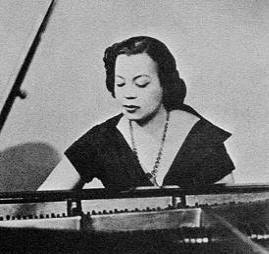
    Margaret Bonds was one of the first Black composers and performers of classical music to gain recognition in the U.S. Born in Chicago on March 3, 1913, she is perhaps best-remembered for her collaborations with Langston Hughes and for her piano work “Troubled Water.”

    This Sunday night on “The Lost Chord,” we’ll pay tribute to Bonds and her notable teachers, Florence Price and William Levi Dawson, both of whom were also important figures in the development of African-American art music.

    Price is regarded as the first African-American woman to have composed symphonies. She wrote three of them. One was performed by the Chicago Symphony Orchestra. She also wrote orchestral works, chamber music, instrumental music, and numerous choral and vocal pieces. She and Bonds shared not only a teacher-student relationship, but also became very good friends. Tonight, we’ll hear Price’s “Fantasie Nègre.”

    In addition to his many fine works for chorus, Dawson is notable for having written one of the most successful symphonies by an African-American composer, the so-called “Negro Folk Symphony.” The work was composed in 1934 and given its first performance by the Philadelphia Orchestra, under Leopold Stokowski. Dawson revised the piece in 1952, following a trip to West Africa, where he was influenced by the indigenous rhythms he encountered there. Stokowski later recorded the piece, as did Neeme Järvi with the Detroit Symphony Orchestra.

    In 1933, Bonds appeared as a piano soloist with the Chicago Symphony. She performed Price’s Piano Concerto with the Women’s Symphony Orchestra of Chicago the next year. In 1939, she moved to New York, where she continued her studies at the Juilliard School. She also studied privately with Roy Harris.

    For all her accomplishments – her collaborations with Langston Hughes, her establishment of a cultural community center in Harlem, and the composition of two ballets and several theater works – the Bonds discography is woefully thin. She’ll be represented tonight by her cycle of four songs, “Ah! Love But a Day,” and by her most-recorded piano work, “Troubled Water.”

    Shortly before her death in Los Angeles in 1972 (at the age of 59), Bonds’ “Credo” for baritone, chorus and orchestra was performed by the Los Angeles Philharmonic, under the direction of Zubin Mehta. Would that they had recorded it!

    Make an investment in Bonds. That’s “Educational Bonds” – music by Margaret Bonds and her teachers – this Sunday night at 10:00 EST, on WWFM – The Classical Network and at wwfm.org.

  • William Grant Still & Black Composers in NJ

    William Grant Still & Black Composers in NJ

    It’s a banner day for William Grant Still in the Trenton-Princeton area.

    As I posted only a short while ago, Still’s “Afro-American Symphony” will be the featured highlight on “The Lost Chord,” tonight at 10:00 on WWFM The Classical Network and wwfm.org, as I conclude my month-long survey of highlights from the reissued Black Composers Series on Sony Classical.

    Another of Still’s symphonies – the much less frequently heard (read NEVER) Symphony No. 4, subtitled “Autochthonous” – will be performed by the Capital Philharmonic of New Jersey at Trenton’s Patriots Theater at the War Memorial this afternoon at 4:00. The concert will also include the recently rediscovered Violin Concerto No. 1 by Florence Price and, as an added bonus, Adolphus Hailstork’s “Celebration.”

    My preview of this exciting program is in the current edition of U.S. 1 Newspaper – PrincetonInfo. I know I posted about it earlier in the week, but I thought it would be helpful to mention it again, not least because the last time I failed to notice that I didn’t include a link until about five hours after! So here it is again.

    https://princetoninfo.com/african-american-composers-shine-in-trenton/

    The so-called “Dean of Afro-American composers,” Still lived from 1895 to 1978. He was a “first” in many ways. His was the first symphony written by a black composer to be performed by a major orchestra (the New York Philharmonic). He was the first to be given the opportunity to conduct a major orchestra (the Los Angeles Philharmonic, at the Hollywood Bowl). His opera, “Troubled Island,” became the first to be produced by a major company (the New York City Opera). His works were performed internationally by the Berlin Philharmonic, the London Symphony Orchestra, the BBC Symphony, and the Tokyo Philharmonic.

    Similarly, Florence Price, who lived from 1887 to 1953, was the first African-American woman to be recognized as a symphonic composer, and the first to have her music performed by a major orchestra (the Chicago Symphony). Her violin concerto was among a stash of manuscripts rescued from her dilapidated summer home as recently as 2009. This afternoon’s performance by the Capital Philharmonic will be the work’s East Coast premiere, and possibly only the second time it has ever been heard in public.

    This is the rare concert that is more than just a concert.

    Tickets are still available through the orchestra’s website, capitalphilharmonic.org.

Tag Cloud

Aaron Copland (92) Beethoven (95) Composer (114) Film Music (119) Film Score (143) Film Scores (255) Halloween (94) John Williams (185) KWAX (229) Leonard Bernstein (99) Marlboro Music Festival (125) Movie Music (134) Opera (198) Philadelphia Orchestra (86) Picture Perfect (174) Princeton Symphony Orchestra (106) Radio (87) Ralph Vaughan Williams (85) Ross Amico (244) Roy's Tie-Dye Sci-Fi Corner (290) The Classical Network (101) The Lost Chord (268) Vaughan Williams (102) WPRB (396) WWFM (881)

DON’T MISS A BEAT

Receive a weekly digest every Sunday at noon by signing up here


RECENT POSTS